

Research

The distinct cadence of a computerized voice echoing across the room was part of my early introduction to the world of accessibility. I was working in the disability services office at a university, and the robotic narration of JAWS (a screen reader) from a colleague’s desk had become part of the daily office foley. To me, the previously uninitiated, it was compelling to witness how much difference a piece of technology could make in enabling independence in the workplace and demonstrating inclusion.

Fast forward to today, where we all seem to be hurtling toward a future where, for many of us, our workplace and greater world will be heavily mediated by screens and all manner of artificial intelligence. Assistive technologies like JAWS, frankly, seem old hat by comparison. My news and professional feeds are regularly dotted with stories about how AI is poised to revolutionize technologies and bring more independence, more accessibility, and more equity. 

This Truly is the Stuff of Sci-Fi Movies

Multimodal AI: We are in an era where AI can “read” text on a screen. But what happens when AI operates multimodally? Authors Nithish Kumar and Aishwarya Srinivasan mention the myriad of possibilities for increasing accessibility in their article “The Sensory Revolution.” When AI can “smell” the sweetest strawberries at the grocery store, “see” the shortest checkout line, or “feel” the weight of the shopping bag, it can drastically support the experience of the built world for anyone who has a sensory limitation.

Wearable Technologies: Researchers are developing robotic exoskeletons to assist people with neuromuscular disorders (e.g., spinal cord injuries, stroke recovery). In-built AI systems could potentially provide “personalized control algorithms that could improve human–machine coordination” for these exoskeletons, according to a December 2025 article in Nature Communications. And jumping to a different type of wearable technology, Meta recently published an article about how its wearable glasses can be used, with AI assistance, to find lost keys, read restaurant menus, or get real-time captions.

New Robotics: Tatum Robotics is developing devices that can translate both words and images into tactile sign language and help deaf-blind users better communicate.

Trends in Product Development for Accessibility

At first glance, it all sounds pretty good. But as exciting as these developments may be, we still need to examine the means and ways these tools are developed. This need is made even more poignant by the fact that AI is not merely the final objective with these and similar new technologies; it is increasingly being deeply woven into the very fabric of product development and testing protocols. While I can’t speak to the development of the specific products described above, there are greater trends at play.  

According to Applause’s 2026 State of Digital Quality in Accessibility survey that surveyed more than 500 software development, QA, product, compliance and accessibility professionals, 79% reported that the organizations where they work use AI to improve digital accessibility in their websites and applications.. This, according to a large swathe of survey respondents, could look like “using AI coding tools to address/remediate accessibility issues” or “scan sites or apps for accessibility issues.”

One of the many issues with this is that many major LLM systems were not necessarily designed to be foremost disability-cognizant. Jackie Leah Scully reminds us in her article for Science, that “most AI developers have little formal knowledge of disability and are not taught about accessibility or inclusion during their training, while courses on AI ethics that discuss bias or diversity tend to focus on sex/gender and race, rather than disability” (Scully, 2018). If you are depending on AI to find the accessibility issues on your website, you must take into account that AI, historically, has been trained largely on websites that are not accessible and are then at risk of reproducing, as Eric Bailey described for GitHub, “accessibility antipatterns.” Moreover, AI models are trained on data that largely ignores the lived experiences of people with disabilities, which means their outputs frequently exhibit a lack of representation. This isn’t just a technical glitch; it’s a systemic deficit that can end up reinforcing existing biases. AI, simply put, cannot serve as be-all, end-all authority on accessibility.

Inclusion: “Nothing About Us Without Us”

These issues highlight a truth that the accessibility community has preached for decades: Product designers and technology developers must co-create with people with disabilities. This is not a new thought (“nothing about us without us”), but the increasing dependency on AI in product development makes the call to action all the more urgent. We cannot outsource the responsibility of designing accessible technologies to AI or synthetic participants, and people with disabilities cannot be brought in at the end-of-product design process for what amounts to token rubber-stamp approval. People with disabilities must be active stakeholders, present from the very first brainstorming session through the entire development pipeline. Yes, one could theoretically argue that the solution is just better AI. Yet, as our built environment rapidly transforms, the necessity of genuine human feedback becomes all the more important. AI systems, as aforementioned, are constrained by their training data, and therefore lack the agility to navigate cutting-edge built environment developments or offer the nuanced, lived responses that only a real person can provide. 

From a researcher’s perspective, these shifts underscore the necessity of intentional preparation to engage with the disability community during the research process. This Global Accessibility Awareness Day, I am reminded to reflect on my practice as a researcher in this age of AI, where the building of products is moving fast and there is more pressure to accelerate the research timeline. In my context of conducting research, this may mean advocating for the participation of individuals with disabilities, and holding the line when there is pushback. This may mean more time investment in finding people with disabilities to participate in research. It may mean dynamically adapting research instruments to meet the diverse needs of participants with disabilities. Or it may mean incorporating more flexibility within research sessions to meet differing needs. While these steps require time, resources, intentionality, and caution, the end result is worth it if it means a more thoughtfully designed, and genuinely accessible, technological future. As Debra Ruh famously said, “accessibility allows us to tap into everyone’s potential.” We must honor our responsibility—to those with disabilities, to those without disabilities who may or may not eventually develop disabilities, and to all technological progeny—to build things well.

By Farrah Brensinger, Senior User Experience Researcher
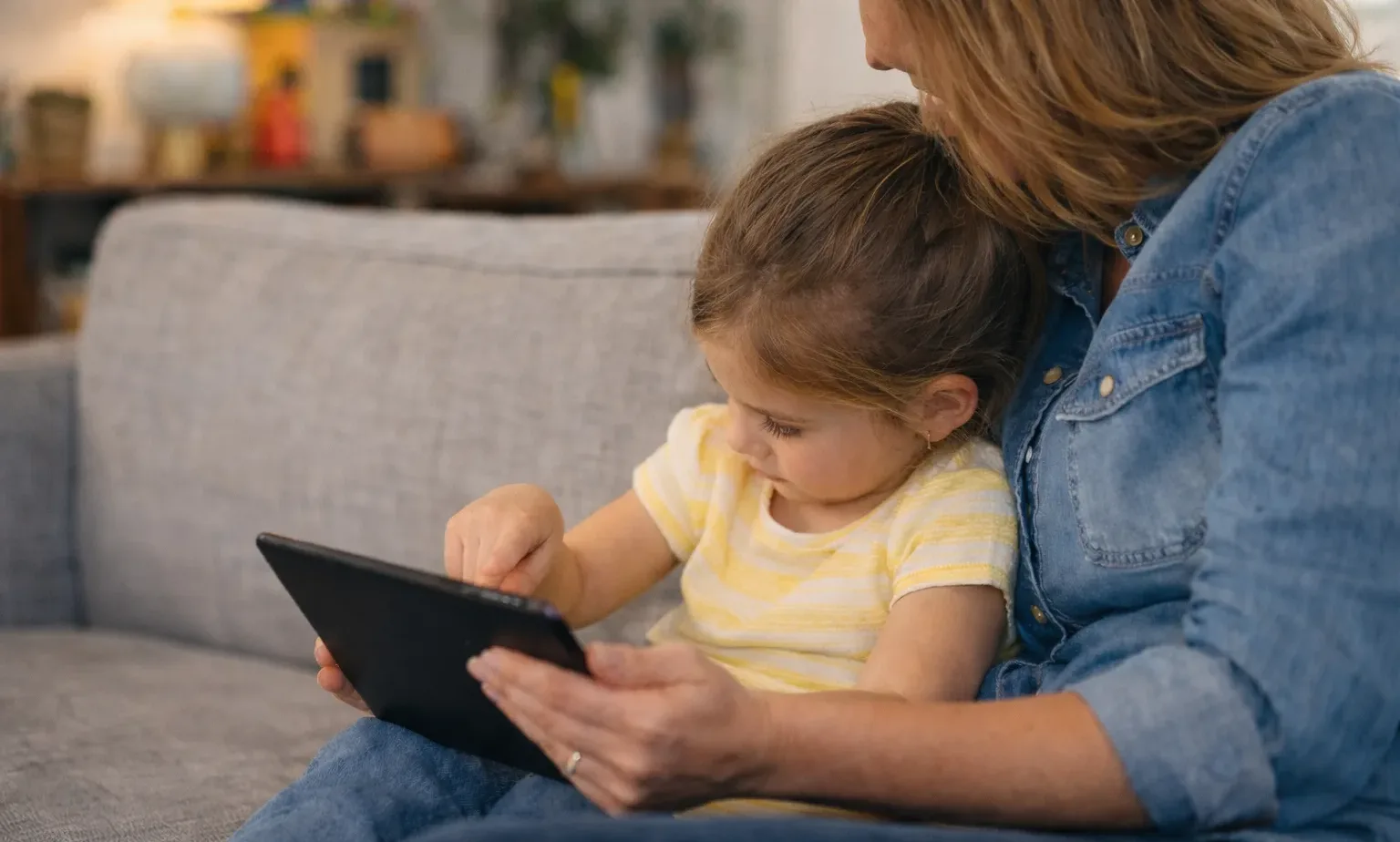
The moment that changes a children’s series rarely just happens in the writers’ room. It can also happen in a living room.

A five-year-old girl tilts her head and says something unexpected about a character. A parent pauses and admits they’re not sure what the takeaway was. An eight-year-old boy laughs at a moment the creators thought was instructional, and tunes out during the explanation. Those are the moments that shape better content.

When people think about research in children’s media, they often think about measurement, proving that something worked after it’s complete. But the real power of research happens much earlier. Research doesn’t just validate content. It influences it.

Where Insight Changes Direction

In our work with PBS KIDS, Nickelodeon, and other children’s media clients across broadcast, digital, and interactive properties, we’re often brought in while content is still evolving. Animatics are rough. Scripts are fluid. Characters haven’t been finalized. Game mechanics are still being refined. That’s exactly when research matters most.

What we uncover doesn’t sit in a report; it informs revision. We examine questions that go beyond surface appeal:

Do children understand the core skill the episode is designed to model?

Do children understand the core skill the episode is designed to model?

Is the learning goal clear, or buried under plot?

Are the rules of the world intuitive to young viewers?

Does the problem feel concrete, or abstract?

When do children disengage, and what’s happening at that moment?

Are parents interpreting the educational intention the way producers expect?

Sometimes the insight confirms the creative approach. Other times, it shifts it.

We’ve observed executive function skills resonating clearly, while the context surrounding them creates confusion. In one project, adults found career themes compelling, but children experienced them differently. In another, humor carried the learning more effectively than explanation. Without research, those disconnects remain invisible. With research, they become opportunities to revise, clarify, and strengthen before a series moves forward. In other words, those insights lead to better alignment between intention and interpretation. That’s not cosmetic feedback. It’s directional influence. 

Research as a Creative Partner

The strongest development teams don’t treat research as a compliance step at the end of production. They treat it as a creative partner.

When research is embedded in the development process, it can influence story pacing, character development, world-building clarity, the explicitness of educational messaging, and the balance between entertainment and instruction. The result isn’t content that feels “researched.” It’s content that feels intuitive, because it aligns with how children actually learn.

That alignment doesn’t happen by instinct alone. It happens by listening. 

Designing for How Kids Learn

This article is the first in a series exploring how research shapes and strengthens children’s media development across the broader children’s content landscape.

In upcoming articles, we’ll feature insights from Allison Caplovitz, PhD, Director of Content Research and Evaluation, and Senior Researchers Sylvia Rusnak and Tiffany Salone, whose expertise in child development, educational measurement, and media testing informs the work behind the scenes.

If you’re developing content for children, consider this:

Do you know what kids are actually taking away?
Are you testing intention against interpretation?
Are you building in time to revise based on evidence?

Because if you’re building for kids, listening to them isn’t optional. It’s foundational.

By Stefanie Cousins, Vice President, Marketing and Communications

This June, for the second summer in a row, I returned to Fluent for a summer internship. Excited by the opportunity to learn from such a talented group of researchers once again, I was eager to continue building on what I learned the previous summer, while also challenging myself in new ways. 

From my first day back, I hit the ground running. As always, the team at Fluent Research was incredibly welcoming and supportive, which made it easy to find my rhythm and dive right in. I joined project teams across different studies, and after brushing up on certain skills and tools, I was able to take on new responsibilities. These new assignments allowed me to see how all the pieces of a research project fit together—from project proposals to polished reports.

Extending the Internship Into My Gap Year

Originally, my internship was set to be just six weeks long; however, since I had deferred my college enrollment to take a gap year, I was thrilled when I found out I would be able to extend my time at Fluent by three months. I took a short break after my initial six week summer internship, and in that time, packed up my life and moved to Sweden, where I would live and work remotely for the next 3 months. Having found a steady rhythm in the first six weeks of the internship, I was excited to continue making strides on various projects and learning how to conduct both qualitative and quantitative research.

Despite being (at least) six hours ahead of the rest of the Fluent team, the extension in my internship made all the difference. Given the length of time, I was able to attend client meetings, manage participants in various studies, conduct in-depth interviews, analyze data, and contribute to reports in ways that I could have never imagined. While I may have had the opportunity to do similar tasks and learn similar skills the previous summer and in my initial six weeks, this portion of the internship unlocked a whole new dimension of the work Fluent does. It opened my eyes to all that goes into the research process. 

Seeing the Full Lifecycle of Research

As a member of several research teams that worked on more fast-paced projects with quick turnarounds as well as long-term studies that evolved over months, I was able to see how research unfolds over time. Through it all, I began to appreciate just how much thought, care, and collaboration goes into every study Fluent conducts as well as the impact and difference all of those things can have on any type of project or work. Whether it was learning not to put quotation marks around italicized text, refining the tone of a topline summary, or keeping participant data clean and organized, I realized that small choices add up to clarity, credibility, and quality. These tangible lessons will stay with me far beyond this internship.

Lessons in Leadership and Collaboration

Another important lesson I’m taking away is what good leadership looks like in action. Throughout the course of my internship, I saw firsthand that leadership isn’t just about leading meetings or making decisions, it’s about how people listen, communicate, and build trust with one another in a team in ways that may even seem mundane.

Watching my colleagues balance professionalism with empathy showed me how leadership can be practiced every day, in both big and small moments, and how that cultivates a positive and enjoyable work environment. 

Growing as a Researcher

While I may not have realized it in the moment, when I think about the past few months, what stands out most is how much I’ve grown not just in my skills, but in my confidence as a researcher. I’ve learned how to manage multiple responsibilities, communicate effectively, and approach challenges with curiosity rather than hesitation.

I’m incredibly grateful to everyone at Fluent for their patience, trust, and encouragement. This internship gave me the chance to truly see myself as part of a research team, and to understand what thoughtful, human-centered work looks like in practice. What began as a short summer experience turned out to be a formative start to my gap year, and I am grateful it happened here at Fluent Research. 

By Paul Jakob.

We’ve all seen it, or lived it. A young child is melting down over wanting “just one more minute” with their tablet. Often, all eyes turn to the parent, silently blaming them for a lack of discipline or control. But is that really what’s happening? Is this behavior simply a part of normal child development, or is it shaped, at least in part, by how the app itself is designed?

A compelling new study by Mallawaarachchi et al. (2025) (full text here) argues it’s not an either/or — it’s both. Their research shows how a child’s self-regulation abilities interact with persuasive app design (PD) to influence how easily (or not) the child can disengage from digital play. 

I heard Dr. Mallawaarachchi present this research at the 2025 Digital Media and Developing Minds International Congress last month, and I was intrigued. “Not all children use screens in the same way,” Dr. Mallawaarachchi explained to me during a recent phone call, “but also screens don’t affect all children the same way.” She noted that some children may come to the experience with a kind of differential susceptibility, meaning their temperament, developmental stage, or disposition might make them more likely to get ‘stuck’ in an app.

As a researcher who helps tech companies do better for children, this interplay between a child’s self-regulation and persuasive design really spoke to me. It reinforced why developmental expertise needs to be present at all stages of design, to ensure that products are not only engaging but also developmentally appropriate.

What is Persuasive App Design?

Persuasive design (PD) refers to features in digital apps or games that are intentionally created to keep users (in this case, children) engaged for longer. These features are intended to capture and hold the user’s attention and make it hard to stop. 

Common examples of PD in children’s apps include:

  • Rewards: Getting virtual coins, new characters, or access to new levels as part of the game experience.
  • Main character pressure: The character might frown or look sad if a child stops playing or makes a certain choice.
  • Locked features tied to in-app purchases: Making certain options of the game only available through payment, prompting children to ask for more time or money to continue playing.
  • Pop-up suggestions for other games: Distractions that encourage children to try an app that is similar to what they are already playing.
  • Autoplay or countdown timers: Creating urgency and discouraging natural stopping points.

While some of these features can enhance gameplay and support learning, they are often used to maximize engagement and revenue, sometimes at the expense of child well-being. Mallawaarachchi emphasized that PD is a continuum of features. ”Of course you want it to promote engagement, but if it’s coming at the cost of the users’ agency, if it’s coming at the fact that you don’t have the freedom to choose what to do, and if it’s coming at the cost of the users’ well-being, to me, that’s deceptive.”

The Study in a Nutshell

Mallawaarachchi et al. looked at how persuasive app design (PD) and children’s self-regulation interact to affect their ability to stop playing a tablet game. Self-regulation is a child’s ability to control their attention, emotions, thoughts, and behaviors, even when faced with distractions or impulses. This skill is what helps a child stop a fun game when dinner is ready, or transition calmly from digital play to another activity. This ability develops throughout early childhood and varies among children.

In the experimental study, 3- to 5-year-old children played one of three apps with similar content, each with low, moderate, or high PD. They also considered each child’s own self-regulation score as assessed by two different standardized measures. 

Study Findings

  • Children liked the apps equally, regardless of the number of persuasive design features. This means that app designers don’t need to rely on manipulative features to make apps enjoyable to children.
  • Children with high self-regulation could disengage from any app consistently, regardless of whether the app employed low, moderate, or high PD.
  • Children with low self-regulation disengaged more easily from low-PD apps, but took significantly longer and needed more support when using apps with moderate or high persuasive design.

“If persuasive features override a child’s available strategies and capacities,” Dr. Mallawaarachchi said, “then the child is no longer in control.”

Why it Matters

This study offers key takeaways for both parents and developers. It shows that:

  • Children aren’t drawn to high-PD apps because they’re more fun. They’re drawn in because of design tricks that make stopping harder.
  • App design interacts with a child’s developmental abilities, meaning some children are more vulnerable to persuasive features.
  • The design of the app and the child’s readiness to engage with it are equally important.

The study reveals that persuasive app design doesn’t make apps more appealing, they just make them harder to leave. This knowledge can empower caregivers to make more informed choices about the apps their children use. But it also makes one thing clear: parents shouldn’t have to shoulder this burden alone. Dr. Mallawaarachchi agrees. “One of our key overarching goals in all things we do is really to remove that burden and responsibility from parents and to move it at least a bit more towards other stakeholders like tech companies, their policies, and also the government.”

Shifting Responsibility

I also believe it’s time for a fundamental shift in responsibility. Just as the Children’s Television Act of 1990 rightly restricted character-based advertising during children’s programming, we need similar protections for children in digital spaces today. That means there’s no excuse for developers to keep relying on manipulative features under the guise of “fun.”

If we want a healthier digital world for all children, we can’t just focus on screen limits; we must also focus on screen design. We need to ensure that tech companies are equipped and motivated to do better. This is where my role, sitting at the intersection of developmental research and tech industry practice, becomes especially important. I work with companies that want to do the right thing, but need research-based guidance to get there. I see my job as translating important studies like this into practical insights that help teams design responsibly, before regulation forces them to change.

We also need the voice of children in the design process. I have spoken with hundreds of children in my work. Their opinions, experiences, and ideas are valuable contributions to the development of content made for them and their peers. It’s important that we not only design for them, but with them. Including children in the design process helps ensure the products we build reflect their actual needs, not just assumptions.

To have a real impact, we need:

  • Clearer regulations that limit how many and what kinds of persuasive design elements can appear in apps for children.
  • Industry standards that prioritize developmental needs over monetization, ensuring children’s well-being comes first..
  • Public investment in high-quality digital media for children, setting a higher standard for content development. This investment would demonstrate that it is possible to create engaging, ethical, developmentally-appropriate content to meet children’s needs.
  • Incorporating children’s voices and input from developmental experts to guide tech companies in creating better, more ethical products for young users.

It’s time to stop expecting parents to fight the screen time battles alone. It’s time to design better, together.

By Allison Caplovitz, Director of Content Research and Evaluation.

As a rising college freshman, about to embark on my first year at Northwestern University, I have been asked to write a number of essays over the last year on my desire to pursue a STEM field of study in college. I am aware of the challenges I will face as a woman in a male-dominated industry, and I have reflected on my disappointment that men occupy the majority of high-level positions in the field. As part of the next generation to enter the workforce, however, I am determined to change that statistic. 

A Summer Internship

This past spring, I applied to internships throughout New York City, including one with Fluent. Unaware of the transformative experience awaiting me, I walked into Fluent’s offices in June, excited to learn more in my field of study, despite the few female role models I thought I would find there.

At first glance, I had not even realized that women make up the majority of Fluent’s staff. After a few weeks of being in the office, I noticed that there were two women’s bathroom keys but only one key for the men’s bathroom. I looked around the office, noticing how hard everyone was working, and a smile appeared on my face. I felt proud of everyone around me, and how successful they have become. 

Looking back on my internship, I recognize how much the female representation at Fluent affected my work. I was constantly met with Dana’s welcoming in the morning, and Nellie’s kind words about my future. I felt comfortable and encouraged to ask questions, take breaks, and bond with the Fluent community, both in the office and virtually. I felt understood and welcomed by my colleagues, often engaging in conversations about college and beyond.  

Female Role Models

Fluent has given me more female role models than I could have predicted. At Fluent, I found that women are able to thrive in every discipline, whether it is marketing and recruitment or data collection and analysis. Many of Fluent’s high-level positions belong to women, meaning Fluent is often represented in meetings by women and thrives off of feminism. As a female intern at Fluent, I felt motivated to pursue my dreams because of my colleagues. In essence, Fluent has given me the opportunity and strength to be successful in my dreams. 

This type of introduction into the STEM field is so important for young women. As someone about to enter the intellectual and transformative years that college provides, having Fluent women as my inspiration will encourage my hard work and determination in school. I have felt supported by everyone around me at Fluent, and I will carry that support throughout my life.  

Fluent doesn’t just produce incredible research. It also promotes a community of belonging and support, and it’s this environment that has made my time here so extraordinary.

By Caitlin Powell

This spring, Senior UX Researcher Evelin Garcia, a proud FirstGen Harvard alum, was invited back to her alma mater to speak at the Alumni & Student Mentorship Forum at the Harvard T.H. Chan School of Public Health. The event gathered students and alumni to explore career paths beyond academia, with a focus on mentorship, community, and shared experience. Evelin shares her reflections on the event below.

Returning to Harvard University as a first-generation alumna to speak at the Alumni & Student Mentorship Forum was a full-circle moment.

This event focused on building community, sharing stories, and supporting first-generation students as they navigate what comes next. I had the chance to share my journey, what led me to UX Research, the skills that have helped me most, and the lessons I wish I had known back when I was in their shoes.

Many of the students I met are interested in exploring careers in global health, data science, and applied research, especially outside academia. At the same time, there were honest conversations about the challenges people are facing right now, like funding cuts, burnout, and growing uncertainty about the future of public health and DEI work. Despite all that, students are eager to find new and meaningful ways to make a meaningful impact.

I was lucky to be part of a group of incredible alumni mentors like Seble Yigletu, Valeria Duran, MS, and others who are doing impactful work in public health, data science, tech, pharma, and more. Hearing their stories reminded me how powerful it is to be in spaces rooted in purpose and shared experience.

One message I emphasized with students was the importance of building practical skills alongside research methods. I encouraged them to invest in honing their skills in project management, negotiation, communication, and data visualization, which are just as important as research methods. These have made a real difference in my day-to-day work.

A huge thank you to Yana G. at Harvard T.H. Chan School of Public Health for the invitation and to Fluent Research for supporting my participation. I am grateful for the chance to give back, learn, and be reminded why mentorship matters, no matter where you are in your career.

If you’re a first-generation or Latinx professional navigating your own journey, let’s connect!

By Senior User Experience Researcher Evelin Garcia.
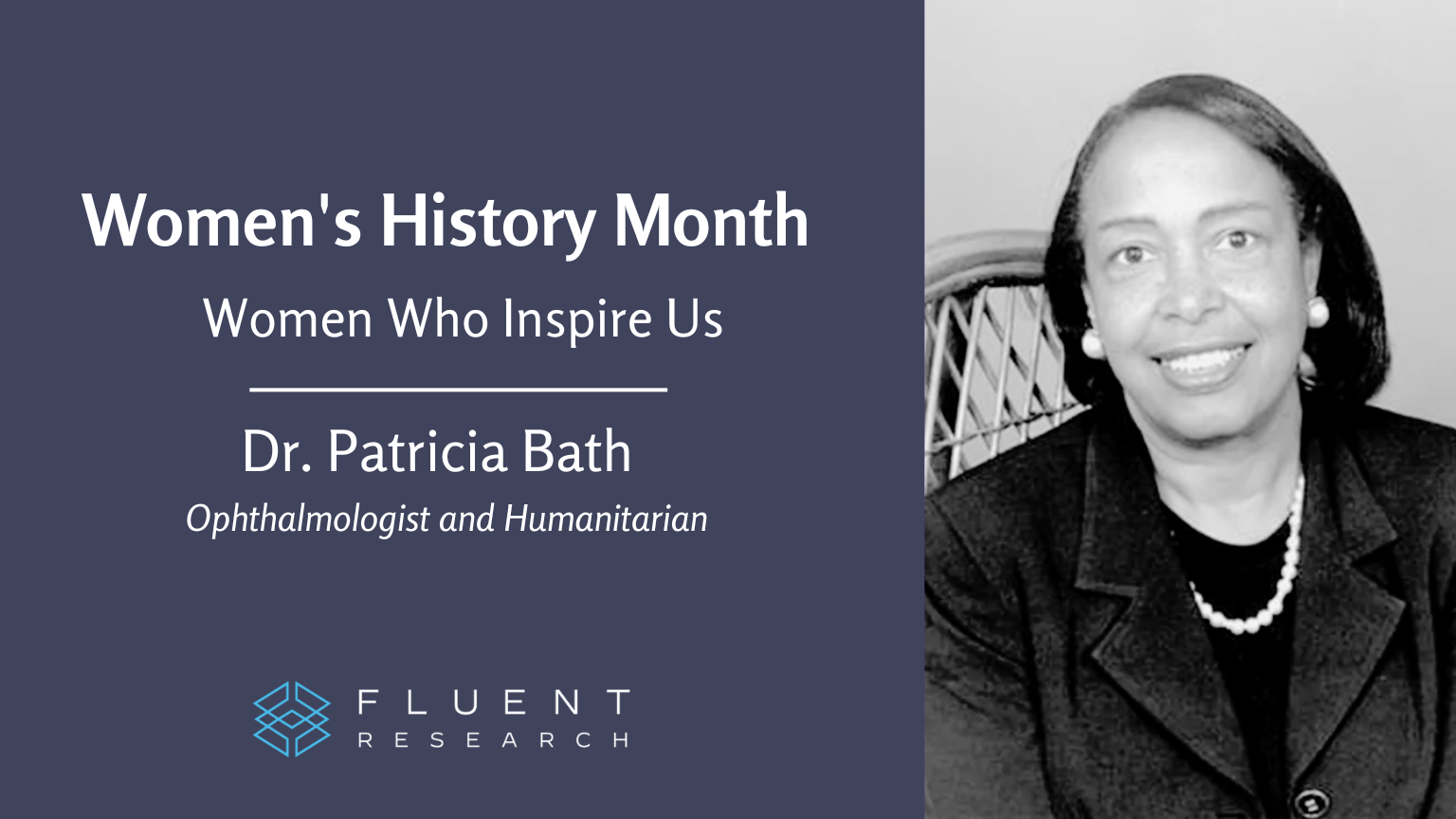
Bridging the gap between Black History Month and Women’s History Month, we celebrate the remarkable life and achievements of Dr. Patricia Bath. Millions around the world owe their restored vision to her groundbreaking ophthalmological work and early advocacy for new modalities of health care. 

A daughter of Harlem, Bath displayed scientific aptitude from a young age. While as a secondary student at Charles Evans Hughes High School she was named a National Science Foundation scholar, connecting her with researchers at Yeshiva University and Harlem Hospital Center. Her accompanying research studies explored the complex relationship between cancer, nutrition, and stress and further demonstrated her research acumen: By age 19, her research work was already being recognized in scientific journals and magazines like Mademoiselle. 

Bath continued her academic journey at Howard University and returned to New York City after graduation. While working at Harlem Hospital Center in the 1970s she observed double the rates of blindness in Black patients compared to white patients. This ignited her passion to help the blind and underserved and to develop new treatment methods. In 1976, Bath established the field of community ophthalmology, a discipline focused on preventing blindness in underserved populations through a mix of public health and community medicine initiatives. The National Institutes of Health described these efforts to make eye care more accessible through neighborhood hubs in this way: “Volunteers trained as eye workers visit senior centers and daycare programs to test vision and screen for cataracts, glaucoma, and other threatening eye conditions.” Bath also became the first African American resident in ophthalmology at New York University, a feat that marked the beginning of a series of historical firsts:

• First African American woman to serve on staff as a surgeon at the UCLA Medical Center.

• First woman to lead a post-graduate training program in ophthalmology.

• First woman elected to the honorary staff of the UCLA Medical Center.

• First African American female doctor to receive a patent for a medical purpose.

Eventually, her dedication to accessible eye care led her to co-found the American Institute for the Prevention of Blindness. The history of the Institute’s many efforts includes donating ophthalmological surgical equipment to developing nations like Pakistan and Nigeria, as well as distributing educational materials. 

Dr. Bath’s path was far from easy. While visiting as an honored guest on Good Morning America, she had this to say about being a woman of color in medicine: “I had a few obstacles but I had to shake it off…. Hater-ation, segregation, racism….”At one point in her career, the growing intensity of sexism and racism she faced in America forced Dr. Bath to temporarily relocate to Europe. There in France and Germany, she was able to continue her pioneering work in laser science. 

Beyond her extensive list of firsts, Dr. Bath is a holder of 5 patents. The Laserphaco Probe, her most celebrated invention, was a revolutionary technology in 1988. It used lasers to dissolve cataracts with ultrasonic waves in a transformative improvement over scalpel methods. In addition to inventions, Dr. Bath was an early champion of telemedicine, recognizing its potential to bridge healthcare gaps by bringing healthcare to the masses regardless of proximity to brick and mortar doctors’ offices. 

In the later years of her life, Bath was honored by the International Women in Medicine Hall of Fame, the American Academy of Ophthalmology Museum of Vision, and the Hunter College Hall of Fame. And in a cause close to this author’s heart, in 2009 she was selected by then-President Barack Obama to serve on a digital accessibility task force. 

While Dr. Bath passed away in 2019, her inspiring legacy continues to illustrate the power of women in STEM. When girls and women are empowered to pursue science, all manner of breakthroughs are possible. She had this to say about serving as a role model: “I want to pass the torch to young girls and have them do S.T.E.M. and have them do ophthalmology.” Today, we can remember Dr. Bath for her brilliance, determination, and courage, but also for her humanitarian devotion to preserving sight for all.

By Farrah Brensinger, Senior User Experience Researcher.

——–

Resources:

1: Lemelson-MIT Program. (n.d.). Patricia Bath. The Lemelson-MIT Program. Retrieved March 20, 2025, from https://lemelson.mit.edu/resources/patricia-bath

2: National Museum of American History. (n.d.). Patricia Bath papers, 1960-2019. Smithsonian Institution. Retrieved March 20, 2025, from https://americanhistory.si.edu/de/collections/archival-item/sova-nmah-ac-1585-ref110

3: ABC News. (2018, November 27). Revolutionary ophthalmologist Dr. Patricia Bath shakes off haters. Good Morning America. Retrieved March 20, 2025, from https://abcnews.go.com/GMA/Wellness/revolutionary-ophthalmologist-dr-patricia-bath-shake-off-haters/story?id=53357320

4: Anumula, V., Kanyadan, P., & Kanyadan, C. (2024, July 30). Patricia E. Bath: A luminary in ophthalmology. Cureus, 16(7), e65781. https://doi.org/10.7759/cureus.65781

5: National Library of Medicine. (n.d.). Patricia Bath, MD, ophthalmologist. Retrieved March 20, 2025, from https://cfmedicine.nlm.nih.gov/physicians/biography_26.html

6: Lottie. (2021, June 30). Patricia Bath biography for kids. Retrieved March 20, 2025, from https://www.lottie.com/blogs/strong-women/patricia-bath-biography-for-kids?srsltid=AfmBOoo7grMzWKUwJ_l0BXVggJVT6ek3gBFs_J56AxfFCxVzmPTWlPFY

7: Wikipedia contributors. (2025, March 20). Patricia Bath. Wikipedia. Retrieved March 20, 2025, from https://en.wikipedia.org/wiki/Patricia_Bath

The COVID-19 pandemic reshaped countless aspects of daily life, and its ripple effects have continued to influence how we engage with work, education, and extracurricular activities. The impact of these societal shifts presented unique challenges for researchers when recruiting participants for studies during the pandemic. Having started and completed a project that spanned the last five years and was wholly impacted by the pandemic, I believe that we need to reconsider the predominant recruitment model that non-profits and academics have relied on in the past. 

The Challenge

In early 2020, I started working on an NSF-funded research project for a client that involved iterative phases of curriculum development and a program evaluation. In the beginning, the study included multiple countries, involving collaborations among developers, subject matter experts, academics, schools, and several youth-serving organizations. Having deep experience with this type of research,  all of the stakeholders felt quite equipped to tackle this project and let the learning begin. By mid-March, we were forced to reimagine our plans.

Of course, there were lots of challenges: the aforementioned pandemic, hurricanes in Puerto Rico, staff turnover, and other struggles within organizations. All of that would have been manageable IF we could recruit the number of youth that we needed for the study. It wasn’t a problem that was unique to us. I was also hearing from other colleagues that recruitment wasn’t nearly as easy as it used to be.

As I see it, the problem was this: traditional recruitment models—which have often relied on partnerships with large youth-serving organizations—are no longer as effective in a post-pandemic society. In the past, securing buy-in from an institution (like a school, community center, or other youth-serving program) would naturally lead to robust participation numbers. Institutions had both the authority and the influence to encourage enrollment, and families were generally receptive. It was never easy, but it was possible if you knew what you were doing. What we came to realize is that we could no longer work from our old recruiter playbooks.

As I reflected on it, I feel that post-pandemic dynamics have disrupted this model. The core issue lies in the shift from institutional incentives to individual choice. Families are now exercising greater autonomy in deciding how their children spend their time, and institutional endorsements carry less weight than they once did. Even when organizations receive substantial funding to support participation, they struggle to meet recruitment targets because they can no longer assume that families will automatically opt-in.

My working hypothesis is that the pandemic invited families into a new reality where the traditional boundaries between work, school, and home life blurred. As parents adapted to working remotely and children engaged in virtual schooling, many families discovered (with a fair amount of challenge) a newfound sense of autonomy and flexibility. This period of adjustment highlighted an essential question for both adults and children: “What do I really need to show up for?”

This question has had lasting effects on out-of-school-time (OST) programs. Before the pandemic, these programs served as critical spaces for enrichment, socialization, and supervision, particularly for working parents. However, the pandemic decoupled the previously inseparable functions of childcare and education. Parents realized that they could manage their children’s schedules differently—whether through remote supervision, flexible work arrangements, or a greater reliance on informal networks. As a result, the perceived necessity of OST programs diminished for many families.

Institutional vs. Individual Incentives

This shift requires a fundamental change in recruitment strategies. Rather than focusing solely on institutional partnerships, researchers would be best served by engaging directly with families and emphasizing the personal value of participation. This means crafting messages that resonate on an individual level, highlighting not just the benefits of the program or study, but also how it aligns with a family’s unique priorities. It also means that the majority of incentivizing should be directed toward the participant. This approach, more typical for marketing research, is highly motivating at the individual level but requires a lot more effort to connect with each of the participants.

A middle ground, which seemed appropriate for this study, was to incentivize the leaders who would be delivering the program. We placed stipulations on the incentive: we would give X amount if they could help with recruitment and provide us with a set number of complete post-surveys. This was a complete game-changer. We still experienced some attrition, but we saw a significant difference in the engagement of the leaders.

Recommendations for Thoughtful Incentivization

Based on these experiences, here are some recommendations for researchers looking to navigate recruitment in this new landscape:

1: Assess the Recruitment Ecosystem: Before launching a recruitment campaign, take time to understand the landscape. Identify where the decision-making power lies. Is it with institutions, leaders, or individual families? Tailor your approach accordingly.

2: Diversify Incentive Structures: One-size-fits-all incentives are less effective in today’s environment. Consider layered incentive models that target both institutional leaders and individual participants. This could mean offering performance-based bonuses for program leaders while providing direct benefits to participants.

3: Align Incentives with Participant Values: Monetary incentives are effective, but they’re not the only motivator. Consider what matters most to your target population—recognition, skill development, community involvement—and design incentives that align with these values.

4: Create Clear, Achievable Goals: When incentivizing program leaders, be specific about expectations. Set measurable goals (e.g., a certain number of completed post-surveys) and ensure that leaders understand how they can meet these targets.

5: Invest in Relationship Building: Incentives are important, but relationships are foundational. Build trust with both institutional partners and individual participants through consistent communication, transparency about study goals, and genuine engagement with their feedback.

6: Monitor and Adapt: Recruitment isn’t static. Continuously monitor what’s working and be prepared to adjust strategies mid-course. Flexibility can be the key to overcoming unexpected challenges.

Moving Forward

The post-pandemic world requires researchers to rethink long-held assumptions about recruitment. Understanding the shift from institutional to individual incentives and adopting a thoughtful, flexible approach to engagement are crucial. By doing so, we can build more resilient research methodologies that are responsive to the changing dynamics of families, communities, and educational ecosystems.

At Fluent, one innovation that came out of this learning is Research Camp, an experience that trades high-value outdoor experiences for participation in short research studies. Research Camp was designed to blend immersive adventure-based activities with data collection in a way that is engaging for participants while still meeting rigorous research standards. Instead of relying on institutional recruitment, Research Camp meets youth and families where they are—offering exciting experiences that make participation feel worthwhile. Learn more about Research Camp and how your company can get involved.

By integrating adventure, community, and research, we’ve found that participants are more likely to engage meaningfully and provide higher-quality responses. This model has also allowed us to test new approaches to incentivization—ensuring that both program leaders and individual participants see clear benefits to their involvement. 

Ultimately, successful recruitment isn’t just about numbers—it’s about fostering meaningful connections that support both research goals and participant needs. By meeting people where they are, both literally and figuratively, we can create research environments that reflect the realities of the communities we aim to serve.

By Dan Warren, Ph.D, Director, Youth Development & Education

Nobel Prize Day, celebrated annually on December 10, is a moment to honor the remarkable individuals whose groundbreaking achievements shape our world. At Fluent Research, we draw inspiration from the laureates who have pushed the boundaries of knowledge and perseverance to make the world a better place. From physicists who revolutionized science to activists fighting for education and equality, these Nobel honorees remind us of the power of ideas to create lasting change. Here, our team members share the laureates who have deeply inspired them.

Nellie Gregorian – Founder and President

Andrei SakharovThe Nobel Peace Prize 1975 for his struggle for human rights in the Soviet Union, for disarmament and cooperation between all nations

One of the people I admire most is Andrei Sakharov—both for his extraordinary contributions to science and for his fight for human rights in the Soviet Union. As a brilliant physicist, he played a pivotal role in the development of the Soviet hydrogen bomb, demonstrating unparalleled intellectual prowess and commitment to advancing theoretical physics. However, it is his transformation from a leading scientist to a courageous advocate for freedom and democracy that truly inspires me. Recognizing the moral implications of his work, Sakharov became a vocal critic of nuclear proliferation and an ardent defender of human rights in the Soviet Union, despite facing severe personal and professional consequences, including imprisonment and internal exile. His efforts to promote peace, disarmament, and justice, earning him the Nobel Peace Prize in 1975, exemplify the power of conscience and the resilience required to stand against oppression. Sakharov’s legacy reminds me of the profound impact one individual can have in championing truth and humanity. He is my hero.

Mary Meyn – Research Director & Chief of Staff

Mary CurieThe Nobel Prize in Physics 1903 for the extraordinary services rendered by her joint researches on the radiation phenomena discovered by Professor Henri Becquerel

Malala YousafzaiThe Nobel Peace Prize 2014 for their struggle against the suppression of children and young people and for the right of all children to education”

When I think of Nobel Prize Laureates, I immediately think of two women from different eras: Marie Curie and Malala Yousafzai. Both women, recognized as Nobel Prize winners 111 years apart, had to fight to get an education, although in very different ways. When I think of Nobel Prize Laureates, I will always think of these two remarkable women who fought for their education and who serve as inspirations and role models to so many people.

David Zax – Senior User Experience Researcher

Paul J. CrutzenMario J. Molina, and F. Sherwood Rowland – The Nobel Prize in Chemistry 1995 for their work in atmospheric chemistry, particularly concerning the formation and decomposition of ozone

I admire Sherry Rowland’s dogged research, along with that of his colleagues, which demonstrated chlorofluorocarbons (CFCs) threat to the ozone layer, culminating in the Montreal Protocol which closed the ozone hole!

In 2023, I published a blog post titled, Gen Z Maximalism: More is More, exploring the meaning and impact of Gen Z Maximalism on young people and culture at large. This aesthetic has significantly shaped youth culture and captured the attention of mainstream publications like The New York Times and Vogue.

Over the past year, Gen Z Maximalism has evolved beyond an aesthetic to a lifestyle, an act of self-care and emotional outlet, influencing how young people approach personal style and curate their physical and digital spaces. Even more recently, other media outlets have taken an interest in this design trend, including NPR, House Beautiful, and The Spruce. Curious about some trends in the chaotic yet joyful world of Gen Z Maximalism? Here’s are some concepts you can add to your repertoire:

Chaotic Customization
This term captures the hyper-personalization and individualization embodied in Gen Z Maximalism. Shifting away from “clean girl” and “quiet luxury,” young people are embracing expressive, layered looks that blend styles, colors, and textures, transforming items into unique and multifaceted expressions of identity. The trend was popularized when Jane Birkin’s personalized handbag charms went viral on TikTok, sparking interest in decorative adornments. As a result, the market for unique accessories like phone lanyards and keychains have risen, and brands are responding with more customizable options.

Dopamine Decor
This concept is about creating environments that spark joy and positivity such as bright colors, playful objects, and whimsical designs. This approach transforms living spaces into sources of happiness and inspiration, serving as a form of self-care. It seems to be the offspring of a “dopamine menu,” which refers to a curated selection of items, experiences, or activities designed to evoke joy and stimulate happiness.

Glimmers
This term falls under the umbrella of Dopamine Decor. Glimmers encapsulates the small details that are designed to spark joy and bring a sense of magic to everyday life. Whether it’s a sparkling chandelier, a quirky piece of art, or a lush indoor plant, these glimmers elevate spaces, adding beauty and something intended to make you smile.

Gen Z Maximalism takes customization, self-expression and creativity through design choices to a new level, by embracing diverse influences and allowing for playful experimentation. This aesthetic empowers young people to craft unique environments that truly represent who they are and spark joy, even in the face of uncertainty.

By Natalia Belchikov, User Experience Researcher