Wellbeing

“Styles upon styles upon styles is what I have.”
—Beastie Boys

“People believe they have learning styles, and they try to think in their preferred style, but doing so doesn’t help them think.”
—Daniel Willingham

My music app thinks it knows me. Most days it does.

I went on a streak of listening to 1970s and early 1980s New York rap a month ago. Must have listened to Funky 4+1’s “That’s the Joint” fifty times over the course of a week, and my algorithm noticed.

At first, that feels good. The algorithm gets me. It recognized my taste and responded to feed me some more tasty stuff with similar flavors. But after a while, the recommendations can feel less like discovery and more like confinement. It keeps giving me the same music, when what I liked was bigger than the songs themselves.

Maybe I wasn’t only drawn to “old-school NY rap.” Maybe I was drawn to the party atmosphere, the call-and-response, the group vocals, the dance-floor pulse, the funk and disco underneath it. A smarter algorithm might hear those deeper qualities and move outward: go-go, house, electro, club rap or later records that sampled and reimagined that early energy (e.g., the Beastie Boys’ Paul’s Boutique).

The problem is not that the algorithm knows I like Funky 4+1. The problem is that it may not know why.

That, in my opinion, is also the problem with learning styles.

For years, there has been a strongly held popular belief that people (especially young people) have a specific way they learn best: visual, auditory, kinesthetic or some other style. Throughout my frequent conversations with teachers, I hear this distinction frequently about the students they teach and an inevitable declaration about their own learning style. The idea comes from a good place. It sounds respectful. It tells young people, especially those who have struggled in school, “You are not bad at learning. You just learn differently.”

While it stems from a generous and well-meaning instinct, the popular focus on fixed learning styles can be more restrictive than helpful.

Educators and youth workers should notice a difference. But Daniel Willingham, a cognitive psychologist at the University of Virginia, is one of the leading researchers challenging the claim behind learning styles that students learn better when instruction is matched to a fixed personal style.

Willingham reinforces the point that students are not all the same. He echoes the feeling that preferences are real and powerful. But he is also saying that preference is not destiny. The best way to teach something depends less on a learner’s label and more on the content, the task, prior knowledge, attention, practice and what the student is asked to think about.

A map may help with geography because geography is spatial. Hearing pronunciation matters when learning a language. Physical practice matters in dance or sports. But none of that should compel us to believe that a person is permanently one kind of learner. It only proves that good teaching matches the strategy to the material.

Learning styles become dangerous when they start to operate like a shallow algorithm.

A student says: “I like seeing things that I am learning about.”

The system responds: “You are a visual learner! We will give you visuals.”

The student concludes: “I am a visual learner.”

The system narrows further: “Then we will avoid methods that do not match your style.”

Then the student begins to wield the label too: “Yes, I will also avoid methods that do not match my style.”

This is where the label becomes more than a description. It becomes a form of agency. The young person now has language to explain discomfort, defend preference and opt out of unfamiliar learning situations. That may feel empowering at first, but over time it can shrink the learner’s range. Reading feels foreign. Lecture feels impossible. Discussion feels inefficient. Writing feels like punishment. Practice feels boring.

What began as recognition becomes restriction.

The better response is not to ignore preference. Preference matters. If a young person says they like visuals, we should listen. But then we should ask what is underneath that preference. Do they need structure? Examples? Pattern? A model before they try?

Those are different needs. They call for different supports. Calling all of them “visual learning” may be as crude as calling Funky 4+1 only “old-school rap.” It is accurate enough to feel useful and crude enough to become harmful.

Although such simple labels are lovely in their own way, youth work should be more expansive than that. When a young person tells us what feels comfortable, we can treat that as a doorway, not a diagnosis. We can begin where they are, but we should not leave them there.

The goal is not learning style. The goal is learning range. It is dynamic.

A good youth-serving professional, like a good DJ, widens the mix. They invite young people to talk, read, move, build, listen, perform, revise, reflect and try again. They honor and celebrate what youth prefer while helping them discover what else they can do.

People are not visual learners, auditory learners or kinesthetic learners. They are learners.

Our job is not to build a smaller playlist around their preferences. It is to hear the deeper pattern, widen the mix and help them discover capacities they did not know they had.

And if we didn’t know that before — well, now we do.

***

By Dan Warren, Director, Youth Development & Education, Fluent Research

This article was originally published in Youth Today on July 16, 2026 as part of the series Dan writes called Pass the mic:Where hip-hop meets human development. Each month, he brings scholars and rappers into dialogue to spark new ways of seeing youth, culture and change.

Previous pieces in the Pass the MIc series:

“When it’s real, you’re doing this even without a record contract.”
— Nas

“Sparks — when illuminated and nurtured — give young people joy, energy and direction.”
— Peter Benson

When I was in graduate school, I taped to the wall in my office an image of Nas (from a Rolling Stone illustration) along with the lyric above. To some degree, it mocked me. I often felt that the only reason I chained myself to that desk was for the letters that would follow my name when I was done. Anyone who has gone through doctoral training can probably attest to that kind of crisis, and Nas got a front row seat to mine. I still cannot fully explain why I went through that process, but I am pretty sure it was not because of a deep love of learning. I snowboarded, played hockey, worked in my garden and played music because of the joy I felt while doing them, not because I expected recognition or reward. Graduate school felt different, and Nas and I knew it.

What makes that line resonate with me is partly what it meant and partly that Nas said it to open Illmatic, his critically acclaimed debut studio album, released in 1994, which is widely regarded as one of the greatest hip-hop albums of all time. It stays with me because it offers a definition of realness that has very little to do with recognition. It points instead to a kind of commitment that exists before validation arrives. The contract comes later. The applause comes later. The proof comes later. What comes first is the relationship between a person and the thing they feel called to do. It involves passion and faith.

That raises an important question for those of us who care about young people:

Are we helping them develop a genuine relationship with the process of doing something, or are we surrounding them with environments that teach them to care mostly about the outcome?

Nas is a useful example because his story makes that distinction visible. Before the acclaim, before Illmatic, before the industry confirmed his value, there was a young person in Queens who had already found something that mattered to him. Hip-hop was not initially a product or a career path. It was a place to put his mind, his observations, his hunger and his craft. The record contract formalized something that already had life. It did not create the life itself.

Peter Benson had a beautiful word for this kind of energy: sparks. He used it to describe the talents, interests and passions that give young people a sense of direction and aliveness. A spark is more than competence. A person may be skilled at many things and feel deeply connected to only one or two of them. I was a much better student than a gardener. A spark has heat. It draws a person back. It makes effort feel worthwhile.

That question applies as much to school as it does to youth programs. Schools often speak the language of curiosity and growth, yet students quickly learn that much of the system revolves around grades, ranking, compliance, deadlines and visible achievement. Youth programs can fall into a similar pattern through leadership outcomes, portfolios, showcases and other measurable indicators of growth. None of those things are unimportant.

The problem begins when the structure surrounding the activity becomes so dominant that the activity itself loses its inner pull.

Edward Deci and Richard Ryan’s Self-Determination Theory helps explain why some environments nourish motivation while others thin it out. They argue that people are more likely to stay deeply engaged when three conditions are present: autonomy, competence and relatedness. Young people need room to exercise ownership. They need the experience of becoming more capable. They also need to feel connected to other people and to some larger sense of meaning.

William Damon’s work on purpose shows what can happen when a spark survives long enough to mature. Purpose is not a passing interest. It is a stable and meaningful commitment that matters to the self and also reaches beyond the self. A spark begins as energy. Intrinsic motivation sustains that energy over time. Purpose gives it direction and weight.

Seen through that lens, Nas’s line captures the beginning of a developmental arc. If it is real, you are doing it before anyone confirms that it is worthwhile. You are still there when the work is repetitive, when no one is watching and when the result is uncertain. That is what makes the contract meaningful in the first place.

For schools and youth programs, the practical implication is clear. We should care about outcomes, but we should also pay attention to the quality of a young person’s engagement along the way. We should ask whether they are becoming more curious, more self-directed, more absorbed and more connected to what they are doing.

This feels especially urgent in a culture that constantly invites people to bypass process. The deeper concern, though, is older than any current tool. When process loses its meaning, passion begins to thin out. When passion thins out, purpose becomes harder to form.

The task, then, is helping young people stay lit from within. It is to notice the early spark, to build schools and programs that support intrinsic motivation and to respect the long, uneven process through which a real interest becomes a real calling.

Nas was right. If it is real, you are doing it anyway.

And if we didn’t know that before — well, now we do.

***

By Dan Warren, Director, Youth Development & Education, Fluent Research

This article was originally published in Youth Today on May 21, 2026 as part of the series Dan writes called Pass the mic:Where hip-hop meets human development. Each month, he brings scholars and rappers into dialogue to spark new ways of seeing youth, culture and change.

Previous pieces in the Pass the MIc series:

May can feel like a sprint, a pileup, and an emotional goodbye all at once. I don’t know about you, but the stress levels in my house are pretty high, all due to my teens’ AP exams, end-of-year projects, and finals. They don’t call this month “Mayhem” and “Maycember” for nothing!

One week, a child may be studying for finals, rushing to a band concert, worrying about friendship shifts, and counting down to summer. A parent may be tracking permission slips, late assignments, sports banquets, graduation dates, and changes in mood that seem to come out of nowhere. It is a lot. And for many families like mine, the stress of May is not about one big event. It is about everything happening at the same time.

May is also Mental Health Awareness Month. That makes it a good time to remember something simple but important: mental health is part of health. Support, connection, rest, and recovery matter at every age.

For families, the goal is not to remove every stressor. Some end-of-year stress is normal. The goal is to lower unnecessary pressure, protect recovery time, and give kids support that fits where they are developmentally.

As we mark Fluent Research’s 20th anniversary, that idea feels especially meaningful. For two decades, we have studied how people navigate cultural and technological change. That work has included learning environments, safer digital experiences, youth culture, children’s and teens’ mental health, education, digital wellbeing, and human-centered innovation. Across all of it, one lesson keeps showing up: young people do better when adults understand where they are developmentally, listen closely, and create conditions that support connection, confidence, and wellbeing.

That is why an age-by-age approach matters. A fifth grader, a freshman, a graduating senior, and a college student may all be winding down the school year. But they are doing very different emotional, social, and developmental work. In May, exhaustion can also make kids seem younger, moodier, less organized, or more overwhelmed than they were earlier in the semester. That does not always mean something is wrong. Often, it means their systems are overloaded.

Here are age-by-age ways to help kids and young adults close the school year with less stress and more steadiness.

Why May Is So Stressful

The end of the school year often brings a heavy mix of demands:

  • Final projects and exams
  • Performances, tournaments, and banquets
  • Field days, spirit weeks, and graduation events
  • Friendship changes and social pressure
  • Summer planning and schedule shifts
  • The emotional weight of endings and transitions

Even positive events can add stress. A child may be excited about summer and still feel sad about leaving a teacher. A teen may be proud of graduating and still feel scared about what comes next. Mixed emotions are normal.

Mental Health Awareness Month: A Reminder

May is a natural time to talk about mental health because it asks young people to do two hard things at once: finish strong and let go.

Mental health support does not always mean a major intervention. Often, it looks like:

  • Clearer routines
  • Fewer unnecessary pressures
  • More sleep
  • Better boundaries around digital overload
  • Calm, respectful check-ins
  • Space for recovery

When we make room for those basics, we help kids manage stress before it grows bigger.

Tweens, Ages 10–12: Make the Month Feel Manageable

Tweens often live in the space between childhood and adolescence. They may want more independence, but they still need concrete structure, reminders, and help seeing the whole picture.

At this age, stress may show up as:

  • Tears
  • Irritability
  • Avoidance
  • Stomachaches
  • Forgotten assignments
  • Sudden overwhelm about something that seems small to adults

The most helpful thing adults can do is make the invisible visible.

Create a simple May calendar that shows tests, projects, field trips, performances, spirit days, celebrations, and family events. Then help your child sort what is required, what is optional, and what can be skipped. A visual plan lowers the mental load.

Use small, specific steps. Instead of saying, “You need to get ready for finals,” try: “Let’s put your science papers in one folder, review the study guide for 15 minutes, and pack your calculator tonight.” Tweens are still building planning skills. Clear next steps help them feel capable.

Protect bedtime and decompression. The end of the year often brings later nights, extra activities, and more screen time. A predictable evening routine can help their nervous system settle. Think snack, shower, backpack reset, quiet reading, music, or another calming activity.

Make room for mixed feelings. Some tweens are excited for summer. Others are sad to leave a teacher, nervous about middle school, or unsure where friendships stand. A walk, car ride, or casual errand may open the door better than a direct conversation.

Try saying: There’s a lot happening this month. Let’s look at the week together and make it feel smaller.

Early Teens, Ages 13–15: Offer Choices, Not Lectures

Early teens are often managing rapid changes in their bodies, emotions, friendships, identity, and independence. They may want adult-like freedom while still needing adult help to think through consequences, manage stress, and recover from emotional ups and downs.

In May, stress for early teens often comes from:

  • Grades
  • Social comparison
  • Friendship drama
  • Group chats
  • Performance pressure
  • The feeling that everyone else is handling things better than they are

Offer structure with choice. Instead of “You need to study now,” try: “Would you rather study before dinner or after dinner?” Choice supports autonomy while still providing boundaries.

Use “take a beat” language. Early teens can feel things intensely and react quickly. Help them pause without shaming them. You might say, “Let’s take a beat. What’s one other possible explanation?” or “What would you tell a friend who was feeling this way?”

Help them notice digital stress loops. A teen may be physically home but emotionally stuck in a group chat, a post, a streak of comparison, or fear of being left out. Rather than leading with “Get off your phone,” ask: “Is being on this app helping you feel connected, or is it making tonight harder?” Then talk through options like muting notifications, taking a timed break, leaving a chat, unfollowing, blocking, or asking for help.

Shift the focus from identity to strategy. Comments like “Why are you so disorganized?” can feel like character judgments. Try, “What part of this is still in your control?” or “What would make tomorrow morning easier?”

Keep the door open. Early teens may reject support and still need it. A calm “I’m around when you want help” often lands better than repeated questioning.

Try saying: I’m not here to take over. I’m here to help you make a plan that works.

Late Teens, Ages 16–17: Reduce Future Overload

Late teens are often trying to finish the school year while also thinking about what comes next. They may be juggling exams, AP tests, graduation requirements, prom, jobs, sports, college decisions, summer work, family expectations, and the emotional reality of leaving a familiar stage of life.

By this age, stress is not only about this week’s assignments. It may also be about:

  • College
  • Money
  • Career questions
  • Relationships
  • Independence
  • Current events
  • Whether they are “ready” for adulthood

Treat them like collaborators. Ask, “Do you want help making a plan, or do you mostly need me to listen?” That one question can lower defensiveness and clarify what kind of support they actually want.

Create a next 30 days map. Put school deadlines, work shifts, forms, applications, celebrations, rest days, and family commitments in one place. Older teens can think more abstractly, but seeing the month laid out still helps reduce pressure.

Separate urgent from important. Everything can feel urgent in May. Help your teen sort tasks into what is due now, due soon, emotionally important, optional, and not worth the energy. This helps them conserve effort for what matters most.

Watch the work-school balance. Part-time work can build confidence, responsibility, and real-world skills. But too many hours during the school year can crowd out sleep, schoolwork, family connection, and social life.

Make room for grief and pride. A teen may be excited to graduate and sad about leaving. They may be ready for college and scared of it. They may want independence and still need reassurance. Mixed emotions are part of transition.

Try saying: You don’t have to have your whole future figured out this month. Let’s focus on the next right steps.

Young Adults, Ages 18–24: Support Without Re-Managing

For college students and young adults, May can bring finals, moving out, internships, job searches, financial stress, changing relationships, and returning home after a year of independence. They may need support, but they usually do not want to feel managed like they are back in high school.

The best approach is to act more like a consultant than a director.

Ask before advising. “Would feedback help, or would encouragement help more?” is often more effective than launching into solutions.

Support basic routines without turning them into criticism. Sleep, food, movement, laundry, transportation, and money can all become stress multipliers during transitions. Practical support can help, especially when offered respectfully.

Normalize uncertainty. Young adults may be making decisions about majors, jobs, relationships, identity, values, and where they belong. They do not need to have everything figured out just because the semester is ending.

Encourage connection. When school ends, that built-in community can disappear quickly. Help young adults think about where they will find belonging during the summer:

  • Friends
  • Work
  • Volunteering
  • Creative projects
  • Exercise groups
  • Spiritual communities
  • Neighborhood activities
  • Family rituals

Respect recovery time. A student coming home from finals may need sleep, food, and quiet before they are ready to talk about grades, plans, or responsibilities.

Try saying: I trust you. I’m here as backup while you sort through what’s next.

Stress-Lowering Practices That Help at Every Age

Some supports work across every age group. They are simple, but they matter.

Protect Sleep

May tends to steal sleep first. But sleep is one of the most important supports for emotional regulation, learning, and resilience.

Lower the Comparison Temperature

Awards ceremonies, grades, college announcements, tryout results, and social media posts can make young people feel measured from every direction. Remind them that someone else’s milestone is not a verdict on their worth.

Create Small Rituals of Closure by Asking:

  • What do you want to remember from this year?
  • What are you proud of getting through?
  • Who helped you?
  • What do you want to leave behind?

Reflection can turn a stressful ending into a meaningful transition.

Use Connection Before Correction

Kids are more likely to problem solve when they feel safe, seen, and respected. This does not mean removing limits. It means leading with human connection so limits can be heard.

Celebrate Recovery, Not Just Achievement

The end of the year is not only about grades, trophies, awards, and admissions. It is also about persistence, friendship, courage, repair, growth, and rest.

When Stress Seems Bigger Than the Season

Some stress is expected at the end of the school year. But persistent sadness, hopelessness, withdrawal, panic, major changes in sleep or eating, self-harm, or talk of not wanting to live should be taken seriously.

Reach out to a school counselor, pediatrician, therapist, or local crisis support if needed. Early support matters.

A Brief Workplace Connection

There is also a useful lesson here for workplaces. Young people do better when expectations are clear, recovery time is protected, and support matches the moment. Adults do better under those same conditions. The way we support kids through periods of high demand can remind us what healthy culture looks like everywhere: clear communication, realistic expectations, empathy, and room to recover.

Closing the Year With More Steadiness

With the right support for the right age, families can help kids close the school year with less pressure, more connection, and a clearer sense that they are growing, not just performing.

Written by Stefanie Cousins, Vice President, Marketing & Communications, Fluent Research

My brother-in-law is a potter. Not as a hobby. That is actually his job, and he is very good at it. Over the years he has explained a fair amount about his craft. One of the things that he explained has always stuck with me: if a piece becomes too perfect, it can lose its life. It becomes less interesting. More sterile.

I have always liked that idea, mostly because I use it as an artistic justification for my own sloppiness. Clearly this is not what he was referring to. But I have borrowed that idea more than once to justify my own rough edges.

Still, I think he was pointing toward something real. Life often comes from a certain kind of imperfection. Not carelessness, but a refusal to overprocess. Something left a little rough can feel more open to the unexpected. It can feel more human.

I saw something similar when I was an elementary school teacher. The lessons I had most meticulously orchestrated, usually the ones delivered under observation, often came up short of their promise. Everything was in place. The timing was tight. The plan was polished. Yet the energy in the room was often flat.

Meanwhile, the days when I had a clear sense of direction but less precision in the script were often the ones where something real happened. Students asked surprising questions. The conversation shifted. Someone took the idea somewhere I had not anticipated. The room felt alive.

When both structure and control are high, everything depends on the person getting it exactly right. There is very little room for deviation, and when your audience is young people, deviation is part of the point, not a design flaw.

For me, this difference shows up clearly if you compare two legendary hip-hop producers: Dr. Dre and RZA.

Dre is famous for precision. His tracks are polished, balanced and exacting. Every layer feels intentional. Every sound is refined until it lands exactly where it should. The final product is smooth and controlled, and that is part of what makes it impressive to me.

His perfectionism even extends beyond the studio. Dre helped build a headphone and speaker company designed to preserve the sonic effort for the listener. The idea was simple: If you put that much care into crafting the sound, you want to make sure none of it gets lost in delivery.

RZA, especially in the early Wu-Tang Clan years, built something very different. His beats were raw, gritty and sometimes almost unstable on first listen. The mixes sounded dusty. The edges stayed exposed. Nine different voices entered the track with their own rhythms, tones and personalities. Yet the songs held together. Underneath the roughness was a structure strong enough to carry all that unpredictability without collapsing. The beat created a frame that allowed the energy to move.

Both producers understood structure. The difference is what they did with it.

• Dre used structure to perfect the product.

• RZA used structure to hold the energy.

I would argue that distinction matters for youth programs.

Sometimes, those designing or working with young people assume that strong programs require tight control. We have all heard, “Proper planning prevents poor programs.” Schedules must be precise. Activities must run smoothly. Behavior must be carefully managed. In this mindset, success looks like order. The room is quiet. Transitions are efficient. Everything is running according to plan.

From the outside, this can look impressive. But youth development does not always flourish in perfectly polished environments.

Young people do need structure. They need clear expectations, shared norms and a sense of safety. They need adults who are paying attention and creating space for the experience.

What they may not need is an environment where every move has already been predetermined. Nor should youth practitioners aspire to such perfection.

Those feelings emerge when they have room to contribute ideas, influence the direction of the group and bring something of themselves into the space. That kind of engagement is rarely perfectly smooth. It involves experimentation, negotiation and the occasional moment of friction.

In other words, it looks a little more like a RZA track than a Dre experience.

A strong youth program has rhythm. Expectations are clear. Adults hold the environment steady. But within that frame, young people are allowed to bring their own voices forward. Their personalities remain visible rather than polished away.

If young people are quiet and following directions, we assume the program is working. But compliance and engagement are not the same thing. A room can be orderly and lifeless at the same time.

Real engagement has more texture. It shows up in curiosity, debate, humor, invention and the willingness to take risks. It shows up when young people begin to see themselves not just as participants but as contributors. That kind of energy requires a structure strong enough to hold difference but flexible enough to allow it.

Just as RZA built the beat underneath the music, youth practitioners play a critical role in shaping youth environments through establishing norms, maintaining safety and holding the larger vision, not by controlling every note.

Sometimes the most powerful thing an adult can do is create a frame strong enough that young people can bring their full voices into the room.

The structure holds and life emerges inside it.

And if we didn’t know that before — well, now we do.


By Dan Warren, Director, Youth Development & Education.

This article was originally published in Youth Today on March 31, 2026.

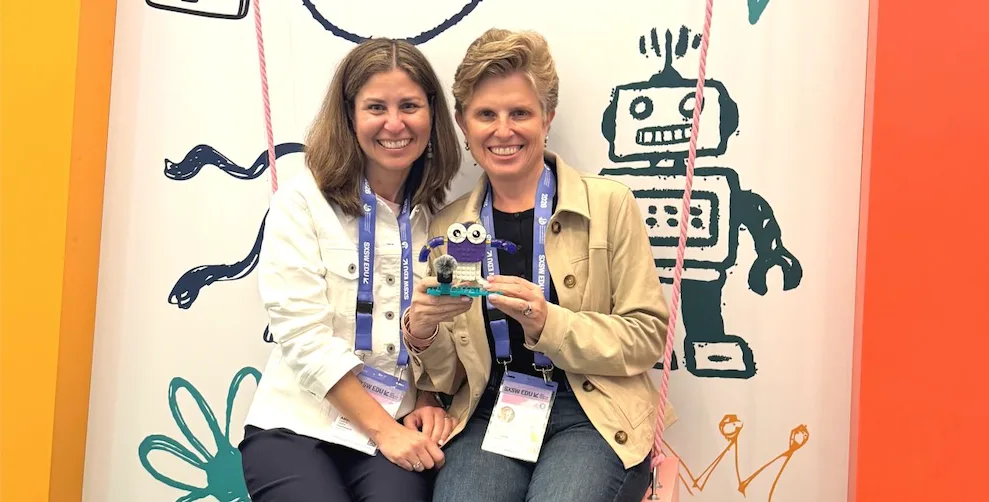
Earlier this month, Allison Caplovitz and Stefanie Cousins attended SXSW EDU in Austin, TX, where they explored the intersection of technology, early childhood education, human connection and wellbeing. The event offered a wealth of insights into how we can thoughtfully integrate AI and digital tools into the lives of young children while preserving the values that help them thrive.

Monica Sutton, a beloved educator and creator of the Ms. Monica YouTube channel, delivered a powerful message urging developers, policymakers, and families to rethink how technology is designed for young children. She emphasized the importance of bringing developmental specialists and child psychologists into the room during the creation process. Sutton also encouraged policymakers to slow down and carefully consider the long-term implications of digital tools, while reminding families to trust their instincts and wisdom when guiding their children. Her framework for evaluating technology for young learners is simple yet profound: Does it honor how young children learn? Does it support their growth and wellbeing? Does it help them thrive? And does it protect their curiosity and connection?

The role of AI in early childhood was another key theme at SXSW EDU. Interviewed by Michael Levine, Dr. Dana Suskind, a cochlear implant surgeon and co-director of the TMW Center for Early Learning & Public Health, highlighted the importance of nurturing connection, curiosity, and lifelong learning in an AI-driven world. She shared a striking observation about how quiet waiting rooms have become, as both parents and children are now glued to their devices. To help families and educators navigate the influx of AI tools, she introduced the DETECT framework, which encourages thoughtful evaluation of AI tools by asking questions like: Who is this designed for? Is there evidence it works? Do children have trouble with it? Does it promote ethical use? Does it protect children’s confidentiality? And does it teach in a way that is aligned with the values of the home or classroom?

The growing digital divide was another critical topic of discussion. While access to technology has expanded, the divide has shifted to who has access to opportunities for developing creativity and human-centered skills. Higher-income families are better positioned to prioritize these skills, while lower-income students often face more rigid, tech-mediated learning environments. This disparity raises concerns about equity and the long-term impact on children’s competence, agency, and resilience. Dr. Suskind also introduced another guiding acronym, HOPE, which underscores the irreplaceable value of human connection, the importance of owning AI’s imperfections, and the need to protect the foundational early years while using AI as a tool for enhancement, not replacement.

Several speakers likened the introduction of AI to the early days of social media, emphasizing the need to “get it right” this time. The stakes are high: relying too heavily on AI and removing opportunities for children to struggle and overcome obstacles could undermine their ability to build resilience and agency—qualities essential for wellbeing. Adeel Kahn, Founder and CEO of Magic School AI, shared an interesting lesson from his company’s journey. Initially, they anthropomorphized their AI bot for both teachers and students but quickly learned this approach wasn’t effective, underscoring the importance of thoughtful design in educational technology.

The conversations at SXSW EDU underscored a shared commitment to ensuring that technology serves as a tool for connection, creativity, growth, and wellbeing—not a replacement for the human touch. As Ms. Monica so eloquently put it, we must ask ourselves: Does this help children thrive? By keeping this question at the forefront, we can navigate the digital age with intention and care, ensuring a brighter future for the next generation.

By Stefanie Cousins, Vice President, Marketing & Communications, Fluent Research
By Nellie Gregorian

Last night, I peeked into my teenage daughter’s room. She was lying on her bed, phone in hand, earbuds in, completely absorbed in her digital world. Every few seconds, she’d laugh softly, shake her head, or roll her eyes.

A small, everyday moment. But it made me pause.

I realized that this moment encapsulates how millions of girls her age are experiencing the world today — part in-person, part online, part algorithmically curated. As a mother, I see her navigating friendships, social norms, and identity in ways I never did at her age.

For many years in my career, I had the privilege of collaborating with Girl Scouts of the USA, helping to advance research and programs designed to build girls’ leadership, confidence, and sense of possibility.

That work taught me something powerful:

Girls are remarkably capable when the environments around them are designed to support their growth.

Today, however, many of those environments are digital.

Girls today are navigating adolescence in ways previous generations never did. Their friendships, identities, and self-image are increasingly shaped in platforms designed to maximize engagement, visibility, and comparison.

  • Algorithms recommend content.
  • Filters reshape faces.
  • Metrics quantify popularity.

None of these systems were intentionally built to harm girls. But many were also not designed with girls’ developmental realities in mind.

So I can’t help but ask:

Are the digital worlds we are building helping the next generation of girls thrive or quietly shaping who they believe they need to become?

Research consistently shows that girls experience online spaces differently than boys:

  • Higher levels of appearance-based pressure
  • Increased social comparison
  • Greater exposure to harassment

Yet when we talk about gender equality in technology, we usually focus on who builds it — and that matters.

But we should also ask:

Who is technology being designed for?

Design choices are never neutral. They shape behavior, norms, and expectations.

When platforms consider age, developmental stage, and wellbeing, they create healthier experiences.

When they also consider gendered experiences, they can better anticipate pressures girls face online.

Designing the digital world with girls in mind doesn’t mean creating separate spaces. It means asking better questions:

  • How do social metrics influence identity formation?
  • How do recommendation systems amplify beauty standards?
  • How can safety systems better respond to harassment targeting girls?
  • What does healthy digital participation look like for adolescents?

These questions sit at the intersection of research, policy, and product design — and they are increasingly urgent.

If we want technology to truly empower the next generation of women, we cannot wait until adulthood to support them.

We need to think about girls — their development, wellbeing, and leadership — from the very beginning of the design process.

Because the digital environments girls grow up in today will help shape the leaders, creators, and innovators of tomorrow.

So here’s the question I think we should be asking this International Women’s Day:

If we were designing the digital world with girls’ wellbeing and leadership in mind from the start… what would we build differently?

Nellie Gregorian is the founder and president of Fluent Research.

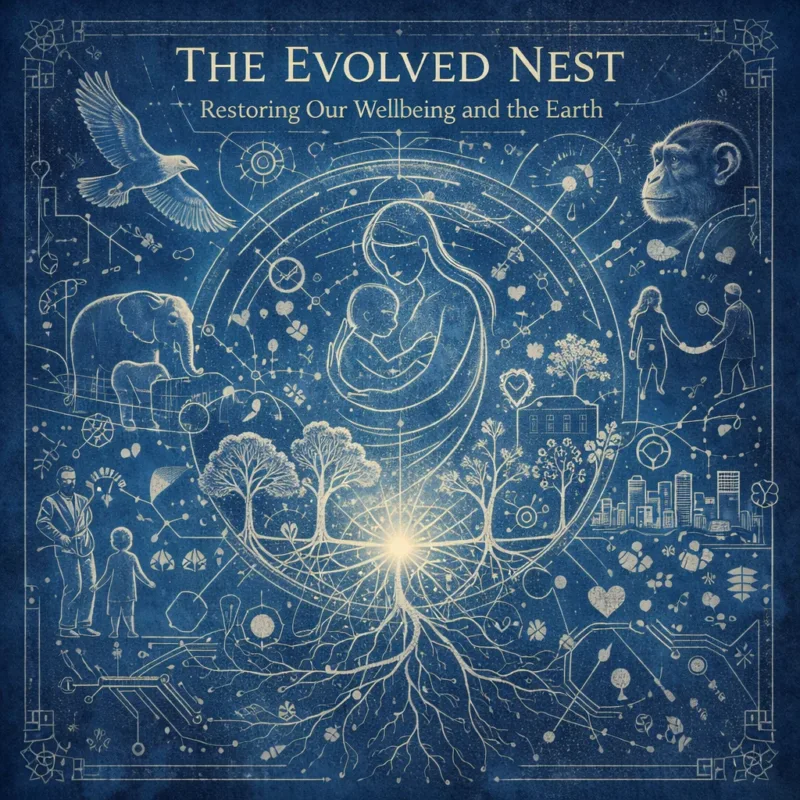
At Fluent Research, we believe that understanding wellbeing requires a holistic lens. It must consider the interplay of technology, culture, education, and the natural world. When you read The Evolved Nest, the latest article by Fluent Research’s Senior Child Development Researcher Amy Warren. PhD, you will explore a profound question: What if the key to healing ourselves and the Earth lies in restoring the conditions we evolved within?

Drawing on insights from developmental psychology and ecological science, Dr. Warren reflects on the concept of the “evolved nest,” a blueprint for human thriving shaped by millions of years of evolution. From nurturing touch and unstructured play to communal care and nature connection, these practices once defined our species. Yet, in the rush of modernity, many of these essential rhythms have been disrupted, leaving us with rising rates of anxiety, loneliness, and disconnection.

But there’s hope. Just as ecosystems retain an innate capacity for repair, so do we. We haven’t lost our blueprints for wellness. They are simply waiting to be rediscovered.

Dive into Dr. Warren’s reflections in the latest issue of Resurgence & Ecologist on how we can reconnect with our ecological inheritance and create environments where both humans and the planet can thrive..

Gratitude is often treated as a polite habit, a personal virtue or a wellness practice. Simple and straightforward. Young people are encouraged to say thank you, write gratitude lists or focus on what they have.

Developmental psychology tells a story that’s a bit more complicated. In this context, gratitude is a developmental capacity that goes beyond a behavior or a feeling. It is the ability to recognize how one’s life has been shaped by others, to understand one’s impact in return and to feel a sense of responsibility that grows out of that awareness. Gratitude matters because it reflects an important shift in how people see themselves from isolated actors toward participants in a greater system of relationships, influence and obligation.

In my opinion, few public figures provide us a clearer example of this shift than Adam Yauch, better known as MCA of the Beastie Boys.

MCA’s legacy is often remembered through music, activism and cultural impact. But seen through a developmental lens, his story offers something else: a clear example of how gratitude can emerge alongside maturity, identity and purpose.

Gratitude Is Not Where We Start

From a developmental perspective, this matters. Erik Erikson argued that adolescence and early adulthood are dominated by the task of identity formation, which involves figuring out who you are, how you belong and how you are seen. At this stage, identity is often performed outwardly. It is loud, experimental and sometimes reckless. The goal is differentiation, not reflection.

Early success can intensify this dynamic. When young people are rewarded for bravado, transgression or shock value, those attributes become reinforced because they are effective, not because they are grounded. Identity gets shaped by feedback loops rather than reflection.

The early Beastie Boys fit squarely within this developmental reality. Their rise was rapid, their visibility immense and their personas rewarded for being provocative and boundary-pushing. That combination of intense recognition arriving before perspective had fully formed created an environment where experimentation and bravado were not just encouraged but publicly amplified. This is not an indictment; it is a developmental observation. When identity is still taking shape, high visibility and cultural reward can make immature decisions more likely, more consequential and harder to undo. Identity work at this stage is provisional, and the stakes are often much higher than young people are equipped to manage.’

Gratitude rarely shows up here as an influence. Not because young people are ungrateful, but because gratitude requires something identity formation has not yet fully developed: perspective over time.

The Developmental Turn: Looking Back Without Freezing

One of the most striking aspects of MCA’s evolution is that he did something many people, especially public figures, struggle to do: he looked back honestly.

He publicly acknowledged the harm in some of his earlier lyrics, took responsibility without deflection and changed how he showed up as an artist and cultural figure. Importantly, he did not disown his past or pretend it never happened. He integrated it.

This distinction matters. Erikson described healthy identity not as a clean break from earlier selves but as an integration of experience. Growth relies heavily on memory.

This is where gratitude begins to take shape. The first step is recognition. Recognition of influence, recognition of impact, recognition of who and what shaped you and who may have been affected along the way. Recognition alone is not gratitude, but it makes gratitude possible. Gratitude emerges when that awareness deepens into appreciation and responsibility.

The Influence of Purpose

William Damon’s work on purpose helps clarify what happens next. Damon defines purpose as a stable intention to accomplish something meaningful to the self and consequential to the world beyond the self. Purpose marks a developmental shift from self-definition to contribution.

Gratitude and purpose are closely connected, but they are not the same. Gratitude reflects growing awareness of influence, interdependence and responsibility. Purpose reflects what people do with that awareness over time. In this sense, gratitude can be understood as a developmental foundation for purpose. Once people recognize what they have received from communities, cultures, collaborators and predecessors, the question naturally changes from “Who am I?” to “What do I owe?”

MCA’s later life reflected this shift. His activism, particularly around Tibetan freedom and anti-war efforts, was purposeful. It was sustained, values-driven and embedded in how he used his platform. This was gratitude expressed through responsibility and long-term commitment.

Why This Matters for Youth Work

For those who work with young people, this framing has real implications.

First, it reminds us not to freeze youth in their worst moments. Identity formation involves experimentation, missteps and revision. It’s messy, and when systems respond to adolescent missteps with permanent labels or exclusion, they interrupt development rather than support it.

Second, it challenges shallow approaches to character education. Gratitude cannot be forced on a timeline. It emerges when young people are supported in reflection, accountability and repair, not when they are instructed to be thankful.

Third, it asks us to design environments that make growth through messiness possible. MCA’s evolution was not inevitable; it was enabled by time, reflection, community and the freedom to change course. Youth systems should offer the same conditions.

Gratitude, understood developmentally, is not about manners. It is about moral eyesight, which requires the ability to recognize interdependence, impact and responsibility.

Growing up in Public

MCA grew up in public. He made mistakes in public. And he modeled what it can look like to mature publicly without pretending to be perfect. That may be his most enduring lesson.

Gratitude is not a starting point. It is something people arrive at when identity stabilizes, purpose takes shape and responsibility becomes unavoidable.

And if we didn’t know that before — well, now we do.

By Dan Warren, Director, Youth Development & Education.

This article was originally published in Youth Today on February 19, 2026.

In a world of endless scrolling and constant notifications, a growing number of young adults are asking a powerful question: what happens if we just stop? A recent study explored this concept, termed “digital quiet,” by asking 18 to 24-year-olds, a generation raised online, to take a one-week break from social media. The results were clear and immediate.

Even a short pause from the digital stream can significantly boost mental health. This finding aligns with years of research into how young people navigate complex online environments. They aren’t just passive consumers; they are actively managing emotional landscapes, setting boundaries, and learning to engage with technology in healthier ways. This post explores why taking intentional social media breaks is becoming an essential practice for well-being.

The Science Behind the Break: What a Week Away Can Do

The study, published in JAMA Network Open, split young adults into two groups. One group took a seven-day break from all social media platforms, while the other continued their use as normal. The findings from this digital detox were compelling.

After just one week, participants who took a break reported:

•  Lower levels of anxiety and depression.

•  A notable improvement in their overall wellbeing.

•  These positive effects were consistent for both young men and women.

For a generation that is exceptionally fluent in digital life, these results highlight a crucial reality: technical skill does not grant emotional immunity. The relentless pace and pressure of social media have tangible effects on mental health, even for the most savvy users.

Why a Digital Detox is So Effective

The benefits of stepping back from social media are rooted in how these platforms interact with our emotional and psychological needs. Our work with teens and young adults reveals several key dynamics that explain why a break can be so restorative.

It Interrupts Overwhelming Emotional Loops

Digital spaces can trigger rapid and intense emotional shifts. The constant flow of audio, video, and social feedback creates “emotional loops” that can become overwhelming, especially during stressful life periods. A digital detox breaks this cycle, giving one’s emotional system the space it needs to reset and recover.

It Creates Boundaries Where None Exist

Social media operates on a timeline without end. Conversations can be revived at any moment, and feeds refresh instantly with new content. This lack of natural endpoints creates an unspoken pressure to remain constantly available. Practicing digital quiet introduces a firm boundary that the platforms themselves do not provide, helping someone reclaim their time and attention.

It Pauses the Comparison Culture

The years between 16 and 24 are a peak period for identity formation, making young adults particularly sensitive to social comparison. Platforms filled with curated highlight reels can amplify self-doubt and fuel symptoms of anxiety and depression. Taking a break from social media interrupts these harmful comparison patterns, offering a chance to reconnect with one’s own sense of self-worth.

It Supports Developing Self-Regulation Skills

Even the most tech-savvy young adults are still developing crucial life skills like emotional filtering, boundary-setting, and self-regulation. These abilities are strengthened through practice. An intentional break acts as a training ground, supporting healthier and more mindful engagement when deciding to return to social platforms.

An Equal Opportunity Benefit for Mental Health

The study’s discovery that both young men and women benefit equally from a social media break is significant. With young women often using social feeds more and young men gravitating toward gaming, their online habits may differ, yett the core issues remain the same.

It isn’t a specific platform causing the strain. It’s the pace, the social pressure, and the unending demand for engagement that creates a heavy emotional load for everyone. A digital detox addresses these universal stressors, making it a valuable tool for all young adults.

Redefining the Relationship with Technology

It’s important to recognize that young people are not rejecting technology. They rely on digital platforms for connection, community, creative expression, and entertainment. They value what online life has to offer.

However, they also feel the significant weight of:

• Nonstop communication demands.

• Intense social expectations.

• Emotional and sensory overload.

• Poorly defined personal boundaries.

In response, many are already experimenting with ways to regain a sense of control. They are curating their feeds, silencing notifications, creating private online spaces, and taking intentional social media breaks. Digital quiet is not a top-down mandate; it’s a wellness strategy they are adopting for themselves.

How to Support and Encourage Digital Quiet

For parents, educators, and even platform designers, the conversation around social media and mental health is often framed as “good versus bad.” The reality is far more nuanced. Digital spaces can be sources of joy, learning, and support, but only when users have the skills and space to navigate them well.

Instead of advocating for total disengagement, a more helpful approach is to encourage balance. Here are some actionable ways to support young adults:

• Normalize periodic breaks: Talk about digital detoxes as a healthy and normal part of life, like taking a vacation from work.

• Promote self-regulation: Help young adults identify their own triggers for stress online and create plans for when to step back.

• Reduce the stigma: Frame social media breaks not as a sign of weakness, but as a proactive step toward better mental health.

• Advocate for better tools: Encourage the development of platform features that help users manage the intensity of their digital experiences.

Young people aren’t trying to escape their digital lives. They are learning how to use technology in a way that allows them to thrive both online and off.

The Takeaway: Reconnect with Yourself

Ultimately, digital quiet isn’t about disconnecting from the world—it’s about reconnecting with yourself. A week-long break may seem like a small action, but the research confirms its power. Even short pauses can reduce anxiety, improve mood, and help reset the emotional patterns tied to constant connection.

In a digital landscape defined by relentless feeds and the pressure to keep up, taking intentional social media breaks is emerging as an essential part of healthy living.

Stefanie Cousins is Vice President, Marketing & Communications at Fluent Research.

At first glance, Positive Youth Development and the Native Tongues might seem to live in different worlds — one grounded in research and youth policy, the other born from hip-hop’s playful, inventive spirit. Look closer and you see the same heartbeat: Young people thrive when we recognize their strengths, connect them to community and give them real opportunities to contribute.

The Birth of PYD

Positive Youth Development (PYD) emerged in the late 20th century as a response to deficit-based models of adolescence. Too often, young people were seen as problems waiting to happen, defined by risks like delinquency, dropout or substance use.

Developmental psychologist Richard Lerner, Ph.D., helped flip that script. His research identified the Five Cs of thriving youth: competence, confidence, connection, character and caring. Similarly, Peter Benson, Ph.D., of the Search Institute emphasized the power of developmental assets (i.e., relationships, skills and opportunities) that allow young people to ignite their “sparks.”

Together, these scholars (along with many others) advanced a movement that was not just about preventing harm but about promoting growth, leadership and well-being.

The Native Tongues as a living PYD case study

In the late 1980s and early 1990s, the Native Tongues — including A Tribe Called Quest, De La Soul, Jungle Brothers and Queen Latifah — modeled a youth-positive culture long before PYD was a common acronym. They offered a countercurrent to cynicism and narrow definitions of “realness,” centering curiosity, humor, Afrocentric imagery and community. The cipher wasn’t just a performance — it was a classroom, a lab, a family.

Through that lens, you can see the principles of Positive Youth Development in motion:

• Aiming for positive outcomes: The Native Tongues didn’t build their movement around fear or scarcity. They built toward something: connection, creativity, pride and contribution. They showed that the best way to keep young people from harm is to give them something powerful to move toward.

• Using a strength-based approach: Their music celebrated what was already strong in their communities (i.e., language, rhythm, humor, intelligence and culture) and turned it into an engine for self-expression and growth.

• Promoting youth engagement and voice: They didn’t wait for permission to lead; they created their own platforms and spoke in their own voices. Collaboration and co-creation were the rule, not the exception. This was authentic youth-adult partnership before the term existed.

• Utilizing inclusive strategies: Their art welcomed everyone into the fold. Black, white, brown, queer, straight, nerdy, street, spiritual … it didn’t matter. The goal was to bring more people into the circle, not to draw lines around who belonged.

• Fostering collaborative, long-term community engagement: They worked together across crews, neighborhoods and generations to create a lasting cultural shift that valued mentorship, belonging and contribution over competition.

They didn’t reject struggle; they transformed it. Their legacy reminds us that Positive Youth Development isn’t about denying what’s hard but rather about creating spaces where joy, dignity and possibility can thrive alongside it.

Culture as a Pathway

The Native Tongues’ influence extended through the music and messages of affiliated artists. Queen Latifah, with her anthem “U.N.I.T.Y.”, elevated self-respect and empowerment, especially for young women in spaces where their voices were too often marginalized. Afrika Baby Bam from the Jungle Brothers celebrated the strengths that he saw in his context when he said, “We weren’t trying to separate ourselves from the street. We were trying to lift it up.”

These artists carried forward the same developmental ideals that scholars like Lerner and Benson articulated: youth need opportunities to express themselves, to contribute to something larger, and to be affirmed as valuable members of a community.

From deficits to strengths

As Karen Pittman reminds us, “problem-free is not fully prepared.” Both PYD and the Native Tongues rejected the notion that young people should only be measured by what they avoid: violence, drugs, failure. Instead, they emphasized what young people can become: leaders, creators, community-builders.

Consider a modern youth center. A deficit approach might emphasize control and surveillance, aiming only to “keep kids out of trouble.” A PYD approach, inspired by both research and hip-hop culture, would instead provide mentorship, leadership opportunities and creative outlets that help young people prepare not just to stay safe, but to thrive.

Seeing the bigger picture

Neither PYD nor the Native Tongues ignored the realities of poverty, racism or trauma. But both refused to let those forces define young people. They insisted on seeing talent, resilience and possibility. That shift from deficit to possibility is what allows youth programs, cultural movements and whole communities to move from survival to thriving.

Learning from the Native Tongues

The Native Tongues show that PYD isn’t only a framework, it’s a way of building culture. It’s a set of practices that turn individual sparks into community light.

If we want youth to thrive, let’s do what both the research and the records tell us: invest in competence, connection and contribution; honor identity and creativity; build spaces where joy and rigor live side by side.

In other words, let’s recognize what the Native Tongues already knew: When young people are given real chances to express their gifts and lift each other up, they don’t just survive, they thrive. And if we didn’t know before … well, now we do.

Dan Warren is Director, Youth Development & Education.

This article was originally published in Youth Today, on November 11, 2025.