


25 Mar The Wellbeing Imperative: Takeaways from SXSW EDU 2026
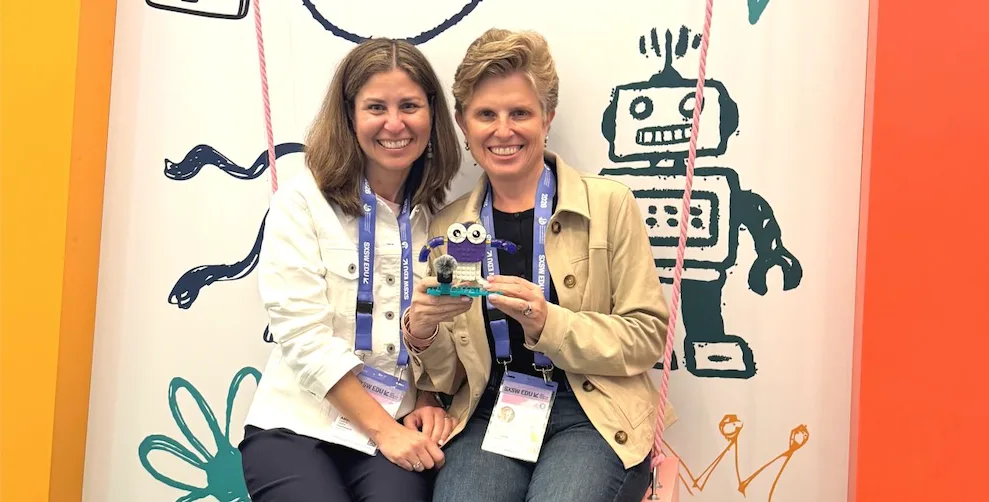
Earlier this month, Allison Caplovitz and Stefanie Cousins attended SXSW EDU in Austin, TX, where they explored the intersection of technology, early childhood education, human connection and wellbeing. The event offered a wealth of insights into how we can thoughtfully integrate AI and digital tools into the lives of young children while preserving the values that help them thrive.
Monica Sutton, a beloved educator and creator of the Ms. Monica YouTube channel, delivered a powerful message urging developers, policymakers, and families to rethink how technology is designed for young children. She emphasized the importance of bringing developmental specialists and child psychologists into the room during the creation process. Sutton also encouraged policymakers to slow down and carefully consider the long-term implications of digital tools, while reminding families to trust their instincts and wisdom when guiding their children. Her framework for evaluating technology for young learners is simple yet profound: Does it honor how young children learn? Does it support their growth and wellbeing? Does it help them thrive? And does it protect their curiosity and connection?
The role of AI in early childhood was another key theme at SXSW EDU. Interviewed by Michael Levine, Dr. Dana Suskind, a cochlear implant surgeon and co-director of the TMW Center for Early Learning & Public Health, highlighted the importance of nurturing connection, curiosity, and lifelong learning in an AI-driven world. She shared a striking observation about how quiet waiting rooms have become, as both parents and children are now glued to their devices. To help families and educators navigate the influx of AI tools, she introduced the DETECT framework, which encourages thoughtful evaluation of AI tools by asking questions like: Who is this designed for? Is there evidence it works? Do children have trouble with it? Does it promote ethical use? Does it protect children’s confidentiality? And does it teach in a way that is aligned with the values of the home or classroom?
The growing digital divide was another critical topic of discussion. While access to technology has expanded, the divide has shifted to who has access to opportunities for developing creativity and human-centered skills. Higher-income families are better positioned to prioritize these skills, while lower-income students often face more rigid, tech-mediated learning environments. This disparity raises concerns about equity and the long-term impact on children’s competence, agency, and resilience. Dr. Suskind also introduced another guiding acronym, HOPE, which underscores the irreplaceable value of human connection, the importance of owning AI’s imperfections, and the need to protect the foundational early years while using AI as a tool for enhancement, not replacement.
Several speakers likened the introduction of AI to the early days of social media, emphasizing the need to “get it right” this time. The stakes are high: relying too heavily on AI and removing opportunities for children to struggle and overcome obstacles could undermine their ability to build resilience and agency—qualities essential for wellbeing. Adeel Kahn, Founder and CEO of Magic School AI, shared an interesting lesson from his company’s journey. Initially, they anthropomorphized their AI bot for both teachers and students but quickly learned this approach wasn’t effective, underscoring the importance of thoughtful design in educational technology.
The conversations at SXSW EDU underscored a shared commitment to ensuring that technology serves as a tool for connection, creativity, growth, and wellbeing—not a replacement for the human touch. As Ms. Monica so eloquently put it, we must ask ourselves: Does this help children thrive? By keeping this question at the forefront, we can navigate the digital age with intention and care, ensuring a brighter future for the next generation.
By Stefanie Cousins, Vice President, Marketing & Communications, Fluent Research