


AI

The distinct cadence of a computerized voice echoing across the room was part of my early introduction to the world of accessibility. I was working in the disability services office at a university, and the robotic narration of JAWS (a screen reader) from a colleague’s desk had become part of the daily office foley. To me, the previously uninitiated, it was compelling to witness how much difference a piece of technology could make in enabling independence in the workplace and demonstrating inclusion.

Fast forward to today, where we all seem to be hurtling toward a future where, for many of us, our workplace and greater world will be heavily mediated by screens and all manner of artificial intelligence. Assistive technologies like JAWS, frankly, seem old hat by comparison. My news and professional feeds are regularly dotted with stories about how AI is poised to revolutionize technologies and bring more independence, more accessibility, and more equity. 

This Truly is the Stuff of Sci-Fi Movies

Multimodal AI: We are in an era where AI can “read” text on a screen. But what happens when AI operates multimodally? Authors Nithish Kumar and Aishwarya Srinivasan mention the myriad of possibilities for increasing accessibility in their article “The Sensory Revolution.” When AI can “smell” the sweetest strawberries at the grocery store, “see” the shortest checkout line, or “feel” the weight of the shopping bag, it can drastically support the experience of the built world for anyone who has a sensory limitation.

Wearable Technologies: Researchers are developing robotic exoskeletons to assist people with neuromuscular disorders (e.g., spinal cord injuries, stroke recovery). In-built AI systems could potentially provide “personalized control algorithms that could improve human–machine coordination” for these exoskeletons, according to a December 2025 article in Nature Communications. And jumping to a different type of wearable technology, Meta recently published an article about how its wearable glasses can be used, with AI assistance, to find lost keys, read restaurant menus, or get real-time captions.

New Robotics: Tatum Robotics is developing devices that can translate both words and images into tactile sign language and help deaf-blind users better communicate.

Trends in Product Development for Accessibility

At first glance, it all sounds pretty good. But as exciting as these developments may be, we still need to examine the means and ways these tools are developed. This need is made even more poignant by the fact that AI is not merely the final objective with these and similar new technologies; it is increasingly being deeply woven into the very fabric of product development and testing protocols. While I can’t speak to the development of the specific products described above, there are greater trends at play.  

According to Applause’s 2026 State of Digital Quality in Accessibility survey that surveyed more than 500 software development, QA, product, compliance and accessibility professionals, 79% reported that the organizations where they work use AI to improve digital accessibility in their websites and applications.. This, according to a large swathe of survey respondents, could look like “using AI coding tools to address/remediate accessibility issues” or “scan sites or apps for accessibility issues.”

One of the many issues with this is that many major LLM systems were not necessarily designed to be foremost disability-cognizant. Jackie Leah Scully reminds us in her article for Science, that “most AI developers have little formal knowledge of disability and are not taught about accessibility or inclusion during their training, while courses on AI ethics that discuss bias or diversity tend to focus on sex/gender and race, rather than disability” (Scully, 2018). If you are depending on AI to find the accessibility issues on your website, you must take into account that AI, historically, has been trained largely on websites that are not accessible and are then at risk of reproducing, as Eric Bailey described for GitHub, “accessibility antipatterns.” Moreover, AI models are trained on data that largely ignores the lived experiences of people with disabilities, which means their outputs frequently exhibit a lack of representation. This isn’t just a technical glitch; it’s a systemic deficit that can end up reinforcing existing biases. AI, simply put, cannot serve as be-all, end-all authority on accessibility.

Inclusion: “Nothing About Us Without Us”

These issues highlight a truth that the accessibility community has preached for decades: Product designers and technology developers must co-create with people with disabilities. This is not a new thought (“nothing about us without us”), but the increasing dependency on AI in product development makes the call to action all the more urgent. We cannot outsource the responsibility of designing accessible technologies to AI or synthetic participants, and people with disabilities cannot be brought in at the end-of-product design process for what amounts to token rubber-stamp approval. People with disabilities must be active stakeholders, present from the very first brainstorming session through the entire development pipeline. Yes, one could theoretically argue that the solution is just better AI. Yet, as our built environment rapidly transforms, the necessity of genuine human feedback becomes all the more important. AI systems, as aforementioned, are constrained by their training data, and therefore lack the agility to navigate cutting-edge built environment developments or offer the nuanced, lived responses that only a real person can provide. 

From a researcher’s perspective, these shifts underscore the necessity of intentional preparation to engage with the disability community during the research process. This Global Accessibility Awareness Day, I am reminded to reflect on my practice as a researcher in this age of AI, where the building of products is moving fast and there is more pressure to accelerate the research timeline. In my context of conducting research, this may mean advocating for the participation of individuals with disabilities, and holding the line when there is pushback. This may mean more time investment in finding people with disabilities to participate in research. It may mean dynamically adapting research instruments to meet the diverse needs of participants with disabilities. Or it may mean incorporating more flexibility within research sessions to meet differing needs. While these steps require time, resources, intentionality, and caution, the end result is worth it if it means a more thoughtfully designed, and genuinely accessible, technological future. As Debra Ruh famously said, “accessibility allows us to tap into everyone’s potential.” We must honor our responsibility—to those with disabilities, to those without disabilities who may or may not eventually develop disabilities, and to all technological progeny—to build things well.

By Farrah Brensinger, Senior User Experience Researcher
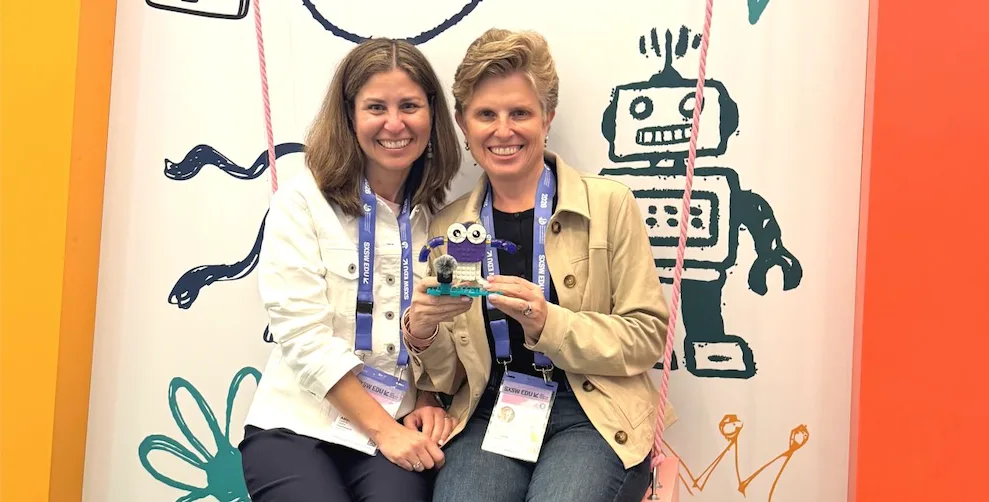
Earlier this month, Allison Caplovitz and Stefanie Cousins attended SXSW EDU in Austin, TX, where they explored the intersection of technology, early childhood education, human connection and wellbeing. The event offered a wealth of insights into how we can thoughtfully integrate AI and digital tools into the lives of young children while preserving the values that help them thrive.

Monica Sutton, a beloved educator and creator of the Ms. Monica YouTube channel, delivered a powerful message urging developers, policymakers, and families to rethink how technology is designed for young children. She emphasized the importance of bringing developmental specialists and child psychologists into the room during the creation process. Sutton also encouraged policymakers to slow down and carefully consider the long-term implications of digital tools, while reminding families to trust their instincts and wisdom when guiding their children. Her framework for evaluating technology for young learners is simple yet profound: Does it honor how young children learn? Does it support their growth and wellbeing? Does it help them thrive? And does it protect their curiosity and connection?

The role of AI in early childhood was another key theme at SXSW EDU. Interviewed by Michael Levine, Dr. Dana Suskind, a cochlear implant surgeon and co-director of the TMW Center for Early Learning & Public Health, highlighted the importance of nurturing connection, curiosity, and lifelong learning in an AI-driven world. She shared a striking observation about how quiet waiting rooms have become, as both parents and children are now glued to their devices. To help families and educators navigate the influx of AI tools, she introduced the DETECT framework, which encourages thoughtful evaluation of AI tools by asking questions like: Who is this designed for? Is there evidence it works? Do children have trouble with it? Does it promote ethical use? Does it protect children’s confidentiality? And does it teach in a way that is aligned with the values of the home or classroom?

The growing digital divide was another critical topic of discussion. While access to technology has expanded, the divide has shifted to who has access to opportunities for developing creativity and human-centered skills. Higher-income families are better positioned to prioritize these skills, while lower-income students often face more rigid, tech-mediated learning environments. This disparity raises concerns about equity and the long-term impact on children’s competence, agency, and resilience. Dr. Suskind also introduced another guiding acronym, HOPE, which underscores the irreplaceable value of human connection, the importance of owning AI’s imperfections, and the need to protect the foundational early years while using AI as a tool for enhancement, not replacement.

Several speakers likened the introduction of AI to the early days of social media, emphasizing the need to “get it right” this time. The stakes are high: relying too heavily on AI and removing opportunities for children to struggle and overcome obstacles could undermine their ability to build resilience and agency—qualities essential for wellbeing. Adeel Kahn, Founder and CEO of Magic School AI, shared an interesting lesson from his company’s journey. Initially, they anthropomorphized their AI bot for both teachers and students but quickly learned this approach wasn’t effective, underscoring the importance of thoughtful design in educational technology.

The conversations at SXSW EDU underscored a shared commitment to ensuring that technology serves as a tool for connection, creativity, growth, and wellbeing—not a replacement for the human touch. As Ms. Monica so eloquently put it, we must ask ourselves: Does this help children thrive? By keeping this question at the forefront, we can navigate the digital age with intention and care, ensuring a brighter future for the next generation.

By Stefanie Cousins, Vice President, Marketing & Communications, Fluent Research

For the past few years, conversations about AI in education have tended to swing between urgency and abstraction, framed as either a looming threat or a transformative solution. But for many students, educators, and families, AI isn’t theoretical — it’s already part of daily life.

By 2026, the most important questions about AI in education aren’t about whether it belongs in classrooms or campuses. They focus on how it’s being experienced, negotiated, and understood by the people living with it.

At Fluent, our work consistently shows that young people don’t encounter technology in isolation. They experience it through relationships, pressure, trust, and care. AI in education is no exception.

1. AI is Blending into the Digital Environment Students Already Know

For students, AI rarely arrives as a single, clearly defined educational tool. Instead, it blends into the broader digital landscape — embedded in platforms they already use to search, write, communicate, and organize their work.

In 2026, schools and universities are increasingly formalizing AI use through policies and platforms. At the same time, students are encountering AI informally through writing assistance, study tools, and features built into everyday apps.

This overlap matters. Young people bring existing beliefs about technology into educational settings — including skepticism, fatigue, and an awareness of how persuasive digital systems can be.

AI adoption doesn’t start in the classroom. It builds on years of lived experience with screens and systems that already shape how young people learn, communicate, and cope.

2. Assessment Pressure Meets AI Head On

Few areas of education have felt the impact of AI as quickly as assessment. Traditional assignments — especially take-home writing and problem sets — now raise new questions about effort, authorship, and fairness.

In response, educators across K-12 and higher education are experimenting with new approaches:

• Placing more emphasis on process and reflection
• Designing assignments that require explanation and judgment
• Creating space for discussion, collaboration, and iteration

From a youth wellbeing perspective, this moment is revealing. AI doesn’t just change how students complete work — it changes how they experience academic pressure.

Rather than framing AI use as misconduct alone, many institutions are beginning to see it as a signal — pointing to deeper tensions around workload, competition, and the definition of success.

3. AI Literacy is Becoming Part of Learning to Live with Technology

As outright bans soften, more schools and universities are turning toward AI literacy — not simply teaching students how to use AI, but how to question it.

In practice, this often means helping students:

• Understand how AI generates responses
• Recognize bias, gaps, and overconfidence
• Decide when AI is helpful and when it isn’t

This mirrors earlier conversations about digital citizenship and persuasive design. Young people are already navigating complex technological systems. They need a shared language and adult guidance to make sense of them.

In this way, AI literacy is less about efficiency and more about agency.

4. Teaching is Becoming More about Interpretation Than Delivery

As AI handles more routine tasks, educators’ roles are shifting in ways that echo lessons from remote learning and hybrid classrooms.

Across education, teachers increasingly focus on:

• Helping students interpret information
• Supporting ethical and contextual judgment
• Creating space for discussion, uncertainty, and meaning-making

These shifts align with what Fluent has observed across youth and family research: young people value adults who help them think, not just produce answers.

AI may change how information is accessed, but it has also made the relational aspects of education more visible.

5. Family Context Still Shapes How AI is Used and Understood

Students don’t encounter AI on equal footing. Family expectations, access to resources, and prior experiences with technology all shape how AI is used and interpreted.

Some families encourage exploration and dialogue. Others express concern about dependence, fairness, or long-term impact. These differences influence how students approach AI — especially during key transitions from K-12 into higher education.

As with earlier shifts like remote schooling, AI highlights how deeply educational experiences are intertwined with home life.

6. AI’s Quiet Expansion Beyond the Classroom

While classroom use by teachers receives the most attention, AI’s influence increasingly extends into advising, enrollment, and student support systems — particularly in higher education.

These tools are often designed to:

• Identify students who may need support
• Streamline communication and services
• Improve retention and engagement

But they also raise important questions about transparency, consent, and trust — especially when students are unaware of how data is being used.

From a wellbeing perspective, support systems work best when students feel helped, not watched.

7. Learning When Not to Use AI

By 2026, the most meaningful conversations about AI in education are no longer about if AI is going to be part of the academic toolkit — they’re about boundaries.

Educators, students, and families are increasingly asking:

• When does AI support learning?
• When does it interfere with reflection, struggle, or creativity?
• What kinds of thinking should remain intentionally human?

These questions echo Fluent’s long-standing focus on intentional technology use. Sometimes, the most thoughtful design choice is deciding what not to go digital.

8. What This Moment Reveals

By revealing long-standing tensions around pressure, equity, trust, and purpose, AI is reshaping education.

In 2026, the challenge for policy makers and practitioners is to listen closely to the authentic voices of how students, families, and educators are already experiencing it.

As with every major technological shift, the most important insights don’t come from the tools themselves — they come from the people living alongside them.

Stefanie Cousins is Vice President, Marketing & Communications at Fluent Research.

The next generation is ready, are we?

Artificial intelligence isn’t coming to classrooms; it’s already there. From adaptive tutoring tools to generative-AI writing assistants, students are encountering new technologies every day. But according to new global surveys, young people don’t just want more AI in education. They want it used responsibly, equitably, and creatively.

A 2025 UNESCO-UNEVOC study of students in 128 countries found that while most Gen Z learners are optimistic about AI’s potential to make learning more engaging and personalized, they also worry about bias, unequal access, and over-reliance on technology. These are questions that educators, families, and policymakers are only beginning to answer.

What young people say matters

At Fluent Research, our work consistently shows that youth are not passive participants in the digital world. They are active interpreters, testers, and critics of it. When asked about AI tools in classrooms, many teens express curiosity mixed with caution. They appreciate platforms that help them visualize complex concepts or learn at their own pace, but they also voice concern about losing the human connection that makes learning meaningful.

This aligns with our broader findings on digital citizenship: students thrive when they understand how technology works and how to use it responsibly. Embedding conversations about ethics, transparency, and data privacy into education is no longer optional. It is part of preparing young people for the world they are inheriting.

Bridging the digital divide

AI has the potential to reduce learning gaps, but only if every student can access it. The digital divide remains one of the most pressing equity issues in education. In many communities, limited connectivity or outdated devices prevent students from fully engaging with new learning tools.

For families and schools, this means advocacy at every level: ensuring infrastructure investments, equitable access to devices, and training educators to integrate AI thoughtfully. Research from UNICEF and the Pew Research Center highlights that students with reliable digital access are more confident not only in their tech skills but also in their overall academic performance.

How educators can make AI work for wellbeing

AI can be a powerful support for student wellbeing when it is used to enhance, not replace, the human aspects of learning. Tools that provide real-time feedback, automate repetitive tasks, or personalize study plans can reduce stress and boost motivation. But they must be paired with teacher guidance, media-literacy education, and opportunities for reflection.

Schools that combine digital-literacy training with mental-health awareness—teaching students how to navigate algorithms, manage screen time, and maintain balance—see measurable improvements in engagement and self-efficacy. 

Looking ahead

As we celebrate International Education Week, the conversation is not just about technology’s power to transform education. It is about the values that guide that transformation. Gen Z is asking educators and policymakers to listen, collaborate, and build a future where AI strengthens curiosity, empathy, and equity.

Fluent Research will continue exploring how young people learn, create, and connect in an age of intelligent machines, and what that means for families, schools, and the next generation of learners.

Stefanie Cousins is Vice President, Marketing & Communications at Fluent Research.