


12 Jan AI in 2026: Moving Beyond Disruption to Student Experience
For the past few years, conversations about AI in education have tended to swing between urgency and abstraction, framed as either a looming threat or a transformative solution. But for many students, educators, and families, AI isn’t theoretical — it’s already part of daily life.
By 2026, the most important questions about AI in education aren’t about whether it belongs in classrooms or campuses. They focus on how it’s being experienced, negotiated, and understood by the people living with it.
At Fluent, our work consistently shows that young people don’t encounter technology in isolation. They experience it through relationships, pressure, trust, and care. AI in education is no exception.
1. AI is Blending into the Digital Environment Students Already Know
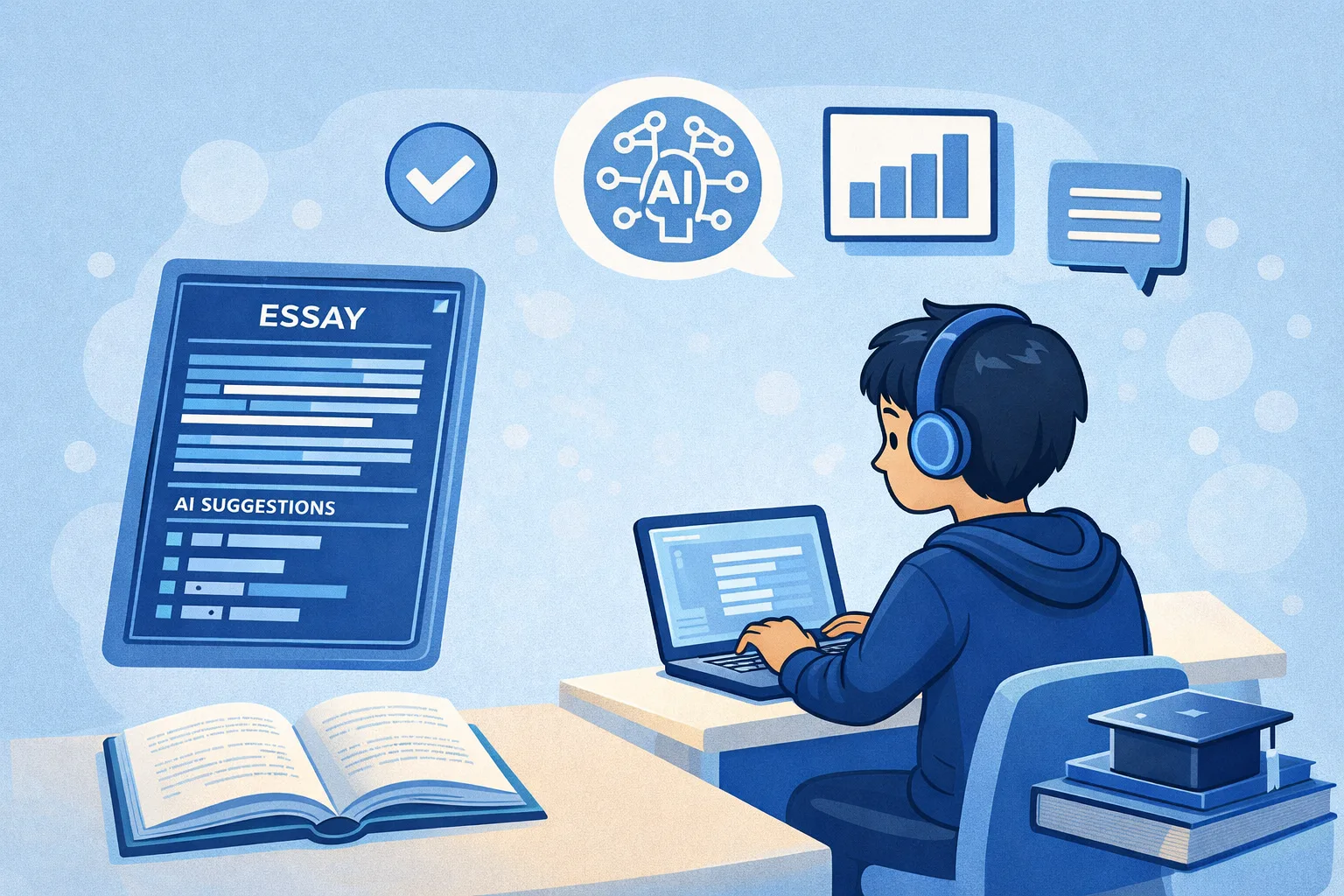
For students, AI rarely arrives as a single, clearly defined educational tool. Instead, it blends into the broader digital landscape — embedded in platforms they already use to search, write, communicate, and organize their work.
In 2026, schools and universities are increasingly formalizing AI use through policies and platforms. At the same time, students are encountering AI informally through writing assistance, study tools, and features built into everyday apps.
This overlap matters. Young people bring existing beliefs about technology into educational settings — including skepticism, fatigue, and an awareness of how persuasive digital systems can be.
AI adoption doesn’t start in the classroom. It builds on years of lived experience with screens and systems that already shape how young people learn, communicate, and cope.
2. Assessment Pressure Meets AI Head On
Few areas of education have felt the impact of AI as quickly as assessment. Traditional assignments — especially take-home writing and problem sets — now raise new questions about effort, authorship, and fairness.
In response, educators across K-12 and higher education are experimenting with new approaches:
• Placing more emphasis on process and reflection
• Designing assignments that require explanation and judgment
• Creating space for discussion, collaboration, and iteration
From a youth wellbeing perspective, this moment is revealing. AI doesn’t just change how students complete work — it changes how they experience academic pressure.
Rather than framing AI use as misconduct alone, many institutions are beginning to see it as a signal — pointing to deeper tensions around workload, competition, and the definition of success.
3. AI Literacy is Becoming Part of Learning to Live with Technology
As outright bans soften, more schools and universities are turning toward AI literacy — not simply teaching students how to use AI, but how to question it.
In practice, this often means helping students:
• Understand how AI generates responses
• Recognize bias, gaps, and overconfidence
• Decide when AI is helpful and when it isn’t
This mirrors earlier conversations about digital citizenship and persuasive design. Young people are already navigating complex technological systems. They need a shared language and adult guidance to make sense of them.
In this way, AI literacy is less about efficiency and more about agency.
4. Teaching is Becoming More about Interpretation Than Delivery
As AI handles more routine tasks, educators’ roles are shifting in ways that echo lessons from remote learning and hybrid classrooms.
Across education, teachers increasingly focus on:
• Helping students interpret information
• Supporting ethical and contextual judgment
• Creating space for discussion, uncertainty, and meaning-making
These shifts align with what Fluent has observed across youth and family research: young people value adults who help them think, not just produce answers.
AI may change how information is accessed, but it has also made the relational aspects of education more visible.
5. Family Context Still Shapes How AI is Used and Understood
Students don’t encounter AI on equal footing. Family expectations, access to resources, and prior experiences with technology all shape how AI is used and interpreted.
Some families encourage exploration and dialogue. Others express concern about dependence, fairness, or long-term impact. These differences influence how students approach AI — especially during key transitions from K-12 into higher education.
As with earlier shifts like remote schooling, AI highlights how deeply educational experiences are intertwined with home life.
6. AI’s Quiet Expansion Beyond the Classroom
While classroom use by teachers receives the most attention, AI’s influence increasingly extends into advising, enrollment, and student support systems — particularly in higher education.
These tools are often designed to:
• Identify students who may need support
• Streamline communication and services
• Improve retention and engagement
But they also raise important questions about transparency, consent, and trust — especially when students are unaware of how data is being used.
From a wellbeing perspective, support systems work best when students feel helped, not watched.
7. Learning When Not to Use AI
By 2026, the most meaningful conversations about AI in education are no longer about if AI is going to be part of the academic toolkit — they’re about boundaries.
Educators, students, and families are increasingly asking:
• When does AI support learning?
• When does it interfere with reflection, struggle, or creativity?
• What kinds of thinking should remain intentionally human?
These questions echo Fluent’s long-standing focus on intentional technology use. Sometimes, the most thoughtful design choice is deciding what not to go digital.
8. What This Moment Reveals
By revealing long-standing tensions around pressure, equity, trust, and purpose, AI is reshaping education.
In 2026, the challenge for policy makers and practitioners is to listen closely to the authentic voices of how students, families, and educators are already experiencing it.
As with every major technological shift, the most important insights don’t come from the tools themselves — they come from the people living alongside them.
Stefanie Cousins is Vice President, Marketing & Communications at Fluent Research.