


Educational Technology Tag

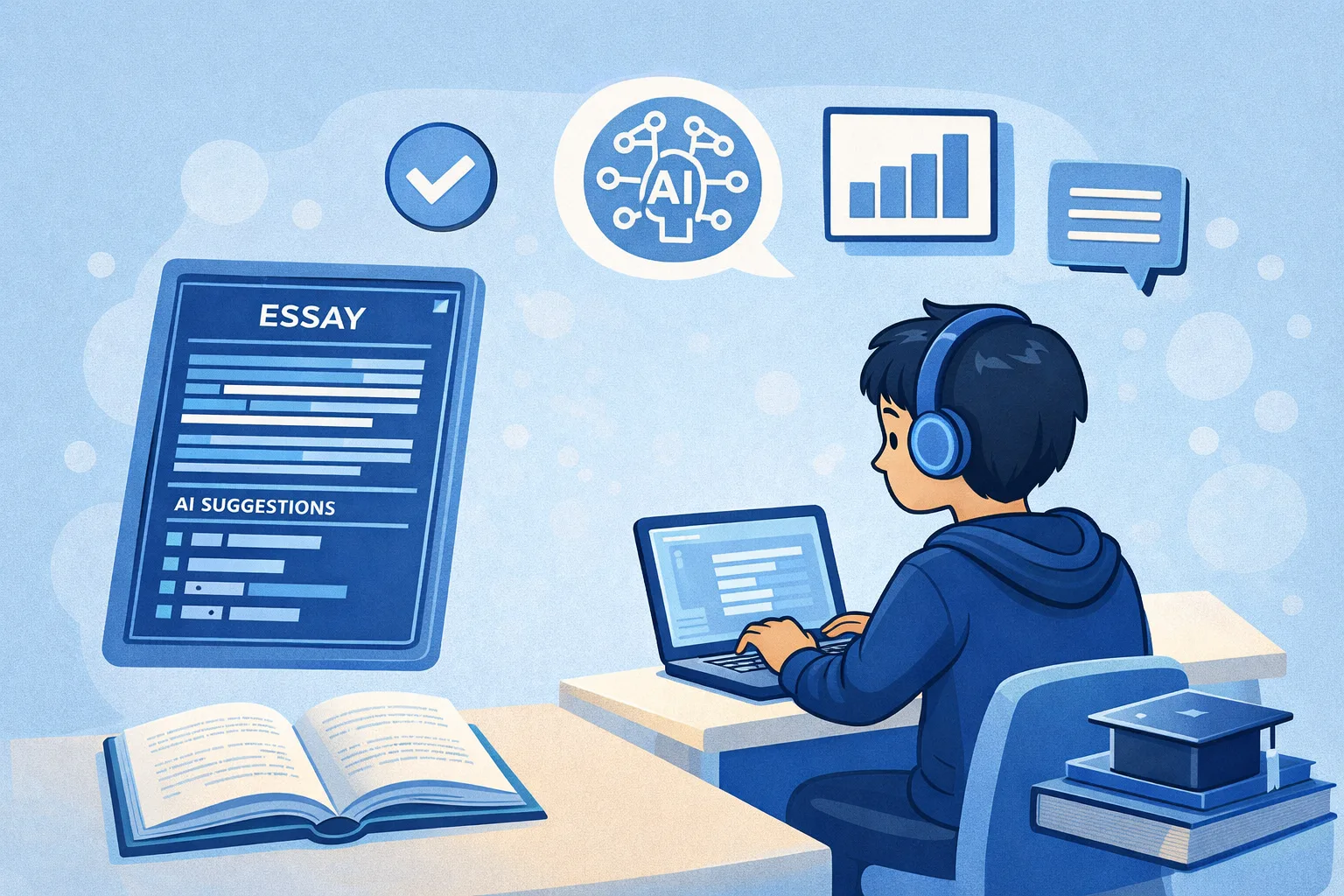
For the past few years, conversations about AI in education have tended to swing between urgency and abstraction, framed as either a looming threat or a transformative solution. But for many students, educators, and families, AI isn’t theoretical — it’s already part of daily life.

By 2026, the most important questions about AI in education aren’t about whether it belongs in classrooms or campuses. They focus on how it’s being experienced, negotiated, and understood by the people living with it.

At Fluent, our work consistently shows that young people don’t encounter technology in isolation. They experience it through relationships, pressure, trust, and care. AI in education is no exception.

1. AI is Blending into the Digital Environment Students Already Know

For students, AI rarely arrives as a single, clearly defined educational tool. Instead, it blends into the broader digital landscape — embedded in platforms they already use to search, write, communicate, and organize their work.

In 2026, schools and universities are increasingly formalizing AI use through policies and platforms. At the same time, students are encountering AI informally through writing assistance, study tools, and features built into everyday apps.

This overlap matters. Young people bring existing beliefs about technology into educational settings — including skepticism, fatigue, and an awareness of how persuasive digital systems can be.

AI adoption doesn’t start in the classroom. It builds on years of lived experience with screens and systems that already shape how young people learn, communicate, and cope.

2. Assessment Pressure Meets AI Head On

Few areas of education have felt the impact of AI as quickly as assessment. Traditional assignments — especially take-home writing and problem sets — now raise new questions about effort, authorship, and fairness.

In response, educators across K-12 and higher education are experimenting with new approaches:

• Placing more emphasis on process and reflection
• Designing assignments that require explanation and judgment
• Creating space for discussion, collaboration, and iteration

From a youth wellbeing perspective, this moment is revealing. AI doesn’t just change how students complete work — it changes how they experience academic pressure.

Rather than framing AI use as misconduct alone, many institutions are beginning to see it as a signal — pointing to deeper tensions around workload, competition, and the definition of success.

3. AI Literacy is Becoming Part of Learning to Live with Technology

As outright bans soften, more schools and universities are turning toward AI literacy — not simply teaching students how to use AI, but how to question it.

In practice, this often means helping students:

• Understand how AI generates responses
• Recognize bias, gaps, and overconfidence
• Decide when AI is helpful and when it isn’t

This mirrors earlier conversations about digital citizenship and persuasive design. Young people are already navigating complex technological systems. They need a shared language and adult guidance to make sense of them.

In this way, AI literacy is less about efficiency and more about agency.

4. Teaching is Becoming More about Interpretation Than Delivery

As AI handles more routine tasks, educators’ roles are shifting in ways that echo lessons from remote learning and hybrid classrooms.

Across education, teachers increasingly focus on:

• Helping students interpret information
• Supporting ethical and contextual judgment
• Creating space for discussion, uncertainty, and meaning-making

These shifts align with what Fluent has observed across youth and family research: young people value adults who help them think, not just produce answers.

AI may change how information is accessed, but it has also made the relational aspects of education more visible.

5. Family Context Still Shapes How AI is Used and Understood

Students don’t encounter AI on equal footing. Family expectations, access to resources, and prior experiences with technology all shape how AI is used and interpreted.

Some families encourage exploration and dialogue. Others express concern about dependence, fairness, or long-term impact. These differences influence how students approach AI — especially during key transitions from K-12 into higher education.

As with earlier shifts like remote schooling, AI highlights how deeply educational experiences are intertwined with home life.

6. AI’s Quiet Expansion Beyond the Classroom

While classroom use by teachers receives the most attention, AI’s influence increasingly extends into advising, enrollment, and student support systems — particularly in higher education.

These tools are often designed to:

• Identify students who may need support
• Streamline communication and services
• Improve retention and engagement

But they also raise important questions about transparency, consent, and trust — especially when students are unaware of how data is being used.

From a wellbeing perspective, support systems work best when students feel helped, not watched.

7. Learning When Not to Use AI

By 2026, the most meaningful conversations about AI in education are no longer about if AI is going to be part of the academic toolkit — they’re about boundaries.

Educators, students, and families are increasingly asking:

• When does AI support learning?
• When does it interfere with reflection, struggle, or creativity?
• What kinds of thinking should remain intentionally human?

These questions echo Fluent’s long-standing focus on intentional technology use. Sometimes, the most thoughtful design choice is deciding what not to go digital.

8. What This Moment Reveals

By revealing long-standing tensions around pressure, equity, trust, and purpose, AI is reshaping education.

In 2026, the challenge for policy makers and practitioners is to listen closely to the authentic voices of how students, families, and educators are already experiencing it.

As with every major technological shift, the most important insights don’t come from the tools themselves — they come from the people living alongside them.

Stefanie Cousins is Vice President, Marketing & Communications at Fluent Research.

The recent Common Sense Media report on Generative AI in schools and homes found that Generative AI has rapidly become part of everyday life for teenagers, particularly in education. From helping with schoolwork to sparking interest in future careers, AI is shaping how young people learn and interact with the world.

A key concern raised in the report is that many parents are unaware of their children’s use of these tools, which creates a gap in support and guidance as teens explore AI. In addition, the report reveals that many schools lack clear guidelines for AI usage, leaving students to navigate these tools on their own, often without explicit teacher approval. This can lead to confusion about how AI should be used appropriately. It is therefore essential for educators to facilitate discussions about AI in the classroom. When students participate in these conversations, they gain a more nuanced understanding of both the advantages and challenges that AI presents.

But the future of AI in schools goes beyond teaching students how to use it appropriately. AI has the potential to transform education itself, moving away from the traditional model of hours spent sitting in classrooms and listening to lectures. I recently learned of a school that exemplifies this shift: the Alpha School in Austin, TX, which has fully integrated AI into its curriculum. Instead of being confined to traditional classroom methods, students learn core academic subjects using AI tailored to individual needs and learning styles, which leaves more time to explore life skills like financial literacy, public speaking, and problem-solving. These new opportunities allow education to be more dynamic, flexible, and suited to the diverse needs of students.

Generative AI is here to stay. Rather than sweeping it under the rug, parents and educators should embrace the technology, set clear rules, and teach teens how to use it responsibly. Schools need to develop clear AI policies and communicate them to families. Parents must educate themselves on the tools their children are using and have open conversations about how to leverage AI in positive ways.

More importantly, AI presents an opportunity to shift the traditional learning model itself. With AI, schools no longer need to rely on outdated methods of passive learning. Instead, they can create more dynamic, student-centered environments where personalized education and life skills are prioritized. By embracing AI, we can foster a new era of learning—one that not only teaches core subjects more efficiently but also equips students with the critical skills they’ll need to thrive in a rapidly changing world.

By Allison Caplovitz, Director of Content Research and Evaluation

In late October, Mark Zuckerberg announced the naming of his umbrella company, Meta. The name was specifically chosen to closely identify the premier force that is shaping the metaverse. Facebook describes the metaverse as “a set of virtual spaces where you can create and explore with other people who aren’t in the same physical space as you. You’ll be able to hang out with friends, work, play, learn, shop, create and more. It’s not necessarily about spending more time online — it’s about making the time you do spend online more meaningful.”

Comments and editorials have been and will be flooding news outlets, social media, and conversations around the remaining water coolers. Early reactions have focused on the companies facilitating this change rather than the potential that this evolution may unlock for society’s greatest challenges. It would be naïve to think that the emergence, development, and cultivation of the metaverse has been or will be rooted in altruism and concern for the public “good.” Judge it as you may, my point is not to persuade you to think this is a “good” or “bad” thing, rather I aim, as a researcher does, to think about the ways that the metaverse will create impact and change and explore the lever by which it does this.

Because I study the development of educational programs, media, and technology, I would ask that you consider the role that the metaverse could play in the operation and support of kids and families. Simply stated, it may help us all as a society raise children more effectively. In my work over the past few years, I have specialized in understanding kids and families, especially when they interact with technology and media. I have had the privilege of working with world class companies that are in the business of creating solutions for kids and families that make their lives safer, richer, and easier. By engaging with these partners over time, I have come to know that they are not only incredibly talented in their skills but also genuinely strive to make the world a better place.

Let’s also recognize that the metaverse has the potential to level the playing field in a variety of disciplines by developing inclusive platforms from the outset. According to the Equity by Design proponents, inequity is designed into systems and with help and intent can be designed out of them. Designers should not focus their considerations on the bulk of the curve when designing but rather aim to create solutions for those in the margins of society. Solutions that are developed in this way, they claim, have historically created not only solutions for those in the margins but have also created unintended benefits for the greater society.

If we accept for the moment that the metaverse will be a reality and a large part of all our lives in the future, designing for the margins yields the biggest benefit for society as a whole. That means there is an optimistic and altruistic core of intent underlying the actions of those designing components of the metaverse for kids and families. I can’t help but wonder (in the truest sense of the word) about what could be possible as a result of this evolution.

Will it be possible for children of incarcerated parents to sit with an imprisoned mother or father and read books together at night? Could deployed soldiers take a few minutes to play catch with their daughters before they got on the bus for school? Could the field of education ∂be leveled by removing the barriers of geography, resources, and time?

The metaverse will never replace the “real” world. It lacks the palpable energy generated by bringing people together in a physical space. This is the kind of energy that all living things emit, and which connects us with our most prehistoric instincts. Conversely, the metaverse is, at its root, a futuristic cognitive experience which reengages emotional references and allows for implicit connection when the physical is impossible.

Research must be a fundamental part of the evolution into this new space. Social scientists must strive to understand how the metaverse and those who support the welfare of families can create a mutually beneficial relationship that fosters a healthier, happier, and more engaged society.

Dan Warren, Ph.D. is Director, Youth Development and Education at Fluent Research. Dan holds a doctorate in Human Development and Child Study from Tufts University and taught elementary school in Massachusetts for nearly a decade.