

Kids

The moment that changes a children’s series rarely just happens in the writers’ room. It can also happen in a living room.

A five-year-old girl tilts her head and says something unexpected about a character. A parent pauses and admits they’re not sure what the takeaway was. An eight-year-old boy laughs at a moment the creators thought was instructional, and tunes out during the explanation. Those are the moments that shape better content.

When people think about research in children’s media, they often think about measurement, proving that something worked after it’s complete. But the real power of research happens much earlier. Research doesn’t just validate content. It influences it.

Where Insight Changes Direction

In our work with PBS KIDS, Nickelodeon, and other children’s media clients across broadcast, digital, and interactive properties, we’re often brought in while content is still evolving. Animatics are rough. Scripts are fluid. Characters haven’t been finalized. Game mechanics are still being refined. That’s exactly when research matters most.

What we uncover doesn’t sit in a report; it informs revision. We examine questions that go beyond surface appeal:

Do children understand the core skill the episode is designed to model?

Do children understand the core skill the episode is designed to model?

Is the learning goal clear, or buried under plot?

Are the rules of the world intuitive to young viewers?

Does the problem feel concrete, or abstract?

When do children disengage, and what’s happening at that moment?

Are parents interpreting the educational intention the way producers expect?

Sometimes the insight confirms the creative approach. Other times, it shifts it.

We’ve observed executive function skills resonating clearly, while the context surrounding them creates confusion. In one project, adults found career themes compelling, but children experienced them differently. In another, humor carried the learning more effectively than explanation. Without research, those disconnects remain invisible. With research, they become opportunities to revise, clarify, and strengthen before a series moves forward. In other words, those insights lead to better alignment between intention and interpretation. That’s not cosmetic feedback. It’s directional influence. 

Research as a Creative Partner

The strongest development teams don’t treat research as a compliance step at the end of production. They treat it as a creative partner.

When research is embedded in the development process, it can influence story pacing, character development, world-building clarity, the explicitness of educational messaging, and the balance between entertainment and instruction. The result isn’t content that feels “researched.” It’s content that feels intuitive, because it aligns with how children actually learn.

That alignment doesn’t happen by instinct alone. It happens by listening. 

Designing for How Kids Learn

This article is the first in a series exploring how research shapes and strengthens children’s media development across the broader children’s content landscape.

In upcoming articles, we’ll feature insights from Allison Caplovitz, PhD, Director of Content Research and Evaluation, and Senior Researchers Sylvia Rusnak and Tiffany Salone, whose expertise in child development, educational measurement, and media testing informs the work behind the scenes.

If you’re developing content for children, consider this:

Do you know what kids are actually taking away?
Are you testing intention against interpretation?
Are you building in time to revise based on evidence?

Because if you’re building for kids, listening to them isn’t optional. It’s foundational.

By Stefanie Cousins, Vice President, Marketing and Communications

Gratitude is often treated as a polite habit, a personal virtue or a wellness practice. Simple and straightforward. Young people are encouraged to say thank you, write gratitude lists or focus on what they have.

Developmental psychology tells a story that’s a bit more complicated. In this context, gratitude is a developmental capacity that goes beyond a behavior or a feeling. It is the ability to recognize how one’s life has been shaped by others, to understand one’s impact in return and to feel a sense of responsibility that grows out of that awareness. Gratitude matters because it reflects an important shift in how people see themselves from isolated actors toward participants in a greater system of relationships, influence and obligation.

In my opinion, few public figures provide us a clearer example of this shift than Adam Yauch, better known as MCA of the Beastie Boys.

MCA’s legacy is often remembered through music, activism and cultural impact. But seen through a developmental lens, his story offers something else: a clear example of how gratitude can emerge alongside maturity, identity and purpose.

Gratitude Is Not Where We Start

From a developmental perspective, this matters. Erik Erikson argued that adolescence and early adulthood are dominated by the task of identity formation, which involves figuring out who you are, how you belong and how you are seen. At this stage, identity is often performed outwardly. It is loud, experimental and sometimes reckless. The goal is differentiation, not reflection.

Early success can intensify this dynamic. When young people are rewarded for bravado, transgression or shock value, those attributes become reinforced because they are effective, not because they are grounded. Identity gets shaped by feedback loops rather than reflection.

The early Beastie Boys fit squarely within this developmental reality. Their rise was rapid, their visibility immense and their personas rewarded for being provocative and boundary-pushing. That combination of intense recognition arriving before perspective had fully formed created an environment where experimentation and bravado were not just encouraged but publicly amplified. This is not an indictment; it is a developmental observation. When identity is still taking shape, high visibility and cultural reward can make immature decisions more likely, more consequential and harder to undo. Identity work at this stage is provisional, and the stakes are often much higher than young people are equipped to manage.’

Gratitude rarely shows up here as an influence. Not because young people are ungrateful, but because gratitude requires something identity formation has not yet fully developed: perspective over time.

The Developmental Turn: Looking Back Without Freezing

One of the most striking aspects of MCA’s evolution is that he did something many people, especially public figures, struggle to do: he looked back honestly.

He publicly acknowledged the harm in some of his earlier lyrics, took responsibility without deflection and changed how he showed up as an artist and cultural figure. Importantly, he did not disown his past or pretend it never happened. He integrated it.

This distinction matters. Erikson described healthy identity not as a clean break from earlier selves but as an integration of experience. Growth relies heavily on memory.

This is where gratitude begins to take shape. The first step is recognition. Recognition of influence, recognition of impact, recognition of who and what shaped you and who may have been affected along the way. Recognition alone is not gratitude, but it makes gratitude possible. Gratitude emerges when that awareness deepens into appreciation and responsibility.

The Influence of Purpose

William Damon’s work on purpose helps clarify what happens next. Damon defines purpose as a stable intention to accomplish something meaningful to the self and consequential to the world beyond the self. Purpose marks a developmental shift from self-definition to contribution.

Gratitude and purpose are closely connected, but they are not the same. Gratitude reflects growing awareness of influence, interdependence and responsibility. Purpose reflects what people do with that awareness over time. In this sense, gratitude can be understood as a developmental foundation for purpose. Once people recognize what they have received from communities, cultures, collaborators and predecessors, the question naturally changes from “Who am I?” to “What do I owe?”

MCA’s later life reflected this shift. His activism, particularly around Tibetan freedom and anti-war efforts, was purposeful. It was sustained, values-driven and embedded in how he used his platform. This was gratitude expressed through responsibility and long-term commitment.

Why This Matters for Youth Work

For those who work with young people, this framing has real implications.

First, it reminds us not to freeze youth in their worst moments. Identity formation involves experimentation, missteps and revision. It’s messy, and when systems respond to adolescent missteps with permanent labels or exclusion, they interrupt development rather than support it.

Second, it challenges shallow approaches to character education. Gratitude cannot be forced on a timeline. It emerges when young people are supported in reflection, accountability and repair, not when they are instructed to be thankful.

Third, it asks us to design environments that make growth through messiness possible. MCA’s evolution was not inevitable; it was enabled by time, reflection, community and the freedom to change course. Youth systems should offer the same conditions.

Gratitude, understood developmentally, is not about manners. It is about moral eyesight, which requires the ability to recognize interdependence, impact and responsibility.

Growing up in Public

MCA grew up in public. He made mistakes in public. And he modeled what it can look like to mature publicly without pretending to be perfect. That may be his most enduring lesson.

Gratitude is not a starting point. It is something people arrive at when identity stabilizes, purpose takes shape and responsibility becomes unavoidable.

And if we didn’t know that before — well, now we do.

By Dan Warren, Director, Youth Development & Education.

This article was originally published in Youth Today on February 19, 2026.

We often talk about “systems change” in youth work, but we rarely slow down to ask what real change actually looks like. One of the most helpful thinkers on this topic is historian and philosopher Thomas Kuhn, who argued that progress doesn’t usually unfold gradually. Instead, we move through paradigm shifts or moments when the old way of understanding no longer fits, and a new model takes its place.

Kuhn found that:

Change begins with anomalies — ideas that don’t fit the old model but point toward something better.

Crisis is part of growth — when old approaches no longer meet new needs.

Paradigm shifts reorganize what’s possible — replacing the old frame with a more useful one.

Kuhn’s ideas can feel abstract, but hip-hop gives us a grounded way to see them clearly. And it begins with DJ Kool Herc, widely regarded as the founder of hip-hop. In the early 1970s, Herc pioneered the breakbeat style of DJing, extending the instrumental “breaks” in records so dancers could keep moving, and built community-centered parties in the Bronx that became the foundation of the entire culture. If Herc represents the original paradigm of hip-hop (i.e., local, joyful and built on movement and connection), then the genre’s biggest innovations become examples of the anomalies and shifts Kuhn described.

Below are three of Kuhn’s core concepts, each illustrated through how hip-hop evolved from Herc’s foundation.

Anomalies: The moments that don’t fit

Kuhn argued that major change begins with an anomaly, a new idea or approach that doesn’t fit the established model. At first, anomalies can seem like outliers, but they plant the seeds for transformation.

In early hip-hop, DJ Kool Herc’s paradigm centered on celebration, dance and community connection. His parties created joy and belonging at a time when young people desperately needed both.

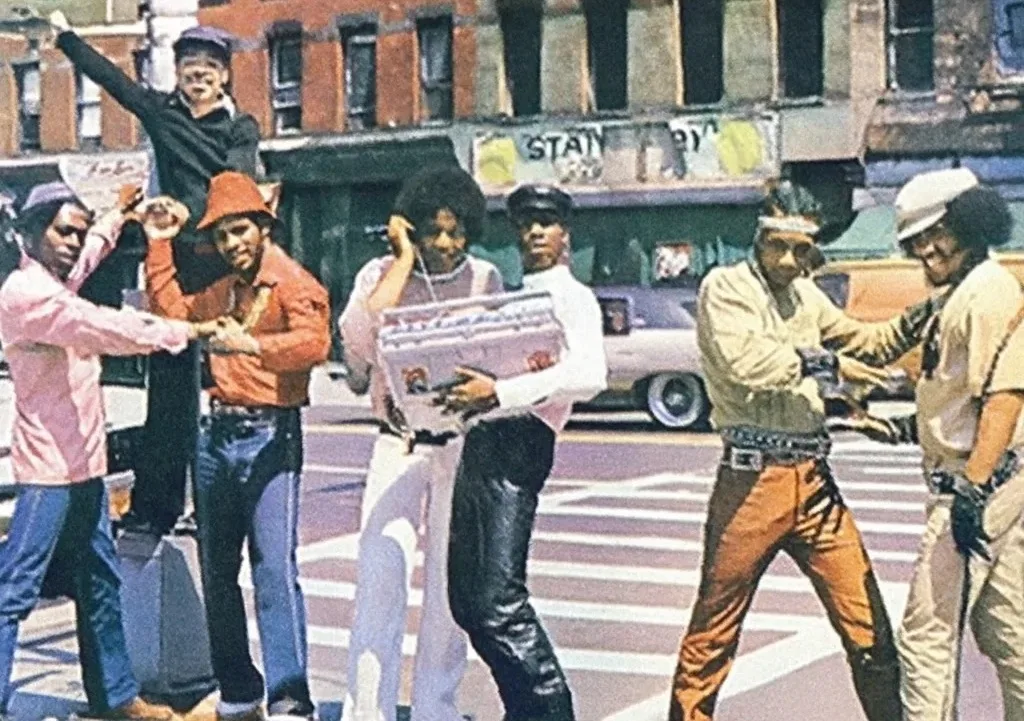
Then came Grandmaster Flash & the Furious Five’s “The Message” (1982). Flash took Herc’s structure and turned it in a different direction. Instead of reflecting the joy of the party, he described the poverty, pressure, violence and systemic neglect going on in the world outside of it. It didn’t fit the celebratory model. But it reflected lived reality.

This was an anomaly. The paradigm had not changed yet, but a new possibility had appeared.

Paradigm crisis: When the old model isn’t enough

Kuhn believed that once enough anomalies appear the existing paradigm enters crisis. This doesn’t mean collapse; it simply means the old explanation can’t account for everything happening around it.

In hip-hop, this crisis took shape when Public Enemy arrived. They took the honesty of “The Message” and amplified it into a full-scale analysis of policing, media and systemic racism. Their work wasn’t just storytelling, but rather sharp critique intended to educate and mobilize. They pushed hip-hop toward a purpose that Herc’s original model may not have anticipated.

Suddenly, the idea that hip-hop existed only for partying and dancing was no longer big enough. A new purpose was emerging: hip-hop as truth-telling and political engagement. The field expanded because it had to.

This is what crisis looks like: the old frame can’t contain the new reality.

Paradigm shift: A new model takes over

A paradigm shift, in Kuhn’s terms, happens when a new model replaces the old one and becomes the dominant way of understanding the field.

For this, we look again to Herc as the root: hip-hop as local, street-based and community-built.

Then we look to Run-DMC, who represented hip-hop’s cultural and commercial possibilities. They didn’t simply extend Herc’s model, they introduced a new one:

Their Adidas partnership opened the door for hip-hop fashion as global business.

Their presence on MTV broke racial barriers that had kept rap off the airwaves.

Their “Walk This Way” collaboration with Aerosmith expanded the audience for hip-hop dramatically.

Their arena tours demonstrated that hip-hop could operate at stadium scale.

This wasn’t incremental growth. It was a new paradigm: hip-hop as global culture and commercial force. Herc gave hip-hop its foundation and then Run-DMC and their massive fan base redesigned the structure built upon it.

Why this matters for people who work with youth

I assume that you aren’t reading this to learn about philosophy or music history. You’re probably reading it because many who work with young people are trying to understand change. More specifically, how to support it, how to recognize it and how to help create it.

Right now in youth work, I see several emerging and encouraging anomalies that may signal the next paradigm:

Schools and afterschool programs are beginning to collaborate more intentionally, creating 360° support around young people rather than operating in silos. This stands in contrast to the long-standing paradigm where schools focused narrowly on academics and afterschool programs were treated as optional add-ons, often working with different staff, goals and communication systems. The new coordination doesn’t fit that old model and may signal an emerging shift toward integrated youth ecosystems.

Youth voice is moving from “input” to genuine partnership, challenging long-standing adult-driven decision-making models. For decades, the dominant paradigm positioned young people as participants to be guided and consulted “when appropriate,” with adults designing programs, policies and priorities on their behalf. The growing number of youth advisory boards, youth-led research teams and shared decision-making structures represents a clear break from that tradition and may point toward a future where youth are true co-creators.

Mental health supports are being integrated into everyday youth spaces, not reserved for moments of crisis. This contrasts sharply with the conventional paradigm in which mental health was addressed only when young people were in acute distress and required referral to outside specialists. Embedding wellness practices into classrooms, afterschool programs and community settings departs from that crisis-response model and may indicate a shift toward proactive, holistic mental health support.

These ideas may seem small, scattered or inconsistent, but that’s exactly what anomalies look like in the beginning. They don’t fully fit the old framework, but they signal the edges of a new one.

Hip-hop shows us that the next paradigm rarely starts in the center. It begins at the margins: a block party, in a small studio, in the voices doing something that doesn’t quite match what came before.

If we can learn to recognize those moments in our youth systems and nurture them we may help create the next shift.

And if we didn’t know that before…well, now we do.

Dan Warren is Director, Youth Development & Education.

This article was originally published in Youth Today, on December 3, 2025.

At first glance, Positive Youth Development and the Native Tongues might seem to live in different worlds — one grounded in research and youth policy, the other born from hip-hop’s playful, inventive spirit. Look closer and you see the same heartbeat: Young people thrive when we recognize their strengths, connect them to community and give them real opportunities to contribute.

The Birth of PYD

Positive Youth Development (PYD) emerged in the late 20th century as a response to deficit-based models of adolescence. Too often, young people were seen as problems waiting to happen, defined by risks like delinquency, dropout or substance use.

Developmental psychologist Richard Lerner, Ph.D., helped flip that script. His research identified the Five Cs of thriving youth: competence, confidence, connection, character and caring. Similarly, Peter Benson, Ph.D., of the Search Institute emphasized the power of developmental assets (i.e., relationships, skills and opportunities) that allow young people to ignite their “sparks.”

Together, these scholars (along with many others) advanced a movement that was not just about preventing harm but about promoting growth, leadership and well-being.

The Native Tongues as a living PYD case study

In the late 1980s and early 1990s, the Native Tongues — including A Tribe Called Quest, De La Soul, Jungle Brothers and Queen Latifah — modeled a youth-positive culture long before PYD was a common acronym. They offered a countercurrent to cynicism and narrow definitions of “realness,” centering curiosity, humor, Afrocentric imagery and community. The cipher wasn’t just a performance — it was a classroom, a lab, a family.

Through that lens, you can see the principles of Positive Youth Development in motion:

• Aiming for positive outcomes: The Native Tongues didn’t build their movement around fear or scarcity. They built toward something: connection, creativity, pride and contribution. They showed that the best way to keep young people from harm is to give them something powerful to move toward.

• Using a strength-based approach: Their music celebrated what was already strong in their communities (i.e., language, rhythm, humor, intelligence and culture) and turned it into an engine for self-expression and growth.

• Promoting youth engagement and voice: They didn’t wait for permission to lead; they created their own platforms and spoke in their own voices. Collaboration and co-creation were the rule, not the exception. This was authentic youth-adult partnership before the term existed.

• Utilizing inclusive strategies: Their art welcomed everyone into the fold. Black, white, brown, queer, straight, nerdy, street, spiritual … it didn’t matter. The goal was to bring more people into the circle, not to draw lines around who belonged.

• Fostering collaborative, long-term community engagement: They worked together across crews, neighborhoods and generations to create a lasting cultural shift that valued mentorship, belonging and contribution over competition.

They didn’t reject struggle; they transformed it. Their legacy reminds us that Positive Youth Development isn’t about denying what’s hard but rather about creating spaces where joy, dignity and possibility can thrive alongside it.

Culture as a Pathway

The Native Tongues’ influence extended through the music and messages of affiliated artists. Queen Latifah, with her anthem “U.N.I.T.Y.”, elevated self-respect and empowerment, especially for young women in spaces where their voices were too often marginalized. Afrika Baby Bam from the Jungle Brothers celebrated the strengths that he saw in his context when he said, “We weren’t trying to separate ourselves from the street. We were trying to lift it up.”

These artists carried forward the same developmental ideals that scholars like Lerner and Benson articulated: youth need opportunities to express themselves, to contribute to something larger, and to be affirmed as valuable members of a community.

From deficits to strengths

As Karen Pittman reminds us, “problem-free is not fully prepared.” Both PYD and the Native Tongues rejected the notion that young people should only be measured by what they avoid: violence, drugs, failure. Instead, they emphasized what young people can become: leaders, creators, community-builders.

Consider a modern youth center. A deficit approach might emphasize control and surveillance, aiming only to “keep kids out of trouble.” A PYD approach, inspired by both research and hip-hop culture, would instead provide mentorship, leadership opportunities and creative outlets that help young people prepare not just to stay safe, but to thrive.

Seeing the bigger picture

Neither PYD nor the Native Tongues ignored the realities of poverty, racism or trauma. But both refused to let those forces define young people. They insisted on seeing talent, resilience and possibility. That shift from deficit to possibility is what allows youth programs, cultural movements and whole communities to move from survival to thriving.

Learning from the Native Tongues

The Native Tongues show that PYD isn’t only a framework, it’s a way of building culture. It’s a set of practices that turn individual sparks into community light.

If we want youth to thrive, let’s do what both the research and the records tell us: invest in competence, connection and contribution; honor identity and creativity; build spaces where joy and rigor live side by side.

In other words, let’s recognize what the Native Tongues already knew: When young people are given real chances to express their gifts and lift each other up, they don’t just survive, they thrive. And if we didn’t know before … well, now we do.

Dan Warren is Director, Youth Development & Education.

This article was originally published in Youth Today, on November 11, 2025.

AI as an On-Demand Study Partner

For most teens, AI isn’t some mystical oracle—it’s a utility. A helpful assistant. Students use it to generate essay outlines, clarify complex topics, fix grammar, or summarize dense readings. The goal isn’t to cheat or cut corners; it’s to get unstuck. Whether it’s breaking down a math problem, brainstorming ideas, or interpreting a historical text, AI often functions as a just-in-time tutor that helps them keep moving forward.

Some describe it as a kind of “academic sidekick”—always there, never judging, and happy to explain things twice (or 10 times).

Personalization Through Practice

What’s striking is how students make AI work for them in unique, personal ways. One teen might use an AI chatbot to rephrase science notes into simpler terms. Another might ask it to generate flashcards or quiz questions for Spanish class. Yet another might want to “romanticize” their Google Doc with better formatting or more engaging headings—because when the workspace feels good, the work often follows.

These small acts of personalization don’t just make schoolwork easier—they make it more meaningful.

Mobile-First, Multi-Device Workflows

Today’s teen is a multitasking master, and their tech setup reflects that. Most AI interactions begin on mobile phones—especially iPhones—because that’s where their lives happen. Whether it’s using AI to rewrite a sentence while waiting at practice or asking it to explain a homework question at 10 p.m., the phone is often the first point of contact.

But when it comes time to write, edit, or build something bigger, teens switch to laptops or tablets. This cross-device flow is entirely normal for them. AI is just one of several tools they bounce between.

Still Skeptical—and Thoughtfully So

Contrary to fears about over-reliance, many teens are cautious about how they use AI. They don’t blindly accept every output. In fact, students often fact-check, revise, or use AI responses only as a starting point. For them, AI is a draft buddy, not a final authority.

There’s also a cultural layer at play. Some teens are hesitant to use AI openly because they don’t know how their teachers feel about it. School policies on AI use are still evolving, and that uncertainty shapes how confidently students engage with these tools.

AI Helps Solve Teen-Sized Problems

Beyond academics, AI is helping teens manage common challenges: time management, procrastination, and lack of focus. Some students use AI-powered reminders, timers, or summaries to break big tasks into manageable chunks. Others describe how having an organized digital workspace—especially one that’s aesthetically pleasing—helps them feel calmer and more in control.

These aren’t just features; they’re emotional tools. For teens juggling school, sports, part-time jobs, and social lives, AI can offer structure, reduce stress, and create breathing room.

What AI Should—and Shouldn’t Do

As AI becomes more deeply embedded in student life, it’s important to recognize what teens want from it—and what they don’t.

They want:

• Tools that help them learn, not do the work for them.
• Outputs that are accurate, relevant, and easy to revise.
• Design and workflow features that feel modern, responsive, and respectful of their time.

They don’t want:

• AI that talks down to them.
• Overly complex interfaces.
• Black-box decisions or content they can’t trust.

Looking Ahead

The future of AI in education will depend on how well we listen to young users. Teens don’t need flashy gimmicks or false promises. They need smart, thoughtful tools that respect their autonomy, support their learning, and adapt to how they really work.

If AI is going to play a meaningful role in youth development, it has to do more than just give answers. It has to understand how teens think—and help them do that thinking more clearly, more creatively, and more confidently

By Dan Warren, PhD, Director of Youth Development & Education.

By Dan Warren, PhD


“If you don’t know, now you know.”
-The Notorious B.I.G.


“Witness the American ideal: The Self‑Made Man. But there is no such person … If, as adults, we can lay claim to competence and compassion, it only means that other human beings have been willing and enabled to commit their competence and compassion to us …”
-The Urie Bronfenbrenner P.H.D.


I doubt Urie Bronfenbrenner ever listened to Biggie Smalls. But if he had, I imagine he would have nodded along — not just to the rhythm, but to the deeper truths hidden in Biggie’s stories. Biggie’s lyrics painted a vivid picture of complexity — family struggles, neighborhood pressures, and the larger systemic forces shaping his life and community. Similarly, Bronfenbrenner, a renowned developmental psychologist, created a framework to help us understand how young people grow and thrive within layered, interconnected environments.


Unfortunately, when many of us design experiences or create policies for young people, we tend to overlook this complexity. Instead, we often rely on broad generational labels, such as “Gen Z,” to describe large groups of youth. While this practice may seem harmless and convenient, it actually limits our understanding of young people’s true needs and can inadvertently create barriers rather than meaningful engagement.


Both Bronfenbrenner’s research and Biggie’s storytelling remind us of an essential truth: real understanding requires looking deeper.

The Limits of Generational Labels

Today, much of our talk about young people is framed in generational terms. Marketers, educators and even policymakers rely on shorthand like “Gen Z” or “Gen Alpha.” These categories offer an easy way to describe broad groups of youth who came of age in a shared historical moment.


To be fair, this framing does capture something important: it acknowledges the power of the influence of time and history on development or, as Bronfenbrenner put it, the chronosystem. It reminds us that kids who grew up with smartphones or social media inhabit a different world than kids who didn’t.


But the concern is that generational labels stop there. They collapse all the developmental phases within that generation into one big block. A 12-year-old navigating the first steps of adolescence and a 22-year-old entering the workforce may both be “Gen Z,” but their developmental needs, capabilities, and vulnerabilities couldn’t be more different. Relying only on generational categories risks oversimplifying, stereotyping and overlooking the specific supports young people need at each stage.

Bronfenbrenner’s Lens: Seeing the Layers

Bronfenbrenner’s ecological systems theory provides a clearer and more nuanced view. He explains that multiple, interconnected layers of influence shape a child’s development:


• Microsystem: Immediate environments, such as family, school or peers. (Think about Biggie’s mother, his close friends in Brooklyn.)

• Mesosystem: Interactions between different microsystems, like the relationship between home life and school experiences. (Biggie struggled with conflicting expectations at school versus the streets.)

• Exosystem: Broader influences like community resources, local economics or media portrayals. (Biggie was deeply influenced by neighborhood conditions and systemic economic pressures.)

• Macrosystem: Societal and cultural beliefs, norms and structures such as racism or expectations about success. (Biggie often criticized these larger societal forces in his music.)

• Chronosystem: The ways experiences and environments change over time. (Biggie’s narratives shifted from youthful experiences toward reflections on adulthood.)


This layered approach makes clear why it’s not enough to say “Gen Z is like this.” The historical context matters, yes, but it intersects with family life, community resources, cultural expectations and developmental stage. Bronfenbrenner shows us how these forces work together in real young people’s lives.

Youth Programs Through Different Eyes

Consider an afterschool program serving young people from middle school through early adulthood.


• Generational thinking: Program leaders might say, “Gen Z loves tech,” and fill the program with tablets, apps and social media tie-ins. This captures the chronosystem, the reality that today’s youth are digital natives, but it doesn’t account for age-specific needs.

• Developmental thinking: Leaders would design different experiences for different age groups. Younger adolescents might get structured activities that support peer relationships and safe identity exploration. Older youth might be given leadership roles, career mentoring or opportunities to use tech for advocacy and creativity.

• Integrated thinking: The strongest programs do both. They recognize the generational context (digital fluency, cultural touchpoints), but they tailor how that reality is engaged depending on the developmental stage. Tech might be used for collaborative digital storytelling with middle schoolers, while for older youth it might support internships, skill-building or college preparation.


This layered approach acknowledges the broad cultural moment while honoring the developmental realities of different ages. The result: programs that are not only relevant, but also developmentally supportive and ethically responsible.

Seeing Clearly Together

Biggie understood something profound: real life isn’t simple. It’s shaped by layers of relationships, environments and systems. Bronfenbrenner shared this understanding, giving us a powerful lens to see beyond surface-level assumptions.


If we genuinely care about creating meaningful, supportive experiences for youth, we must move beyond labels and into deeper understanding. Let’s commit to designing, teaching and leading with an awareness of the developmental realities that define young people’s lives.


In other words, let’s learn to see youth as clearly as Biggie and Bronfenbrenner did.

And if we didn’t know before — well, now we do.


Dan Warren is Director, Youth Development & Education.

This article was originally published in Youth Today, on September 2, 2025.


We’ve all seen it, or lived it. A young child is melting down over wanting “just one more minute” with their tablet. Often, all eyes turn to the parent, silently blaming them for a lack of discipline or control. But is that really what’s happening? Is this behavior simply a part of normal child development, or is it shaped, at least in part, by how the app itself is designed?

A compelling new study by Mallawaarachchi et al. (2025) (full text here) argues it’s not an either/or — it’s both. Their research shows how a child’s self-regulation abilities interact with persuasive app design (PD) to influence how easily (or not) the child can disengage from digital play. 

I heard Dr. Mallawaarachchi present this research at the 2025 Digital Media and Developing Minds International Congress last month, and I was intrigued. “Not all children use screens in the same way,” Dr. Mallawaarachchi explained to me during a recent phone call, “but also screens don’t affect all children the same way.” She noted that some children may come to the experience with a kind of differential susceptibility, meaning their temperament, developmental stage, or disposition might make them more likely to get ‘stuck’ in an app.

As a researcher who helps tech companies do better for children, this interplay between a child’s self-regulation and persuasive design really spoke to me. It reinforced why developmental expertise needs to be present at all stages of design, to ensure that products are not only engaging but also developmentally appropriate.

What is Persuasive App Design?

Persuasive design (PD) refers to features in digital apps or games that are intentionally created to keep users (in this case, children) engaged for longer. These features are intended to capture and hold the user’s attention and make it hard to stop. 

Common examples of PD in children’s apps include:

  • Rewards: Getting virtual coins, new characters, or access to new levels as part of the game experience.
  • Main character pressure: The character might frown or look sad if a child stops playing or makes a certain choice.
  • Locked features tied to in-app purchases: Making certain options of the game only available through payment, prompting children to ask for more time or money to continue playing.
  • Pop-up suggestions for other games: Distractions that encourage children to try an app that is similar to what they are already playing.
  • Autoplay or countdown timers: Creating urgency and discouraging natural stopping points.

While some of these features can enhance gameplay and support learning, they are often used to maximize engagement and revenue, sometimes at the expense of child well-being. Mallawaarachchi emphasized that PD is a continuum of features. ”Of course you want it to promote engagement, but if it’s coming at the cost of the users’ agency, if it’s coming at the fact that you don’t have the freedom to choose what to do, and if it’s coming at the cost of the users’ well-being, to me, that’s deceptive.”

The Study in a Nutshell

Mallawaarachchi et al. looked at how persuasive app design (PD) and children’s self-regulation interact to affect their ability to stop playing a tablet game. Self-regulation is a child’s ability to control their attention, emotions, thoughts, and behaviors, even when faced with distractions or impulses. This skill is what helps a child stop a fun game when dinner is ready, or transition calmly from digital play to another activity. This ability develops throughout early childhood and varies among children.

In the experimental study, 3- to 5-year-old children played one of three apps with similar content, each with low, moderate, or high PD. They also considered each child’s own self-regulation score as assessed by two different standardized measures. 

Study Findings

  • Children liked the apps equally, regardless of the number of persuasive design features. This means that app designers don’t need to rely on manipulative features to make apps enjoyable to children.
  • Children with high self-regulation could disengage from any app consistently, regardless of whether the app employed low, moderate, or high PD.
  • Children with low self-regulation disengaged more easily from low-PD apps, but took significantly longer and needed more support when using apps with moderate or high persuasive design.

“If persuasive features override a child’s available strategies and capacities,” Dr. Mallawaarachchi said, “then the child is no longer in control.”

Why it Matters

This study offers key takeaways for both parents and developers. It shows that:

  • Children aren’t drawn to high-PD apps because they’re more fun. They’re drawn in because of design tricks that make stopping harder.
  • App design interacts with a child’s developmental abilities, meaning some children are more vulnerable to persuasive features.
  • The design of the app and the child’s readiness to engage with it are equally important.

The study reveals that persuasive app design doesn’t make apps more appealing, they just make them harder to leave. This knowledge can empower caregivers to make more informed choices about the apps their children use. But it also makes one thing clear: parents shouldn’t have to shoulder this burden alone. Dr. Mallawaarachchi agrees. “One of our key overarching goals in all things we do is really to remove that burden and responsibility from parents and to move it at least a bit more towards other stakeholders like tech companies, their policies, and also the government.”

Shifting Responsibility

I also believe it’s time for a fundamental shift in responsibility. Just as the Children’s Television Act of 1990 rightly restricted character-based advertising during children’s programming, we need similar protections for children in digital spaces today. That means there’s no excuse for developers to keep relying on manipulative features under the guise of “fun.”

If we want a healthier digital world for all children, we can’t just focus on screen limits; we must also focus on screen design. We need to ensure that tech companies are equipped and motivated to do better. This is where my role, sitting at the intersection of developmental research and tech industry practice, becomes especially important. I work with companies that want to do the right thing, but need research-based guidance to get there. I see my job as translating important studies like this into practical insights that help teams design responsibly, before regulation forces them to change.

We also need the voice of children in the design process. I have spoken with hundreds of children in my work. Their opinions, experiences, and ideas are valuable contributions to the development of content made for them and their peers. It’s important that we not only design for them, but with them. Including children in the design process helps ensure the products we build reflect their actual needs, not just assumptions.

To have a real impact, we need:

  • Clearer regulations that limit how many and what kinds of persuasive design elements can appear in apps for children.
  • Industry standards that prioritize developmental needs over monetization, ensuring children’s well-being comes first..
  • Public investment in high-quality digital media for children, setting a higher standard for content development. This investment would demonstrate that it is possible to create engaging, ethical, developmentally-appropriate content to meet children’s needs.
  • Incorporating children’s voices and input from developmental experts to guide tech companies in creating better, more ethical products for young users.

It’s time to stop expecting parents to fight the screen time battles alone. It’s time to design better, together.

By Allison Caplovitz, Director of Content Research and Evaluation.

Charlotte Beatty and I had the pleasure of attending the 2025 Games for Change (G4C) Festival, held on June 26–27 at Parsons School of Design in New York City. The event brought together innovators from the gaming, education, health, and social impact sectors, exploring how games and immersive media can foster collaboration across industries. We had the opportunity to listen to the latest social impact innovations from major gaming companies like Minecraft Education, Roblox, Ubisoft and changemakers in the space, such as Sesame Workshop, Ludic Mind Studios, and the Geena Davis Institute.

At Fluent Research, our work frequently intersects with gaming, EdTech, and media. The festival provided valuable insights into the future of these industries, inspiring us with new perspectives on how games can drive education, mental health, and social change. We’re eager to apply these learnings to our work.

Here are a few key takeaways we would like to share with you:

1. Dispelling Gaming Stereotypes

One of the key themes discussed at the festival was debunking conventional gaming stereotypes. Historically viewed as mere entertainment, gaming is now widely recognized as a powerful educational and therapeutic tool. The Geena Davis Institute, for example, detailed their methodology for identifying and addressing harmful stereotypes within games, particularly in fantasy storylines, through critical evaluation and revision of these harmful tropes.

Ludic Mind Studios also presented findings from a study analyzing the portrayal of mental illness across over 100 video games. This research revealed a prevalence of negative depictions, such as “asylums” being presented as sinister environments or individuals with mental health conditions being characterized as villainous or irredeemable. In response, Ludic Mind Studios developed a game, called “The Road Ahead”, that not only features positive mental health narratives but also equips players with practical strategies for managing their mental wellbeing through gameplay.

2. The Transformative Power of Gaming in EdTech

Gaming is fundamentally reshaping the EdTech landscape by delivering highly interactive learning experiences. Educational games effectively capture student engagement in ways that traditional classroom approaches often cannot, cultivating creativity, critical thinking, and collaborative skills while simultaneously enhancing learning enjoyment.

Consider Minecraft Education, which is now being integrated into school curricula to educate students on sustainability. Educators and librarians shared tremendous successes in leveraging Minecraft Education to engage students. In one example, students devised sustainable solutions within the game based on a real-world lab they conducted. Their work earned competition wins, media recognition, and ultimately led to a presentation at the United Nations. These students are now teaching younger learners how to use Minecraft Education to address real-world sustainability challenges.

Additionally, Roblox has introduced mini-games designed to teach young people about recycling, helping them understand the importance of sustainability in an interactive and fun way. These examples underscore gaming’s capacity to stimulate creativity and critical thinking while addressing critical global issues like environmental conservation.

3. Games as a Catalyst for Social Change

Games are rapidly emerging as powerful tools for addressing societal issues. During a panel discussion, the winners of the Unity 2025 Grant introduced their groundbreaking games and their impact on diverse communities. One developer created a game featuring a 3D animated avatar to teach American Sign Language (ASL) called the Small Talk app, offering an innovative communication learning tool for the hearing impaired. Another game immersed students in a large-scale ocean exploration, teaching them about environmental conservation and sustainability called World Ocean Explorer: A Virtual Immersion. Additionally, a robotics medical simulator was developed to assist disabled individuals with limited mobility in more effectively managing their medical care called RCareWorld was awarded the students grant. 

Ubisoft also presented their recent initiative for Just Dance, which incorporated a song and dance routine intended to represent what it’s like to have ADHD, helping to create a more positive and accurate representation of neurodiversity. This endeavor reflects EA’s broader commitment to inclusivity and raising awareness about mental health.

These projects are just a fraction of how the gaming industry is leveraging its influence to support underserved communities, enhance access to education, and provide improved care and learning opportunities. The potential for gaming to foster positive social change is truly inspiring.

4. Games for Emotional Regulation

Gaming can also serve as a valuable resource for emotional regulation, with some games specifically designed to assist players in managing stress and anxiety and practicing mindfulness techniques. Ludic Mind Studios has integrated therapeutic aspects into their games, emphasizing emotional awareness and resilience. These games not only entertain but also help players develop emotional intelligence and coping strategies, promoting overall mental wellbeing.

A particularly inspiring project highlighted at the festival came from a group of high school students in Los Angeles who developed a groundbreaking game within Roblox during a Hackathon. The game features an advanced AI system that proactively identifies and filters out negative language or speech directed at a player before reaching the recipient. The game also incorporates communal and restorative play principles. Players collaborate to cultivate a garden: positive remarks add to the greenery, while negative language results in reduced points. However, the player who used negative language is given the opportunity to retract their words and make amends. One of the students, who has been playing Roblox since he was 9 years old, shared a sentiment that resonated with the group: “As a young child, I didn’t understand what the words I was being told meant, I just knew it didn’t feel good, and I wanted to prevent that from happening to another child.” This project illustrates how games can foster a positive, supportive environment for emotional growth and empower players to develop healthier interactions both online and in real-world situations.

5. The Indispensability of Research in Game Design

The speakers at G4C underscored research in game design as an absolutely critical element for creating games that are not only enjoyable but also genuinely impactful. Particularly within the EdTech space, game developers often lack direct access to schools and educators, which complicates a full understanding of their unique needs and the optimal ways to tailor games for educational purposes. Research plays a pivotal role in bridging this gap, enabling developers to glean insights directly from educators and students to design more effective and engaging learning experiences. Collaborative efforts among researchers, educators, and game developers ensure that games are not merely entertaining but also fulfill educational objectives and address practical classroom challenges.

The 2025 Games for Change Festival showcased how far the gaming world has evolved and how much further it can go. From advancing inclusive storytelling and mental health support to transforming classrooms and empowering young creators, games are proving themselves to be powerful tools for learning, connection, and social impact. The ideas and projects we encountered reminded us that meaningful innovation happens at the intersection of creativity, empathy, and research. As games continue to push boundaries across industries, they offer exciting new pathways to solve real-world problems and build more connected, thoughtful, and equitable futures.

By User Experience Researcher Natalia Belchikov

The kids are alright. Right?

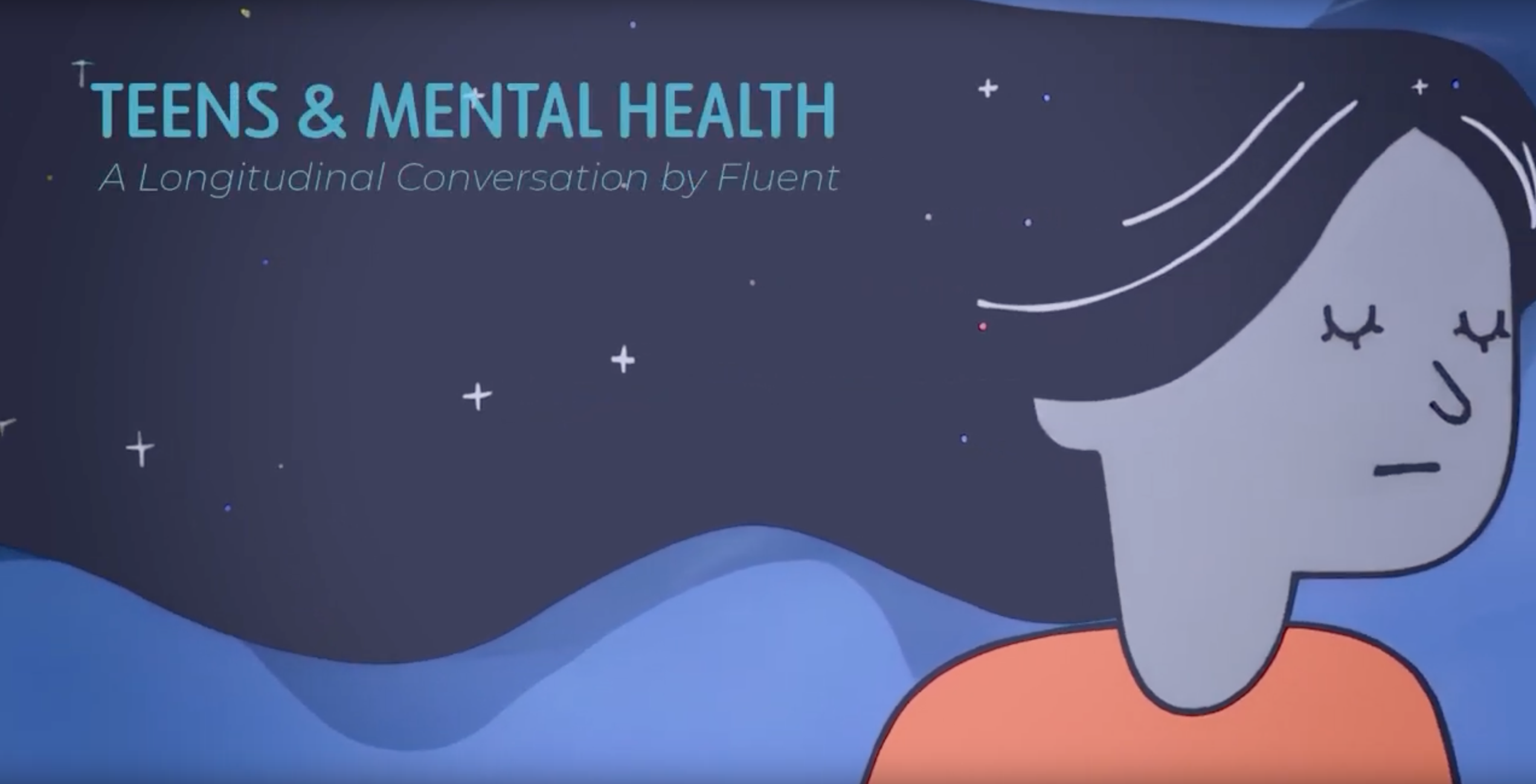
In 2022, as schools reopened and lockdowns lifted, we sat down with teens navigating the aftermath of the COVID-19 pandemic. Their stories were raw, honest, and deeply human.

Now, in 2025, we’ve followed up. What’s changed? What hasn’t?

This May, for Mental Health Awareness Month, we returned to these young people to hear how their perspectives on life and mental health have evolved. Across a seven-part video series, they speak openly about stress, identity, social media, and the importance of being heard.

Each video explores a different facet of teen wellbeing:

Teen Wellbeing after the COVID Pandemic — Angelina reflects on how the pandemic shaped her social life, and how those effects linger in college.

What is Mental Health? — Teens share what mental health means to them, in their own words.

Pressure — Then and Now — Leah discusses the burden of perfectionism and the power of self-compassion.

Stepping Back from Social Media — Blake talks about tuning out the noise and reclaiming peace of mind.

Being Yourself vs. Fitting into a Mold — Zander opens up about peer pressure, self-expression, and identity.

Advice for Adults — Listen to Your Teens — Teens offer heartfelt advice on how adults can better support them.

Reflecting on the COVID-19 Pandemic and Looking Ahead — A look at who they were, who they are now, and who they’re becoming.

We invite you to hear directly from them.

Watch the full series on YouTube

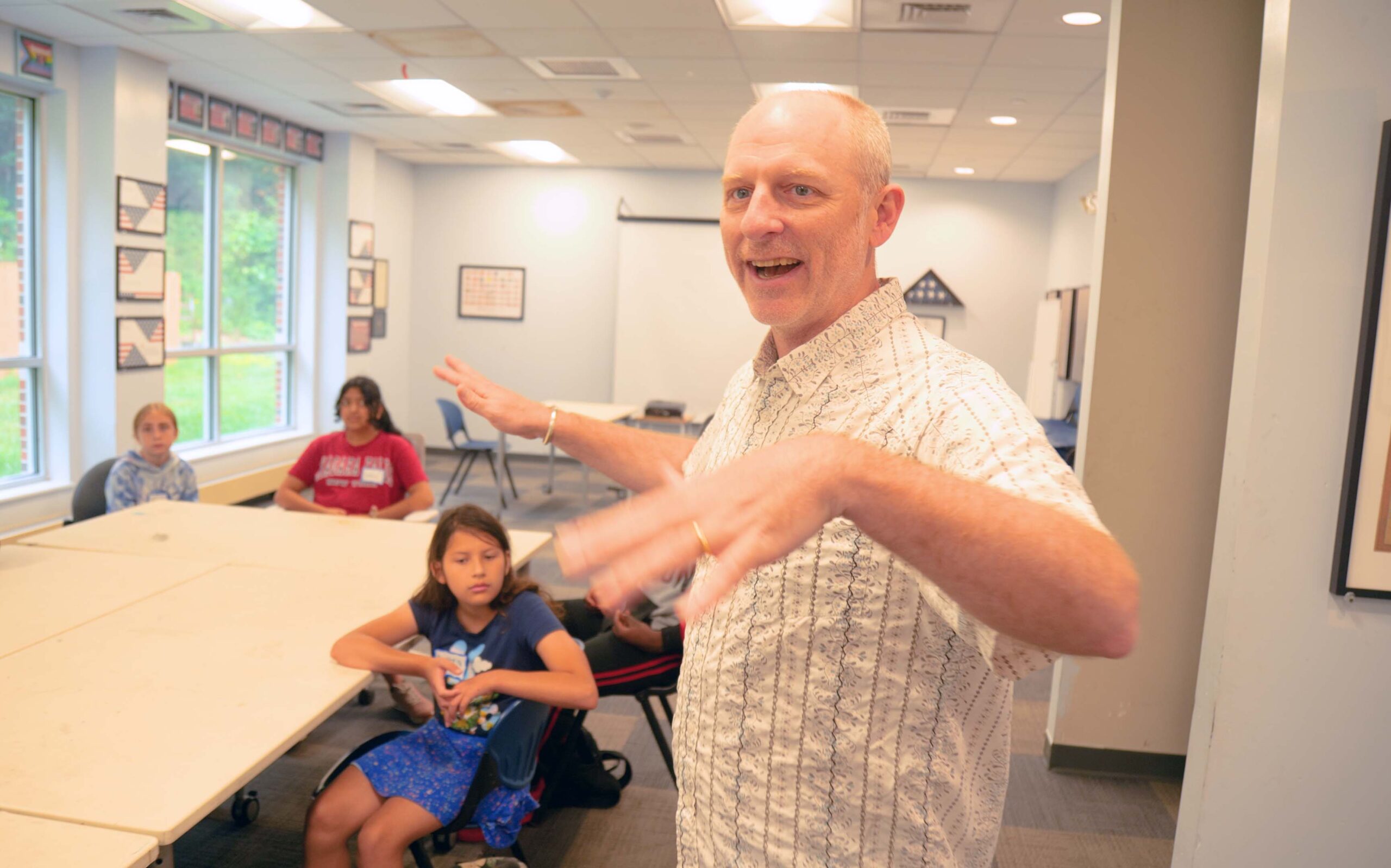
What happens when you combine summer camp energy with cutting-edge research? You get Research Camp —a fresh, participatory approach that brings kids into the heart of the research process. We sat down for a quick Q&A with Dan Warren, Fluent’s Director of Youth Development & Education, to explore how this idea came to life, what participatory research really means, and why kids aren’t just participants—they’re co-creators.

DW: It started with a pretty practical challenge. We were working with a client who needed to test a curriculum—something hands-on, engineering-related—and we needed a group of kids who could commit to doing something every day for 10 days. The most reliable way I could think to make that happen was to partner with a day camp.

I reached out to a local camp in Boston and asked if we could sponsor a group of kids to attend. In exchange, we’d get an hour of their time each day to run our sessions.

What we realized was that the cost of recruiting those kids and paying incentives wasn’t that different from just sending them to camp for two weeks. And this way, they got a full camp experience—and we got consistent attendance, energy, and engagement. It turned out to be such a win-win that it sparked the idea of building a whole model around that experience.

DW: Participatory research is all about bringing the people you’re studying into the process. Instead of asking questions from a distance, you’re inviting them to help shape the questions, explore the answers, and understand the meaning behind the insights.

Research Camp is a way to bring that approach to life with kids. Over multiple days, you build real rapport. They get comfortable, they open up, and they start to think more critically and creatively. They challenge ideas, build on each other’s thoughts, and begin to see themselves as co-creators in the process—not just subjects. That’s where the magic happens.

DW: Too often, their voices are filtered or left out entirely. In market research, we’ve traditionally asked parents what their kids think or only engaged kids when we’re testing products. But when it comes to big topics—education, health, policy—we haven’t given youth a real seat at the table.

What I’ve seen is that when kids are involved meaningfully, when their actual words and experiences are represented, it changes the research. It makes it richer, more grounded. And when they’re part of presenting that research too, it shifts how people listen. Their voices deserve to be central—not peripheral.

DW: We use a wide range of methods—co-creation sessions, focus groups, one-on-one interviews, kid-led interviews, and roundtables. Sometimes it’s a traditional focus group—but in the woods. That changes the whole vibe.

Because the kids are on-site for longer periods, we can go deeper. We can follow up on something someone said in a group and pull them aside for a one-on-one the next day. We’ve had kids interview other kids as ‘camp reporters.’ We build sessions that match the environment—collaborative, exploratory, and fun.

DW: First, there’s flexibility. You’re not locked into a strict schedule or format. If something interesting comes up, we can pivot. We can go back to a kid or reconfigure a group. That’s rare in research.

Second—and maybe more importantly—it immerses clients in the world of kids. A lot of our clients design for youth, but they haven’t spent much time with them outside their own families. At camp, they see how kids talk, how they move, how different ages interact. That exposure changes how they think about their work. They leave with a better feel for the people they’re designing for.

DW: A few surprises, for sure. One was how excited the kids were to come back. Many had never been to day camp before, so this was a big opportunity. They didn’t just enjoy it—they felt proud to be part of something important.

Another surprise: I wrote an article about Research Camp, and someone in Pakistan saw it and decided to create their own version there. She reached out to tell me how being outside in nature helped kids open up. That was powerful—it showed that this model can travel and adapt. Check out the article she wrote for us about her Research Camp with a group of girls in Lahore.

And then there’s just the joy of it. Being outside, having real conversations, watching kids light up when they realize their voice matters—it’s meaningful for everyone involved.

DW:Two things. First, that they have fun—real fun. That they get to play, explore, be outside, and connect with other kids. That’s meaningful on its own.

But second, and maybe more importantly, I hope they leave feeling heard. Not just like someone listened, but like their ideas mattered. We’ve had kids say things like, “Wait… are they really going to use what I said?” That moment—that realization that their words could shape something bigger—is powerful. It plants a seed of agency, of self-worth. That’s the heart of what we’re doing.

DW: I’d say: come visit. Spend some time with us at camp. Once you see the energy, the honesty, and the depth of insight that comes from these sessions, you’ll get it. You don’t have to take our word for it. Just be there. Watch how the conversations unfold when kids feel safe, seen, and engaged. There’s a kind of clarity that’s hard to unsee once you experience it firsthand.

DW: We’re launching camps this summer at Colorado Adventure Point in Denver, which is a fantastic facility. We’re really excited about that.

But I’m also thinking bigger—beyond just kids. I want to explore something I’m calling Family Fest. Not just parents. Not just kids. But families as a system—a whole unit of insight. I imagine bringing diverse families together for a few days in a retreat-like setting, where they can participate in meaningful, fun activities and research sessions.

Designers, engineers, and policymakers could attend—not to observe from the sidelines, but to engage. To spend real time getting to know the families they’re designing for.

Eventually, I could see Family Fest growing into something even larger—part retreat, part research lab, part conference. A place where researchers, funders, designers, and families all gather. Where findings are shared, ideas are built, and families are at the center of it all. Like a world’s fair for participatory research.

And I think there’s a real appetite for that. I’d love to collaborate with conference organizers like Common Sense Media, TMRE, Quirks, and the Society for Research in Child Development (SRCD); companies like Google, Sesame Workshop, Meta, LEGO, or PBS; and youth-serving organizations like 4-H, the Boys & Girls Clubs, YMCA, Campfire, and Scouting. There’s so much potential to bring more people into this work—and to center it around the voices that matter most.