


Gen Z

The American Academy of Pediatrics’s (AAP) new policy statement on digital ecosystems, children, and adolescents is a meaningful shift in how we talk about kids’ lives online. Instead of reducing the conversation to “screen time” or putting the burden solely on parents, the AAP uses a socioecological model, recognizing that children’s experiences with media are shaped by many interacting factors: their developmental needs, family context, platform design, and the broader systems that influence what shows up on screens.

As someone trained in developmental science, I immediately recognized Bronfenbrenner in the AAP’s approach. Children don’t develop in a vacuum, and neither do their digital lives. And that framing resonates with me not just as someone who cares about the research, but as someone who has worked directly with content creators and product teams trying to build better experiences for kids and families.

What I’ve Learned From Working With Content Teams

In my work, I’ve seen that many creators genuinely want to make content that is meaningful, age appropriate, and effective for children. But good intentions aren’t enough. The details matter too, including pacing, interactivity, clarity of learning goals, and how content fits into real family routines. And at the end of the day, the content has to be engaging enough for children to actually want to watch and learn from it.

And just as importantly, even the most thoughtful programming can be undermined by the surrounding digital environment. Features like endless scrolling, autoplay, algorithmic recommendations, and design patterns that prioritize engagement over child wellbeing can shape how kids experience content in ways creators never intended.

That’s why I appreciate how clearly the AAP distinguishes between high-quality and low-quality experiences, and how much attention they give to the digital ecosystem itself. It’s not only what children consume, but how platforms deliver it. This connects closely to an article I wrote recently about persuasive design. Even when content is high quality, the surrounding design patterns can make it harder for kids (and parents) to disengage.

I also loved seeing the AAP explicitly highlight PBS KIDS as an example of high-quality, child-centered content. As someone who consults on several PBS KIDS properties (e.g., Count on June Bug!, Dicey Escape, Skillsville,), I’ve seen firsthand how thoughtful design and developmentally grounded storytelling can make a real difference for kids and families.

Trust & Safety Isn’t Just a Policy Problem — It’s a Human Problem

Another part of the policy that feels especially important is its recognition that families cannot carry this responsibility alone. In the AAP’s recommendations, you can see a broader call for platforms to build stronger safeguards, reduce harmful defaults, and increase transparency.

From my perspective, this is where trust and safety conversations need to evolve.

At Fluent Research, we help companies bring youth and family voice into decisions about safety, wellbeing, and platform design. One of the clearest lessons from that work is that teens often know they want to break away from certain online experiences, but they can’t seem to do it. Not because they don’t care, but because many platforms are designed to make stopping hard. How can we expect young people to “just log off” when the system is built to keep them there?

Listening to youth and caregivers doesn’t replace policy or enforcement, but it grounds it in lived reality.

A Shared Responsibility Framework We Can Build On

What I take away most from the AAP’s policy is this: if we want healthier digital environments, we need to stop treating children’s media use as the individual failure of a child, a parent, or even a single platform. We need to treat it as a system that can be designed differently.

And the good news is that systems can change. We can build products that support children’s agency instead of undermining it. We can create content that helps families connect instead of creating conflict. We can involve youth and caregivers early enough that safety and quality aren’t afterthoughts.

The AAP policy doesn’t just offer guidance, it offers a framework for shared responsibility. And from where I sit, working alongside creators, researchers, and product teams, that shared responsibility is exactly where the future needs to go.

By Allison Caplovitz, PhD, Director, Content Research and Evaluation
We often talk about “systems change” in youth work, but we rarely slow down to ask what real change actually looks like. One of the most helpful thinkers on this topic is historian and philosopher Thomas Kuhn, who argued that progress doesn’t usually unfold gradually. Instead, we move through paradigm shifts or moments when the old way of understanding no longer fits, and a new model takes its place.

Kuhn found that:

Change begins with anomalies — ideas that don’t fit the old model but point toward something better.

Crisis is part of growth — when old approaches no longer meet new needs.

Paradigm shifts reorganize what’s possible — replacing the old frame with a more useful one.

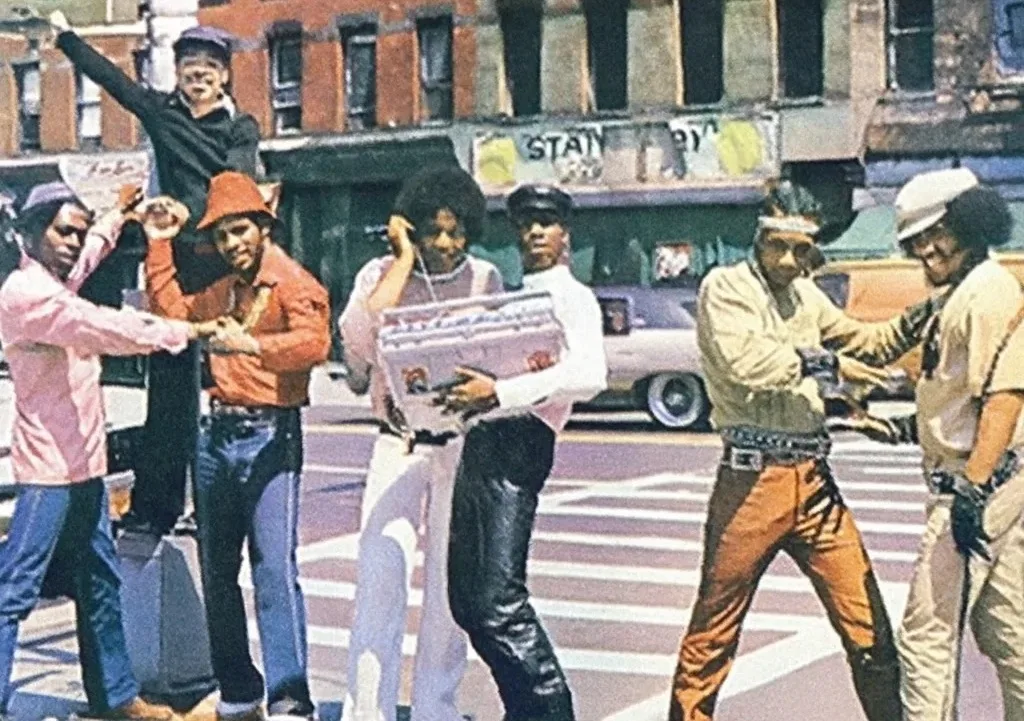
Kuhn’s ideas can feel abstract, but hip-hop gives us a grounded way to see them clearly. And it begins with DJ Kool Herc, widely regarded as the founder of hip-hop. In the early 1970s, Herc pioneered the breakbeat style of DJing, extending the instrumental “breaks” in records so dancers could keep moving, and built community-centered parties in the Bronx that became the foundation of the entire culture. If Herc represents the original paradigm of hip-hop (i.e., local, joyful and built on movement and connection), then the genre’s biggest innovations become examples of the anomalies and shifts Kuhn described.

Below are three of Kuhn’s core concepts, each illustrated through how hip-hop evolved from Herc’s foundation.

Anomalies: The moments that don’t fit

Kuhn argued that major change begins with an anomaly, a new idea or approach that doesn’t fit the established model. At first, anomalies can seem like outliers, but they plant the seeds for transformation.

In early hip-hop, DJ Kool Herc’s paradigm centered on celebration, dance and community connection. His parties created joy and belonging at a time when young people desperately needed both.

Then came Grandmaster Flash & the Furious Five’s “The Message” (1982). Flash took Herc’s structure and turned it in a different direction. Instead of reflecting the joy of the party, he described the poverty, pressure, violence and systemic neglect going on in the world outside of it. It didn’t fit the celebratory model. But it reflected lived reality.

This was an anomaly. The paradigm had not changed yet, but a new possibility had appeared.

Paradigm crisis: When the old model isn’t enough

Kuhn believed that once enough anomalies appear the existing paradigm enters crisis. This doesn’t mean collapse; it simply means the old explanation can’t account for everything happening around it.

In hip-hop, this crisis took shape when Public Enemy arrived. They took the honesty of “The Message” and amplified it into a full-scale analysis of policing, media and systemic racism. Their work wasn’t just storytelling, but rather sharp critique intended to educate and mobilize. They pushed hip-hop toward a purpose that Herc’s original model may not have anticipated.

Suddenly, the idea that hip-hop existed only for partying and dancing was no longer big enough. A new purpose was emerging: hip-hop as truth-telling and political engagement. The field expanded because it had to.

This is what crisis looks like: the old frame can’t contain the new reality.

Paradigm shift: A new model takes over

A paradigm shift, in Kuhn’s terms, happens when a new model replaces the old one and becomes the dominant way of understanding the field.

For this, we look again to Herc as the root: hip-hop as local, street-based and community-built.

Then we look to Run-DMC, who represented hip-hop’s cultural and commercial possibilities. They didn’t simply extend Herc’s model, they introduced a new one:

Their Adidas partnership opened the door for hip-hop fashion as global business.

Their presence on MTV broke racial barriers that had kept rap off the airwaves.

Their “Walk This Way” collaboration with Aerosmith expanded the audience for hip-hop dramatically.

Their arena tours demonstrated that hip-hop could operate at stadium scale.

This wasn’t incremental growth. It was a new paradigm: hip-hop as global culture and commercial force. Herc gave hip-hop its foundation and then Run-DMC and their massive fan base redesigned the structure built upon it.

Why this matters for people who work with youth

I assume that you aren’t reading this to learn about philosophy or music history. You’re probably reading it because many who work with young people are trying to understand change. More specifically, how to support it, how to recognize it and how to help create it.

Right now in youth work, I see several emerging and encouraging anomalies that may signal the next paradigm:

Schools and afterschool programs are beginning to collaborate more intentionally, creating 360° support around young people rather than operating in silos. This stands in contrast to the long-standing paradigm where schools focused narrowly on academics and afterschool programs were treated as optional add-ons, often working with different staff, goals and communication systems. The new coordination doesn’t fit that old model and may signal an emerging shift toward integrated youth ecosystems.

Youth voice is moving from “input” to genuine partnership, challenging long-standing adult-driven decision-making models. For decades, the dominant paradigm positioned young people as participants to be guided and consulted “when appropriate,” with adults designing programs, policies and priorities on their behalf. The growing number of youth advisory boards, youth-led research teams and shared decision-making structures represents a clear break from that tradition and may point toward a future where youth are true co-creators.

Mental health supports are being integrated into everyday youth spaces, not reserved for moments of crisis. This contrasts sharply with the conventional paradigm in which mental health was addressed only when young people were in acute distress and required referral to outside specialists. Embedding wellness practices into classrooms, afterschool programs and community settings departs from that crisis-response model and may indicate a shift toward proactive, holistic mental health support.

These ideas may seem small, scattered or inconsistent, but that’s exactly what anomalies look like in the beginning. They don’t fully fit the old framework, but they signal the edges of a new one.

Hip-hop shows us that the next paradigm rarely starts in the center. It begins at the margins: a block party, in a small studio, in the voices doing something that doesn’t quite match what came before.

If we can learn to recognize those moments in our youth systems and nurture them we may help create the next shift.

And if we didn’t know that before…well, now we do.

Dan Warren is Director, Youth Development & Education.

This article was originally published in Youth Today, on December 3, 2025.

In a world of endless scrolling and constant notifications, a growing number of young adults are asking a powerful question: what happens if we just stop? A recent study explored this concept, termed “digital quiet,” by asking 18 to 24-year-olds, a generation raised online, to take a one-week break from social media. The results were clear and immediate.

Even a short pause from the digital stream can significantly boost mental health. This finding aligns with years of research into how young people navigate complex online environments. They aren’t just passive consumers; they are actively managing emotional landscapes, setting boundaries, and learning to engage with technology in healthier ways. This post explores why taking intentional social media breaks is becoming an essential practice for well-being.

The Science Behind the Break: What a Week Away Can Do

The study, published in JAMA Network Open, split young adults into two groups. One group took a seven-day break from all social media platforms, while the other continued their use as normal. The findings from this digital detox were compelling.

After just one week, participants who took a break reported:

•  Lower levels of anxiety and depression.

•  A notable improvement in their overall wellbeing.

•  These positive effects were consistent for both young men and women.

For a generation that is exceptionally fluent in digital life, these results highlight a crucial reality: technical skill does not grant emotional immunity. The relentless pace and pressure of social media have tangible effects on mental health, even for the most savvy users.

Why a Digital Detox is So Effective

The benefits of stepping back from social media are rooted in how these platforms interact with our emotional and psychological needs. Our work with teens and young adults reveals several key dynamics that explain why a break can be so restorative.

It Interrupts Overwhelming Emotional Loops

Digital spaces can trigger rapid and intense emotional shifts. The constant flow of audio, video, and social feedback creates “emotional loops” that can become overwhelming, especially during stressful life periods. A digital detox breaks this cycle, giving one’s emotional system the space it needs to reset and recover.

It Creates Boundaries Where None Exist

Social media operates on a timeline without end. Conversations can be revived at any moment, and feeds refresh instantly with new content. This lack of natural endpoints creates an unspoken pressure to remain constantly available. Practicing digital quiet introduces a firm boundary that the platforms themselves do not provide, helping someone reclaim their time and attention.

It Pauses the Comparison Culture

The years between 16 and 24 are a peak period for identity formation, making young adults particularly sensitive to social comparison. Platforms filled with curated highlight reels can amplify self-doubt and fuel symptoms of anxiety and depression. Taking a break from social media interrupts these harmful comparison patterns, offering a chance to reconnect with one’s own sense of self-worth.

It Supports Developing Self-Regulation Skills

Even the most tech-savvy young adults are still developing crucial life skills like emotional filtering, boundary-setting, and self-regulation. These abilities are strengthened through practice. An intentional break acts as a training ground, supporting healthier and more mindful engagement when deciding to return to social platforms.

An Equal Opportunity Benefit for Mental Health

The study’s discovery that both young men and women benefit equally from a social media break is significant. With young women often using social feeds more and young men gravitating toward gaming, their online habits may differ, yett the core issues remain the same.

It isn’t a specific platform causing the strain. It’s the pace, the social pressure, and the unending demand for engagement that creates a heavy emotional load for everyone. A digital detox addresses these universal stressors, making it a valuable tool for all young adults.

Redefining the Relationship with Technology

It’s important to recognize that young people are not rejecting technology. They rely on digital platforms for connection, community, creative expression, and entertainment. They value what online life has to offer.

However, they also feel the significant weight of:

• Nonstop communication demands.

• Intense social expectations.

• Emotional and sensory overload.

• Poorly defined personal boundaries.

In response, many are already experimenting with ways to regain a sense of control. They are curating their feeds, silencing notifications, creating private online spaces, and taking intentional social media breaks. Digital quiet is not a top-down mandate; it’s a wellness strategy they are adopting for themselves.

How to Support and Encourage Digital Quiet

For parents, educators, and even platform designers, the conversation around social media and mental health is often framed as “good versus bad.” The reality is far more nuanced. Digital spaces can be sources of joy, learning, and support, but only when users have the skills and space to navigate them well.

Instead of advocating for total disengagement, a more helpful approach is to encourage balance. Here are some actionable ways to support young adults:

• Normalize periodic breaks: Talk about digital detoxes as a healthy and normal part of life, like taking a vacation from work.

• Promote self-regulation: Help young adults identify their own triggers for stress online and create plans for when to step back.

• Reduce the stigma: Frame social media breaks not as a sign of weakness, but as a proactive step toward better mental health.

• Advocate for better tools: Encourage the development of platform features that help users manage the intensity of their digital experiences.

Young people aren’t trying to escape their digital lives. They are learning how to use technology in a way that allows them to thrive both online and off.

The Takeaway: Reconnect with Yourself

Ultimately, digital quiet isn’t about disconnecting from the world—it’s about reconnecting with yourself. A week-long break may seem like a small action, but the research confirms its power. Even short pauses can reduce anxiety, improve mood, and help reset the emotional patterns tied to constant connection.

In a digital landscape defined by relentless feeds and the pressure to keep up, taking intentional social media breaks is emerging as an essential part of healthy living.

Stefanie Cousins is Vice President, Marketing & Communications at Fluent Research.