Content

The moment that changes a children’s series rarely just happens in the writers’ room. It can also happen in a living room.

A five-year-old girl tilts her head and says something unexpected about a character. A parent pauses and admits they’re not sure what the takeaway was. An eight-year-old boy laughs at a moment the creators thought was instructional, and tunes out during the explanation. Those are the moments that shape better content.

When people think about research in children’s media, they often think about measurement, proving that something worked after it’s complete. But the real power of research happens much earlier. Research doesn’t just validate content. It influences it.

Where Insight Changes Direction

In our work with PBS KIDS, Nickelodeon, and other children’s media clients across broadcast, digital, and interactive properties, we’re often brought in while content is still evolving. Animatics are rough. Scripts are fluid. Characters haven’t been finalized. Game mechanics are still being refined. That’s exactly when research matters most.

What we uncover doesn’t sit in a report; it informs revision. We examine questions that go beyond surface appeal:

Do children understand the core skill the episode is designed to model?

Do children understand the core skill the episode is designed to model?

Is the learning goal clear, or buried under plot?

Are the rules of the world intuitive to young viewers?

Does the problem feel concrete, or abstract?

When do children disengage, and what’s happening at that moment?

Are parents interpreting the educational intention the way producers expect?

Sometimes the insight confirms the creative approach. Other times, it shifts it.

We’ve observed executive function skills resonating clearly, while the context surrounding them creates confusion. In one project, adults found career themes compelling, but children experienced them differently. In another, humor carried the learning more effectively than explanation. Without research, those disconnects remain invisible. With research, they become opportunities to revise, clarify, and strengthen before a series moves forward. In other words, those insights lead to better alignment between intention and interpretation. That’s not cosmetic feedback. It’s directional influence. 

Research as a Creative Partner

The strongest development teams don’t treat research as a compliance step at the end of production. They treat it as a creative partner.

When research is embedded in the development process, it can influence story pacing, character development, world-building clarity, the explicitness of educational messaging, and the balance between entertainment and instruction. The result isn’t content that feels “researched.” It’s content that feels intuitive, because it aligns with how children actually learn.

That alignment doesn’t happen by instinct alone. It happens by listening. 

Designing for How Kids Learn

This article is the first in a series exploring how research shapes and strengthens children’s media development across the broader children’s content landscape.

In upcoming articles, we’ll feature insights from Allison Caplovitz, PhD, Director of Content Research and Evaluation, and Senior Researchers Sylvia Rusnak and Tiffany Salone, whose expertise in child development, educational measurement, and media testing informs the work behind the scenes.

If you’re developing content for children, consider this:

Do you know what kids are actually taking away?
Are you testing intention against interpretation?
Are you building in time to revise based on evidence?

Because if you’re building for kids, listening to them isn’t optional. It’s foundational.

By Stefanie Cousins, Vice President, Marketing and Communications

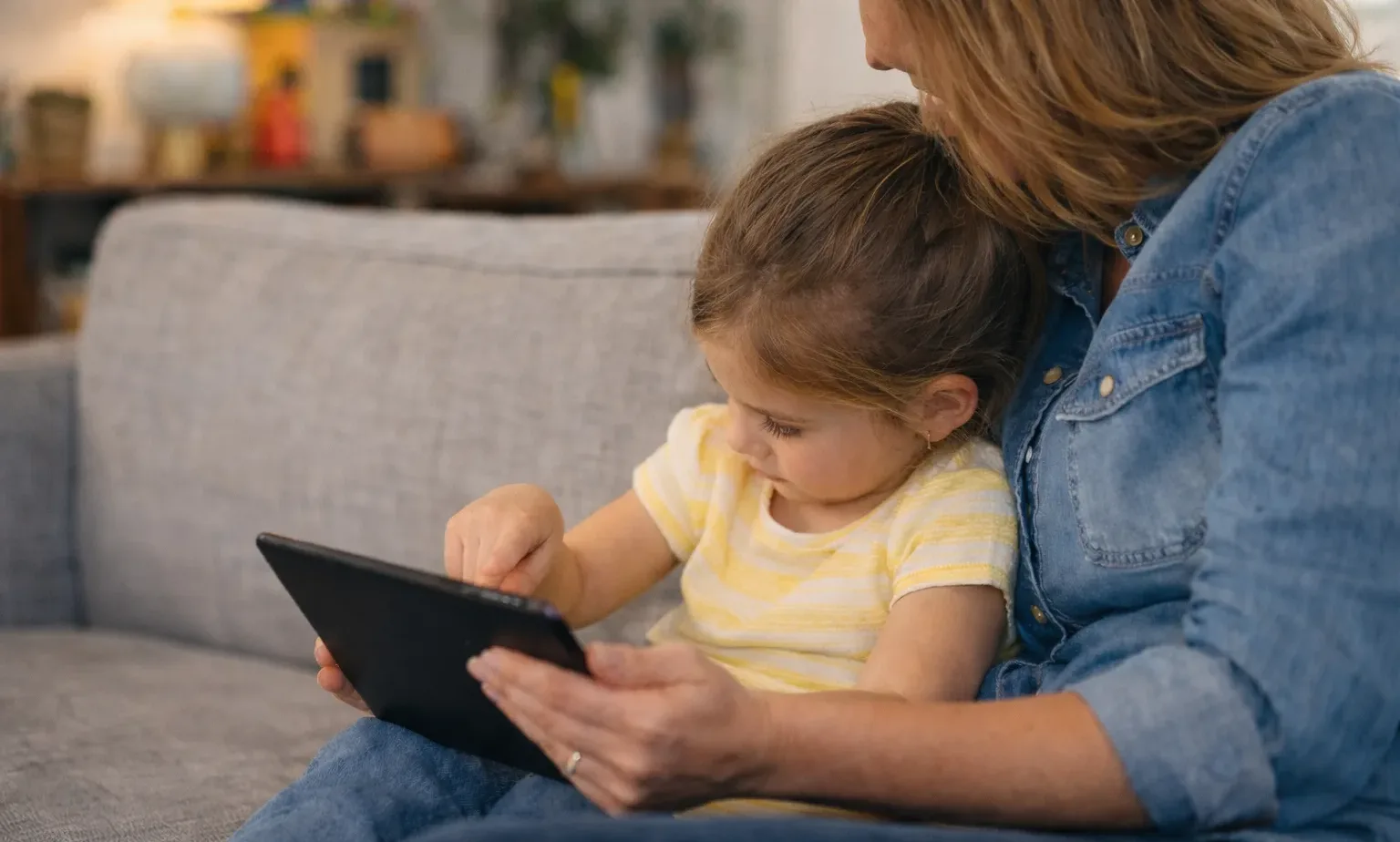
We’ve all seen it, or lived it. A young child is melting down over wanting “just one more minute” with their tablet. Often, all eyes turn to the parent, silently blaming them for a lack of discipline or control. But is that really what’s happening? Is this behavior simply a part of normal child development, or is it shaped, at least in part, by how the app itself is designed?

A compelling new study by Mallawaarachchi et al. (2025) (full text here) argues it’s not an either/or — it’s both. Their research shows how a child’s self-regulation abilities interact with persuasive app design (PD) to influence how easily (or not) the child can disengage from digital play. 

I heard Dr. Mallawaarachchi present this research at the 2025 Digital Media and Developing Minds International Congress last month, and I was intrigued. “Not all children use screens in the same way,” Dr. Mallawaarachchi explained to me during a recent phone call, “but also screens don’t affect all children the same way.” She noted that some children may come to the experience with a kind of differential susceptibility, meaning their temperament, developmental stage, or disposition might make them more likely to get ‘stuck’ in an app.

As a researcher who helps tech companies do better for children, this interplay between a child’s self-regulation and persuasive design really spoke to me. It reinforced why developmental expertise needs to be present at all stages of design, to ensure that products are not only engaging but also developmentally appropriate.

What is Persuasive App Design?

Persuasive design (PD) refers to features in digital apps or games that are intentionally created to keep users (in this case, children) engaged for longer. These features are intended to capture and hold the user’s attention and make it hard to stop. 

Common examples of PD in children’s apps include:

  • Rewards: Getting virtual coins, new characters, or access to new levels as part of the game experience.
  • Main character pressure: The character might frown or look sad if a child stops playing or makes a certain choice.
  • Locked features tied to in-app purchases: Making certain options of the game only available through payment, prompting children to ask for more time or money to continue playing.
  • Pop-up suggestions for other games: Distractions that encourage children to try an app that is similar to what they are already playing.
  • Autoplay or countdown timers: Creating urgency and discouraging natural stopping points.

While some of these features can enhance gameplay and support learning, they are often used to maximize engagement and revenue, sometimes at the expense of child well-being. Mallawaarachchi emphasized that PD is a continuum of features. ”Of course you want it to promote engagement, but if it’s coming at the cost of the users’ agency, if it’s coming at the fact that you don’t have the freedom to choose what to do, and if it’s coming at the cost of the users’ well-being, to me, that’s deceptive.”

The Study in a Nutshell

Mallawaarachchi et al. looked at how persuasive app design (PD) and children’s self-regulation interact to affect their ability to stop playing a tablet game. Self-regulation is a child’s ability to control their attention, emotions, thoughts, and behaviors, even when faced with distractions or impulses. This skill is what helps a child stop a fun game when dinner is ready, or transition calmly from digital play to another activity. This ability develops throughout early childhood and varies among children.

In the experimental study, 3- to 5-year-old children played one of three apps with similar content, each with low, moderate, or high PD. They also considered each child’s own self-regulation score as assessed by two different standardized measures. 

Study Findings

  • Children liked the apps equally, regardless of the number of persuasive design features. This means that app designers don’t need to rely on manipulative features to make apps enjoyable to children.
  • Children with high self-regulation could disengage from any app consistently, regardless of whether the app employed low, moderate, or high PD.
  • Children with low self-regulation disengaged more easily from low-PD apps, but took significantly longer and needed more support when using apps with moderate or high persuasive design.

“If persuasive features override a child’s available strategies and capacities,” Dr. Mallawaarachchi said, “then the child is no longer in control.”

Why it Matters

This study offers key takeaways for both parents and developers. It shows that:

  • Children aren’t drawn to high-PD apps because they’re more fun. They’re drawn in because of design tricks that make stopping harder.
  • App design interacts with a child’s developmental abilities, meaning some children are more vulnerable to persuasive features.
  • The design of the app and the child’s readiness to engage with it are equally important.

The study reveals that persuasive app design doesn’t make apps more appealing, they just make them harder to leave. This knowledge can empower caregivers to make more informed choices about the apps their children use. But it also makes one thing clear: parents shouldn’t have to shoulder this burden alone. Dr. Mallawaarachchi agrees. “One of our key overarching goals in all things we do is really to remove that burden and responsibility from parents and to move it at least a bit more towards other stakeholders like tech companies, their policies, and also the government.”

Shifting Responsibility

I also believe it’s time for a fundamental shift in responsibility. Just as the Children’s Television Act of 1990 rightly restricted character-based advertising during children’s programming, we need similar protections for children in digital spaces today. That means there’s no excuse for developers to keep relying on manipulative features under the guise of “fun.”

If we want a healthier digital world for all children, we can’t just focus on screen limits; we must also focus on screen design. We need to ensure that tech companies are equipped and motivated to do better. This is where my role, sitting at the intersection of developmental research and tech industry practice, becomes especially important. I work with companies that want to do the right thing, but need research-based guidance to get there. I see my job as translating important studies like this into practical insights that help teams design responsibly, before regulation forces them to change.

We also need the voice of children in the design process. I have spoken with hundreds of children in my work. Their opinions, experiences, and ideas are valuable contributions to the development of content made for them and their peers. It’s important that we not only design for them, but with them. Including children in the design process helps ensure the products we build reflect their actual needs, not just assumptions.

To have a real impact, we need:

  • Clearer regulations that limit how many and what kinds of persuasive design elements can appear in apps for children.
  • Industry standards that prioritize developmental needs over monetization, ensuring children’s well-being comes first..
  • Public investment in high-quality digital media for children, setting a higher standard for content development. This investment would demonstrate that it is possible to create engaging, ethical, developmentally-appropriate content to meet children’s needs.
  • Incorporating children’s voices and input from developmental experts to guide tech companies in creating better, more ethical products for young users.

It’s time to stop expecting parents to fight the screen time battles alone. It’s time to design better, together.

By Allison Caplovitz, Director of Content Research and Evaluation.

At Fluent Research, we believe that a good book has the power to inspire, educate, and transform. In honor of National Book Lovers Day, we asked our team to share what they’re reading right now and their thoughts on the content. From thoughtful novels to powerful nonfiction, their diverse tastes reflect a passion for life, learning, and laughter.

Aeliya Ahmed – Project Manager

  • Tuesdays with Morrie by Mitch Albom
  • A friend of mine recently recommended this book to me and I’m enjoying it so far. It’s a book that’s written by a former student who goes on weekly visits to his old college professor, Morrie who’s dying from ALS. In their weekly talks, Morrie imparts gems of his end-of-life wisdom. I’m still making my way through all the lessons this book chronicles, but it has been a great reminder of what is truly important.


Charlotte Beatty – User Experience Researcher

  • Orlando by Virginia Woolf
  • Orlando is my favorite book I’ve read so far this year. As a big Virginia Woolf fan, I find Orlando to be the most playful, hopeful, and self-expressive novel in her body of work. The book exists as both a work of fiction and a surrealist autobiography of Woolf’s own life, identity, and relationships. The gender-bending, poetry-obsessed, effortlessly endearing Orlando lives for hundreds of years through different time periods, switching genders and lives overnight, and experiencing different political moments and social catalysts from different stratifications. The book is a snapshot of Woolf’s meditations on gender, politics, and power in conversation with the time period she was alive in, but her thoughts still feel relevant to the world we find ourselves in today, nearly a century later. The 1993 movie adaptation starring Tilda Swinton is equally moving and delightful.


Evelin Garcia – User Experience Researcher

  • Magic in Room 216: How One Teacher Came of Age and Inspired the Next Generation by Andee Nunn
  • The author of this book, Andee Nunn, was my English teacher in high school. At the time, I was having a very difficult time and living with so much uncertainty about the future. Mrs. Nunn was extremely supportive and did everything she could to help me go to college. To this day, she has been one of the most supportive teachers I’ve ever had and I am still in touch with her to this day. In this book, she talks about her experiences navigating education and recalls stories of the students who have made a lasting impression on her throughout her career. I highly recommend this book!


Mary Meyn – Research Director and Chief of Staff

  • Real Americans by Rachel Khong
  • I recently finished reading Real Americans, by Rachel Khong. A few years ago I read Khong’s 2017 novel called Goodbye, Vitamin and loved it. It was original, poignant, and beautifully written. So when I saw that Khong had a new novel coming out I knew I had to read it. Real Americans is a story of cross-generational family identity, as told from two perspectives. The two perspectives were radically different yet equally compelling and believable. I really enjoyed this novel and would recommend it to those who enjoy fiction!


Kelly Sheehan Senior User Experience Researcher

  • Funny Story by Emily Henry
  • Funny Story is a fictional story about a children’s librarian whose fiancé dumps her for his childhood best friend. She finds companionship in her fiancé’s new partner’s ex and soon begins to fall for him. Emily Henry only has a handful of books, and I was so excited about the release of this new one. She has a way of creating vivid and compelling characters whose storylines feel both understandable and novel. Her books feel like a complete escape from reality, and I love being pulled into her stories!


Amy Warren – Senior Child Development Researcher 

  • Braiding Sweetgrass by Robin Wall Kimmerer
  • I was drawn to this book for its blending of Indigenous knowledge and Western science. As a botanist and a member of the Citizen Potawatomi Nation, Kimmerer offers a unique perspective on our relationship with the Earth. She shares the wisdom and teachings of her ancestors, emphasizing the importance of reciprocity and gratitude towards the natural world. She delves into the intricate details of plant life, revealing the complex systems and relationships that sustain ecosystems. I love how she weaves together these two ways of knowing. I think it’s this sort of “mending of splits” — between Wisdom and Science, Humans and Nature — that is most needed now.


Dan Warren – Director of Youth Development & Education

As a researcher specializing in media, technology and children, my work is informed by my interest in, and knowledge of, child development. At Fluent Research, we have collaborated with numerous media companies to provide insights into the evolving experiences of children and parents with digital media.

One recurring theme in our research is the desire of both parents and children to limit their screentime, but their inability to do so consistently. This discrepancy in knowledge and practice often stems from parents feeling overwhelmed by the plethora of media choices, and their fear that if they limit screens, their children might feel left out. For kids, the compelling nature of digital content, peer influences, the omnipresence of screens in their daily lives, and the algorithms that feed them more and more content make it extremely challenging to limit their use of digital media.

With the passage of the new Kids Online Safety and Privacy Act in the U.S. Senate this week, we are on our way to implementing some new protections for kids. It’s about time!

This new bill marries two different acts, The Kids Online Safety Act (KOSA) and the Children’s Online Privacy Protection Act (COPPA) 2.0. Both represent significant legislative efforts aimed at enhancing online safety and privacy for children. As this bill moves closer to passage, it is important to consider its implications.

• Kids Online Safety Act:

– KOSA aims to update and expand protections for children under 17.

– KOSA also provides guardians with more control over platforms, prevents features such as autoplay, and provides for stronger default privacy settings.

• Children’s Online Privacy Protection Rule 2.0

– COPPA 2.0, which is an extension of the original COPPA, was enacted in 1998 to regulate the collection of personal information from children under 13.

– This new version of COPPA 2.o would also expand protections for teens.

– The proposed updates in COPPA 2.0 also address targeted advertising, data retention practices, and the need for verifiable parental consent.

– COPPA 2.0 aims to provide stronger safeguards in this new era of media saturation.

The passage of KOSA in the Senate and future passage in the U.S. House of Representatives could mark a significant step forward in protecting children’s digital wellbeing. As someone working every day at the intersection of media, technology, and child development, I believe these legislative measures are long overdue. They not only aim to safeguard privacy but also to foster healthier digital habits among children. By creating a more regulated and child-friendly digital landscape, we can help kids and parents alike navigate the complexities of technology while minimizing potential risks. In this ever-polarized political landscape, we can all come together and agree that our kids are worth protecting!

By Allison Caplovitz, Director, Content Research and Evaluation

With its capacity to bring us knowledge, laughter, and new perspectives, social media can enrich our lives in countless ways. In this blog, our team shares their favorite accounts to follow. From thrilling outdoor adventures to insights into parenting with empathy, these accounts offer endless fun and inspiration. We hope you enjoy them as much as we do!


Lia Abrams: User Experience Researcher – Beli

Beli is an up-and-coming social media platform that allows you to search for restaurants in your area, save them to your wishlist, and rate them once you have dined there. You can see where your friends want to go and where they have been as well as what they ordered at each restaurant, how they rated it, and even pictures of their food. It’s the best way to find a great restaurant that’s been vetted by people you trust!


Aeliya Ahmed: Projet Manager – Ben Kielenski 

Ben makes TikTok videos that always open with “do you want to come on an adventure with?” He solo travels and does the coolest outdoor activities you could imagine – all the hiking, biking, kayaking, swimming, diving, running in the world! I love watching him because his videos remind me of how much there is to see – and he inspired me to go on my three-month solo trip earlier this year!


Farrah Brensinger: Senior User Experience Researcher – The Pancake Princess 

The Pancake Princess (Erika Kwee) hosts “data-driven bake-offs,” where she tests trending Internet recipes and lets her squad of taste testers give their verdicts. Whether you’re on the hunt for a new carrot cake recipe, or if you simply MUST know how Smitten Kitchen’s lemon bar recipe stacks up against Tartine’s, the Pancake Princess is your go-to guru!


Mary Meyn: Chief of Staff and Director, Research Born a Backpacker

One of my favorite accounts to follow is Born a Backpacker, the Instagram account of a family who share their travels around the United States and the world with their three young children. I love following their journey as a family doing everything from everyday things such as taking their kids to soccer practice to living on a boat for a week in Thailand. Nia, the woman who runs the account, is very down to earth and seemingly shows her family’s “real life.” It is the best of social media: an account that is inspiring, shares practical tips, and makes me feel connected to other people with similar interests.


Kelly Sheehan: Senior User Experience Researcher  – NurturedFirst

As a parent of a young child, I find NuturedFirst a super helpful account for tackling everyday challenges (like how to respond to tantrums) and more serious challenges (like body safety). The account owner (Jess) uses real world examples to demonstrate how to meet your child with deep empathy rather than focusing on the inconvenient behavior itself. I love this account because I feel like I walk away with more knowledge, more empathy, and greater appreciation for my child.


Amy Warren: Senior Child Development Researcher –  Darcia Narvaez

Darcia Narvaez is a central force within the paradigm shift BACK to humans’ original and “normal” cooperative orientation that begins within the human family. Simply, she is the Jane Goodall of humans, reminding us of our (human) needs, inner wisdom, and wellness-informed pathways to flourishing. Check out her educational outreach project, The Evolved Nest, to learn more! And be sure to explore #EvolvedNest #JaneGoodall #humanflourishing too!


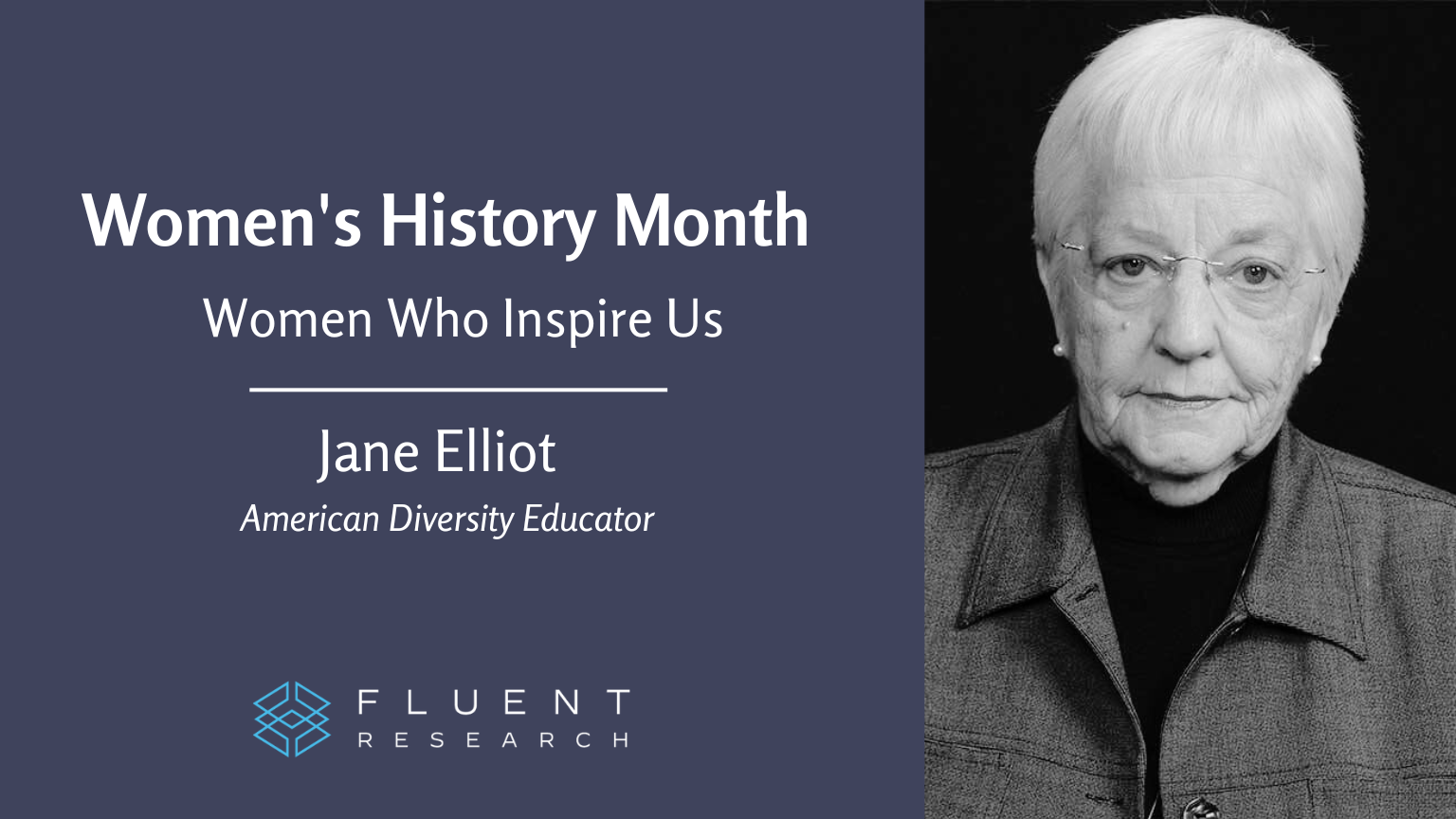
This Women’s History Month and we’re excited to share this post from Fluent’s Project Manager, Aeliya Ahemd, where she shares her admiration for Jane Elliot, a trailblazing educator.

A woman who inspires me is Jane Elliot, a powerhouse educator and anti-racist activist.

First coming across her work in a child development psychology course in college, I learned about her groundbreaking “Blue Eyes/Brown Eyes” classroom exercise with her third-graders to allow her students to see firsthand what experiencing discrimination could feel like. Fifty years later, her work is just as important as it was then.

Elliot’s ideas about race were not popular at the time, as they challenged the deeply ingrained attitudes of her small, predominantly-white town in Iowa, but despite criticism and backlash, Elliot didn’t shy away from being a tireless advocate for anti-racism education. She confronted injustice head-on — and continues to untill today, more than five decades later. Since her “Blue Eyes/Brown Eyes” classroom exercise, Elliot’s work has been dedicated to the pursuit of racial equity and justice. In 2019, Elliot gave a lecture at my college campus, and getting the chance to hear her speak ardently and witness her indomitable spirit was heartening.

Above all, I deeply admire Jane Elliot’s message on the transformative power of education. Through her work, she doesn’t just share knowledge; she instills empathy and compassion, shares meaningful actions we all can take to create a more equitable society, and challenges us to hold ourselves accountable. She’s teaching us how to be better people.

As we approach the conclusion of 2023, the Fluent team is excited to reflect on some standout moments that have shaped this year. Join us on this journey down memory lane as we celebrate impactful client work, innovative research initiatives, and the recognition of one of our exceptional colleagues.

1) Scholastic Kids & Family Reading Report

Fluent Research conducted the eighth edition of the Scholastic Kids & Family Reading Report™, a biennial national survey examining parents’ and children’s reading attitudes and behaviors. This year’s findings, including the correlation between reading frequency and emotional wellbeing, garnered attention from major media outlets such as Psychology Today and The Washington Post. Explore the results on the Scholastic Kids & Family Reading Report website.

2) Research Camp

Picture a camp nestled in the outskirts of Boston, where children engage in typical camp activities while sharing their thoughts with researchers on various topics. What began as a quest to find Latinx children for GBH’s curriculum testing transformed into Research Camp—an immersive research environment. This novel approach allowed our clients not only to observe focus groups and interviews but also to actively engage with the dynamic world of summer camp, fostering breakthrough insights and participant engagement. Keep an eye out for announcement about future Research Camps in Boston, MA (February 19-23 & April 15-19) and Los Angeles, CA, during school breaks and throughout the year. If Research Camp piques your interest, reach out to Nellie Gregorian.

3) Sofia Polo’s Outstanding Young Researcher Award

In November, Fluent’s Director of Research Strategy Sofia Polo received the Outstanding Young Researcher Award at the 2023 Marketing Research and Insight Excellence Awards. Presented to individuals under 30 who have made significant contributions to the industry, this accolade recognizes Sofia’s dedication, client focus, and insightful analyses. Sofia’s achievement underscores Fluent’s commitment to nurturing talent and innovation in market research.

As we bid farewell to 2023, these milestones stand as testaments to Fluent’s commitment to excellence, innovation, and client satisfaction. We are grateful for the opportunities to collaborate, learn, and grow throughout the year. Looking ahead, we remain dedicated to pushing the boundaries of what is possible in market research. Thank you for being a part of our journey, and here’s to another year of continued success and meaningful contributions in 2024.

By Stefanie Cousins – Vice President, Marketing and Communications

It’s Boston, January 2021, and I am standing in the middle of an empty schoolyard, with an audio recorder strapped to my belly. I’m holding a long boom pole with a big fluffy microphone, and my face just lost the ability to convey expression. It is, as we locals say, “wicked cold”.

My colleague, Fluent’s Director of Productions Heath Cozens, is pointing his camera at a focus mark on the ground, messing around with various buttons, knobs, and attachments. What we both know is that a slew of kids are about to come outside and, since they can’t stay out long due to the dangerous cold, and we have limited time to film them, there’s no room for mistakes with this shot.

Snow starts to fall, the wind picks up, and I raise my pole and call out to the gymnasium door for our first kid. Without hesitation, a seven-year-old girl runs up to her mark, displays her painting to the camera, says her name and age, and bolts back inside to comfort.

Personally, I love the cold, and I’m always happy to step out of my comfort zone. In this case, I’m working with a seasoned professional director, capturing some closing visuals for a documentary film, kicking off a professional collaboration and friendship that’s not only expanded my skillset but also given me an entirely new perspective on the world of data gathering, analysis, and reporting.

One of the truly unique aspects of Fluent and the vision of the President and founder, Nellie Gregorian, has been the way that video is used as a storytelling device to bring research to life and create the opportunity for deep connection with the people that we study. Initially, I regarded this approach as creative embellishment. Really cool stuff, but it was an add-on to the “real” research that it was being connected to. As I delved deeper and had the privilege of collaborating with our Director of Productions, Heath Cozens, I came to understand that it was far more than mere aesthetic flourish.

What struck me was the uncanny parallel between Heath’s documentary creation process and the research work I was familiar with. He meticulously compiled questions and goals, collected data, analyzed those data, and then wove a compelling narrative grounded in the data. This process felt very familiar, connecting easily to my training as a researcher.

What was new to me, or at least underdeveloped in me, was the artistry of his process. At each stage of production, Heath was unwavering in his pursuit of aesthetic excellence and in ensuring that the stakeholder’s experience was nothing short of exquisite. He would patiently wait for the perfect conditions, fine-tune lighting incessantly, and bear the physical strain of holding a camera up for what seemed like an eternity, all in the name of capturing an enlightening conversation between two eight-year-olds on a chilly January day. In the realm of academia, where I trained to be a researcher, scientific rigor was the sole beacon.

But Heath taught me that we need not sacrifice the artistry of our work for the sake of scientific rigor. This shift in perspective has breathed new life into my work and offers valuable insights for all researchers:

1) Always stand poised to seize a moment and be prepared to immerse yourself in it, however long it may take.

2) Ensure you do not overshadow the voice of the participant; their narrative should shine unhindered.

3) Recognize that every facet of the process holds significance, and each step should be executed with meticulous care and artistic flair.

4) And, at the very least, stay out of the shot!

As I continue to work with Heath, I look for new ways to learn from him and think not only about how we can incorporate more video into our reporting but also about how his methods can help our whole Fluent team see things through a different lens.

By Dan Warren, Director of Youth Development & Education. 

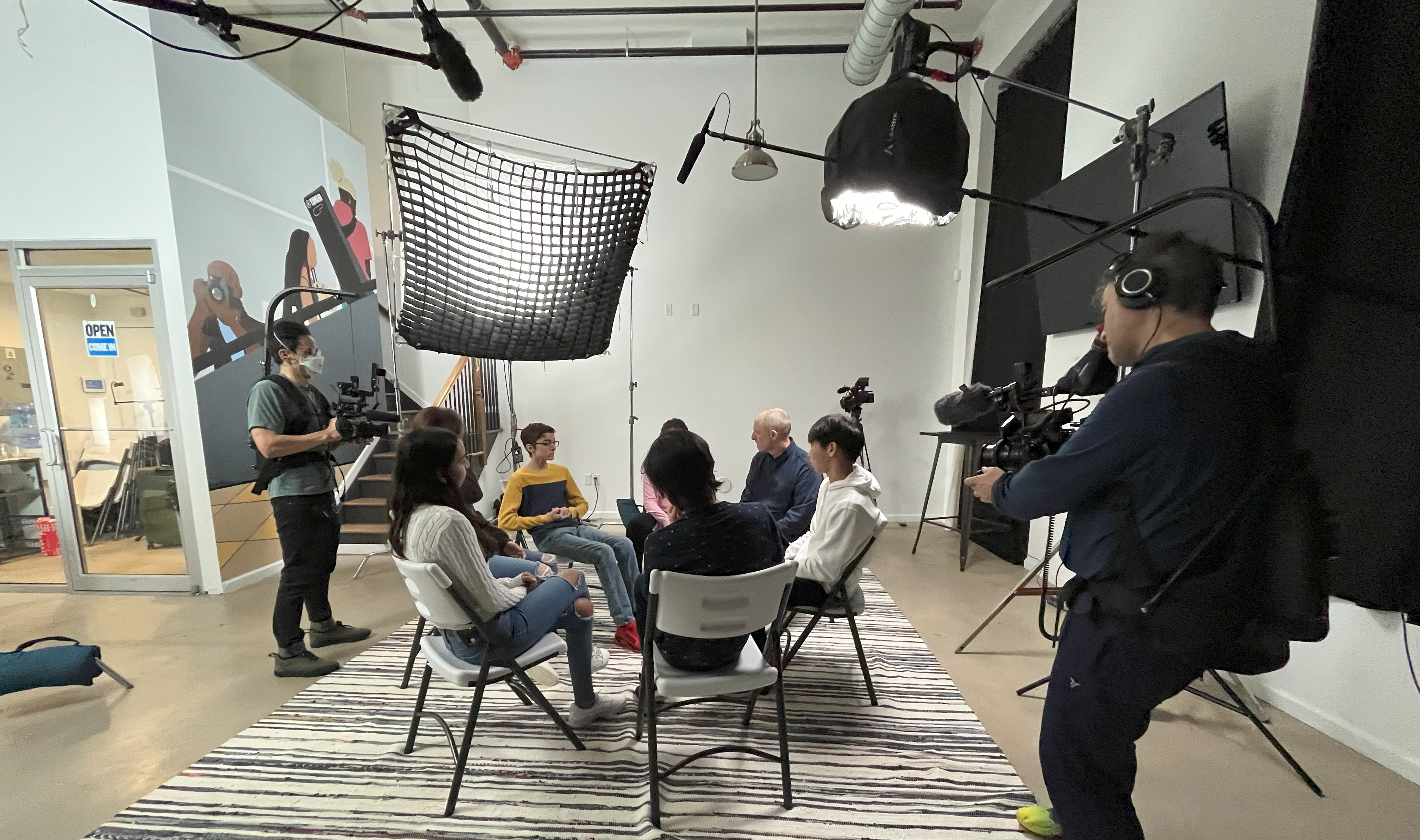
Image: Cinematographer Michael Werner (left) and director Heath Cozens (right) film a discussion led by Dan Warren (center).

When I was younger, I used to read a lot! Books were my gateway to exploring the world. Due to my family’s financial constraints, vacations and other summer activities were not available to me. Instead, books became my window to new cultures, places, and experiences.

Along with the movie The Parent Trap, the book Sleepaway Girls by Jen Calonita sparked my interest in going to summer camp and the possibility of forming lifelong friendships while experiencing all that nature had to offer. Inspired by this book and the movie, I immediately began researching different summer camps in my area hoping to recreate the adventures I had read about. Having been to summer camp, my neighbor recommended YMCA Camp Woodstock located in Woodstock, CT, describing it as a magical place and an experience he never forgot. Hoping to have that same experience, I reached out to the camp director directly and asked how I could go to summer camp too. While there were some scholarships left to partially cover the cost of attendance, I would have to pay the rest myself. Undaunted, I made it my mission to advocate for myself to attend. I begged my parents to let me go, got straight As that quarter to show my parents my commitment, and put together a potential payment plan if I were to attend.

After tirelessly advocating for myself, I was accepted into YMCA Camp Woodstock’s Leaders-In-Training (LIT) program – a six-week experience for teens that changed my life. I made some amazing friends from all over the world including Spain, France, and Italy. I participated in fun activities like kayaking, camping, learning camp songs, and competing in dining hall chant battles. I loved it so much that I returned to camp the next summer, eager to relive the magic of summer camp.

This summer, when Fluent announced plans for a research camp, I found myself in a position to pay forward the life-changing experience I had gained all those years ago. In partnership with New England Base Camp, Fluent arranged for a group of mostly Latinx tweens to attend day camp for two weeks where they could take part in all the camp activities, as well as research-related activities, including activity sessions and focus groups. To alleviate some of the cost, Fluent offered summer camp scholarships to the research participants, which deeply resonated with me. I was so excited for the opportunity to help others have that same amazing summer experience I had when I was growing up.

Unfortunately, I quickly realized that Latinx families have major reservations about the idea of summer camp because they immediately think that their child will be sleeping there, which raises major concerns for them. Most don’t realize that there are also day camps where kids just go for a few hours a day. I had to work very hard to reassure them they would be safe and would not be sleeping there since it was a day camp. I served as the main point of contact for them and their children. Knowing that I also come from a Latinx background and speak Spanish fluently, they felt much more comfortable opening up to me. I met with them individually before they enrolled to answer any questions and for them to get to know me as well. Once the camp started, they knew they could call or text me at any time, easing their concerns and solidifying mutual trust.

The stories of three tween girls who had recently arrived from El Salvador especially resonated with me. To attend this camp each day, they needed to travel roundtrip from East Boston to Milton, MA, yet their mothers worked 10-hour days and had no way of picking up or dropping them off at camp. Because the mothers had wanted to provide opportunities for their girls to practice their English, assimilate into their new home, and make new friends, they found a friend for the girls to stay with so they could be closer to the camp. I appreciated that the moms were trying so hard to have their daughters attend summer camp. Their experience touched me and reminded me of all the advocating I had to do for myself to attend camp all those years ago.

As camp ended, it was clear that these three girls had been positively impacted by their camp experience and left a lasting impression on the lives of their fellow campers. Yes, they had formed new friendships, but they had also become a source of support for each other and an inspiration to the camp as a whole. The oldest girl, an 8th grader, took on the role of translating for the other two. Together they helped other campers and staff practice their Spanish-speaking skills, and educated everyone about Salvadoran culture.

From the outside looking in, Research Camp had such a tremendous impact on the lives of these girls and I think that was very special. Reflecting on the summer and watching the campers navigate the program reinforced the idea that camp has the potential to serve as a catalyst for growth, resilience, and cross-cultural understanding.

By User Experience Researcher, Evelin Garcia.

Individuals who may be struggling with loneliness, depression, or anxiety and are in need of immediate relief or support are increasingly looking to apps as a middle-path tool when a mental health service provider may not be the most expedient solution. This BBC article explores the innovative possibilities of a chatbot therapist app called Replika, aimed at providing AI-generated counseling services to its users. Lia Abrams and Charlotte Beatty, two researchers at Fluent, consider the following to be important areas of research to investigate:

1) The consequences of around-the-clock access to chatbots. In face-to-face therapy, skill development often hinges on the time a patient spends away from a therapist; that is, the time patients spend in day-to-day life putting their coping skills into practice. While around-the-clock care could be useful for individuals who need immediate support, it’s important to consider how constant access to a chatbot could facilitate patterns of depending on the resource in times of stress instead of developing personal resilience.

2) The commitment to equitable mental healthcare. The technology described in this article primarily addresses the wider population of individuals with mild to moderate mental health issues. However, it is necessary to consider how the smaller population of people with severe mental illness could utilize the service. These individuals face significant stigma, present a more complex set of challenges, and potentially need more support and funding for their healthcare.

3) The ability of AI to replicate natural human skills and instincts. An important component of therapy is the ability to read a patient’s body language and facial expressions. Will an AI chatbot be able to pick up on the intricacies of a patient’s energy? How will this work if there is no prior knowledge of who the patient is, their personality, or their mannerisms?

4) The security of patient information and the quality of data mining. One important part of therapy is the confidentiality agreement that therapists sign, prohibiting them from disclosing patient information outside of sessions. How can chatbot therapy services ensure that patient data is not misused? In addition, if the data that chatbot algorithms draw on is skewed or doesn’t cover a wide enough demographic of people, then can algorithms truly care for all individuals as they see fit? There is substantial evidence that mental health experiences vary significantly across demographic lines like gender, race, ethnicity, and sexuality. How can AI and chatbots truly cater to the needs of each individual’s intersectional identity?

Here at Fluent, we prioritize research that amplifies voices of underrepresented communities. While the possibility of AI-generated mental healthcare offers significant benefits for increased accessibility to self-help practices, the above are factors that should be addressed and researched in order to ensure that platforms such as Replika can reach and serve a wide range of individuals.

By Lia AbramsCharlotte Beatty