

Content

In 2021, Chris McCarthy, the president and CEO of Viacom-CBS and MTV Networks, launched the Mental Health Storytelling Coalition and the publication of the Mental Health Media Guide. The purpose of the guide is to teach content creators how to develop more positive mental health storylines that include a diverse range of experiences. With the release of “Wolf Pack,” the first scripted series using the guide’s recommendations, Fluent’s UX Researcher Charlotte Beatty shares her thoughts about the impact of media on teen wellbeing and the implications for the guide on developing storylines that change the narrative on mental health.

“Wolf Pack” is the first scripted series from MTV Entertainment Studios to incorporate the guide. The writers room also worked with consultant Courtney Knowles, senior media advisor for The JED Foundation (JED), a Fluent client and a nonprofit geared toward protecting emotional health and preventing suicide that is particularly geared toward teens.

Most of us will never forget the movies, TV shows, music, and media that made an impact on us as teenagers. Adolescence is a period where individuals are searching for meaning and self-discovery, and nothing feels better than finding a piece of art that makes you feel seen. For about half of the population, adolescence is also a period where mental illness symptoms begin to appear, typically anywhere between ages 14-24.

At Fluent, we talk to teenagers every day about experiences with growing up, mental health, and the media for clients such as JED. In recent years, shows like Euphoria, 13 Reasons Why, and Stranger Things have captured the attention of teenagers across the nation because of the different ways the shows tell stories about mental illness. Storytellers have experimented with a range of portrayals — from painful hyperrealism, as seen in Euphoria, to personifying mental illness with monsters and fantasy world building, such as with Vecna in Stranger Things. Reported rates of mental illness among teenagers have been on the rise, so it’s no wonder that these shows have garnered so much attention, whether it be praise or criticism.

In a post-pandemic world where teenagers are more tapped into media than ever before and having an “emotional support show” has become a regular turn of phrase, it’s exciting to dream of new ways that research can support production development in the film and television space. MTV and its collaborators are breaking exciting ground with their Mental Health Media Guide as they broach one of the most prominent and topical areas of contemporary television for teens. This progress builds on the legacy of research in media, initiated by researchers at The Joan Ganz Cooney Center and Sesame Workshop, but turns the conversation towards adolescence and mental wellbeing with a focus on considering realistic, positive solutions, and problem-solving when it comes to mental health storytelling.

By Charlotte Beatty

A wise and dear professor once told me, “The medium is not the message. The message is the message.” And when television was the medium, that was certainly true. But is that still the case with the proliferation of interactive media for children taking hold? Does the interactivity of the medium outweigh the content being delivered on it?

In the podcast series, Chasing Life, Dr. Sanjay Gupta delves into the science behind the impact of technology on our brains. This particular episode, Inside a Lab Studying Toddlers and Touchscreens,” explores the impact of interactive touchscreen technologies on very young children. Dr. Dimitri Christakis, a pediatrician and director of Seattle Children’s Research Institute, explains how his research is finding that children between the ages of 18 and 24 months struggle to disengage from an app in comparison to a traditional toy. This knowledge triggers questions for both parents of young children as well as the technology companies that create these apps. What can parents and tech companies do to prevent adverse effects on children’s young brains from this relatively new technology?

As a parent myself, I see in my teenagers how the interactivity and stimulation of technology keeps them fully engaged and immersed. And in my role as Director of Content Research and Evaluation at Fluent Research, I help technology and media companies understand how children and parents experience apps, games, and other products so designers and producers who create digital content for kids do so with their wellbeing in mind. This is more important than ever as technology continues to evolve and draw in the attention of a generation. As Dr. Christakis says, “Every program is educational. The question is, ‘What is it teaching?’” We need to do better for our children.

By Allison Caplovitz, PhD

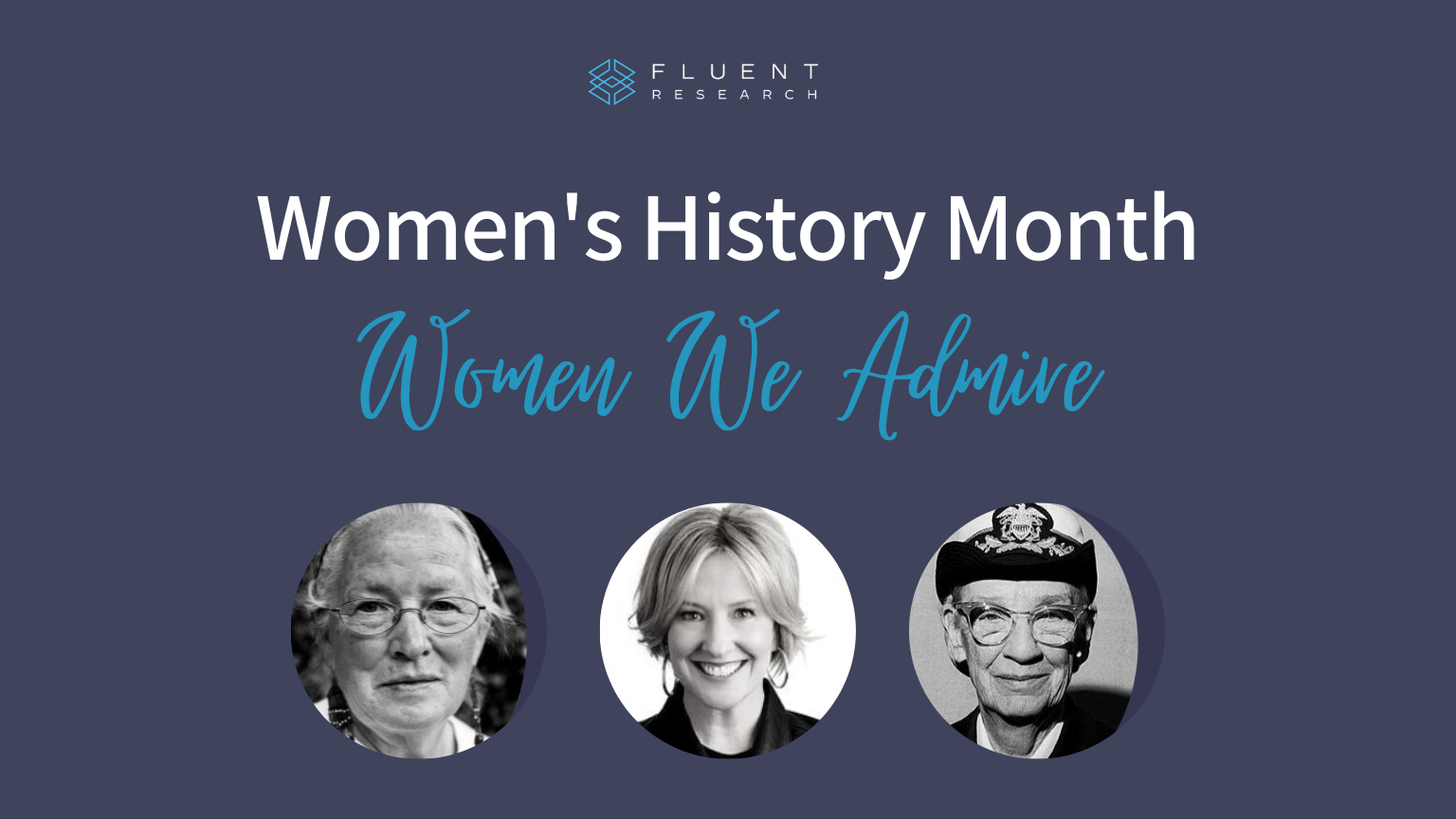
In celebration of Women’s History Month, we asked a few of our Fluent team members to write about the women who inspire them. From lauded professors to pioneering civil rights activists, read below to learn more about the important work and incredible achievements of the women we admire.

Quantitative Researcher Amber González on Joan Trumpauer Mulholland

In November 2016, I had the pleasure of meeting Joan Trumpauer Mulholland — a renowned activist. Joan participated in and helped organize some of the most influential moments of the 1960s Civil Rights Movement, including the Freedom Rides, Jackson Woolworth’s sit-in, the March on Washington, and the Selma to Montgomery March.

Despite her upbringing as a young white woman in the segregated South, being a child of segregationists, and a great-granddaughter of slave owners, Joan had an unwavering dedication and commitment to challenge racial segregation. She shed light on the repercussions of her involvement, including being disowned by her family, imprisoned and placed on death row, and hunted by the KKK for execution. It was truly inspiring to hear a first-hand account of stories from an unlikely hero of the 1960s Civil Rights Movement, whose devotion to the cause required the utmost conviction and courage.

Her legacy does not end there. To this day she continues to challenge racist ideology through the efforts of her organization, the Joan Trumpauer Mulholland Foundation whose mission is to educate youth about the Civil Rights Movement and inspire others to make a difference through activism in their community.

Reflecting back, I’m grateful I crossed paths with Joan when I did, during my senior year of college, one week after the 2016 election. It was a period marked by an uptick in incidents of racist and xenophobic harassment on my college campus and across the country, and her inspiring story and words of wisdom reinvigorated me to remain engaged in activism on and off campus.

Senior Researcher Sylvia Rusnak, Ph.D. on Brené Brown

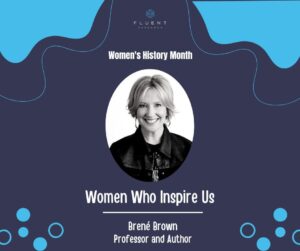
One woman that inspires me is author and professor Brené Brown. She researches courage, vulnerability, shame, and empathy. I admire her because her research has real-world impact; her work helps us understand ourselves and create meaningful change in our lives.

Brené is a storyteller and communicates her work in a way that resonates. As a researcher, I strive to conduct research that ultimately improves the lives of others and communicate it in a way that clicks.

Brené’s work also has importance for how we show up in our lives for ourselves, for others, and also for how we work. Vulnerability at work allows for creativity and meaningful conversations. Her work inspires me to try to be brave: to show up to take action, rather than to stand by on the sidelines, simply observing or commenting on the actions of others.

Senior User Experience Researcher Farrah Brensinger on Grace Hopper

If you have ever noticed and reported a ‘bug’ to software developers, you have Grace Hopper to thank for this offbeat way to describe a software glitch. Hopper minted the label after a bonafide moth got stuck in her computer and caused it to go haywire.

Hopper’s influence in software goes far beyond adding the unusual term to our everyday computer lexicon. The first woman to receive a Ph.D. in Mathematics from Yale, she went on to create A-O, a ‘compiler’ program that translated mathematical terms into machine-readable computer code. She later invented a compiler that made machine-readable code from English-language inputs, enabling mainstream computer usage for those with non-programming backgrounds. She received the 1991 National Medal of Technology from President George Bush, recognizing her technological impacts on ‘open[ing] the door to a significantly larger universe of users.’

When asked about her most important accomplishments, she listed training young people right alongside her programming triumphs. Undoubtedly, Grace Hopper would be pleased to see so many young women entering the computer science field today, ready to push the boundaries of programming, just as she did.

Grace Hopper’s story inspires me to innovate for good and look for additional opportunities to get life-changing technologies into the hands of as many people as possible.


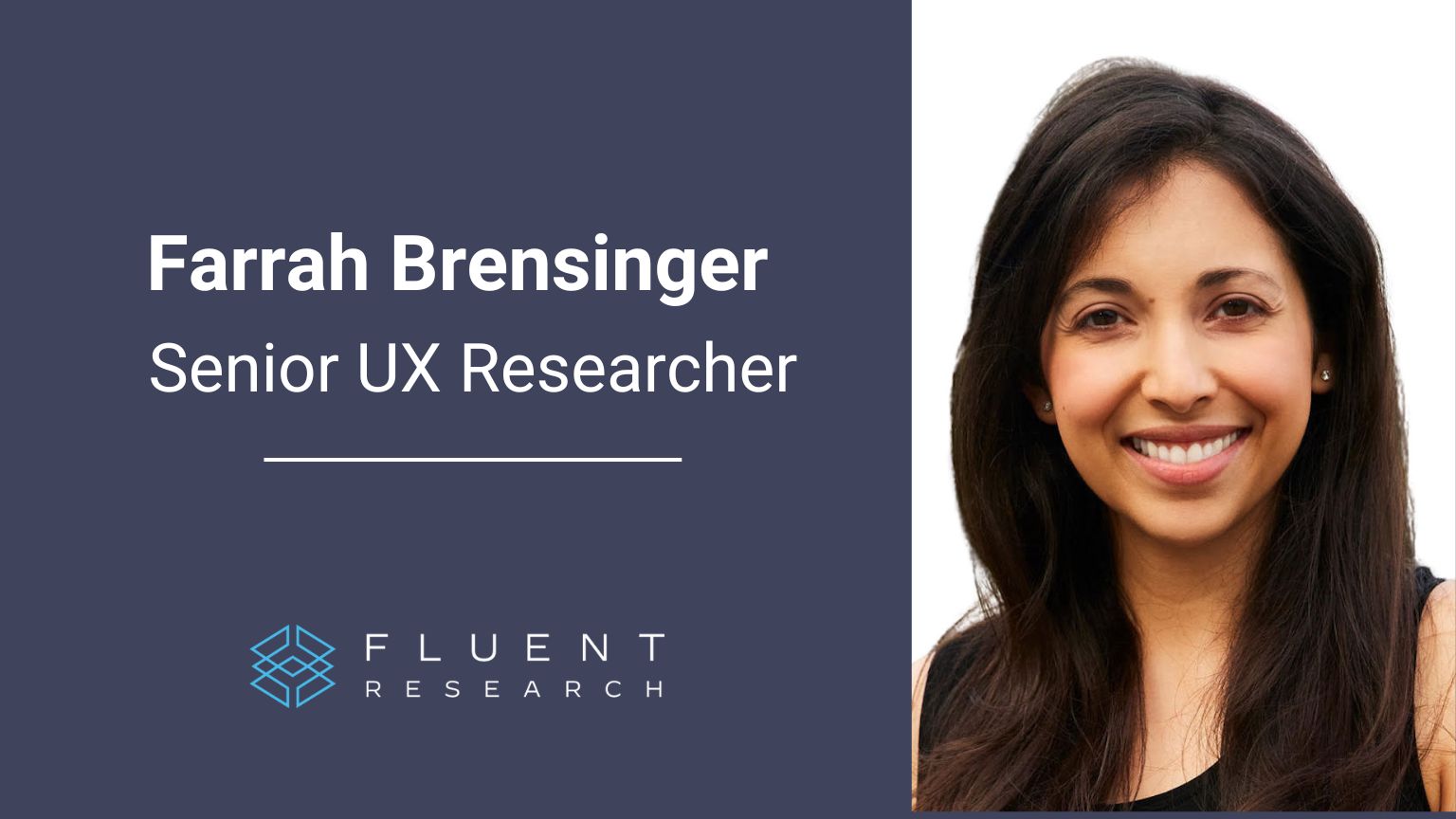
January 17, 2023 (New York, NY) – Fluent Research, a data and insights-driven strategic consulting firm, announced today that Farrah Brensinger has been promoted to Senior UX Researcher. In this role, Farrah will oversee a wide range of global research studies, informing the development of new technologies and content.


“Farrah has demonstrated her deep analytical skills while working on diverse projects, ranging from UX research to impact assessments of educational content,” said Nellie Gregorian, Founder and President of Fluent Research. “I am excited to see Farrah’s accomplishments in her new role.”


Farrah is passionate about designing products, services, and experiences that create a better quality of life and a brighter future for all. She leverages qualitative research methodologies to build empathy and provide data-driven, actionable recommendations.


Prior to joining Fluent, Farrah worked at Shimmy Technologies, contributing user research for the development of game-based training tools used in the manufacturing sector.


About Fluent Research
Fluent Research is a data and insights-driven strategic consulting firm. Since 2006 Fluent has leveraged understanding of human behavior to help the world’s best-known brands and organizations advance worthy causes, innovate transformational products, and successfully navigate change. Fluent’s work centers around three practice areas: thought leadership research, formative research and evaluation, and social impact assessment. Fluent has applied rigorous and innovative research solutions in service of promoting children’s access to and quality of education, and gender equality in the U.S. and in over 70 countries around the world. Fluent’s creative arm, Fluent Productions, is an award-winning producer of original documentary content that harnesses the power of visual storytelling to bring attention to important issues facing our society, to build empathy and inspire action.

Contact: Stefanie Cousins
[email protected]


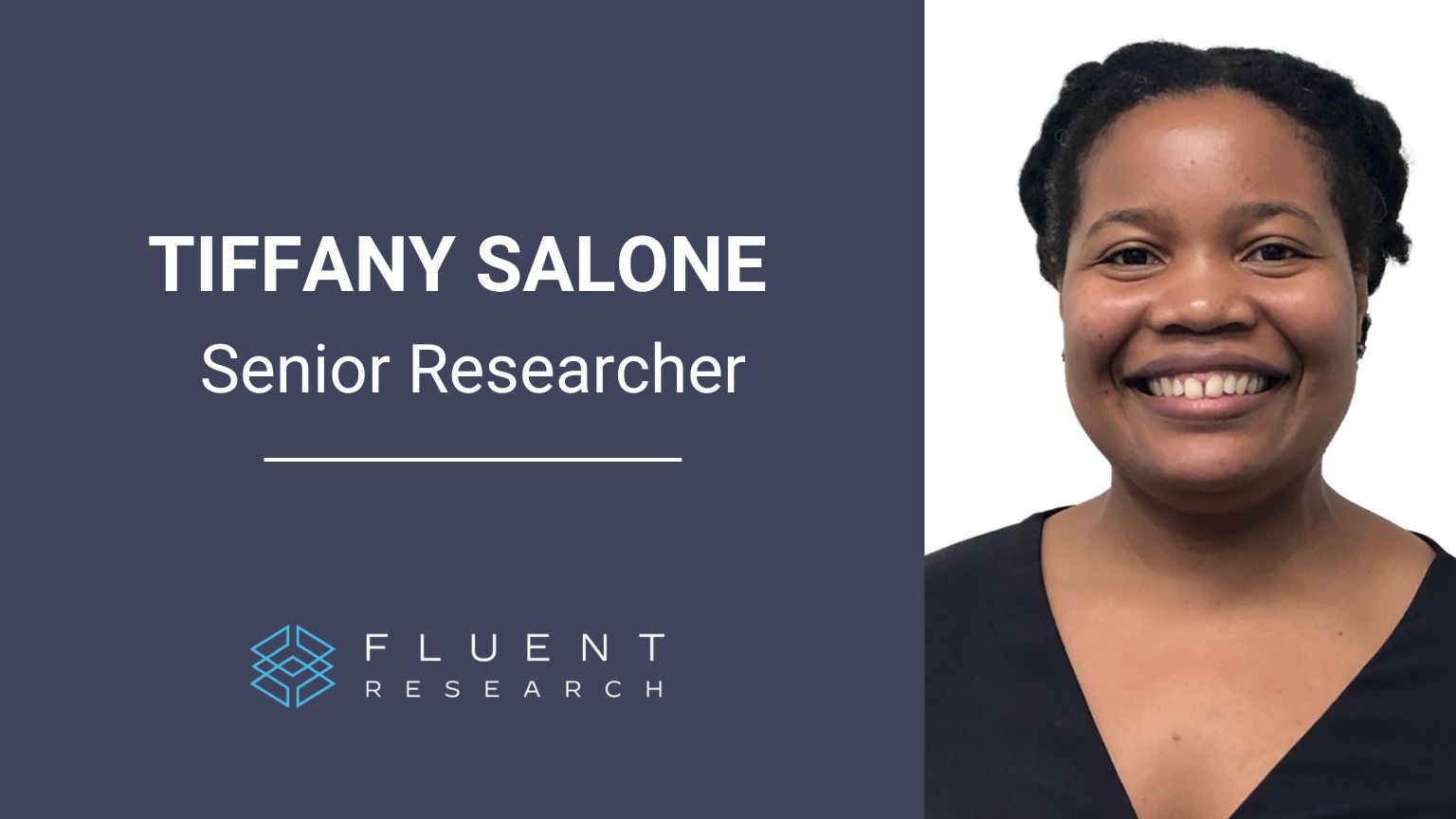
January 13, 2023 (New York, NY) – Fluent Research, a data and insights-driven strategic consulting firm, announced today that Tiffany Salone has been promoted to Senior Researcher. In this role, Tiffany will oversee a wide range of global research studies, informing the development of educational products and programs that benefit children, youth, and families.

“Tiffany excels at managing complex research projects, and she is an expert quantitative and qualitative analyst,” said Nellie Gregorian, Founder and President of Fluent Research. “Tiffany’s promotion acknowledges her contribution to our success and continuing growth.”

Tiffany has a deep background in technology and education. She is passionate about designing and conducting research that supports increased and equitable accessibility to education and technology, especially for young learners and their families. No matter what type of project she is working on, she is a consistent advocate for users, particularly those who are low-income or live in underserved communities around the world.

Prior to joining Fluent, Tiffany worked as a researcher in educational media and technology. Before working as a researcher, she spent eight years as a video producer, videographer, and editor of short documentaries and feature films.

About Fluent Research
Fluent Research is a data and insights-driven strategic consulting firm. Since 2006 Fluent has leveraged understanding of human behavior to help the world’s best-known brands and organizations advance worthy causes, innovate transformational products, and successfully navigate change. Fluent’s work centers around three practice areas: thought leadership research, formative research and evaluation, and social impact assessment. Fluent has applied rigorous and innovative research solutions in service of promoting children’s access to and quality of education, and gender equality in the U.S. and in over 70 countries around the world. Fluent’s creative arm, Fluent Productions, is an award-winning producer of original documentary content that harnesses the power of visual storytelling to bring attention to important issues facing our society, to build empathy and inspire action.

Contact: Stefanie Cousins
[email protected]


Next month Fluent’s Director of Content & Evaluation, Dr. Allison Caplovitz, will be returning to Miami to attend the Kidscreen Summit after the conference’s two-year hiatus due to COVID. Allison’s favorite meeting of the year, the Kidscreen Summit is known as the most important annual event in the kids media industry.

Allison’s background includes deep experience informing the development of children’s television programs, evaluating curriculum development, and conducting summative research. She has advised 9 Story, Highlights for Children, Meta, Netflix, PBS Kids, Sesame Workshop, Warner Media, and YouTube Kids, and was instrumental to the success of the iconic children’s media property Blue’s Clues. Read all about Allison here and be sure to connect with her in Miami.

Today, the most cutting-edge thinking about human development is holistic, dynamic, and emphasizes the relationship between the developing person and his or her context.  This thinking is an important evolution; a stark contrast to outmoded ideas that see people as something to be molded by the context like a piece of clay or “filled” like an empty receptacle.

The Positive Youth Development (PYD) perspective is one such holistic and dynamic view, based on the ideas that:1

   1. All young people have strengths (because of the potential for developmental change across the lifespan), and

   2. All contexts have strengths as well. These strengths are resources that can be used to promote positive youth development.

   3. If the strengths of young people are combined with the strengths of the context, then positive, healthy development occurs.

PYD emerges out of this dynamic relationship and is evidenced by the presence in young people of “Five C’s”:  Competence, Confidence, Connection, Caring, and Character.

Digital contexts are becoming more prevalent in children’s lives than ever before, fueled in part by the COVID-19 pandemic and the need to move various aspects of children’s lives online.2  The growing presence of digital technology as a context for children’s development requires that we think deeply about its impact, identify its strengths, and consider how best to combine those strengths with the strengths of young people to promote their positive development.

Nutrient-rich digital contexts have many of the same features as those found in the physical world.  Both are guided by a deep understanding of children’s development, behavior, and natural play patterns.3  Both also recognize social interactions as the core of what it means to be human, seeking to enhance and extend (not obstruct) human connection.4  In turn, both types of contexts empower children to be agents in their own development, to make choices and course-corrections, to be generative and creative.5

We know digital contexts support positive development when children exhibit these six positive behaviors:3

    1. Communication (sharing ideas, caring about and interpreting the work of others)

    2. Collaboration (turning shared ideas into shared action)

    3. Community Building (contributing to the good of the community)

    4. Content Creation (using tools to create new artifacts)

    5. Creativity (being flexible and imaginative)

    6. Choices of Conduct (making decisions based on one’s personal sense of morality)

Taken together, these behaviors can be used to guide the design of developmentally-mindful digital contexts and, as well, to evaluate and revamp existing digital contexts.

When we take a positive developmental approach to digital contexts, we recognize that the quality and potential benefits of those contexts are contingent upon children’s developmental milestones.  Just as a child’s height determines the relevance of monkey bars, so too does their attention span, memory, symbolic representational skills and so on, determine the relevance and nutrient richness of digital contexts.  Certain developments, particularly in early childhood, happen best in the physical, multidimensional world.  Children must reach these key milestones to unlock and benefit from the strengths of digital contexts.  When unlocked, the strengths of young people can combine with the strengths of digital contexts to support positive development.

    1. Lerner, R. M., Lerner, J. V., Almerigi, J., Theokas, C., Phelps, E., Gestsdóttir, S. Naudeau, S., Jelicic, H., Alberts, A. E., Ma, L., Smith, L. M., Bobek, D. L., Richman-Raphael, D., Simpson, I., Christiansen, E. D., & von Eye, A. (2005). Positive youth development, participation in community youth development programs, and community contributions of fifth-grade adolescents: Findings from the first wave of the 4-H Study of Positive Youth Development. Journal of Early Adolescence, 25(1), 17-71.
    2. Responsible Innovation in Technology for Children. UNICEF Office of Research – Innocenti, Florence, 2022.
    3. Bers, M. U. (2012). Designing Digital Experiences for Positive Youth Development: From Playpen to Playground. Oxford, Cary, NC.
    4. Hirsh-Pasek, K., Zosh, J. M., Golinkoff, R. M., Gray, J. H., Robb, M. B., & Kaufman, J. (2015). Putting education in “educational” apps: Lessons from the science of learning. Psychological Science in the Public Interest, 16(1), 3-34.
    5. Lerner, R. M., Theokas, C., & Jelicic, H. (2005). Youth as active agents in their own positive development: A developmental systems perspective. In W. Greve, K. Rothermund, & D. Wentura (Eds.). The adaptive self: Personal continuity and intentional self-development (pp. 31-47). Göttingen, Germany: Hogrefe & Huber Publishers.

Amy Warren, Ph.D. is a Senior Child Development Researcher at Fluent Research. Amy holds a Bachelor of Arts in psychology from Clark University and M.A. and Ph.D. degrees in child development from Tufts University. Dan Warren, Ph.D. is Director, Youth Development and Education at Fluent Research. Dan holds a doctorate in Human Development and Child Study from Tufts University and taught elementary school in Massachusetts for nearly a decade. Together, they co-founded Home Base Learning Center, a nature-based elementary school guided by the core values of Positive Youth Development, Social Justice, and Earth Stewardship.

Fluent’s Research Strategist Sofia Polo recently completed research on oral health literacy for our client Sesame Workshop that was included in an article published in the peer-reviewed California Dental Association Journal.

The article describes a series of activities through which UCLA and Sesame Street collaborated to develop and use oral health resources as part of a children’s oral health awareness campaign. Read an excerpt of some of Fluent’s findings below. You can read the rest of the study starting from page 771 on the December 2021 issue of the California Dental Association Journal.

Focus Groups:

Sesame Street organized a qualitative study using focus groups to examine dentists’, child care providers’ and parents’ current practices and perceptions of the barriers Chinese-speaking, Spanish- speaking, Korean-speaking, Black and Filipino families encounter with regard to the oral health of their young children. The focus groups also sought to solicit feedback on SSIC’s oral health resources.Research objectives included identifying stakeholders’ top priorities and concerns around the oral health of young children; exploring stakeholders’ current practices for promoting the oral health of young children and pinpointing where they learned about these practices; describing the challenges and barriers parents encounter in promoting the oral health of young children, including those unique to specific language/ethnic groups; and gathering feedback and recommendations on the SSIC resources and soliciting ideas for effective dissemination strategies to reach the specific language/ethnic groups. The focus groups consisted of 16 in-depth 45- to 60-minute individual interviews with dentists via Zoom and 13 90-minute virtual focus groups with mothers and child care providers conducted via Zoom.

Results:

During the lifetime of the campaign, the aim was to achieve the following goals across all platforms on social media:

  • Reach 10,000 users per video at minimum.
  • Achieve 25% engagement across all posts per video views.
  • Receive 20,000 views per Dentist Grover video.
  • Receive 50,000 views for Elmo’s Toothy Dance.
  • Increase followership by 50% across all platforms.
  • Recruit at least five local and/ or national partners.  

Results of the awareness campaign exceeded each of the reestablished goals, with the social media campaign generating impressive metrics within a month of the release of the fifth video (FIGURE 2) and a grand total of over 687,000 views of the five featured new videos across MLAS and SSIC websites by the conclusion of the project in December 2020. Followers increased across all social media platforms, with Facebook followers showing the highest percentage increase (112%) and Instagram having the greatest number of followers (204).