

Methodology

When I think about what draws me most to research, I think about how it illuminates human nature. UX research brings a sense of humanity back into products and concepts that may have only existed as incubating ideas within a product development team. It can be a grounding force that adds a human sensibility to the conversation around how to design an app or build an online space. It reminds us of what everyday, lived experiences look like for people like you and I, and the importance of considering them in the design process.

In the fast-paced world of tech and UX, researchers and designers often need to find clear patterns of human identity development and behavior, quickly. But as much of our team at Fluent can tell you, sometimes the most interesting findings and data can emerge from bizarre, unique, outlier instances. When we approach data with curiosity and don’t impose patterns or internalized bias on our findings, we can discover new findings that take our work to a deeper level and usher in innovation.

Discovering novelty in the unique always makes me think of queer theory. In my anthropological studies, like many other young social scientists, I was enamored with theorists like Judith Butler, Eve Sedgwick, and Audre Lorde, who all offered up new ways of understanding identity. Queer theory and queer frameworks lend themselves to thinking about the world and identity-making in new ways, and remind us that we should push back on and think beyond reductive binaries. This is not to say that creating categories and labels is wholly bad. In fact, as UX researchers, it is often our job to create categories, personas, and labels out of raw data that our clients and partners can use to inform their work.

But as I reflect on queerness this June, I am once again thinking about having consideration for the outlier. Fluent often works with children and teens, and it is worthwhile to consider that Gen Z currently has the largest ratio of LGBTQ+ individuals in comparison to older generations, a trend that is expected to continue. What does this mean for our work as researchers?

It means that we need to pay extra close attention to the unique, the novel and the outliers. Beyond buzzwords and news clickbait, there is a significant shift occurring in how younger individuals consider their identity, especially when it comes to gender and sexuality. There have been discussions in research circles, for example, about Gen Z’s rejection of labels. We see this mirrored in Gen Z culture – public figures like Billie Eilish, Joshua Bassett, Ice Spice, and Phoebe Bridgers exist as queer individuals with little to no fanfare about waving a specific label or placing themselves in a certain category.  This differs from older generations of LGBTQ+ individuals, who grew up in an entirely different cultural landscape of labeling, self-disclosure, and the intentions and consequences tied to both.

It seems to me that every Pride month, the etymology of what’s in a label always comes up in community discussions. As a researcher and a queer person, it always feels like an ironic intersection of my personal and professional life.

In research circles, making research more inclusive is a topic that is being explored more and more every day. While this can include concrete steps, like changing the options for identity identification on a survey, I think it also needs to include ideological exploration. In other words: as a qualitative researcher, classically, I think we need to try and understand the WHY just as much as we are observing the WHAT. And as we look to emerging populations like Gen Z and Gen Alpha, I encourage the research community to table bias and prior knowledge, and pay extra close attention to what may exist outside of the categories, ideologies, and binaries we may be imposing on our participants, and on our findings.

By Charlotte Beatty, User Experience Researcher
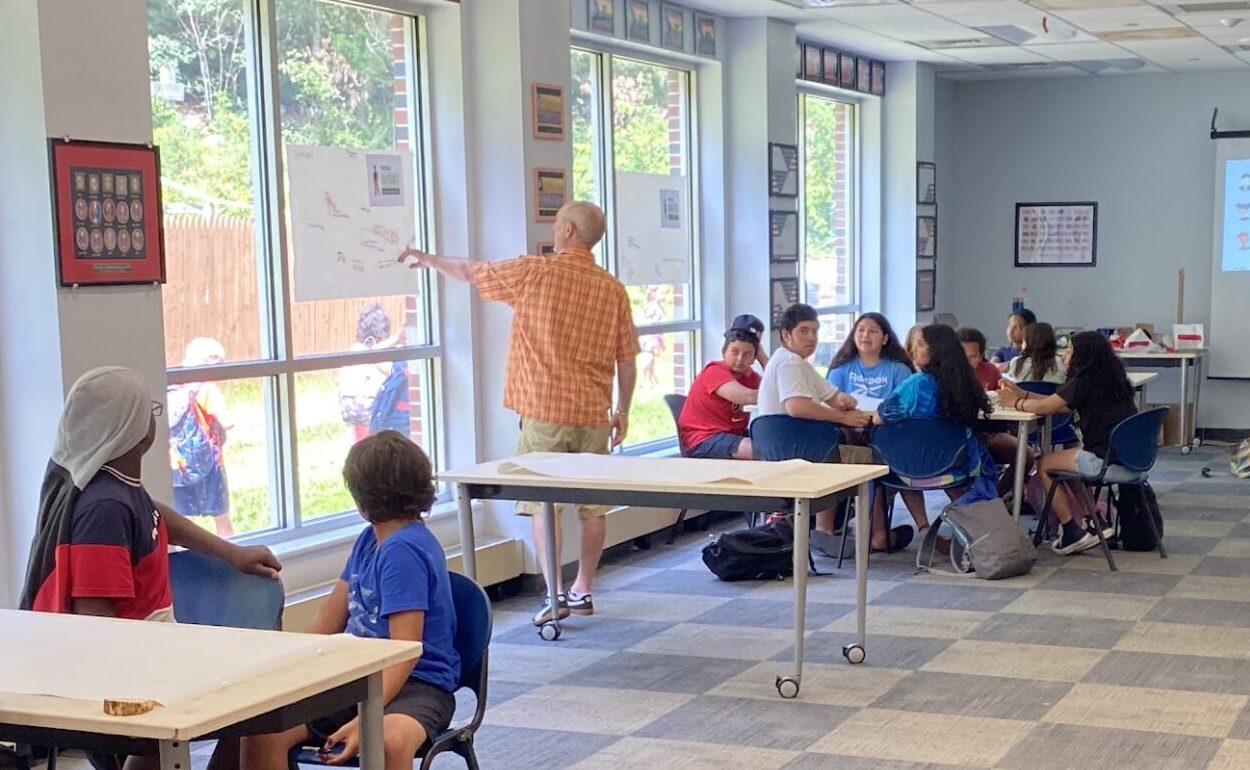
Research Camp is an immersive experience for both youth and clients. For the kids, it involves engaging in a full schedule of camp activities and participating in research for a brief period each day. Clients have the opportunity to witness children grapple with their research or design questions in real life while also interacting with them informally. What makes this experience unique is that we conduct the research in a fun and engaging environment: Camp. Research Camps take place in cities across the US at established camps that hold sessions during school vacations and in the summer. The incentive for youth participation is a week of the camp’s tuition at a significantly reduced price.

At Research Camp, we explore the world through the eyes of children. Using a range of qualitative research methodologies, we aim for deep insights into their thoughts, feelings, and experiences to answer our client’s research questions. Over the past few weeks, we’ve published articles about how Research Camp came about and how we found our first participants. In this article, we’ll focus on how we leverage a convenience sample and five qualitative research methodologies to understand and enhance the lives of children.

Convenience Sampling – A Quick Entry Point

Research Camp relies heavily on a convenience sampling. A convenience sample is just that, convenient, because participants are selected based on ease of recruitment over randomness. It is particularly helpful when conducting exploratory or formative research because it allows us to gather data quickly from children who are either attending the camp or already interested in going. Convenience sampling tends to be time efficient and cost effective compared to other sampling methodologies, making it a great choice when appropriate.

Convenience sampling, however, comes with its limitations. Since participants aren’t randomly selected, the sample may not accurately represent the broader population, thus limiting the external validity of the research. Additionally, the absence of randomness in the selection process makes reliable estimation of sampling error problematic and, therefore, precise statistical inferences and hypothesis testing doesn’t really work. For our purposes, the convenience sample is perfect, but researchers must be aware of the drawbacks when designing and interpreting convenience sample-based studies.

Qualitative Research Methodologies We Use with Kids at Camp

Because children have unique perspectives and experiences that may not always be adequately captured by utilizing one research solution, we use five different qualitative research methodologies at Research Camp. These methodologies were chosen to generate rich data to help us explore nuanced responses, emotions, and stories that go beyond data from surveys or questionnaires to provide a more holistic view of children’s experiences and opinions.

1. Focus Groups – Exploring Children’s Perspectives

One of the primary qualitative methodologies we use is focus groups. In a focus group a skilled moderator guides a small group of children through discussions on specific topics. This methodology offers several advantages:

        • Careful Participant Selection: We ensure that the children in our focus groups are uniquely positioned to provide valuable insights into the topic under investigation.
        • Experienced Moderation: Our moderators have backgrounds in child psychology or education, creating a safe environment for children to express themselves.
        • Age-Appropriate Sessions: Recognizing children’s shorter attention spans, our focus group sessions typically last 45 minutes to an hour and may involve engaging activities like games or storytelling.


2. In-Depth Interviews – A Personal Connection
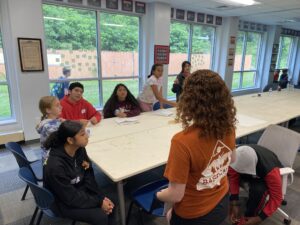
In-depth interviews (IDIs) with children are another valuable qualitative methodology we use during Research Camp. These semi-structured interviews facilitate detailed discussions with children on a wide range of topics. Conducting in-depth interviews with kids provides two benefits to the research process:

        • A Child-Centric Approach: In-depth interviews allow us to adapt questions to the child’s developmental stage and cognitive abilities, ensuring age-appropriate interactions.
        • Building Trust: Conducted in a one-on-one, non-threatening environment, these interviews often lead to stronger connections between children and researchers, fostering more honest and open responses compared to focus groups.


3. Child Ethnography – Immersed in Their World

Child ethnography, a specialized form of ethnographic research, plays a crucial role in Research Camp. This qualitative methodology involves immersive, long-term fieldwork to study the lives of children within their cultural and social contexts. We do this both on-site at the camp as well as in the homes of some of the campers outside of the camp hours. Child ethnography is invaluable because it provides:

        • Deep Insights: Child ethnography provides a holistic understanding of children’s daily lives, experiences, and perspectives by allowing the researchers to see things play out over a longer period in a more natural environment.
        • Cultural Context: Ethnographies can help researchers explore how cultural norms, values, and practices shape children’s experiences and development, offering insights into their socialization.


4. Observations – Becoming part of the scene

Nothing has been more effective than getting into the thick of it with kids. By interacting with youth through observations and immersion during Research Camp, researchers spend time with children, observe their interactions, and engage in informal conversations. Observations have some specific benefits:

        • Immersive Insights: Observations and immersion provide authentic insights into children’s lives by creating the opportunity to see kids over a longer and less contrived period of time.
        • “Quantity” time: By creating a wider timeframe to observe kids, we increase the possibility of kids becoming more comfortable and, therefore, authentic. It also makes the space for other unintended insights that can provide some of the most profound breakthroughs.


5. Co-Creation Sessions – Collaborating with Children
Co-creation sessions, when children are invited into the process of the design, development, or improvement of products or services, are an amazing and inspiring experience. Often, researchers and designers get stuck in a certain adult-centric way of thinking and need to enlist the help of kids to create alongside them. Co-creation is great because it provides:

        • Fresh Perspectives: Children offer fresh, imaginative, and innovative viewpoints that can lead to creative solutions.
        • User-Centric Solutions: Co-creation ensures that products or services are tailored to children’s needs and preferences, enhancing customer satisfaction.


Research Camp employs a range of qualitative research methodologies to unlock the unique perspectives and experiences of children. From focus groups and in-depth interviews to child ethnography, observations, and co-creation sessions, these methodologies help us understand, empower, and advocate for children in a world that often, intentionally or not, misinterprets or tunes out their critical voices.

By Dan Warren, Director, Youth Development & Education

As a quantitative researcher and a current joint major in economics and math, we have been encouraged to see the increased emphasis on motivating girls and women to pursue STEM activities and educational opportunities in recent years. We were inspired to spotlight STEM opportunities for women in college in light of a Forbes article we read by the CEO of Vector Laboratories Dr. Lisa Sellers that focuses on what companies can do to motivate women to pursue STEM careers.

Dr. Sellers offers insightful strategies for out-of-school organizations, companies, and secondary schools to encourage young women to pursue STEM and how to make it more inclusive of all genders. Since women who are entering college or already matriculating may not have had these opportunities, we wondered how colleges and universities might inspire women to pursue STEM majors and careers.

From Fluent’s perspective there is one obvious first step, and that is to conduct research to better understand women’s experiences, needs, opinions, and perceptions of STEM. Below we suggest ideas for research as well as steps that institutions might take to welcome more women into STEM majors and related careers:

Ask women what they need

Qualitative, quantitative, or a mix of both research methods can help uncover insights into women’s attitudes and perceptions of STEM majors. Focus groups of women in college who have chosen STEM majors would provide an understanding of why they chose that major, what has helped them succeed, and what else would support them in pursuit of their degree and opportunities after graduation. Focus groups with students who have not yet declared a major may provide insight into the barriers that exist for women pursuing a STEM major or career. Additionally, colleges and universities may want to survey current and prospective students to understand how they perceive STEM majors and the barriers in pursuing them. With this understanding, institutions of higher education can make adjustments to help encourage more women to pursue STEM.

Invite women to join

Sometimes all someone needs is an invitation to join. It’s a lot easier to join a group when you’re invited – that signals to someone that they are welcome! Colleges and universities can offer information sessions about various majors, including STEM majors, and invite women to attend or host women-only events specific to STEM.  

Encourage women to try something new

Colleges and universities should remind students that college is a great opportunity to try something new. Yes, some students in Intro to Computer Science may have already taken AP Computer Science in high school or attended coding camp. However introductory classes are designed to teach everything you need to be successful in that class. Emphasizing that no prior knowledge is needed to take an introductory class in course descriptions, syllabi, and professor communications can help encourage those students who have less experience with STEM subject matter to feel comfortable taking a chance on a class that is outside of their comfort zone.

Provide women with mentorship

Female role models are essential for other women to hear stories of personal experiences that help them envision a path forward for themselves. There are many opportunities to provide role models in a higher education setting: 1) Encourage women to be teaching assistants in STEM classes. 2) Provide opportunities for recent graduates in STEM majors to speak about their college and first job experiences. 3) Invite women in management and leadership positions to speak openly about their own paths and provide guidance for those just starting out.

At Fluent, our experience with colleges and universities, clients in the education sector, and young adult populations has shown us time and again the value of research. Clients have the opportunity to directly impact students’ educational experiences and outcomes by testing and improving materials and offerings with their target audience. Similarly, research also provides them with an understanding of their brand equity, what drives it, and benchmarks that help to improve their standing. On a more personal note, we have both benefited from some of the ideas suggested above. We are particularly grateful for the strong mentorship we’ve received from professors, managers, and co-workers. Moreover, the invitations to join a group or try something new have opened doors for us. We believe these opportunities have been instrumental in our education and growth, and look forward to hearing new ideas to encourage  women to choose STEM education and careers.


By Mary Meyn and Halley Robbins

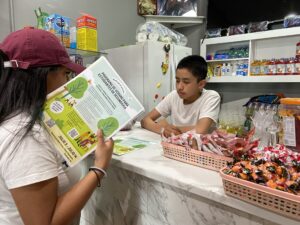
In June, my colleague Amy Warren and I set out to recruit families from the Greater Boston and Providence areas for Fluent Research’s first ever Research Camp, a new and innovative take on community-based action research. For this inaugural camp, we focused on recruiting Latinx families for a GBH study funded by the National Science Foundation (NSF). But we were not just focused on hitting target recruitment numbers. Fluent’s Research Camp is about building genuine connections and embracing the diverse backgrounds of the communities that inform our research.

Anyone who has ever tried to recruit research participants knows it is no easy task, an uphill battle some may say. It requires a lot of time, energy, planning, and resources. The approach must be strategic, utilizing personal connections to tap into different networks. To make things easier, Fluent could have hired a professional recruiter and called it a day, but we wanted to connect personally with these families, hear their stories, and build bridges of trust.

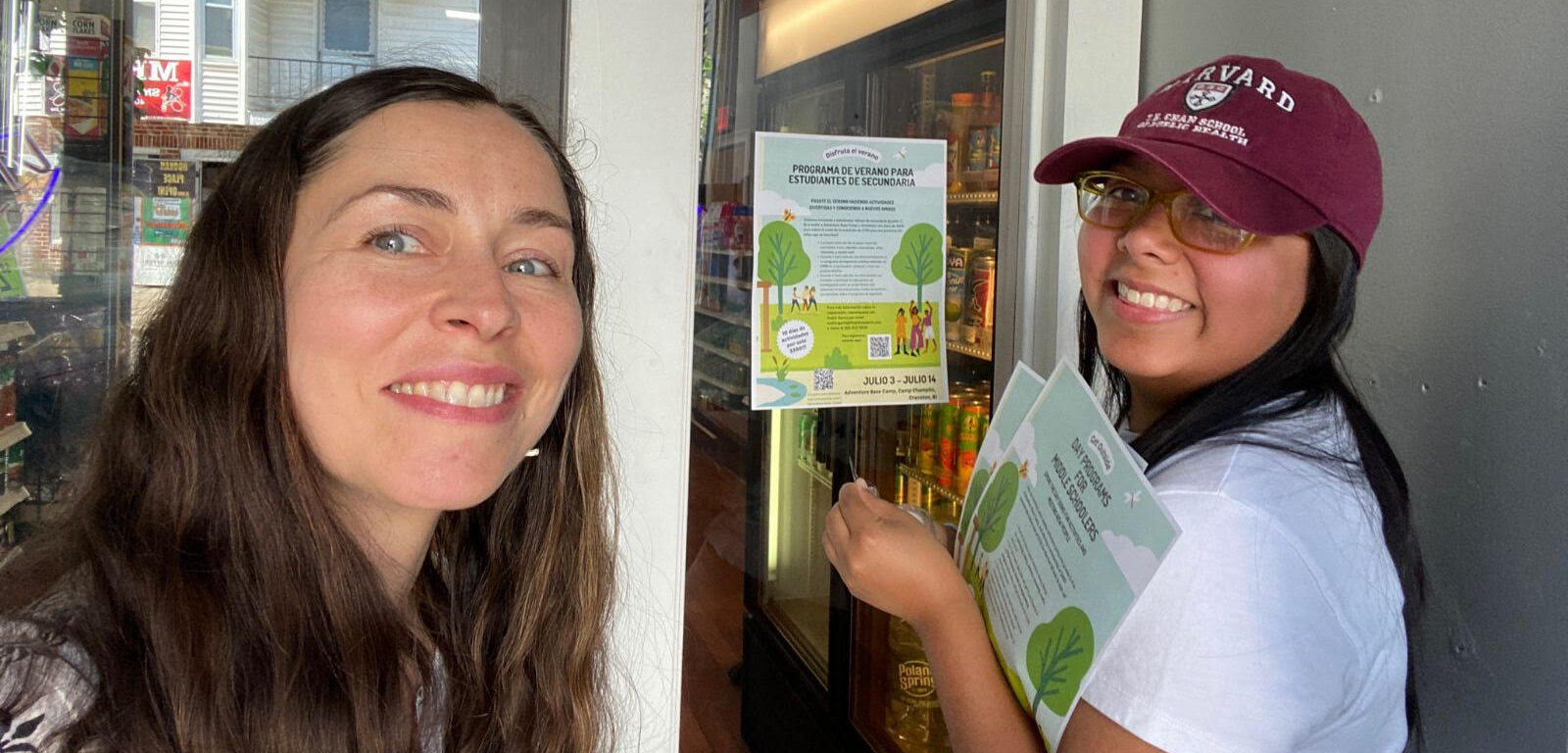
Armed with sunscreen, pushpins, tape, and stacks of flyers, Amy and I hit the streets of Boston and Providence in our most comfy sneakers to engage the community. Our recruitment journey was guided by a map we created of key locations where we could find our target population – bodegas, restaurants, laundromats, hair salons, schools, nonprofit organizations, etc. With a well-rehearsed spiel in English and Spanish, we set forth to talk to anyone who would listen.

Interestingly, our journey turned into an immersive cultural experience. At each stop, we heard fascinating stories from really interesting people that reminded us of the resilience and diligence of the Latinx immigrant community. For instance, we met a business owner from El Salvador, who had recently written a book about the first Central American migrants who arrived in the US in the 1800’s, a story not many people know about. Another notable encounter occurred with two young boys who were spending their summer helping out at the cash register of their family’s store. One of them expressed interest in going to summer camp because it was something he had always wanted to do. Towards the end of the day, we visited a tortilleria, a shop that makes and sells hand-made tortillas. There, I chatted with a worker about how tortillas connect our two cultures, hers Guatemalan and mine Mexican.

One major highlight was the opportunity to indulge in what felt like a culinary tour of Latin America. Amy and I tried dishes from a variety of cultures like Brazilian coxinhas, Colombian empanadas, Mexican agua fresca, and Dominican guisado de res, which made us feel more connected to the people we met.

As a Mexican-American woman, I felt a great deal of responsibility and pride employing my own cultural background and roots to build bridges of trust throughout this experience. I value knowing that my upbringing, principles, and Spanish-language skills allowed Amy and I to form authentic connections that otherwise could not be formed by simply using a recruiting service.

As I reflect on our journey, I am reminded of the true purpose of research, to gain a genuine and ethical understanding of the human experience. It is more than just hitting recruitment numbers and it begins long before the analysis phase. The process of uncovering insights begins when we build true human connection, when we appreciate and experience diverse cultures, and when we collaborate on the ground with communities.

By Evelin Garcia, User Experience Researcher, Fluent Research

If you have had any interactions with a teen or young adult recently, I am sure you have heard the word “cringy” uttered more than once. Consider Chicken Shop Date interviews with Amelia Dimoldenberg and Taylor Swift’s infamous 2022 NYU graduation speech when she says “… learn to live alongside cringe,” as examples of the current cultural relevance of cringe. But how about “meta-cringe”? Trend forecasters predict that 2023 is the year of meta-cringe for Gen Z. While cringe is generally defined as embarrassment, awkwardness or discomfort about something or someone being out of touch, meta-cringe is defined as having an awareness that something is cringey and enjoying it anyway. A hallmark of meta-cringe is that it’s unclear whether the act is sincere or ironic, and because of that, the question about intent loses importance all together.

It makes sense that meta-cringe is having its moment. In the current political and social climate, Gen Z are inundated with news and trends that move at a speed far too fast to keep up with. Young people are understandably anxious about the state of the world and disillusioned with emerging adulthood for many reasons, including the war in Ukraine, mass shootings, climate change, and economic uncertainty. These feelings of distress, combined with Gen Z’s value of authenticity, leads young people to deliberately engage in absurd, awkward, and idiosyncratic cringe humor. Gen Z are no longer interested in projecting a perfect online image. Instead, they are rejecting the societal pressures of a flawless feed and the shame associated with cringeworthy moments, and in lieu of this, opting for curated cringe. This kind of humor is often an expression of nostalgia for the media and cultural trends of Gen Z’s adolescence from the 2000s to 2010s (i.e., Shrek raves, viral memes about 2000s emo singing impressions).

In our work at Fluent, where we often conduct research with Gen Z teens and young adults, we consider the cultural shifts and values that embody meta-cringe when trying to connect with and design for young people. Here are some ideas to keep in mind when working with Gen Z:

– Be Nostalgic: Find unique and easy ways for Gen Z to connect with the beloved digital and media world they grew up with (2000s to 2010s).

– Embrace Absurdity: Don’t be afraid to be cringy. Intentional or not, this peaks interest.

– Play with “when the curtain drops” moments: Focus on content that feels unstaged and genuine. Consider the trope of “when the curtain drops” or “the camera stops rolling” humor where the viewer gets a glimpse into the inner world of a character, or behind the scenes.

– Be Authentic: Be cringey, be real, as long as you are being truthful to you. A curated and manicured public image is not in style anymore.

– Cultivate personal and meaningful connection: Ensure that connection feels vulnerable, intimate and simple, perhaps with smaller groups of peers.

– Share the unfiltered self: Encourage sharing in a way that feels like unedited, first takes. Consider BeReal and Poparazzi as examples of apps popular among Gen Z that are designed for unedited and in-the-moment photo sharing.

– Be Relatable: One aspect of meta-cringe is the relatability of those moments of embarrassment, awkwardness or discomfort. It may be painful to watch, but the humor connects with Gen Z who are disillusioned with the perfect, filtered digital image.

Meta-cringe will influence Gen Z’s expectations and behaviors in the digital world. Young people are embracing their guilty pleasures and giving themselves permission to be themselves, IRL and online. We can view this carefree attitude as a way for Gen Z to express more vulnerability when they connect with others online.

Sources:
https://i-d.vice.com/en/article/qjkywp/meta-cringe
https://www.russh.com/tiktok-meta-cringe/
https://zeefeed.com.au/meta-cringe/
https://www.tiktok.com/t/ZTRWYP36o/

By Natalia Belchikov, User Experience Researcher, Fluent Research

Digital contexts are becoming more prevalent in children’s lives than ever before, fueled in part by the COVID-19 pandemic and the need to move various aspects of children’s lives online*. Since human development is a holistic and dynamic process between the developing person and his or her context* and children develop in positive and healthy ways when their strengths are combined with the strengths of their contexts, we have an opportunity as researchers to bring this framework to the changing landscape of children’s lives.

What has become apparent in our company’s recent requests for proposals, is that there is a lack of fit between the knowledge and experience of many designers and the developmental needs and abilities of children. This lack of fit signals a fundamental problem, and an opportunity, given the growing presence of digital technology as a context for children’s development. The virtual world is a new frontier and there has been a land rush of companies looking to stake their claim flag.  This rapid growth has seemed to create holes in the capabilities of these frontier companies. More precisely, the talent needed to design for adults does not adequately translate to designing for kids. In the absence of comprehensive knowledge about child development, current designers may err in using themselves or those close to them as the markers of success and/or “normality”.

“We all have a blind spot and it’s shaped exactly like us.” – Junto Diaz, Author

Short of extensive training in child development, designers can utilize a few central rules of thumb when designing for kids. Keeping these in mind will go a long way to minimizing, or at least acknowledging, our biases:

1) All humans are whole. Sometimes by necessity, we need to zoom in and focus on a specific part of children’s development, such as their literacy level or their ability to swipe on a tablet. But it is important to understand those parts within the context of the whole developing person. We then need to further adjust our lens to view that person as situated within a dynamic relationship with his or her context.

2) There is no ‘typical’ child. Much of what we know and have studied about children is approximations that are gathered from information that has been averaged over large groups from mostly Westernized societies. Expectations about children should be considered approximations that can get you close to understanding.

3) All households are different. A common mistake is to view children’s development as unfolding in a vacuum. Rules and expectations differ greatly by household and are driven by cultural, situational, and practical factors. Just because a child is developmentally capable of something does not mean that they will do it.

4) Child development is less linear than it appears. Because development is an iterative process, there are often regressions that ebb and flow with progressions. Development of a skill or competency may occur steadily over time or rapidly in spurts. While many abilities get better over time, it is not always the case.  Some abilities, like attention span increase gradually over time during childhood while other capacities, like learning a new language, decrease over time. Other aspects of development, like identity development, are latent during younger years and then rapidly develop.

If there is one mantra that we could recommend to all designers and those thinking about how to best support kids, we would strongly offer this:

“Every [child] is like all other [children], some other [children], and no other [child].” – Kluckhohn & Murray, Anthropologist & Psychologist

By Dan and Amy Warren.

==========

1*Responsible Innovation in Technology for Children. UNICEF Office of Research – Innocenti, Florence, 2022.

*Lerner, R. M., Lerner, J. V., Almerigi, J., Theokas, C., Phelps, E., Gestsdóttir, S. Naudeau, S., Jelicic, H., Alberts, A. E., Ma, L., Smith, L. M., Bobek, D. L., Richman-Raphael, D., Simpson, I., Christiansen, E. D., & von Eye, A. (2005). Positive youth development, participation in community youth development programs, and community contributions of fifth-grade adolescents: Findings from the first wave of the 4-H Study of Positive Youth Development. Journal of Early Adolescence, 25(1), 17-71.


Today, the most cutting-edge thinking about human development is holistic, dynamic, and emphasizes the relationship between the developing person and his or her context.  This thinking is an important evolution; a stark contrast to outmoded ideas that see people as something to be molded by the context like a piece of clay or “filled” like an empty receptacle.

The Positive Youth Development (PYD) perspective is one such holistic and dynamic view, based on the ideas that:1

   1. All young people have strengths (because of the potential for developmental change across the lifespan), and

   2. All contexts have strengths as well. These strengths are resources that can be used to promote positive youth development.

   3. If the strengths of young people are combined with the strengths of the context, then positive, healthy development occurs.

PYD emerges out of this dynamic relationship and is evidenced by the presence in young people of “Five C’s”:  Competence, Confidence, Connection, Caring, and Character.

Digital contexts are becoming more prevalent in children’s lives than ever before, fueled in part by the COVID-19 pandemic and the need to move various aspects of children’s lives online.2  The growing presence of digital technology as a context for children’s development requires that we think deeply about its impact, identify its strengths, and consider how best to combine those strengths with the strengths of young people to promote their positive development.

Nutrient-rich digital contexts have many of the same features as those found in the physical world.  Both are guided by a deep understanding of children’s development, behavior, and natural play patterns.3  Both also recognize social interactions as the core of what it means to be human, seeking to enhance and extend (not obstruct) human connection.4  In turn, both types of contexts empower children to be agents in their own development, to make choices and course-corrections, to be generative and creative.5

We know digital contexts support positive development when children exhibit these six positive behaviors:3

    1. Communication (sharing ideas, caring about and interpreting the work of others)

    2. Collaboration (turning shared ideas into shared action)

    3. Community Building (contributing to the good of the community)

    4. Content Creation (using tools to create new artifacts)

    5. Creativity (being flexible and imaginative)

    6. Choices of Conduct (making decisions based on one’s personal sense of morality)

Taken together, these behaviors can be used to guide the design of developmentally-mindful digital contexts and, as well, to evaluate and revamp existing digital contexts.

When we take a positive developmental approach to digital contexts, we recognize that the quality and potential benefits of those contexts are contingent upon children’s developmental milestones.  Just as a child’s height determines the relevance of monkey bars, so too does their attention span, memory, symbolic representational skills and so on, determine the relevance and nutrient richness of digital contexts.  Certain developments, particularly in early childhood, happen best in the physical, multidimensional world.  Children must reach these key milestones to unlock and benefit from the strengths of digital contexts.  When unlocked, the strengths of young people can combine with the strengths of digital contexts to support positive development.

    1. Lerner, R. M., Lerner, J. V., Almerigi, J., Theokas, C., Phelps, E., Gestsdóttir, S. Naudeau, S., Jelicic, H., Alberts, A. E., Ma, L., Smith, L. M., Bobek, D. L., Richman-Raphael, D., Simpson, I., Christiansen, E. D., & von Eye, A. (2005). Positive youth development, participation in community youth development programs, and community contributions of fifth-grade adolescents: Findings from the first wave of the 4-H Study of Positive Youth Development. Journal of Early Adolescence, 25(1), 17-71.
    2. Responsible Innovation in Technology for Children. UNICEF Office of Research – Innocenti, Florence, 2022.
    3. Bers, M. U. (2012). Designing Digital Experiences for Positive Youth Development: From Playpen to Playground. Oxford, Cary, NC.
    4. Hirsh-Pasek, K., Zosh, J. M., Golinkoff, R. M., Gray, J. H., Robb, M. B., & Kaufman, J. (2015). Putting education in “educational” apps: Lessons from the science of learning. Psychological Science in the Public Interest, 16(1), 3-34.
    5. Lerner, R. M., Theokas, C., & Jelicic, H. (2005). Youth as active agents in their own positive development: A developmental systems perspective. In W. Greve, K. Rothermund, & D. Wentura (Eds.). The adaptive self: Personal continuity and intentional self-development (pp. 31-47). Göttingen, Germany: Hogrefe & Huber Publishers.

Amy Warren, Ph.D. is a Senior Child Development Researcher at Fluent Research. Amy holds a Bachelor of Arts in psychology from Clark University and M.A. and Ph.D. degrees in child development from Tufts University. Dan Warren, Ph.D. is Director, Youth Development and Education at Fluent Research. Dan holds a doctorate in Human Development and Child Study from Tufts University and taught elementary school in Massachusetts for nearly a decade. Together, they co-founded Home Base Learning Center, a nature-based elementary school guided by the core values of Positive Youth Development, Social Justice, and Earth Stewardship.

Here at Fluent Research, we find ourselves interacting with kids nearly all year around. We interview them about playtime and class time, film them at home and at school, play games with them, and even watch videos alongside them. We talk to kids a lot for the research we conduct on behalf of our clients!

Some researchers may be intimidated by talking to children. It’s understandable. We were young people too once, but we might not remember what it’s like to be 4, 6, or 8 years old. Well, fear no more! Our Director of Youth Development and Education Dan Warren put together the above video to help you get through your next interaction with a small human and have fun at the same time!

If you would like to download the slide show, click here.