


Media

By Nellie Gregorian

Last night, I peeked into my teenage daughter’s room. She was lying on her bed, phone in hand, earbuds in, completely absorbed in her digital world. Every few seconds, she’d laugh softly, shake her head, or roll her eyes.

A small, everyday moment. But it made me pause.

I realized that this moment encapsulates how millions of girls her age are experiencing the world today — part in-person, part online, part algorithmically curated. As a mother, I see her navigating friendships, social norms, and identity in ways I never did at her age.

For many years in my career, I had the privilege of collaborating with Girl Scouts of the USA, helping to advance research and programs designed to build girls’ leadership, confidence, and sense of possibility.

That work taught me something powerful:

Girls are remarkably capable when the environments around them are designed to support their growth.

Today, however, many of those environments are digital.

Girls today are navigating adolescence in ways previous generations never did. Their friendships, identities, and self-image are increasingly shaped in platforms designed to maximize engagement, visibility, and comparison.

  • Algorithms recommend content.
  • Filters reshape faces.
  • Metrics quantify popularity.

None of these systems were intentionally built to harm girls. But many were also not designed with girls’ developmental realities in mind.

So I can’t help but ask:

Are the digital worlds we are building helping the next generation of girls thrive or quietly shaping who they believe they need to become?

Research consistently shows that girls experience online spaces differently than boys:

  • Higher levels of appearance-based pressure
  • Increased social comparison
  • Greater exposure to harassment

Yet when we talk about gender equality in technology, we usually focus on who builds it — and that matters.

But we should also ask:

Who is technology being designed for?

Design choices are never neutral. They shape behavior, norms, and expectations.

When platforms consider age, developmental stage, and wellbeing, they create healthier experiences.

When they also consider gendered experiences, they can better anticipate pressures girls face online.

Designing the digital world with girls in mind doesn’t mean creating separate spaces. It means asking better questions:

  • How do social metrics influence identity formation?
  • How do recommendation systems amplify beauty standards?
  • How can safety systems better respond to harassment targeting girls?
  • What does healthy digital participation look like for adolescents?

These questions sit at the intersection of research, policy, and product design — and they are increasingly urgent.

If we want technology to truly empower the next generation of women, we cannot wait until adulthood to support them.

We need to think about girls — their development, wellbeing, and leadership — from the very beginning of the design process.

Because the digital environments girls grow up in today will help shape the leaders, creators, and innovators of tomorrow.

So here’s the question I think we should be asking this International Women’s Day:

If we were designing the digital world with girls’ wellbeing and leadership in mind from the start… what would we build differently?

Nellie Gregorian is the founder and president of Fluent Research.
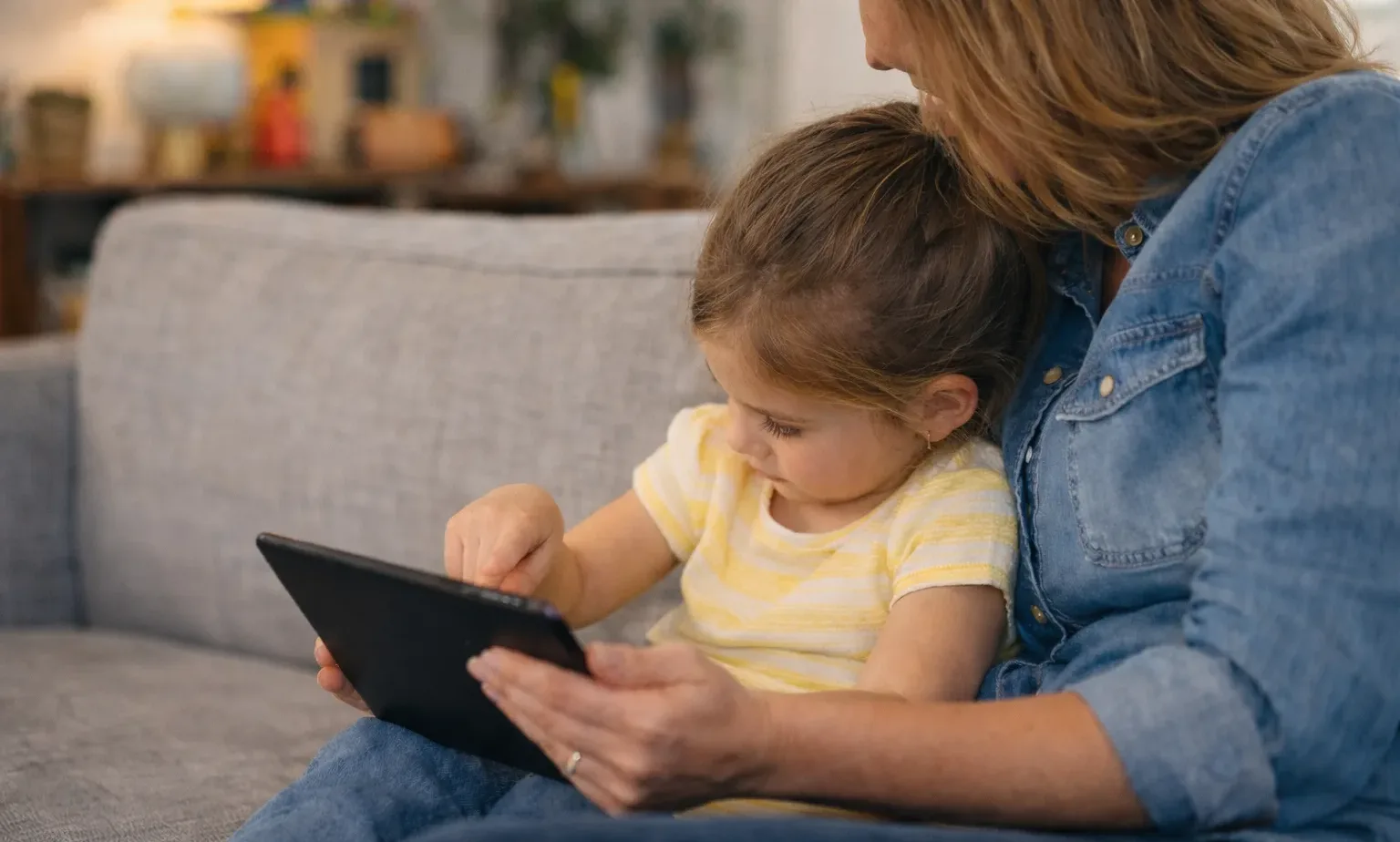
The moment that changes a children’s series rarely just happens in the writers’ room. It can also happen in a living room.

A five-year-old girl tilts her head and says something unexpected about a character. A parent pauses and admits they’re not sure what the takeaway was. An eight-year-old boy laughs at a moment the creators thought was instructional, and tunes out during the explanation. Those are the moments that shape better content.

When people think about research in children’s media, they often think about measurement, proving that something worked after it’s complete. But the real power of research happens much earlier. Research doesn’t just validate content. It influences it.

Where Insight Changes Direction

In our work with PBS KIDS, Nickelodeon, and other children’s media clients across broadcast, digital, and interactive properties, we’re often brought in while content is still evolving. Animatics are rough. Scripts are fluid. Characters haven’t been finalized. Game mechanics are still being refined. That’s exactly when research matters most.

What we uncover doesn’t sit in a report; it informs revision. We examine questions that go beyond surface appeal:

Do children understand the core skill the episode is designed to model?

Do children understand the core skill the episode is designed to model?

Is the learning goal clear, or buried under plot?

Are the rules of the world intuitive to young viewers?

Does the problem feel concrete, or abstract?

When do children disengage, and what’s happening at that moment?

Are parents interpreting the educational intention the way producers expect?

Sometimes the insight confirms the creative approach. Other times, it shifts it.

We’ve observed executive function skills resonating clearly, while the context surrounding them creates confusion. In one project, adults found career themes compelling, but children experienced them differently. In another, humor carried the learning more effectively than explanation. Without research, those disconnects remain invisible. With research, they become opportunities to revise, clarify, and strengthen before a series moves forward. In other words, those insights lead to better alignment between intention and interpretation. That’s not cosmetic feedback. It’s directional influence. 

Research as a Creative Partner

The strongest development teams don’t treat research as a compliance step at the end of production. They treat it as a creative partner.

When research is embedded in the development process, it can influence story pacing, character development, world-building clarity, the explicitness of educational messaging, and the balance between entertainment and instruction. The result isn’t content that feels “researched.” It’s content that feels intuitive, because it aligns with how children actually learn.

That alignment doesn’t happen by instinct alone. It happens by listening. 

Designing for How Kids Learn

This article is the first in a series exploring how research shapes and strengthens children’s media development across the broader children’s content landscape.

In upcoming articles, we’ll feature insights from Allison Caplovitz, PhD, Director of Content Research and Evaluation, and Senior Researchers Sylvia Rusnak and Tiffany Salone, whose expertise in child development, educational measurement, and media testing informs the work behind the scenes.

If you’re developing content for children, consider this:

Do you know what kids are actually taking away?
Are you testing intention against interpretation?
Are you building in time to revise based on evidence?

Because if you’re building for kids, listening to them isn’t optional. It’s foundational.

By Stefanie Cousins, Vice President, Marketing and Communications

The Scholastic Kids & Family Reading Report is a biennial national survey of parents’ and children’s reading attitudes and behaviors. Fluent Research recently conducted the eighth edition of the survey on behalf of Scholastic, and we are pleased to share that major media outlets have already picked up some of the report’s key findings.

On June 2, 2023, Psychology Today shared results from this research that demonstrated the strong link between reading frequency and emotional well-being. Teens who read less frequently were more likely than other teens to say that their emotional or mental health was worse compared to before the pandemic. In fact, the teens who read less often are more likely to report feeling anxious, depressed, and lonely than the teens who read more often.

On June 24, 2023, Alyssa Rosenberg of the Washington Post wrote an opinion piece about the decline in kids’ reading for fun. She cited data from Scholastic’s Kids & Family Reading Report showing that 28% of children between ages 6-17 read 5-7 days a week, down from 37% in 2010. With this in mind, she offered some outstanding ways to encourage children to read, including giving kids the freedom to choose their own books. This last point is supported by data from the research, which found that more than 90% of kids say their favorite books and the books they are more likely to finish are the ones they have picked out themselves.

We’re thrilled to have conducted this impactful research on behalf of Scholastic and look forward to sharing more news coverage of the report as it becomes available. You can view the research results on Scholastic’s Kids & Family Reading Report website.

By Stefanie Cousins

At Fluent Research, we capture, distill and communicate authentic insights to help our clients make data-driven decisions and develop successful business strategies. In recent years, we’ve also been implementing a uniquely powerful way to explore and express these insights: bespoke, broadcast-quality documentary films.

The documentaries we create seek to foster understanding, cultivate empathy, and spark a profound connection with the lives and values of the individuals our clients serve.

We use a wide range of documentary styles, but one approach, in particular, is a perennial favorite. We call it the Deep Dive.

In a typical Deep Dive, we select diverse candidates within a specific demographic (e.g., users of Product X, ages 13-18) and make a series of character-based short films that place audiences within their worlds. Like with home-visit ethnographies, the aim is to capture subjects’ lives in a holistic way. We travel with a small, minimally-invasive crew across the US, and sometimes across the globe, capturing each subject’s lives and the people in their lives.

But how do products and services come into play? What about Product X?

The answer lies in the hero’s journey, the narrative structure identified by Joseph Campbell that drives classical storytelling. In the hero’s journey, an individual strives to reach a goal (Defeat the tyrant! Find true love! Win the spelling bee!) but must first face challenges along the way (Rally the forces! Prove one’s worth! Memorize the dictionary!)

Our approach to storytelling mirrors this journey. Each subject is guided by some goal, care, or concern. The question we seek to answer is: what role does our client’s product or service play in the journey? Is it the sword that empowers them, or is it, perhaps, a double-edged blade?

This is, of course, a simplification. Human lives are messy, and there might be multiple goals, sometimes in conflict with each other. Unintended consequences may arise, and so on. In our documentary Deep Dives, we strike a balance that honors life’s complexity, yet preserves narrative clarity. As a result, the stories that we produce are nuanced, sometimes bittersweet, and always compelling.

For example, one series of short documentaries that we produced was about entertainment and technology usage within a certain demographic. One of those films features an older woman, living alone. Having recently lost her husband, she uses her entertainment tech to remember him, motivate her fitness routine, and to stay socially and spiritually engaged. When her daughter pays a visit, she cautions her mother against “overdoing it.” A gentle disagreement ensues. As her daughter leaves, our heroine reveals her reluctance to burden her children. Her media and tech usage helps her maintain physical and mental health — and her independence.

• Goal: self-reliance

• Challenge: aging

• Product role: serving her goal

In the same series, we meet a father who delights in digital entertainment in all its forms. He castigates himself for watching movies and listening to podcasts instead of working–especially in front of his two sons, who he’s trying to keep on the digital straight-and-narrow.  He announces plans for a phone-monitoring app to monitor their screen time and is met with loud protestations. Our hero feels conflicted, modeling behavior that he doesn’t condone. But later, when the family joins Dad to watch a nostalgic concert film, the boys enjoy it with him, and communication flows. Despite Dad’s concerns, watching TV together becomes a positive experience for all.

• Goal: being a good dad

• Challenges: self-sabotage/ self-doubt

• Product role: it’s complicated

When we create Deep Dives, we take a collaborative approach with the subjects who guide and suggest directions to explore. Of course, while their voices are valued, there’s a directorial guiding hand to maintain balance in the narrative.

The process often begins with an in-depth on-camera interview, during which we work together to identify the key elements of the story. Before wrapping up the interview, subjects have the opportunity to add information or set the record straight, should they feel the emerging narrative is inaccurate. Together, we then make a rough plan to establish what organic scenes we can capture that best tell the story.

When filming these scenes, we go with the flow, capturing whatever authentic, fresh moments might unfold. Unplanned scenes are also captured, and diversions from the plan are welcomed. While this approach may take a little longer to bear fruit, the end result is a richer, more genuine portrayal of our participants’ hopes, battles, and victories. As a rule, we schedule two days per finished minute for editing, which is then followed by post-production tasks like audio mastering and color-grading.

The Deep Dive is but one tool in our kit. But whether the format is more emotive, essayistic, or expository, every documentary we produce is built upon a foundation of trust. We’re deeply grateful to our subjects and clients for entrusting us on our quest to tell these rich, authentic human stories, through film.

By Heath Cozens, Director of Productions, Fluent Productions

In 2021, Chris McCarthy, the president and CEO of Viacom-CBS and MTV Networks, launched the Mental Health Storytelling Coalition and the publication of the Mental Health Media Guide. The purpose of the guide is to teach content creators how to develop more positive mental health storylines that include a diverse range of experiences. With the release of “Wolf Pack,” the first scripted series using the guide’s recommendations, Fluent’s UX Researcher Charlotte Beatty shares her thoughts about the impact of media on teen wellbeing and the implications for the guide on developing storylines that change the narrative on mental health.

“Wolf Pack” is the first scripted series from MTV Entertainment Studios to incorporate the guide. The writers room also worked with consultant Courtney Knowles, senior media advisor for The JED Foundation (JED), a Fluent client and a nonprofit geared toward protecting emotional health and preventing suicide that is particularly geared toward teens.

Most of us will never forget the movies, TV shows, music, and media that made an impact on us as teenagers. Adolescence is a period where individuals are searching for meaning and self-discovery, and nothing feels better than finding a piece of art that makes you feel seen. For about half of the population, adolescence is also a period where mental illness symptoms begin to appear, typically anywhere between ages 14-24.

At Fluent, we talk to teenagers every day about experiences with growing up, mental health, and the media for clients such as JED. In recent years, shows like Euphoria, 13 Reasons Why, and Stranger Things have captured the attention of teenagers across the nation because of the different ways the shows tell stories about mental illness. Storytellers have experimented with a range of portrayals — from painful hyperrealism, as seen in Euphoria, to personifying mental illness with monsters and fantasy world building, such as with Vecna in Stranger Things. Reported rates of mental illness among teenagers have been on the rise, so it’s no wonder that these shows have garnered so much attention, whether it be praise or criticism.

In a post-pandemic world where teenagers are more tapped into media than ever before and having an “emotional support show” has become a regular turn of phrase, it’s exciting to dream of new ways that research can support production development in the film and television space. MTV and its collaborators are breaking exciting ground with their Mental Health Media Guide as they broach one of the most prominent and topical areas of contemporary television for teens. This progress builds on the legacy of research in media, initiated by researchers at The Joan Ganz Cooney Center and Sesame Workshop, but turns the conversation towards adolescence and mental wellbeing with a focus on considering realistic, positive solutions, and problem-solving when it comes to mental health storytelling.

By Charlotte Beatty

A wise and dear professor once told me, “The medium is not the message. The message is the message.” And when television was the medium, that was certainly true. But is that still the case with the proliferation of interactive media for children taking hold? Does the interactivity of the medium outweigh the content being delivered on it?

In the podcast series, Chasing Life, Dr. Sanjay Gupta delves into the science behind the impact of technology on our brains. This particular episode, Inside a Lab Studying Toddlers and Touchscreens,” explores the impact of interactive touchscreen technologies on very young children. Dr. Dimitri Christakis, a pediatrician and director of Seattle Children’s Research Institute, explains how his research is finding that children between the ages of 18 and 24 months struggle to disengage from an app in comparison to a traditional toy. This knowledge triggers questions for both parents of young children as well as the technology companies that create these apps. What can parents and tech companies do to prevent adverse effects on children’s young brains from this relatively new technology?

As a parent myself, I see in my teenagers how the interactivity and stimulation of technology keeps them fully engaged and immersed. And in my role as Director of Content Research and Evaluation at Fluent Research, I help technology and media companies understand how children and parents experience apps, games, and other products so designers and producers who create digital content for kids do so with their wellbeing in mind. This is more important than ever as technology continues to evolve and draw in the attention of a generation. As Dr. Christakis says, “Every program is educational. The question is, ‘What is it teaching?’” We need to do better for our children.

By Allison Caplovitz, PhD

Digital contexts are becoming more prevalent in children’s lives than ever before, fueled in part by the COVID-19 pandemic and the need to move various aspects of children’s lives online*. Since human development is a holistic and dynamic process between the developing person and his or her context* and children develop in positive and healthy ways when their strengths are combined with the strengths of their contexts, we have an opportunity as researchers to bring this framework to the changing landscape of children’s lives.

What has become apparent in our company’s recent requests for proposals, is that there is a lack of fit between the knowledge and experience of many designers and the developmental needs and abilities of children. This lack of fit signals a fundamental problem, and an opportunity, given the growing presence of digital technology as a context for children’s development. The virtual world is a new frontier and there has been a land rush of companies looking to stake their claim flag.  This rapid growth has seemed to create holes in the capabilities of these frontier companies. More precisely, the talent needed to design for adults does not adequately translate to designing for kids. In the absence of comprehensive knowledge about child development, current designers may err in using themselves or those close to them as the markers of success and/or “normality”.

“We all have a blind spot and it’s shaped exactly like us.” – Junto Diaz, Author

Short of extensive training in child development, designers can utilize a few central rules of thumb when designing for kids. Keeping these in mind will go a long way to minimizing, or at least acknowledging, our biases:

1) All humans are whole. Sometimes by necessity, we need to zoom in and focus on a specific part of children’s development, such as their literacy level or their ability to swipe on a tablet. But it is important to understand those parts within the context of the whole developing person. We then need to further adjust our lens to view that person as situated within a dynamic relationship with his or her context.

2) There is no ‘typical’ child. Much of what we know and have studied about children is approximations that are gathered from information that has been averaged over large groups from mostly Westernized societies. Expectations about children should be considered approximations that can get you close to understanding.

3) All households are different. A common mistake is to view children’s development as unfolding in a vacuum. Rules and expectations differ greatly by household and are driven by cultural, situational, and practical factors. Just because a child is developmentally capable of something does not mean that they will do it.

4) Child development is less linear than it appears. Because development is an iterative process, there are often regressions that ebb and flow with progressions. Development of a skill or competency may occur steadily over time or rapidly in spurts. While many abilities get better over time, it is not always the case.  Some abilities, like attention span increase gradually over time during childhood while other capacities, like learning a new language, decrease over time. Other aspects of development, like identity development, are latent during younger years and then rapidly develop.

If there is one mantra that we could recommend to all designers and those thinking about how to best support kids, we would strongly offer this:

“Every [child] is like all other [children], some other [children], and no other [child].” – Kluckhohn & Murray, Anthropologist & Psychologist

By Dan and Amy Warren.

==========

1*Responsible Innovation in Technology for Children. UNICEF Office of Research – Innocenti, Florence, 2022.

*Lerner, R. M., Lerner, J. V., Almerigi, J., Theokas, C., Phelps, E., Gestsdóttir, S. Naudeau, S., Jelicic, H., Alberts, A. E., Ma, L., Smith, L. M., Bobek, D. L., Richman-Raphael, D., Simpson, I., Christiansen, E. D., & von Eye, A. (2005). Positive youth development, participation in community youth development programs, and community contributions of fifth-grade adolescents: Findings from the first wave of the 4-H Study of Positive Youth Development. Journal of Early Adolescence, 25(1), 17-71.


Today, the most cutting-edge thinking about human development is holistic, dynamic, and emphasizes the relationship between the developing person and his or her context.  This thinking is an important evolution; a stark contrast to outmoded ideas that see people as something to be molded by the context like a piece of clay or “filled” like an empty receptacle.

The Positive Youth Development (PYD) perspective is one such holistic and dynamic view, based on the ideas that:1

   1. All young people have strengths (because of the potential for developmental change across the lifespan), and

   2. All contexts have strengths as well. These strengths are resources that can be used to promote positive youth development.

   3. If the strengths of young people are combined with the strengths of the context, then positive, healthy development occurs.

PYD emerges out of this dynamic relationship and is evidenced by the presence in young people of “Five C’s”:  Competence, Confidence, Connection, Caring, and Character.

Digital contexts are becoming more prevalent in children’s lives than ever before, fueled in part by the COVID-19 pandemic and the need to move various aspects of children’s lives online.2  The growing presence of digital technology as a context for children’s development requires that we think deeply about its impact, identify its strengths, and consider how best to combine those strengths with the strengths of young people to promote their positive development.

Nutrient-rich digital contexts have many of the same features as those found in the physical world.  Both are guided by a deep understanding of children’s development, behavior, and natural play patterns.3  Both also recognize social interactions as the core of what it means to be human, seeking to enhance and extend (not obstruct) human connection.4  In turn, both types of contexts empower children to be agents in their own development, to make choices and course-corrections, to be generative and creative.5

We know digital contexts support positive development when children exhibit these six positive behaviors:3

    1. Communication (sharing ideas, caring about and interpreting the work of others)

    2. Collaboration (turning shared ideas into shared action)

    3. Community Building (contributing to the good of the community)

    4. Content Creation (using tools to create new artifacts)

    5. Creativity (being flexible and imaginative)

    6. Choices of Conduct (making decisions based on one’s personal sense of morality)

Taken together, these behaviors can be used to guide the design of developmentally-mindful digital contexts and, as well, to evaluate and revamp existing digital contexts.

When we take a positive developmental approach to digital contexts, we recognize that the quality and potential benefits of those contexts are contingent upon children’s developmental milestones.  Just as a child’s height determines the relevance of monkey bars, so too does their attention span, memory, symbolic representational skills and so on, determine the relevance and nutrient richness of digital contexts.  Certain developments, particularly in early childhood, happen best in the physical, multidimensional world.  Children must reach these key milestones to unlock and benefit from the strengths of digital contexts.  When unlocked, the strengths of young people can combine with the strengths of digital contexts to support positive development.

    1. Lerner, R. M., Lerner, J. V., Almerigi, J., Theokas, C., Phelps, E., Gestsdóttir, S. Naudeau, S., Jelicic, H., Alberts, A. E., Ma, L., Smith, L. M., Bobek, D. L., Richman-Raphael, D., Simpson, I., Christiansen, E. D., & von Eye, A. (2005). Positive youth development, participation in community youth development programs, and community contributions of fifth-grade adolescents: Findings from the first wave of the 4-H Study of Positive Youth Development. Journal of Early Adolescence, 25(1), 17-71.
    2. Responsible Innovation in Technology for Children. UNICEF Office of Research – Innocenti, Florence, 2022.
    3. Bers, M. U. (2012). Designing Digital Experiences for Positive Youth Development: From Playpen to Playground. Oxford, Cary, NC.
    4. Hirsh-Pasek, K., Zosh, J. M., Golinkoff, R. M., Gray, J. H., Robb, M. B., & Kaufman, J. (2015). Putting education in “educational” apps: Lessons from the science of learning. Psychological Science in the Public Interest, 16(1), 3-34.
    5. Lerner, R. M., Theokas, C., & Jelicic, H. (2005). Youth as active agents in their own positive development: A developmental systems perspective. In W. Greve, K. Rothermund, & D. Wentura (Eds.). The adaptive self: Personal continuity and intentional self-development (pp. 31-47). Göttingen, Germany: Hogrefe & Huber Publishers.

Amy Warren, Ph.D. is a Senior Child Development Researcher at Fluent Research. Amy holds a Bachelor of Arts in psychology from Clark University and M.A. and Ph.D. degrees in child development from Tufts University. Dan Warren, Ph.D. is Director, Youth Development and Education at Fluent Research. Dan holds a doctorate in Human Development and Child Study from Tufts University and taught elementary school in Massachusetts for nearly a decade. Together, they co-founded Home Base Learning Center, a nature-based elementary school guided by the core values of Positive Youth Development, Social Justice, and Earth Stewardship.