Publications

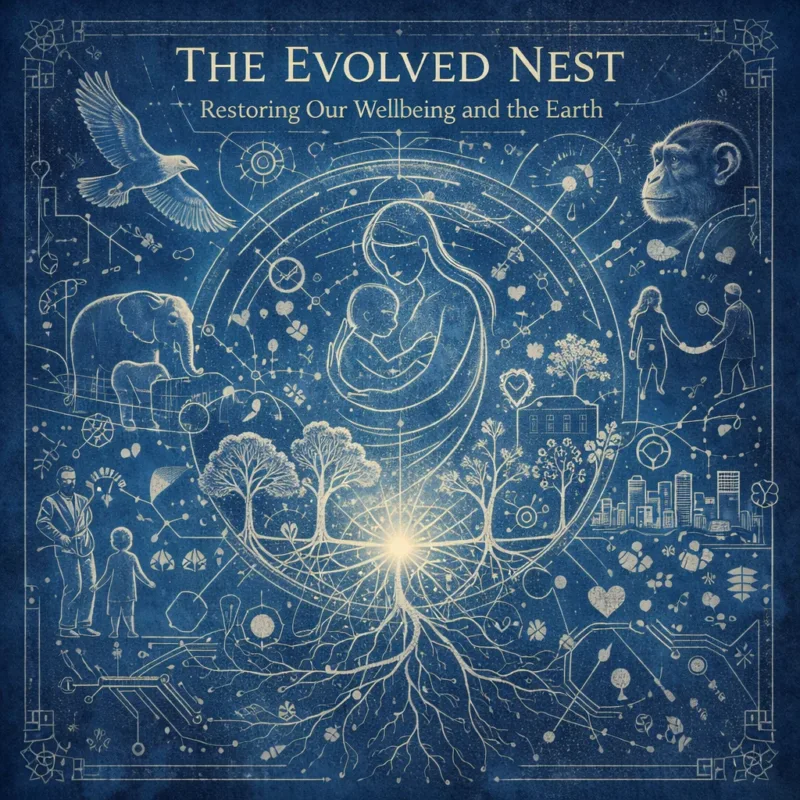
At Fluent Research, we believe that understanding wellbeing requires a holistic lens. It must consider the interplay of technology, culture, education, and the natural world. When you read The Evolved Nest, the latest article by Fluent Research’s Senior Child Development Researcher Amy Warren. PhD, you will explore a profound question: What if the key to healing ourselves and the Earth lies in restoring the conditions we evolved within?

Drawing on insights from developmental psychology and ecological science, Dr. Warren reflects on the concept of the “evolved nest,” a blueprint for human thriving shaped by millions of years of evolution. From nurturing touch and unstructured play to communal care and nature connection, these practices once defined our species. Yet, in the rush of modernity, many of these essential rhythms have been disrupted, leaving us with rising rates of anxiety, loneliness, and disconnection.

But there’s hope. Just as ecosystems retain an innate capacity for repair, so do we. We haven’t lost our blueprints for wellness. They are simply waiting to be rediscovered.

Dive into Dr. Warren’s reflections in the latest issue of Resurgence & Ecologist on how we can reconnect with our ecological inheritance and create environments where both humans and the planet can thrive..

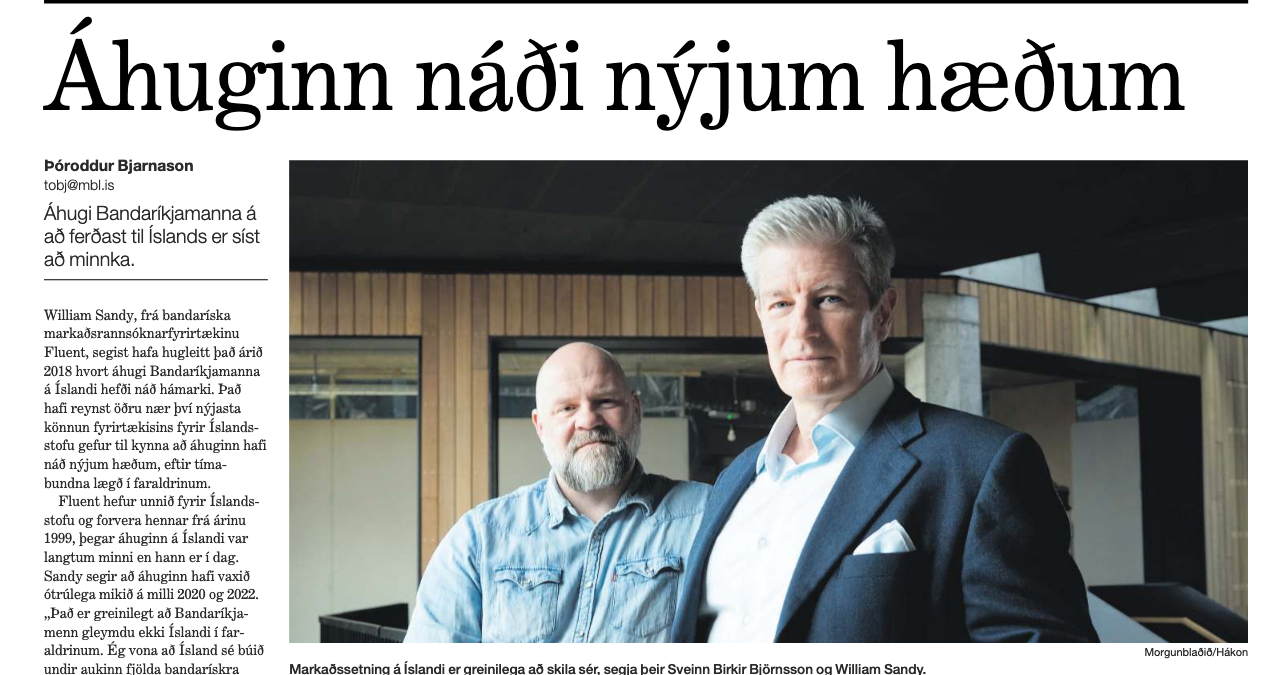
Have you been thinking about traveling to Iceland? If the answer is yes, you are not alone. Fluent Research’s 2022 survey among 1,000+ US consumers ages 18-70 shows a dramatic revival of interest in Iceland and Icelandic products since we last conducted the survey in 2020. In fact, 52% of respondents say they are highly likely to travel to Iceland for pleasure. The previous survey, conducted in 2020 amid the COVID-19 pandemic and associated lockdowns and layoffs, saw a softening of such interest, when only 39% expressed a desire for travel to Iceland. The relaxation of pandemic mandates and re-opening of cities and international borders has brought a vigorous rebound in interest.

All things associated with Iceland seem to be benefiting from the widening appeal of Iceland as a destination. According to Fluent’s Executive Director William Sandy, who was interviewed last month for an article about the survey results in The Morning News, an Icelandic newspaper, “American consumers expressed record levels of interest in travel to Iceland, and interest in stop-over travel to Iceland. The upward trend in awareness and interest in Iceland and Icelandic products that we have witnessed since 1999 has resumed and even accelerated. Marketing in Iceland is clearly paying off.”

Fluent Research has been tracking consumer attitudes towards travel to Iceland and Icelandic products in the U.S. on behalf of the Icelandic trade and tourism association, which promotes tourism, products, and culture of Iceland, since 1999. To see our last case study on our work with Iceland Naturally, click here.

Fluent Research’s Founder & President Nellie Gregorian and Executive Director William Sandy have collaborated with Critica on an article published this week in the Frontiers in Public Health Journal.

Titled, “Implications of COVID-19 Vaccine Hesitancy: Results of Online Bulletin Board Interviews,” the article details the results from focus groups, or “bulletin boards,” carried out to discover the nature of COVID-19 vaccine hesitancy and its implications.

The article was also written by Jack M. Gorman and Sara E. Gorman from Critica Inc, and David A. Scales, M.D., Ph.D. from the Department of Medicine at Weill Cornell Medical College.

You can read an excerpt below or check out the full article here.

Introduction:

The introduction of safe and effective vaccines that protect against the virus that causes COVID-19 has the potential to bring the pandemic under control. Unfortunately, a substantial minority of Americans are either hesitant to be vaccinated or say they will absolutely not receive one of the vaccines under any circumstances (1). Vaccine hesitancy and refusal threaten the ability to establish community (also called “herd”) immunity and therefore pose a significant risk to the public’s health (2).

Vaccine hesitancy and refusal are complex phenomena involving multiple themes and narratives (35). These phenomena vary by ethnic and racial groups, geographic areas, political affiliations, and a host of other demographic and cultural factors (612). Vaccine hesitancy and refusal have been fueled in part by misinformation and disinformation about COVID-19 that has been spread throughout traditional and social media (1315). Misinformation about vaccines is particularly difficult to dislodge (1517).

While survey data have provided important information about the reasons for vaccine hesitancy, direct interviews and focus groups offer the potential to reveal more nuanced factors and to place vaccine hesitancy within a larger socio-ecological context. Among the reasons cited for vaccine hesitancy in one recent focus group study are concerns with the rapid development of the vaccine and fears about long-term adverse side effects (18). The same research group found that Black focus group participants also cited mistrust of the healthcare system and racial injustice as reasons for vaccine hesitancy (18).

In the present work we conducted online focus groups, or bulletin boards, in an attempt to probe more deeply into why people are skeptical about COVID-19 vaccines. Efforts to persuade people to accept vaccination are more successful among those who are hesitant to be vaccinated but not yet fully decided against vaccination (19). One recent study did find that people who were “strongly hesitant” about vaccinations against COVID-19 could be persuaded by messages that “highlighted the personal benefits of vaccinations or directly addressed speed of developmental concerns” (20). We used an initial screener to select participants who were hesitant to receive a COVID-19 vaccine but not yet firmly decided for or against having one. Our analysis of the results was influenced by the social ecological model (21). The information gleaned from these interviews revealed several themes that we believe are important not only to understanding COVID-19 vaccine hesitancy and refusal but also to larger issues facing the U.S. healthcare system.

Fluent’s Research Strategist Sofia Polo recently completed research on oral health literacy for our client Sesame Workshop that was included in an article published in the peer-reviewed California Dental Association Journal.

The article describes a series of activities through which UCLA and Sesame Street collaborated to develop and use oral health resources as part of a children’s oral health awareness campaign. Read an excerpt of some of Fluent’s findings below. You can read the rest of the study starting from page 771 on the December 2021 issue of the California Dental Association Journal.

Focus Groups:

Sesame Street organized a qualitative study using focus groups to examine dentists’, child care providers’ and parents’ current practices and perceptions of the barriers Chinese-speaking, Spanish- speaking, Korean-speaking, Black and Filipino families encounter with regard to the oral health of their young children. The focus groups also sought to solicit feedback on SSIC’s oral health resources.Research objectives included identifying stakeholders’ top priorities and concerns around the oral health of young children; exploring stakeholders’ current practices for promoting the oral health of young children and pinpointing where they learned about these practices; describing the challenges and barriers parents encounter in promoting the oral health of young children, including those unique to specific language/ethnic groups; and gathering feedback and recommendations on the SSIC resources and soliciting ideas for effective dissemination strategies to reach the specific language/ethnic groups. The focus groups consisted of 16 in-depth 45- to 60-minute individual interviews with dentists via Zoom and 13 90-minute virtual focus groups with mothers and child care providers conducted via Zoom.

Results:

During the lifetime of the campaign, the aim was to achieve the following goals across all platforms on social media:

  • Reach 10,000 users per video at minimum.
  • Achieve 25% engagement across all posts per video views.
  • Receive 20,000 views per Dentist Grover video.
  • Receive 50,000 views for Elmo’s Toothy Dance.
  • Increase followership by 50% across all platforms.
  • Recruit at least five local and/ or national partners.  

Results of the awareness campaign exceeded each of the reestablished goals, with the social media campaign generating impressive metrics within a month of the release of the fifth video (FIGURE 2) and a grand total of over 687,000 views of the five featured new videos across MLAS and SSIC websites by the conclusion of the project in December 2020. Followers increased across all social media platforms, with Facebook followers showing the highest percentage increase (112%) and Instagram having the greatest number of followers (204).


Entrepreneur Media mentions Fluent’s study, “School, Interrupted,” in its article on the experiences of students with individualized learning plans with distance learning.

“According to a recent survey from Fluent Research, “Parents of students who had Individualized Learning Plans (IEP) were significantly more likely to report that distance learning allowed their child to keep up with their learning goals. This progress did not come without a great deal of work and stress, however. Parents of students with IEPs expressed higher levels of frustration with online distance learning, especially when it came to simultaneously managing their child’s work and their own work from home.”  View Article

EdTech Digest featured our study, School, Interrupted: Families’ Experiences with Education during the Pandemic, in its June issue. Research indicates that although the switch to online distance learning has been largely a frustrating experience for families, parents and teens alike give educators high marks for ensuring continuing education in the time of crisis. View Article