Children

A child’s mind is a ball of curiosity, you may be able to engage them for a minute or an hour tops, but it gets tricky as soon as they find something more interesting. Such is the nature of researching with children. It allows you to gather the most raw information and opinion regarding anything at all. But it may also restrict the amount of depth and detail that can be obtained from their remarks. Similar dilemmas were experienced during my onsite research with pre- to early teenage girls residing in the red light district of Old Lahore, Pakistan as highlighted in my master’s thesis:

“It was the most challenging yet the most rewarding research experience, the most pushing yet the most raw experience. Sometimes they would be moody and low on energy and I would have to build up an extra fun environment. But the thing is I couldn’t be too fun because that would get too lame for them. I had to be the perfect amount of energetic yet sober, fun yet serious, approachable yet distant, and flexible yet organized” (Anwar 2024).

Amidst such circumstances, the question that naturally came to my mind was how to strike that perfect balance in my research that would allow me to gather all the data and create a valuable and fun experience for the participants.

The answer lay in the newly found tool called Research Camp, which I stumbled upon in my LinkedIn feed. Introduced by Dan Warren, PhD, Director, Education and Youth Development at Fluent Research, Research Camp provides an immersive research experience for children away from their regular setting. An opportunity to spend quality time together, talk, react, move, and relate with one another and their surroundings, all while participating in adventurous camp activities.

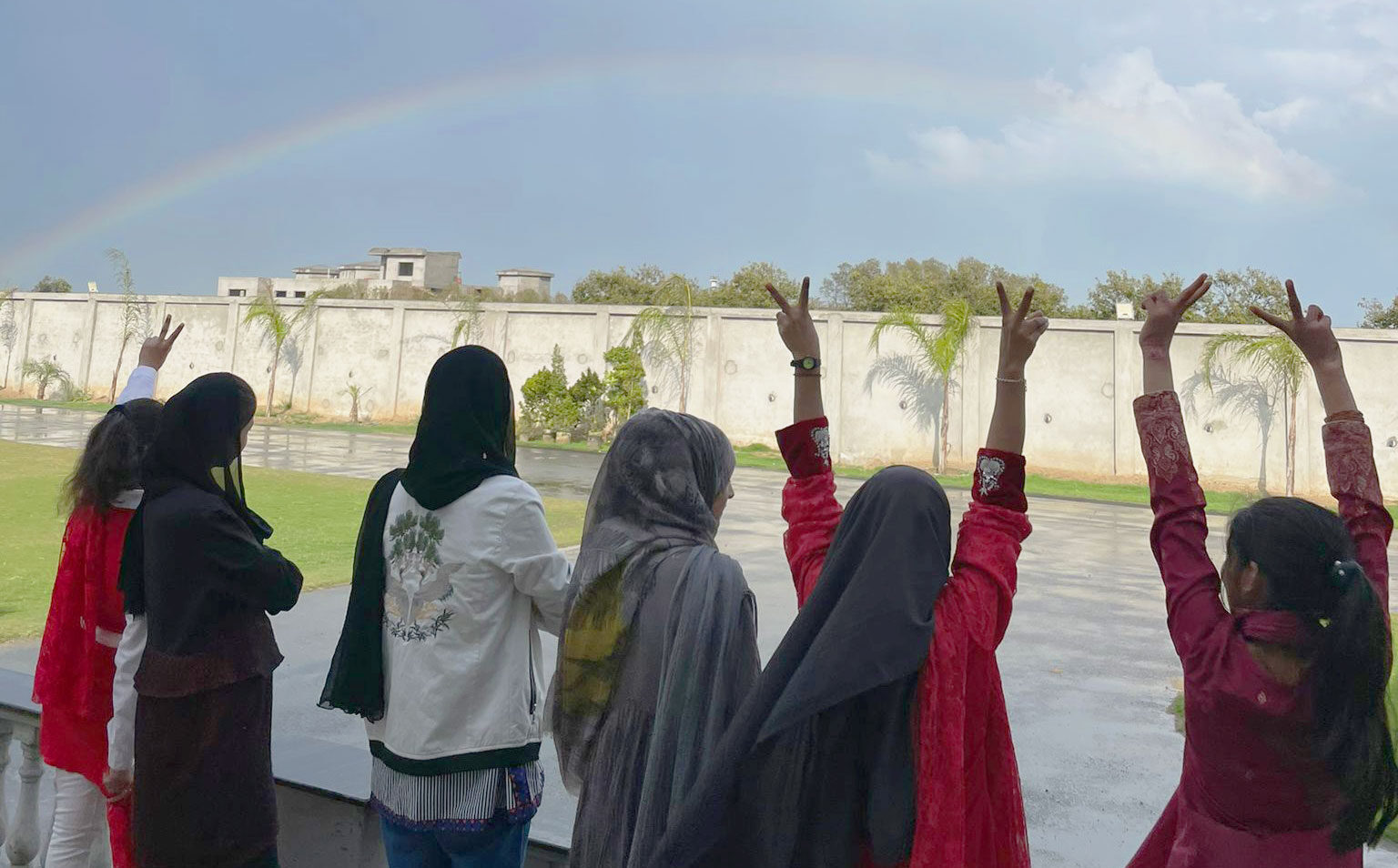
While that sounded amazing on paper, I was reminded of the constraints of my research. I didn’t have the means to book a campsite but did I let that stop me? No. Instead, I replicated the camp feeling at my friend’s farmhouse in Pakistan. The purpose was to take my participants away from their usual setting and provide them with a safe and open space to spend quality time with each other. Like a field trip, they got a chance to enjoy a little break from their routines and immerse themselves in the adventures of a new space. It was all about having fun together. In doing that I uncovered the multiple layers of being that shaped my research and gave me rich insights into their lived experiences, fears, and dreams.

During the camp, I had discussion cues, focus groups, debates, and map-making activities that stimulated conversation about their experiences. In their words, “Everyone’s running here and there, this is how fun participating in research should be like.” Others commented, “Yeah it helps freshen up the mind and you get a fresh perspective on things that is easier to share.” Similarly, another participant reflected, “It’s so boring to sit in one place, instead going to new places makes the research more fun.” Such was the feedback that I got from the two research camps that I conducted.

Not only did the camps allow me to gather new insights into the relationship between one’s being and space, but they also allowed us to talk about feelings and experience vulnerability together. In the end, it was a win-win situation. Where I, as a researcher, gathered my data, and the girls as the participants created memories and moments of fun together.

(P.S.) Here’s some video I captured during the camp: Research Camp in Pakistan

By Tehreem Anwar.

As a researcher specializing in media, technology and children, my work is informed by my interest in, and knowledge of, child development. At Fluent Research, we have collaborated with numerous media companies to provide insights into the evolving experiences of children and parents with digital media.

One recurring theme in our research is the desire of both parents and children to limit their screentime, but their inability to do so consistently. This discrepancy in knowledge and practice often stems from parents feeling overwhelmed by the plethora of media choices, and their fear that if they limit screens, their children might feel left out. For kids, the compelling nature of digital content, peer influences, the omnipresence of screens in their daily lives, and the algorithms that feed them more and more content make it extremely challenging to limit their use of digital media.

With the passage of the new Kids Online Safety and Privacy Act in the U.S. Senate this week, we are on our way to implementing some new protections for kids. It’s about time!

This new bill marries two different acts, The Kids Online Safety Act (KOSA) and the Children’s Online Privacy Protection Act (COPPA) 2.0. Both represent significant legislative efforts aimed at enhancing online safety and privacy for children. As this bill moves closer to passage, it is important to consider its implications.

• Kids Online Safety Act:

– KOSA aims to update and expand protections for children under 17.

– KOSA also provides guardians with more control over platforms, prevents features such as autoplay, and provides for stronger default privacy settings.

• Children’s Online Privacy Protection Rule 2.0

– COPPA 2.0, which is an extension of the original COPPA, was enacted in 1998 to regulate the collection of personal information from children under 13.

– This new version of COPPA 2.o would also expand protections for teens.

– The proposed updates in COPPA 2.0 also address targeted advertising, data retention practices, and the need for verifiable parental consent.

– COPPA 2.0 aims to provide stronger safeguards in this new era of media saturation.

The passage of KOSA in the Senate and future passage in the U.S. House of Representatives could mark a significant step forward in protecting children’s digital wellbeing. As someone working every day at the intersection of media, technology, and child development, I believe these legislative measures are long overdue. They not only aim to safeguard privacy but also to foster healthier digital habits among children. By creating a more regulated and child-friendly digital landscape, we can help kids and parents alike navigate the complexities of technology while minimizing potential risks. In this ever-polarized political landscape, we can all come together and agree that our kids are worth protecting!

By Allison Caplovitz, Director, Content Research and Evaluation

A few months ago, my Girl Scout troop of 8 and 9-year-old girls voted on which badges they wanted to earn.  They overwhelmingly voted to earn the “STEM Career Exploration” badge, and the “Coding” badge, among others. It was clear they were very excited about STEM subjects. The funny thing is, a number of them didn’t know exactly what STEM was, but they did know that it’s cool.

How does my troop know that STEM is cool, and that there is a place for them in it? I give credit to the many organizations that have been working to encourage women’s interest in STEM: from established organizations like Girl Scouts, to new but now well-known brands like the Rebel Girls books, to up-and-coming organizations such as Lost Women of Science. Thanks to these organizations and so many others, girls can see themselves as scientists, they can practice being scientists themselves, and they can hear the stories of women who came before them.

Elevating the visibility of women in STEM roles is particularly crucial for young girls to imagine themselves in similar positions. Our Girl Scout troop enjoyed hosting a computer engineer who shared insights into her profession. Similarly, our local library organized a meet-and-greet session with a female paleontologist. Initiatives like Lost Women of Science amplify the stories of lesser-known women, reaching millions and shedding light on the contributions of women throughout history who were overlooked.

When girls see individuals like them excelling as chemists, mechanical engineers, or app developers, they dream of following in their footsteps. I’ve observed firsthand the power of both historical and modern narratives that highlight women in STEM for young girls. Stories of historical women show girls that women succeeded even if they weren’t always welcomed, and stories of modern women demonstrate that STEM is an area in which girls and women can thrive.

By Mary Meyn, Director of Research.

Recently, we attended the Digital Media and Developing Minds International Scientific Congress in Washington, DC, which was organized by the Children and Screens Institute of Digital Media and Child Development. This unique event brought together clinicians, advocacy leaders, teachers, and researchers. Expertise among attendees included medicine, developmental psychology, and experimental psychology. The conference aimed to foster collaboration and exchange of ideas concerning children’s health and safety in relation to digital media use.

Key Themes

During the three-day event, which featured more than 15 talks and panels, several key themes emerged:

The Impact of Screen Media on Minoritized Youth

Discussions revolved around both the positive and negative effects of screen media on LGBTQ youth and youth of color.

Challenges of Under-Connected Youth

There was a focus on the limitations faced by under-connected youth and the need for equitable access to digital resources in the global south.

Data Deficiency on Young Children

Participants noted the lack of comprehensive data on young children’s digital media usage.

Privacy and Security Concerns

Topics included discussions on data ownership (parents vs. children) and the need for improved privacy and security measures for children online.

Updated Policies

There was a consensus that the Children’s Online Privacy Protection Act (COPPA) is outdated and that age gates alone are insufficient to safeguard children in today’s digital landscape.

Mental Health Implications

Speakers addressed the impact of digital media on the mental health of youth, including externalizing behaviors and bidirectional effects.

Youth Advisory Panels

Experts highlighted the value of involving youth in decision-making processes and participatory design research.

Parental Support and Contextual Influence

Panelists discussed how the context of home environments has impacts on children’s media use and potential dependence on screen time.

We found the conference  thought provoking and inspiring. It was a great opportunity to listen to interesting figures in the field and gain new perspectives that will inform our future work. This event served as a reminder that stepping away from daily tasks to attend conferences may lead to new ideas.


By Allison Caplovitz & Tiffany Salone

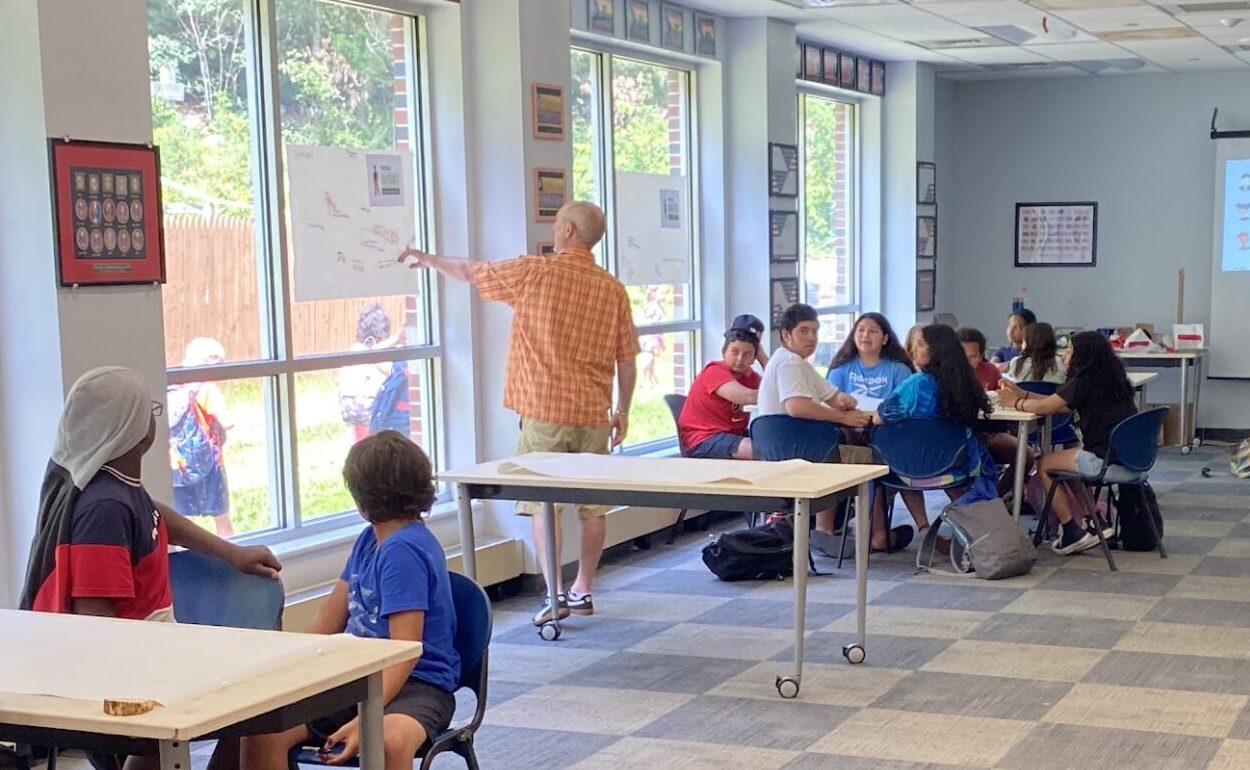
Research Camp is an immersive experience for both youth and clients. For the kids, it involves engaging in a full schedule of camp activities and participating in research for a brief period each day. Clients have the opportunity to witness children grapple with their research or design questions in real life while also interacting with them informally. What makes this experience unique is that we conduct the research in a fun and engaging environment: Camp. Research Camps take place in cities across the US at established camps that hold sessions during school vacations and in the summer. The incentive for youth participation is a week of the camp’s tuition at a significantly reduced price.

At Research Camp, we explore the world through the eyes of children. Using a range of qualitative research methodologies, we aim for deep insights into their thoughts, feelings, and experiences to answer our client’s research questions. Over the past few weeks, we’ve published articles about how Research Camp came about and how we found our first participants. In this article, we’ll focus on how we leverage a convenience sample and five qualitative research methodologies to understand and enhance the lives of children.

Convenience Sampling – A Quick Entry Point

Research Camp relies heavily on a convenience sampling. A convenience sample is just that, convenient, because participants are selected based on ease of recruitment over randomness. It is particularly helpful when conducting exploratory or formative research because it allows us to gather data quickly from children who are either attending the camp or already interested in going. Convenience sampling tends to be time efficient and cost effective compared to other sampling methodologies, making it a great choice when appropriate.

Convenience sampling, however, comes with its limitations. Since participants aren’t randomly selected, the sample may not accurately represent the broader population, thus limiting the external validity of the research. Additionally, the absence of randomness in the selection process makes reliable estimation of sampling error problematic and, therefore, precise statistical inferences and hypothesis testing doesn’t really work. For our purposes, the convenience sample is perfect, but researchers must be aware of the drawbacks when designing and interpreting convenience sample-based studies.

Qualitative Research Methodologies We Use with Kids at Camp

Because children have unique perspectives and experiences that may not always be adequately captured by utilizing one research solution, we use five different qualitative research methodologies at Research Camp. These methodologies were chosen to generate rich data to help us explore nuanced responses, emotions, and stories that go beyond data from surveys or questionnaires to provide a more holistic view of children’s experiences and opinions.

1. Focus Groups – Exploring Children’s Perspectives

One of the primary qualitative methodologies we use is focus groups. In a focus group a skilled moderator guides a small group of children through discussions on specific topics. This methodology offers several advantages:

        • Careful Participant Selection: We ensure that the children in our focus groups are uniquely positioned to provide valuable insights into the topic under investigation.
        • Experienced Moderation: Our moderators have backgrounds in child psychology or education, creating a safe environment for children to express themselves.
        • Age-Appropriate Sessions: Recognizing children’s shorter attention spans, our focus group sessions typically last 45 minutes to an hour and may involve engaging activities like games or storytelling.


2. In-Depth Interviews – A Personal Connection

In-depth interviews (IDIs) with children are another valuable qualitative methodology we use during Research Camp. These semi-structured interviews facilitate detailed discussions with children on a wide range of topics. Conducting in-depth interviews with kids provides two benefits to the research process:

        • A Child-Centric Approach: In-depth interviews allow us to adapt questions to the child’s developmental stage and cognitive abilities, ensuring age-appropriate interactions.
        • Building Trust: Conducted in a one-on-one, non-threatening environment, these interviews often lead to stronger connections between children and researchers, fostering more honest and open responses compared to focus groups.


3. Child Ethnography – Immersed in Their World

Child ethnography, a specialized form of ethnographic research, plays a crucial role in Research Camp. This qualitative methodology involves immersive, long-term fieldwork to study the lives of children within their cultural and social contexts. We do this both on-site at the camp as well as in the homes of some of the campers outside of the camp hours. Child ethnography is invaluable because it provides:

        • Deep Insights: Child ethnography provides a holistic understanding of children’s daily lives, experiences, and perspectives by allowing the researchers to see things play out over a longer period in a more natural environment.
        • Cultural Context: Ethnographies can help researchers explore how cultural norms, values, and practices shape children’s experiences and development, offering insights into their socialization.


4. Observations – Becoming part of the scene

Nothing has been more effective than getting into the thick of it with kids. By interacting with youth through observations and immersion during Research Camp, researchers spend time with children, observe their interactions, and engage in informal conversations. Observations have some specific benefits:

        • Immersive Insights: Observations and immersion provide authentic insights into children’s lives by creating the opportunity to see kids over a longer and less contrived period of time.
        • “Quantity” time: By creating a wider timeframe to observe kids, we increase the possibility of kids becoming more comfortable and, therefore, authentic. It also makes the space for other unintended insights that can provide some of the most profound breakthroughs.


5. Co-Creation Sessions – Collaborating with Children

Co-creation sessions, when children are invited into the process of the design, development, or improvement of products or services, are an amazing and inspiring experience. Often, researchers and designers get stuck in a certain adult-centric way of thinking and need to enlist the help of kids to create alongside them. Co-creation is great because it provides:

        • Fresh Perspectives: Children offer fresh, imaginative, and innovative viewpoints that can lead to creative solutions.
        • User-Centric Solutions: Co-creation ensures that products or services are tailored to children’s needs and preferences, enhancing customer satisfaction.


Research Camp employs a range of qualitative research methodologies to unlock the unique perspectives and experiences of children. From focus groups and in-depth interviews to child ethnography, observations, and co-creation sessions, these methodologies help us understand, empower, and advocate for children in a world that often, intentionally or not, misinterprets or tunes out their critical voices.

By Dan Warren, Director, Youth Development & Education

The Scholastic Kids & Family Reading Report is a biennial national survey of parents’ and children’s reading attitudes and behaviors. Fluent Research recently conducted the eighth edition of the survey on behalf of Scholastic, and we are pleased to share that major media outlets have already picked up some of the report’s key findings.

On June 2, 2023, Psychology Today shared results from this research that demonstrated the strong link between reading frequency and emotional well-being. Teens who read less frequently were more likely than other teens to say that their emotional or mental health was worse compared to before the pandemic. In fact, the teens who read less often are more likely to report feeling anxious, depressed, and lonely than the teens who read more often.

On June 24, 2023, Alyssa Rosenberg of the Washington Post wrote an opinion piece about the decline in kids’ reading for fun. She cited data from Scholastic’s Kids & Family Reading Report showing that 28% of children between ages 6-17 read 5-7 days a week, down from 37% in 2010. With this in mind, she offered some outstanding ways to encourage children to read, including giving kids the freedom to choose their own books. This last point is supported by data from the research, which found that more than 90% of kids say their favorite books and the books they are more likely to finish are the ones they have picked out themselves.

We’re thrilled to have conducted this impactful research on behalf of Scholastic and look forward to sharing more news coverage of the report as it becomes available. You can view the research results on Scholastic’s Kids & Family Reading Report website.

By Stefanie Cousins

Have you noticed vibrant color schemes, unconventional patterns, curated clutter, and an eclectic mix of styles popping up in your social media feed lately? If so, then you may be familiar with Gen Z maximalism— a bold and expressive design aesthetic that exemplifies the motto, “more is more.” Let’s take a dive into this recent trend.

Gen Z maximalism is a far departure from minimalism, popular among millennials. Whereas the millennial generation prefers simplicity and functionality through clutter-free spaces, clean lines, and neutral colors, Gen Z prioritizes vibrancy, creative self-expression, and constant stimulation.

The rise of Gen Z maximalism is due, in large part, to the impact of the pandemic. With extended periods of quarantine and stay-at-home orders, young people spent more time indoors cultivating living spaces that emanated warmth and inspiration. Gen Z turned to maximalism as a way to infuse their homes with the energy, joy, and personality that reflect their unique tastes. The aesthetic goes beyond interior design. Gen Z’s maximalist effect on fashion and beauty subverts conventions and tradition with an eclectic style of bold patterns, textures, and colors.

In our work at Fluent Research, we often explore how digital products empower the creativity of young people around the globe. Gen Z maximalism reflects the unique ways in which this generation seeks to express their individuality, creating unique content that stands out in the crowded digital landscape. This aesthetic encourages personalization and unabashed exploration of various styles and modes of expression. We must ensure that Gen Z continues to have access to the latest digital platforms, innovations, and tools that empower them to customize and personalize their experiences and express their creativity.

By Natalia Belchikov


In this special Kid Insight column, which originally appeared in Kidscreen Magazine last month, David Cohen, senior director of content research at Sesame Workshop, Stefanie Cousins, vice-president of marketing and communications at Fluent Research, and Sofia Polo, director of research strategy at Fluent Research, give insight into Sesame Workshop’s impact strategy for hard-to-reach communities.

Children’s content has the power to positively impact children’s lives in ways that ripple through generations, and that’s the reason why many of us do what we do. But while we may try to deliver content that authentically reaches a diverse range of families, we have to ask: Are we achieving that goal? And if not, how can we do better?

At Sesame Street in Communities (SSIC), we’ve tried to formalize the answer to this second question. Although our efforts lean on the reach and resources of Sesame Workshop, we believe that elements of our model can be incorporated by other companies that want to more strategically develop and distribute their content (or supporting campaigns) to specific or hard-to-reach communities.

STEP 1

Partner up!

Identify potential partners with strong connections to local communities, such as healthcare organizations, nonprofits and educational institutions. We believe that a key part of success here is giving community stakeholders co-leadership roles right from the beginning. Here are some questions to consider.

Population: Is there a group of people that you are specifically interested in creating content for? If so, reach out to social service organizations that provide outreach to that community.

Subject matter: Who might have subject matter expertise or an interest in your topic? It’s helpful to consider community partners who can contribute ideas and who will also benefit from the outcome.

Capabilities: What can the community partner realistically offer for the delivery and implementation of content? Successful partnerships begin with clearly communicated expectations about responsibilities and level of involvement.

STEP 2

Do your research!

Now it’s time to get to know the community—like, REALLY get to know it. Get out there (or go online) to conduct interviews, focus groups or surveys to understand your target population’s context, needs, beliefs and attitudes as related to your topic. Connecting with the community in this way will also give you the opportunity to learn about effective ways of distributing the content. Here are some tips to get you started.

Use step 1: Community partners likely have relationships with the people you want to reach. Engage them by asking them to help recruit research participants, host focus groups or review interview questions to ensure that they are culturally and linguistically sensitive.

Choose the right methodology: Focus groups and interviews, for example, let participants tell stories that highlight their lived experience, and they work great for research that’s meant to inform decisions about an upcoming project. There are also online platforms (such as bulletin boards) that provide a freeform space for research participants to respond to your questions in writing. You do not need to recruit hundreds of research participants—many SSIC studies recruit as few as 25 people for this type of research.

Hire a research consulting firm: Not all of this needs to fall on your shoulders, and there are often affordable options.

STEP 3

Spread the word!

Let the results of your research guide your content development and distribution. Having the help of community partners at this point is essential. As you know, it’s challenging for any content or campaign to capture the attention of busy parents with young children, especially those from underserved communities. However, when a trusted community organization disseminates the content, those parents are more likely to see it, trust it, and absorb its messaging. Here are some suggestions.

  • Organize family-friendly events at local schools or community centers where materials are distributed.
  • Conduct sessions to show healthcare providers and caregivers how to access and use the materials.
  • Work with librarians and healthcare providers to connect with community members.
IDEAS IN ACTION

Let’s take a look at how this works on the ground. In 2018, SSIC launched an oral health initiative targeting Black and immigrant families with young children in Los Angeles County. We set out to address how content could improve oral health outcomes for young children.

Why oral health? According to the US Centers for Disease Control and Prevention (CDC), tooth decay is the most common chronic disease in young children, and it affects high-risk children beginning in infancy and early childhood. Children with poor oral health miss more school days and receive lower grades than children with good oral health.

We became aware of this issue as part of a National Maternal and Child Oral Health Policy Center meeting in Washington, DC in 2006. Once we identified the opportunity for content to play a role in improving this outcome, we set about building our strategy.

Partner selection: We decided to partner with the UCLA School of Dentistry because it was determined that SSIC resources would be a valuable complement to its existing “More LA Smiles” children’s health awareness campaign.

Research: We partnered with Fluent Research, a consulting firm with expertise in children’s media and community-based research. They were selected through a competitive RFP process based on their experience in conducting research and evaluations of media-based resources and initiatives with young children and their caregivers. The research consisted of a series of interviews and focus groups with parents, early childhood educators, and dentists who serve Black, Latino, Korean, Chinese and Filipino families in Los Angeles. SSIC’s community partners played an instrumental role in carrying out this research by identifying and recruiting hard-to-reach research participants.

Analysis: The research highlighted specific financial, psychological and immigration-related factors that make accessing oral healthcare a challenge for parents, and pinpointed common misconceptions and hesitations around diet, oral hygiene and dentist visits. The research also identified schools, daycares and doctors’ offices as trusted settings for accessing information about parenting and health.

Execution: SSIC and its community partners developed several strategies for distributing the content, including events at schools and clinics, the distribution of booklets and online videos to childcare and healthcare providers, and a social media campaign that involved local businesses and organizations posting bilingual graphics and videos promoting the importance of tooth brushing (featuring Elmo and Grover, of course!). SSIC also worked with community partners to install Sesame Street-themed “Comfy-Cozy Spaces” in their facilities, where children can play with plush Sesame Street Muppet toys and parents have access to the oral health content.

Results & follow-up: After one year, a review of the campaign’s reach found that it had exceeded its goals, generating nearly 700,000 views of the oral health videos and increasing SSIC’s following on Facebook by 112%.

This is just one example of how SSIC uses its community-centered model to develop content and supporting campaigns that successfully target hard-to-reach populations. Although it has its challenges, even small steps toward blending aspects of this model into your content development and distribution process can make a difference.

At the end of the day, infusing community voices into content helps producers make more authentic programming, but it also ends up having a much deeper impact on the people and audiences who are targeted to consume it.


One of the most consistent findings I have noticed while studying families and digital media over the years is that parents want their children to be less dependent on them. At the same time, however, parents must also supervise their children and ensure their children’s online safety. In various studies about educational apps, children’s media, digital gaming, non-digital play, and reading, many parents have admitted that whatever the medium, they want their children to be both safe and independent. Therein lies the parenting conundrum.

Parents tend to opt for solo activities and resources for their children that can offer the safest options and the most autonomy. For example, while co-reading is important to parents to allow time to bond, they also want their child to grow to love reading and eventually choose to read independently on their own. Similarly, parents often prefer to send their children to the yard (if one is available to them) instead of a public park, since they can provide supervision while getting other things done at home.

While this idea may seem like a no-brainer (especially to parents), the solutions that research offers as the best and safest options for children—co-viewing and co-playing, for example, which we fully support—can admittedly leave parents feeling that they have to make a hard choice. They feel they have to choose between what they should do to be a “good parent” and what they end up doing in reality, which is often pushing their child toward the easiest solution that gets them out of their hair. We have heard from many parents that they struggle to balance their children’s need for activities that are educational, fun, and physically active —activities that often require supervision—with their own need for time to do what they need to do, which often requires their child to act independently.

According to our research, the capacity for independent play is one of the key drivers for parents to allow technology use among young children, beating out most other anxieties parents report having about screen time and active time. This is a particularly interesting finding to see come up time and again, especially given the vats of ink spilled over screen time since the debut of the iPad in 2010 (not to mention the invention of the television). Complicating the picture further, the levers for safety and autonomy are different for each family. A family most concerned about exposure, for example, might allow their 11-year-old to access any video game they want as long as their device is not connected to the internet. Another family concerned about contact and location might give their 11-year-old a phone so that they can be reached wherever they are, with less concern about how the child uses it.

Regardless of each family’s situation, however, there are certain takeaways tech companies might consider to help parents feel more confident in their child’s safety when using technology independently. Ideally, with this peace of mind, parents might be less anxious about not striking the balance between wanting to engage with their children and needing time to be more hands off.

1) Support the balance of learning and fun.

We have heard from many parents that, if their children are going to be on a screen anyway, they want the time spent to be as educational as possible. For some parents, an engaging educational app is a relief, since the alternatives are “mindless” apps that just waste time. But above all, we have heard that parents take cues from their children about what is engaging for them and worth spending time and money on. If it is educational but no fun, it is not going to be worth the time, let alone the money. App designers should strive for the happy medium. Note, however, that the desire for educational apps seems to change over time: as older children have increased responsibilities at school, parents want their children to relax and are more okay with “mindless” fun.

2) Support parents’ search for appropriate content.

We have likely all experienced the inundation of choices that have resulted from the proliferation of streamers, channels, and podcast networks. The children’s media landscape is no different. There is no shortage of options for devices, apps, or shows to choose from, and parents are operating on a combination of word of mouth, pre-vetting (using the apps themselves for a while), and trial and error. Issues with app store rating systems have been well documented, but in addition to overdue changes to those systems, parents need to be made aware of websites like Common Sense Media (CSM) that include parent and child reviews and media research. Outlets such as CSM can also help parents differentiate high-quality, research-based content from popular apps that claim to be educational. This information can help parents make their own decisions about what is right for their family.

3) Support parents’ efforts to keep their children safe.

Parents trust devices and apps that help them maintain control over what their children are exposed to. While they can control most of what comes into their home in other ways, technology can be a conduit to the wider world that parents have comparatively little control over. We have found that parents are not completely comfortable with company-imposed or set-it-and-forget-it filters, so we suggest clear controls that allow parents to customize and revisit the boundaries they’ve set over time.

4) Support regulations on children’s time.

Although parents like that technology can occupy their children’s time, they also fear and dislike the complete and utter takeover of their attention. Parents we have talked to complain about being excluded from engagement with their child while they are on devices. While some parents have outsourced being the screen time “bad guy” to timers and house rules, many parents wish apps and devices integrated periodic breaks after an appropriate amount of time. This feature would make transitions between activities smoother for everyone.

5) Support optional parent participation.

Although parents want and need their children to be independent, they still see the value of co-engagement and participation in their interests. Multiplayer modes and prompts for optional parent participation in activities invite parents to engage with their children in digital spaces rather than exclude them. Portals or logins that give parents a view of what their child is doing and the progress they have made also help parents feel connected without interrupting their child’s screen time.

Conducting research with parents and children provides me and my colleagues at Fluent with the opportunity to advise tech companies on how their products and services might have a positive impact on kids and their parents. These are some of the most common insights we have heard from families across our research studies. I look forward to seeing how Fluent Research continues to help make new innovations even better for them.

By Tiffany Salone*

In 2021, Chris McCarthy, the president and CEO of Viacom-CBS and MTV Networks, launched the Mental Health Storytelling Coalition and the publication of the Mental Health Media Guide. The purpose of the guide is to teach content creators how to develop more positive mental health storylines that include a diverse range of experiences. With the release of “Wolf Pack,” the first scripted series using the guide’s recommendations, Fluent’s UX Researcher Charlotte Beatty shares her thoughts about the impact of media on teen wellbeing and the implications for the guide on developing storylines that change the narrative on mental health.

“Wolf Pack” is the first scripted series from MTV Entertainment Studios to incorporate the guide. The writers room also worked with consultant Courtney Knowles, senior media advisor for The JED Foundation (JED), a Fluent client and a nonprofit geared toward protecting emotional health and preventing suicide that is particularly geared toward teens.

Most of us will never forget the movies, TV shows, music, and media that made an impact on us as teenagers. Adolescence is a period where individuals are searching for meaning and self-discovery, and nothing feels better than finding a piece of art that makes you feel seen. For about half of the population, adolescence is also a period where mental illness symptoms begin to appear, typically anywhere between ages 14-24.

At Fluent, we talk to teenagers every day about experiences with growing up, mental health, and the media for clients such as JED. In recent years, shows like Euphoria, 13 Reasons Why, and Stranger Things have captured the attention of teenagers across the nation because of the different ways the shows tell stories about mental illness. Storytellers have experimented with a range of portrayals — from painful hyperrealism, as seen in Euphoria, to personifying mental illness with monsters and fantasy world building, such as with Vecna in Stranger Things. Reported rates of mental illness among teenagers have been on the rise, so it’s no wonder that these shows have garnered so much attention, whether it be praise or criticism.

In a post-pandemic world where teenagers are more tapped into media than ever before and having an “emotional support show” has become a regular turn of phrase, it’s exciting to dream of new ways that research can support production development in the film and television space. MTV and its collaborators are breaking exciting ground with their Mental Health Media Guide as they broach one of the most prominent and topical areas of contemporary television for teens. This progress builds on the legacy of research in media, initiated by researchers at The Joan Ganz Cooney Center and Sesame Workshop, but turns the conversation towards adolescence and mental wellbeing with a focus on considering realistic, positive solutions, and problem-solving when it comes to mental health storytelling.

By Charlotte Beatty