Author: Stefanie Cousins

To celebrate Fluent Research’s 20th anniversary, we’re highlighting the people who have helped shape the organization along the way. This week, we’re featuring Dana Markow, PhD, Fluent’s Vice President, Research.

Dana wears many hats at Fluent, including leader of our quantitative, survey-based research and driver of business, innovation, and strategy development. Having conducted extensive research with children and teens, education products and services, and public affairs, Dana provides her clients with data-driven, human-centered strategic insights that help them address complex questions and support strategic decisions.

Read below to find out about what Dana’s typical day looks like, her favorite productivity hack, and the activities she enjoys outside the office.

1) What inspired you to join Fluent Research?

Nellie and I met around 10 years ago and I was really impressed with the work that she was doing. I was working as an independent consultant at the time and a project came my way that I thought would be a great opportunity for us to partner on. That project was a success, which led to a few more projects. So when the offer came to join Fluent on a full-time basis, I was thrilled to accept. 

2) What’s your role at Fluent, and what does a typical day look like for you?

I’m Vice President, Research and lead a team focused primarily on quantitative, survey-based research. I also have broader responsibilities for overall research strategy and innovation and business development. A typical day for me involves speaking with existing and potential clients, preparing a proposal for a new project, overseeing the various research projects managed by my team, and digging into the data to inform insights and recommendations for a client.

3) How has Fluent evolved since you joined?

It’s been a period of exciting growth. Since I’ve joined, the Fluent team has increased from fewer than five employees to more than 20 incredibly talented individuals. 

4) What’s your favorite part of working at Fluent?

I love the wide variety of topics and populations that we get to investigate. I have the opportunity to learn from my clients and colleagues, as well as deepen and expand my areas of expertise.  

5) What’s a book, movie, or podcast you’d recommend to everyone?

Bel Canto by Ann Patchett

6) What’s your go-to productivity hack?

Does taking a walk to clear my head count as a productivity hack?

7) What does Fluent’s 20th Anniversary mean to you?

It’s an opportunity to celebrate and reflect on our accomplishments and devote attention to what we want to achieve in the next 20 years. 

8) What’s your favorite way to unwind after a busy day?

Doing the puzzles on The New York Times Games app. Wordle, Sudoku, Pips, Spelling Bee, the crosswords–I’m obsessed with them all!

9) If you could travel anywhere in the world, where would you go and why?

The list is long, as I haven’t traveled nearly as much as I would have liked, but Italy is at the top. The “why” is probably obvious: history, art, the coastal landscapes, and of course, the food (pasta and gelato?!).

10) What’s your favorite snack or drink to have while working?

Almonds (raw, unsalted)

11) What’s a hobby or activity you’re passionate about outside of work?

I really enjoy cooking and baking. I love the entire process–from choosing the recipes, shopping for special ingredients, preparing the food and sharing it with others. The only part I’m less enthused about is washing the pots & pans, but that’s a small price to pay. 

Twenty years is a long time. Long enough to fill a lot of shelves, queue up a lot of podcasts, and dog-ear a lot of pages. As we mark Fluent Research’s 20th anniversary, we wanted to share something more personal than a milestone — the 20 books, magazines, and podcasts our team can’t stop talking about right now.

Think of this as our staff-curated summer list. Twenty recommendations. One for each year. Organized by genre, so you can find your way to whatever you’re in the mood for — a gripping thriller, a quiet literary novel, a podcast that makes a long walk fly by.

Here’s what we’re reading and listening to.

Fiction: Literary

Theo of Golden by Allen Levi

This one stayed with me long after the last page. As I read, I kept thinking about two things: how others see us isn’t always how we see ourselves, shown through the recipients of Theo’s paintings — and how a person’s greatest legacy may be the quiet, lasting impact they leave on the hearts around them. I didn’t want it to end. The characters felt like part of my life while I was reading. Recommended by Allison Caplovitz

The Vanishing Half by Brit Bennett

I started this after seeing it everywhere — best-of lists, bestseller charts, bookstore windows. It’s a family saga, a sub-genre I’m drawn to, centered on twin sisters from a fictional Louisiana town known for its light-skinned Black community. Themes of racial identity sit at the forefront, so I’m settling in for a serious read with a lot to think through. And I can already feel the two sisters drifting toward very different lives. Recommended by Farrah Brensinger

Fiction: Historical

Katherine by Anya Seton

A fictionalized account of Katherine Swynford and John of Gaunt, set in 14th-century England. Katherine isn’t widely known today, yet the modern English monarchy descends from her, and she’s an ancestral grandmother to four U.S. presidents. So little of her life is documented that the author researched what she could and filled in the gaps — though many of the major events really happened. I love learning about these figures and doing my own digging as I read. Recommended by Paige Frankovich

Martyr! by Kaveh Akbar

This novel follows Cyrus Shams, a young, newly sober poet and the son of Iranian immigrants. His mother died in a plane crash when he was very young, and the story moves between Cyrus’s present and his parents’ pasts. Obsessed with martyrs, art, and family history, he travels to Brooklyn to meet a dying artist. Because both author and protagonist are poets, many chapters open with a poem. I love that variation — the poems let you reflect on the story from a new angle. Recommended by Lia Abrams

We Don’t Talk about Carol by Kristen L. Berry

Sydney Singleton, a former investigative journalist, discovers she had an aunt — one of six Black teenage girls who vanished in Raleigh, NC, in the 1960s. The cases were never solved, mostly forgotten, until Sydney begins a deep dive. The author blends historical fiction, mystery, and journalism, three of my favorite genres. She also brings to light the ongoing crisis of missing Black girls, and the systemic disparities in how their cases are treated, underreported, and unsolved. Recommended by Stefanie Cousins

Fiction: Mystery/Thriller

Verity by Colleen Hoover

I’m only a few chapters into this one (reading for a book club with friends) and I’m already completely gripped. The movie is coming out later this year, so we wanted to read it before seeing the film. Recommended by Mona El-Hout

A Lesson in Secrets: A Maisie Dobbs Novel by Jacqueline Winspear

I’ve been working my way through the Maisie Dobbs historical mystery series. I love the protagonist — her approach, her process, the careful way she solves a mystery. Recommended by Sylvia Rusnak

Fiction: Science Fiction/Fantasy

Project Hail Mary by Andy Weir

I just started this one. I’ve heard wonderful things about both the book and the upcoming movie, and I can’t wait to keep reading. Recommended by Kelly Sheehan

Non-Fiction: History/Biography

Banana Ball: The Unbelievably True Story of the Savannah Bananas by Jesse Cole & Don Yaeger

Anyone who’s seen the Savannah Bananas play knows they are pure fun. As I listen to this audiobook, I’m enjoying how the Bananas think creatively — keeping the true essence of baseball while making it more exciting, engaging, and entertaining. Their bold ideas and willingness to take risks have led to remarkable success, and it’s a joy to be along for the ride. Recommended by Mary Meyn

The Intelligence Explosion: When AI Beats Humans at Everything by James Barrat

I’m learning more about Artificial General Intelligence and superintelligence here than I ever did in a formal AI course. Barrat warns about the existential risks of advanced AI, making a compelling case that a recursive self-improvement loop could spiral into something uncontrollable. Despite some technical moments, it’s a genuine page-turner — fascinating, and occasionally a bit ominous. Recommended by Nellie Gregorian

Unplugged: Adventures from MTV to Timbuktu by Tom Freston

Written by MTV’s co-founder, this memoir chronicles a wild, wonderfully unconventional life — hitchhiking across the globe, selling clothing in India and Afghanistan, then helping launch one of the most iconic cable networks of all time. What a life. It also brought back great memories of my early research career, working on projects for MTV, Nickelodeon, and other Viacom networks. Recommended by Nellie Gregorian

I Regret Almost Everything: A Memoir by Keith McNally

“The Restaurateur Who Invented Downtown.” A candid, bestselling look at his legendary New York restaurants — Balthazar, Pastis, The Odeon — his health struggles, and his late-career reinvention as a viral Instagram personality. I probably spent a small fortune at McNally’s tables over the years. Zero regrets. Recommended by Nellie Gregorian

Non-Fiction: Self-Help/Wellness

The Art of Gathering: How We Meet and Why It Matters by Priya Parker

I love hosting friends and family, and I’ve been on the library waitlist for this one for a month. The author writes about how to bring real intention and purpose to the way we gather. I can’t wait to dive in. Recommended by Aeliya Ahmed

The Natural Superwoman by Uzi Reiss, M.D. and Yfat Reiss Gendell

This is an accessible, science-backed guide to an often overlooked part of women’s health: the role of hormones in wellness and longevity. Women’s health — particularly in midlife and beyond — has long been understudied and underrepresented in research and clinical practice. I was drawn to it as a woman and as a researcher-practitioner focused on supporting women’s positive development across the lifecycle. Recommended by Amy Warren

Article/Periodical

The New Yorker — Multiple authors

I look forward to The New Yorker every week. There’s always a new topic to learn about and a short story to satisfy a fiction craving. And I can always count on the cartoons to put a smile on my face. Recommended by Dana Markow

Traces of Consciousness — Donald Hoffman, Chetan Prakash, and Manish Chattopadhyay

This paper presents a mathematical framework describing how an observer (a conscious agent) can perceive a larger, more complex system by focusing on only a limited subset of its states, effectively acting as an informational “window.”

It’s the latest development in Donald Hoffman’s groundbreaking work advancing the “case against reality”—the idea that the physical world is not fundamental, but rather a mental construct. At first glance it’s mind-blowingly far-out stuff, but its ambition is matched by its rigor and, in my admittedly limited understanding, the argument is remarkably convincing.

I give thanks every day for tools like NotebookLM, which help me make sense of dense material like this at my own pace. Recommended by Heath Cozens

Podcasts

Desert Island Discs — BBC

I love how the music choices create an anchor for a biographical conversation. There’s something revealing in what people choose to bring with them. And I’m always curious whether the people I admire would pick the same songs I would. Recommended by Dan Warren

Hardcore History: Blueprint for Armageddon — Dan Carlin

A deep, immersive dive into history that rewards your full attention. Dan Carlin has a way of making the past feel urgent and alive. Recommended by Sofia Polo

Blowback — Noah Kulwin & Brendan James

This podcast breaks down US interventionism — specific events, campaigns, battles, and their legacy. As the name suggests, there’s some anti-war perspective woven throughout. It’s a thoughtful way to understand how the past still shapes the present. Recommended by Sofia Polo

Prestige TV Podcast: “Widows Bay” Deep Dive — The Ringer

A recap series following Widows Bay, the new Apple TV drama. Perfect for anyone who wants to keep talking about a show long after the episode ends. Recommended by Sofia Polo

Fashion Neurosis with Bella Freud — Bella Freud

Bella Freud interviews artists, musicians, and designers about their relationship to clothes, fashion, and art across their lives. I love hearing everyone’s different experiences — to me, nothing is more central to self-understanding and identity than how we choose to present ourselves. My favorite episodes are her conversations with Jonathan Anderson, Rosalía, FKA Twigs, and Lorde. Recommended by Charlotte Beatty

A list built by people, for people

What strikes me about this list isn’t its range, though the range is wide. It’s how much of each person shows up in their pick. A historical mystery solved by a beloved protagonist. A podcast that turns music into memory. A memoir that brings back an entire era of someone’s career.

That’s the work we do, really. We pay attention to what people choose, and why it matters to them.

So here’s our invitation as we celebrate twenty years: pick one. Start it this week. And if it stays with you — if it becomes the book you didn’t want to end, or the podcast you recommend to everyone you know — come tell us about it.

What would make your list?

By Stefanie Cousins, Vice President, Marketing and Communications

This year Fluent Research is celebrating its 20th anniversary. It is a major milestone for the company, which has spent two decades conducting research across a wide variety of industries, sectors, and audiences. While I haven’t been at Fluent for that entire two-decade run, hitting this benchmark naturally got me thinking about my own career in children’s media research, and how much the landscape has shifted since I first started.

When my career in kids’ media began, things looked very different. One of my earliest projects was working on Blue’s Clues. Back then, research wasn’t a checkbox you ticked at the very end of production; it was baked into the show’s DNA.

We tested every episode with kids three separate times as it moved through development. We’d watch how they engaged, gather their feedback, and use those insights to tweak the story structure, the pacing, and the animation. It was a given that children’s voices would shape the final product. We used to joke: We’re cheating because we’re asking the kids to tell us what they think even before it’s produced. But of course it wasn’t cheating at all. It was an effective way to let the audience guide the show before it was even finished.

I also remember the early days of evaluating interactive CD-ROMs, trying to figure out what meaningful digital engagement even looked like for a young audience. At the time, it felt like we were exploring uncharted territory. Looking back, what strikes me most about that era was the level of intentionality. Content was crafted with patience, and there was a true commitment to truly understanding your audience before making big decisions.

The Shift to Hyperspeed in the Children’s Media Landscape

The media environment today is a different world entirely.

Audiences don’t just watch TV; they move fluidly between streaming, social platforms, gaming, and digital spaces like TikTok and YouTube. The challenge for creators is no longer getting content into people’s hands. It’s about standing out in a world where there are a million other distractions and choices at your fingertips.

On one hand, the growth of streaming and digital platforms have brought real gains. There are more diverse stories being told and more ways to reach audiences than ever before. But it has also changed the pace of the industry. Production cycles have compressed. The pressure to constantly feed platforms means content is dropped at a rapid pace. In the rush to keep up, the deep, iterative research that used to be standard practice often gets sidelined.

Why the Children in the Audience Matter More Than Ever

The acceleration of the industry doesn’t make research less important. It makes it more important.

When audiences have infinite choices, understanding what actually resonates with them (what builds emotional connections and keeps them genuinely engaged) is everything. Research is what stops us from guessing and keeps us grounded in the reality of people’s actual lives.

That’s why the work we still get to do with partners like PBS KIDS means so much to me. When productions are able to secure the necessary funding, we collaborate on the kind of rigorous, formative testing that allows us to help shape shows while they are still in active development. Seeing the direct impact of that research reminds me just how important this process remains. It proves that taking the time to listen to children is still the most effective way to build media that truly serves them.

Children: The Heart of Children’s Media

As we celebrate 20 years of Fluent and look to the future, my hope is that we see a renewed commitment to putting research at the center of production, not as an afterthought. At Fluent, that’s the work we are dedicated to continuing and expanding. I look forward to partnering with more creators who believe that rigorous, child-first research isn’t a luxury, but a foundation. 

The platforms will keep shifting and the technology will keep evolving. That’s not going away. But after 20 years, here’s what we know for certain: truly great content will always start by putting children, their voices, and their needs at the heart of development.

By Allison Caplovitz, PhD, Director, Content Research and Evaluation

We’re proud to announce that our research study on Dicey Escape, a PBS Kids digital math game, has been accepted to the International Communication Association (ICA) 2026 Conference — one of the leading global forums for communication research. The paper’s first author, Nancy A. Jennings, PhD from the CHEER Lab at the University of Cincinnati, will present the research findings at the conference in Cape Town, South Africa, June 4–6, 2026. Allison Caplovitz, PhD and Tiffany Salone, M.Ed from Fluent Research and Kelly R. Merrill Jr, PhD from University of Cincinnati are co-authors.

The research was conducted when PBS KIDS engaged Fluent Research to answer a straightforward but important question: does the Odd Squad Dicey Escape game actually improve math skills in young children, and how do kids respond to it overall? The study followed children ages 5–7 over a three-week period, measuring their math knowledge before and after gameplay. The findings — and their implications for app design and parenting decisions — are available on our website.

The ICA acceptance brings this work to an international research audience and reflects the broader significance of the study’s findings. The article provides a deeper look at the methodology, results, and what they mean for educators, parents, and digital content developers. Read the full text here: Digital Games and Math Skills Development: Leveraging Digital Play with Early Math Trajectories in the PBS KIDS’ Odd Squad Game Dicey Escape.

“When it’s real, you’re doing this even without a record contract.”
— Nas

“Sparks — when illuminated and nurtured — give young people joy, energy and direction.”
— Peter Benson

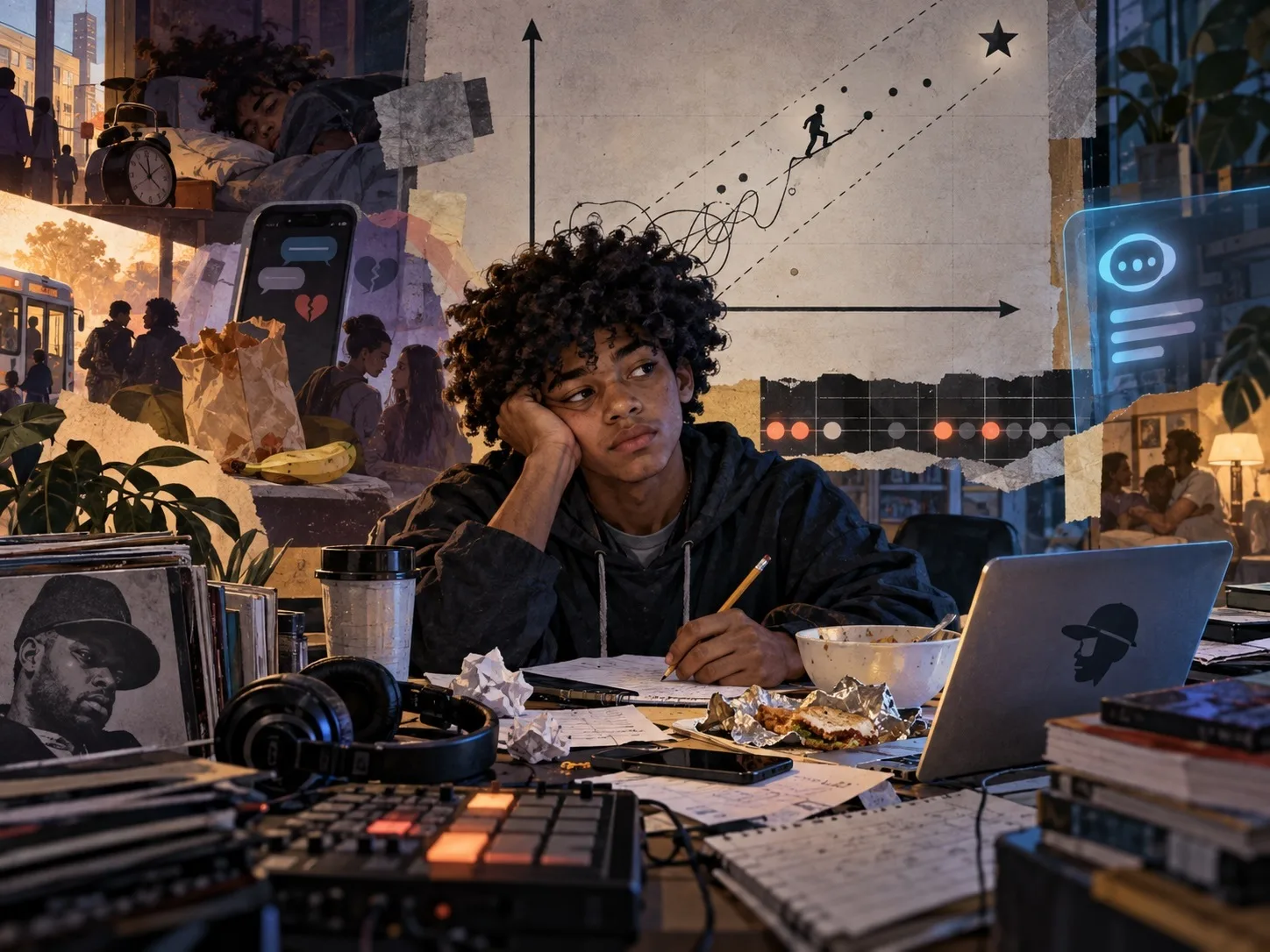
When I was in graduate school, I taped to the wall in my office an image of Nas (from a Rolling Stone illustration) along with the lyric above. To some degree, it mocked me. I often felt that the only reason I chained myself to that desk was for the letters that would follow my name when I was done. Anyone who has gone through doctoral training can probably attest to that kind of crisis, and Nas got a front row seat to mine. I still cannot fully explain why I went through that process, but I am pretty sure it was not because of a deep love of learning. I snowboarded, played hockey, worked in my garden and played music because of the joy I felt while doing them, not because I expected recognition or reward. Graduate school felt different, and Nas and I knew it.

What makes that line resonate with me is partly what it meant and partly that Nas said it to open Illmatic, his critically acclaimed debut studio album, released in 1994, which is widely regarded as one of the greatest hip-hop albums of all time. It stays with me because it offers a definition of realness that has very little to do with recognition. It points instead to a kind of commitment that exists before validation arrives. The contract comes later. The applause comes later. The proof comes later. What comes first is the relationship between a person and the thing they feel called to do. It involves passion and faith.

That raises an important question for those of us who care about young people:

Are we helping them develop a genuine relationship with the process of doing something, or are we surrounding them with environments that teach them to care mostly about the outcome?

Nas is a useful example because his story makes that distinction visible. Before the acclaim, before Illmatic, before the industry confirmed his value, there was a young person in Queens who had already found something that mattered to him. Hip-hop was not initially a product or a career path. It was a place to put his mind, his observations, his hunger and his craft. The record contract formalized something that already had life. It did not create the life itself.

Peter Benson had a beautiful word for this kind of energy: sparks. He used it to describe the talents, interests and passions that give young people a sense of direction and aliveness. A spark is more than competence. A person may be skilled at many things and feel deeply connected to only one or two of them. I was a much better student than a gardener. A spark has heat. It draws a person back. It makes effort feel worthwhile.

That question applies as much to school as it does to youth programs. Schools often speak the language of curiosity and growth, yet students quickly learn that much of the system revolves around grades, ranking, compliance, deadlines and visible achievement. Youth programs can fall into a similar pattern through leadership outcomes, portfolios, showcases and other measurable indicators of growth. None of those things are unimportant.

The problem begins when the structure surrounding the activity becomes so dominant that the activity itself loses its inner pull.

Edward Deci and Richard Ryan’s Self-Determination Theory helps explain why some environments nourish motivation while others thin it out. They argue that people are more likely to stay deeply engaged when three conditions are present: autonomy, competence and relatedness. Young people need room to exercise ownership. They need the experience of becoming more capable. They also need to feel connected to other people and to some larger sense of meaning.

William Damon’s work on purpose shows what can happen when a spark survives long enough to mature. Purpose is not a passing interest. It is a stable and meaningful commitment that matters to the self and also reaches beyond the self. A spark begins as energy. Intrinsic motivation sustains that energy over time. Purpose gives it direction and weight.

Seen through that lens, Nas’s line captures the beginning of a developmental arc. If it is real, you are doing it before anyone confirms that it is worthwhile. You are still there when the work is repetitive, when no one is watching and when the result is uncertain. That is what makes the contract meaningful in the first place.

For schools and youth programs, the practical implication is clear. We should care about outcomes, but we should also pay attention to the quality of a young person’s engagement along the way. We should ask whether they are becoming more curious, more self-directed, more absorbed and more connected to what they are doing.

This feels especially urgent in a culture that constantly invites people to bypass process. The deeper concern, though, is older than any current tool. When process loses its meaning, passion begins to thin out. When passion thins out, purpose becomes harder to form.

The task, then, is helping young people stay lit from within. It is to notice the early spark, to build schools and programs that support intrinsic motivation and to respect the long, uneven process through which a real interest becomes a real calling.

Nas was right. If it is real, you are doing it anyway.

And if we didn’t know that before — well, now we do.

***

By Dan Warren, Director, Youth Development & Education, Fluent Research

This article was originally published in Youth Today on May 21, 2026 as part of the series Dan writes called Pass the mic:Where hip-hop meets human development. Each month, he brings scholars and rappers into dialogue to spark new ways of seeing youth, culture and change.

Previous pieces in the Pass the MIc series:

The distinct cadence of a computerized voice echoing across the room was part of my early introduction to the world of accessibility. I was working in the disability services office at a university, and the robotic narration of JAWS (a screen reader) from a colleague’s desk had become part of the daily office foley. To me, the previously uninitiated, it was compelling to witness how much difference a piece of technology could make in enabling independence in the workplace and demonstrating inclusion.

Fast forward to today, where we all seem to be hurtling toward a future where, for many of us, our workplace and greater world will be heavily mediated by screens and all manner of artificial intelligence. Assistive technologies like JAWS, frankly, seem old hat by comparison. My news and professional feeds are regularly dotted with stories about how AI is poised to revolutionize technologies and bring more independence, more accessibility, and more equity. 

This Truly is the Stuff of Sci-Fi Movies

Multimodal AI: We are in an era where AI can “read” text on a screen. But what happens when AI operates multimodally? Authors Nithish Kumar and Aishwarya Srinivasan mention the myriad of possibilities for increasing accessibility in their article “The Sensory Revolution.” When AI can “smell” the sweetest strawberries at the grocery store, “see” the shortest checkout line, or “feel” the weight of the shopping bag, it can drastically support the experience of the built world for anyone who has a sensory limitation.

Wearable Technologies: Researchers are developing robotic exoskeletons to assist people with neuromuscular disorders (e.g., spinal cord injuries, stroke recovery). In-built AI systems could potentially provide “personalized control algorithms that could improve human–machine coordination” for these exoskeletons, according to a December 2025 article in Nature Communications. And jumping to a different type of wearable technology, Meta recently published an article about how its wearable glasses can be used, with AI assistance, to find lost keys, read restaurant menus, or get real-time captions.

New Robotics: Tatum Robotics is developing devices that can translate both words and images into tactile sign language and help deaf-blind users better communicate.

Trends in Product Development for Accessibility

At first glance, it all sounds pretty good. But as exciting as these developments may be, we still need to examine the means and ways these tools are developed. This need is made even more poignant by the fact that AI is not merely the final objective with these and similar new technologies; it is increasingly being deeply woven into the very fabric of product development and testing protocols. While I can’t speak to the development of the specific products described above, there are greater trends at play.  

According to Applause’s 2026 State of Digital Quality in Accessibility survey that surveyed more than 500 software development, QA, product, compliance and accessibility professionals, 79% reported that the organizations where they work use AI to improve digital accessibility in their websites and applications.. This, according to a large swathe of survey respondents, could look like “using AI coding tools to address/remediate accessibility issues” or “scan sites or apps for accessibility issues.”

One of the many issues with this is that many major LLM systems were not necessarily designed to be foremost disability-cognizant. Jackie Leah Scully reminds us in her article for Science, that “most AI developers have little formal knowledge of disability and are not taught about accessibility or inclusion during their training, while courses on AI ethics that discuss bias or diversity tend to focus on sex/gender and race, rather than disability” (Scully, 2018). If you are depending on AI to find the accessibility issues on your website, you must take into account that AI, historically, has been trained largely on websites that are not accessible and are then at risk of reproducing, as Eric Bailey described for GitHub, “accessibility antipatterns.” Moreover, AI models are trained on data that largely ignores the lived experiences of people with disabilities, which means their outputs frequently exhibit a lack of representation. This isn’t just a technical glitch; it’s a systemic deficit that can end up reinforcing existing biases. AI, simply put, cannot serve as be-all, end-all authority on accessibility.

Inclusion: “Nothing About Us Without Us”

These issues highlight a truth that the accessibility community has preached for decades: Product designers and technology developers must co-create with people with disabilities. This is not a new thought (“nothing about us without us”), but the increasing dependency on AI in product development makes the call to action all the more urgent. We cannot outsource the responsibility of designing accessible technologies to AI or synthetic participants, and people with disabilities cannot be brought in at the end-of-product design process for what amounts to token rubber-stamp approval. People with disabilities must be active stakeholders, present from the very first brainstorming session through the entire development pipeline. Yes, one could theoretically argue that the solution is just better AI. Yet, as our built environment rapidly transforms, the necessity of genuine human feedback becomes all the more important. AI systems, as aforementioned, are constrained by their training data, and therefore lack the agility to navigate cutting-edge built environment developments or offer the nuanced, lived responses that only a real person can provide. 

From a researcher’s perspective, these shifts underscore the necessity of intentional preparation to engage with the disability community during the research process. This Global Accessibility Awareness Day, I am reminded to reflect on my practice as a researcher in this age of AI, where the building of products is moving fast and there is more pressure to accelerate the research timeline. In my context of conducting research, this may mean advocating for the participation of individuals with disabilities, and holding the line when there is pushback. This may mean more time investment in finding people with disabilities to participate in research. It may mean dynamically adapting research instruments to meet the diverse needs of participants with disabilities. Or it may mean incorporating more flexibility within research sessions to meet differing needs. While these steps require time, resources, intentionality, and caution, the end result is worth it if it means a more thoughtfully designed, and genuinely accessible, technological future. As Debra Ruh famously said, “accessibility allows us to tap into everyone’s potential.” We must honor our responsibility—to those with disabilities, to those without disabilities who may or may not eventually develop disabilities, and to all technological progeny—to build things well.

By Farrah Brensinger, Senior User Experience Researcher

May can feel like a sprint, a pileup, and an emotional goodbye all at once. I don’t know about you, but the stress levels in my house are pretty high, all due to my teens’ AP exams, end-of-year projects, and finals. They don’t call this month “Mayhem” and “Maycember” for nothing!

One week, a child may be studying for finals, rushing to a band concert, worrying about friendship shifts, and counting down to summer. A parent may be tracking permission slips, late assignments, sports banquets, graduation dates, and changes in mood that seem to come out of nowhere. It is a lot. And for many families like mine, the stress of May is not about one big event. It is about everything happening at the same time.

May is also Mental Health Awareness Month. That makes it a good time to remember something simple but important: mental health is part of health. Support, connection, rest, and recovery matter at every age.

For families, the goal is not to remove every stressor. Some end-of-year stress is normal. The goal is to lower unnecessary pressure, protect recovery time, and give kids support that fits where they are developmentally.

As we mark Fluent Research’s 20th anniversary, that idea feels especially meaningful. For two decades, we have studied how people navigate cultural and technological change. That work has included learning environments, safer digital experiences, youth culture, children’s and teens’ mental health, education, digital wellbeing, and human-centered innovation. Across all of it, one lesson keeps showing up: young people do better when adults understand where they are developmentally, listen closely, and create conditions that support connection, confidence, and wellbeing.

That is why an age-by-age approach matters. A fifth grader, a freshman, a graduating senior, and a college student may all be winding down the school year. But they are doing very different emotional, social, and developmental work. In May, exhaustion can also make kids seem younger, moodier, less organized, or more overwhelmed than they were earlier in the semester. That does not always mean something is wrong. Often, it means their systems are overloaded.

Here are age-by-age ways to help kids and young adults close the school year with less stress and more steadiness.

Why May Is So Stressful

The end of the school year often brings a heavy mix of demands:

  • Final projects and exams
  • Performances, tournaments, and banquets
  • Field days, spirit weeks, and graduation events
  • Friendship changes and social pressure
  • Summer planning and schedule shifts
  • The emotional weight of endings and transitions

Even positive events can add stress. A child may be excited about summer and still feel sad about leaving a teacher. A teen may be proud of graduating and still feel scared about what comes next. Mixed emotions are normal.

Mental Health Awareness Month: A Reminder

May is a natural time to talk about mental health because it asks young people to do two hard things at once: finish strong and let go.

Mental health support does not always mean a major intervention. Often, it looks like:

  • Clearer routines
  • Fewer unnecessary pressures
  • More sleep
  • Better boundaries around digital overload
  • Calm, respectful check-ins
  • Space for recovery

When we make room for those basics, we help kids manage stress before it grows bigger.

Tweens, Ages 10–12: Make the Month Feel Manageable

Tweens often live in the space between childhood and adolescence. They may want more independence, but they still need concrete structure, reminders, and help seeing the whole picture.

At this age, stress may show up as:

  • Tears
  • Irritability
  • Avoidance
  • Stomachaches
  • Forgotten assignments
  • Sudden overwhelm about something that seems small to adults

The most helpful thing adults can do is make the invisible visible.

Create a simple May calendar that shows tests, projects, field trips, performances, spirit days, celebrations, and family events. Then help your child sort what is required, what is optional, and what can be skipped. A visual plan lowers the mental load.

Use small, specific steps. Instead of saying, “You need to get ready for finals,” try: “Let’s put your science papers in one folder, review the study guide for 15 minutes, and pack your calculator tonight.” Tweens are still building planning skills. Clear next steps help them feel capable.

Protect bedtime and decompression. The end of the year often brings later nights, extra activities, and more screen time. A predictable evening routine can help their nervous system settle. Think snack, shower, backpack reset, quiet reading, music, or another calming activity.

Make room for mixed feelings. Some tweens are excited for summer. Others are sad to leave a teacher, nervous about middle school, or unsure where friendships stand. A walk, car ride, or casual errand may open the door better than a direct conversation.

Try saying: There’s a lot happening this month. Let’s look at the week together and make it feel smaller.

Early Teens, Ages 13–15: Offer Choices, Not Lectures

Early teens are often managing rapid changes in their bodies, emotions, friendships, identity, and independence. They may want adult-like freedom while still needing adult help to think through consequences, manage stress, and recover from emotional ups and downs.

In May, stress for early teens often comes from:

  • Grades
  • Social comparison
  • Friendship drama
  • Group chats
  • Performance pressure
  • The feeling that everyone else is handling things better than they are

Offer structure with choice. Instead of “You need to study now,” try: “Would you rather study before dinner or after dinner?” Choice supports autonomy while still providing boundaries.

Use “take a beat” language. Early teens can feel things intensely and react quickly. Help them pause without shaming them. You might say, “Let’s take a beat. What’s one other possible explanation?” or “What would you tell a friend who was feeling this way?”

Help them notice digital stress loops. A teen may be physically home but emotionally stuck in a group chat, a post, a streak of comparison, or fear of being left out. Rather than leading with “Get off your phone,” ask: “Is being on this app helping you feel connected, or is it making tonight harder?” Then talk through options like muting notifications, taking a timed break, leaving a chat, unfollowing, blocking, or asking for help.

Shift the focus from identity to strategy. Comments like “Why are you so disorganized?” can feel like character judgments. Try, “What part of this is still in your control?” or “What would make tomorrow morning easier?”

Keep the door open. Early teens may reject support and still need it. A calm “I’m around when you want help” often lands better than repeated questioning.

Try saying: I’m not here to take over. I’m here to help you make a plan that works.

Late Teens, Ages 16–17: Reduce Future Overload

Late teens are often trying to finish the school year while also thinking about what comes next. They may be juggling exams, AP tests, graduation requirements, prom, jobs, sports, college decisions, summer work, family expectations, and the emotional reality of leaving a familiar stage of life.

By this age, stress is not only about this week’s assignments. It may also be about:

  • College
  • Money
  • Career questions
  • Relationships
  • Independence
  • Current events
  • Whether they are “ready” for adulthood

Treat them like collaborators. Ask, “Do you want help making a plan, or do you mostly need me to listen?” That one question can lower defensiveness and clarify what kind of support they actually want.

Create a next 30 days map. Put school deadlines, work shifts, forms, applications, celebrations, rest days, and family commitments in one place. Older teens can think more abstractly, but seeing the month laid out still helps reduce pressure.

Separate urgent from important. Everything can feel urgent in May. Help your teen sort tasks into what is due now, due soon, emotionally important, optional, and not worth the energy. This helps them conserve effort for what matters most.

Watch the work-school balance. Part-time work can build confidence, responsibility, and real-world skills. But too many hours during the school year can crowd out sleep, schoolwork, family connection, and social life.

Make room for grief and pride. A teen may be excited to graduate and sad about leaving. They may be ready for college and scared of it. They may want independence and still need reassurance. Mixed emotions are part of transition.

Try saying: You don’t have to have your whole future figured out this month. Let’s focus on the next right steps.

Young Adults, Ages 18–24: Support Without Re-Managing

For college students and young adults, May can bring finals, moving out, internships, job searches, financial stress, changing relationships, and returning home after a year of independence. They may need support, but they usually do not want to feel managed like they are back in high school.

The best approach is to act more like a consultant than a director.

Ask before advising. “Would feedback help, or would encouragement help more?” is often more effective than launching into solutions.

Support basic routines without turning them into criticism. Sleep, food, movement, laundry, transportation, and money can all become stress multipliers during transitions. Practical support can help, especially when offered respectfully.

Normalize uncertainty. Young adults may be making decisions about majors, jobs, relationships, identity, values, and where they belong. They do not need to have everything figured out just because the semester is ending.

Encourage connection. When school ends, that built-in community can disappear quickly. Help young adults think about where they will find belonging during the summer:

  • Friends
  • Work
  • Volunteering
  • Creative projects
  • Exercise groups
  • Spiritual communities
  • Neighborhood activities
  • Family rituals

Respect recovery time. A student coming home from finals may need sleep, food, and quiet before they are ready to talk about grades, plans, or responsibilities.

Try saying: I trust you. I’m here as backup while you sort through what’s next.

Stress-Lowering Practices That Help at Every Age

Some supports work across every age group. They are simple, but they matter.

Protect Sleep

May tends to steal sleep first. But sleep is one of the most important supports for emotional regulation, learning, and resilience.

Lower the Comparison Temperature

Awards ceremonies, grades, college announcements, tryout results, and social media posts can make young people feel measured from every direction. Remind them that someone else’s milestone is not a verdict on their worth.

Create Small Rituals of Closure by Asking:

  • What do you want to remember from this year?
  • What are you proud of getting through?
  • Who helped you?
  • What do you want to leave behind?

Reflection can turn a stressful ending into a meaningful transition.

Use Connection Before Correction

Kids are more likely to problem solve when they feel safe, seen, and respected. This does not mean removing limits. It means leading with human connection so limits can be heard.

Celebrate Recovery, Not Just Achievement

The end of the year is not only about grades, trophies, awards, and admissions. It is also about persistence, friendship, courage, repair, growth, and rest.

When Stress Seems Bigger Than the Season

Some stress is expected at the end of the school year. But persistent sadness, hopelessness, withdrawal, panic, major changes in sleep or eating, self-harm, or talk of not wanting to live should be taken seriously.

Reach out to a school counselor, pediatrician, therapist, or local crisis support if needed. Early support matters.

A Brief Workplace Connection

There is also a useful lesson here for workplaces. Young people do better when expectations are clear, recovery time is protected, and support matches the moment. Adults do better under those same conditions. The way we support kids through periods of high demand can remind us what healthy culture looks like everywhere: clear communication, realistic expectations, empathy, and room to recover.

Closing the Year With More Steadiness

With the right support for the right age, families can help kids close the school year with less pressure, more connection, and a clearer sense that they are growing, not just performing.

Written by Stefanie Cousins, Vice President, Marketing & Communications, Fluent Research

By Nellie Gregorian

Last night, I peeked into my teenage daughter’s room. She was lying on her bed, phone in hand, earbuds in, completely absorbed in her digital world. Every few seconds, she’d laugh softly, shake her head, or roll her eyes.

A small, everyday moment. But it made me pause.

I realized that this moment encapsulates how millions of girls her age are experiencing the world today — part in-person, part online, part algorithmically curated. As a mother, I see her navigating friendships, social norms, and identity in ways I never did at her age.

For many years in my career, I had the privilege of collaborating with Girl Scouts of the USA, helping to advance research and programs designed to build girls’ leadership, confidence, and sense of possibility.

That work taught me something powerful:

Girls are remarkably capable when the environments around them are designed to support their growth.

Today, however, many of those environments are digital.

Girls today are navigating adolescence in ways previous generations never did. Their friendships, identities, and self-image are increasingly shaped in platforms designed to maximize engagement, visibility, and comparison.

  • Algorithms recommend content.
  • Filters reshape faces.
  • Metrics quantify popularity.

None of these systems were intentionally built to harm girls. But many were also not designed with girls’ developmental realities in mind.

So I can’t help but ask:

Are the digital worlds we are building helping the next generation of girls thrive or quietly shaping who they believe they need to become?

Research consistently shows that girls experience online spaces differently than boys:

  • Higher levels of appearance-based pressure
  • Increased social comparison
  • Greater exposure to harassment

Yet when we talk about gender equality in technology, we usually focus on who builds it — and that matters.

But we should also ask:

Who is technology being designed for?

Design choices are never neutral. They shape behavior, norms, and expectations.

When platforms consider age, developmental stage, and wellbeing, they create healthier experiences.

When they also consider gendered experiences, they can better anticipate pressures girls face online.

Designing the digital world with girls in mind doesn’t mean creating separate spaces. It means asking better questions:

  • How do social metrics influence identity formation?
  • How do recommendation systems amplify beauty standards?
  • How can safety systems better respond to harassment targeting girls?
  • What does healthy digital participation look like for adolescents?

These questions sit at the intersection of research, policy, and product design — and they are increasingly urgent.

If we want technology to truly empower the next generation of women, we cannot wait until adulthood to support them.

We need to think about girls — their development, wellbeing, and leadership — from the very beginning of the design process.

Because the digital environments girls grow up in today will help shape the leaders, creators, and innovators of tomorrow.

So here’s the question I think we should be asking this International Women’s Day:

If we were designing the digital world with girls’ wellbeing and leadership in mind from the start… what would we build differently?

Nellie Gregorian is the founder and president of Fluent Research.

At Fluent Research, we believe that understanding wellbeing requires a holistic lens. It must consider the interplay of technology, culture, education, and the natural world. When you read The Evolved Nest, the latest article by Fluent Research’s Senior Child Development Researcher Amy Warren. PhD, you will explore a profound question: What if the key to healing ourselves and the Earth lies in restoring the conditions we evolved within?

Drawing on insights from developmental psychology and ecological science, Dr. Warren reflects on the concept of the “evolved nest,” a blueprint for human thriving shaped by millions of years of evolution. From nurturing touch and unstructured play to communal care and nature connection, these practices once defined our species. Yet, in the rush of modernity, many of these essential rhythms have been disrupted, leaving us with rising rates of anxiety, loneliness, and disconnection.

But there’s hope. Just as ecosystems retain an innate capacity for repair, so do we. We haven’t lost our blueprints for wellness. They are simply waiting to be rediscovered.

Dive into Dr. Warren’s reflections in the latest issue of Resurgence & Ecologist on how we can reconnect with our ecological inheritance and create environments where both humans and the planet can thrive..

The moment that changes a children’s series rarely just happens in the writers’ room. It can also happen in a living room.

A five-year-old girl tilts her head and says something unexpected about a character. A parent pauses and admits they’re not sure what the takeaway was. An eight-year-old boy laughs at a moment the creators thought was instructional, and tunes out during the explanation. Those are the moments that shape better content.

When people think about research in children’s media, they often think about measurement, proving that something worked after it’s complete. But the real power of research happens much earlier. Research doesn’t just validate content. It influences it.

Where Insight Changes Direction

In our work with PBS KIDS, Nickelodeon, and other children’s media clients across broadcast, digital, and interactive properties, we’re often brought in while content is still evolving. Animatics are rough. Scripts are fluid. Characters haven’t been finalized. Game mechanics are still being refined. That’s exactly when research matters most.

What we uncover doesn’t sit in a report; it informs revision. We examine questions that go beyond surface appeal:

Do children understand the core skill the episode is designed to model?

Do children understand the core skill the episode is designed to model?

Is the learning goal clear, or buried under plot?

Are the rules of the world intuitive to young viewers?

Does the problem feel concrete, or abstract?

When do children disengage, and what’s happening at that moment?

Are parents interpreting the educational intention the way producers expect?

Sometimes the insight confirms the creative approach. Other times, it shifts it.

We’ve observed executive function skills resonating clearly, while the context surrounding them creates confusion. In one project, adults found career themes compelling, but children experienced them differently. In another, humor carried the learning more effectively than explanation. Without research, those disconnects remain invisible. With research, they become opportunities to revise, clarify, and strengthen before a series moves forward. In other words, those insights lead to better alignment between intention and interpretation. That’s not cosmetic feedback. It’s directional influence. 

Research as a Creative Partner

The strongest development teams don’t treat research as a compliance step at the end of production. They treat it as a creative partner.

When research is embedded in the development process, it can influence story pacing, character development, world-building clarity, the explicitness of educational messaging, and the balance between entertainment and instruction. The result isn’t content that feels “researched.” It’s content that feels intuitive, because it aligns with how children actually learn.

That alignment doesn’t happen by instinct alone. It happens by listening. 

Designing for How Kids Learn

This article is the first in a series exploring how research shapes and strengthens children’s media development across the broader children’s content landscape.

In upcoming articles, we’ll feature insights from Allison Caplovitz, PhD, Director of Content Research and Evaluation, and Senior Researchers Sylvia Rusnak and Tiffany Salone, whose expertise in child development, educational measurement, and media testing informs the work behind the scenes.

If you’re developing content for children, consider this:

Do you know what kids are actually taking away?
Are you testing intention against interpretation?
Are you building in time to revise based on evidence?

Because if you’re building for kids, listening to them isn’t optional. It’s foundational.

By Stefanie Cousins, Vice President, Marketing and Communications