

Research Tag

The COVID-19 pandemic reshaped countless aspects of daily life, and its ripple effects have continued to influence how we engage with work, education, and extracurricular activities. The impact of these societal shifts presented unique challenges for researchers when recruiting participants for studies during the pandemic. Having started and completed a project that spanned the last five years and was wholly impacted by the pandemic, I believe that we need to reconsider the predominant recruitment model that non-profits and academics have relied on in the past. 

The Challenge

In early 2020, I started working on an NSF-funded research project for a client that involved iterative phases of curriculum development and a program evaluation. In the beginning, the study included multiple countries, involving collaborations among developers, subject matter experts, academics, schools, and several youth-serving organizations. Having deep experience with this type of research,  all of the stakeholders felt quite equipped to tackle this project and let the learning begin. By mid-March, we were forced to reimagine our plans.

Of course, there were lots of challenges: the aforementioned pandemic, hurricanes in Puerto Rico, staff turnover, and other struggles within organizations. All of that would have been manageable IF we could recruit the number of youth that we needed for the study. It wasn’t a problem that was unique to us. I was also hearing from other colleagues that recruitment wasn’t nearly as easy as it used to be.

As I see it, the problem was this: traditional recruitment models—which have often relied on partnerships with large youth-serving organizations—are no longer as effective in a post-pandemic society. In the past, securing buy-in from an institution (like a school, community center, or other youth-serving program) would naturally lead to robust participation numbers. Institutions had both the authority and the influence to encourage enrollment, and families were generally receptive. It was never easy, but it was possible if you knew what you were doing. What we came to realize is that we could no longer work from our old recruiter playbooks.

As I reflected on it, I feel that post-pandemic dynamics have disrupted this model. The core issue lies in the shift from institutional incentives to individual choice. Families are now exercising greater autonomy in deciding how their children spend their time, and institutional endorsements carry less weight than they once did. Even when organizations receive substantial funding to support participation, they struggle to meet recruitment targets because they can no longer assume that families will automatically opt-in.

My working hypothesis is that the pandemic invited families into a new reality where the traditional boundaries between work, school, and home life blurred. As parents adapted to working remotely and children engaged in virtual schooling, many families discovered (with a fair amount of challenge) a newfound sense of autonomy and flexibility. This period of adjustment highlighted an essential question for both adults and children: “What do I really need to show up for?”

This question has had lasting effects on out-of-school-time (OST) programs. Before the pandemic, these programs served as critical spaces for enrichment, socialization, and supervision, particularly for working parents. However, the pandemic decoupled the previously inseparable functions of childcare and education. Parents realized that they could manage their children’s schedules differently—whether through remote supervision, flexible work arrangements, or a greater reliance on informal networks. As a result, the perceived necessity of OST programs diminished for many families.

Institutional vs. Individual Incentives

This shift requires a fundamental change in recruitment strategies. Rather than focusing solely on institutional partnerships, researchers would be best served by engaging directly with families and emphasizing the personal value of participation. This means crafting messages that resonate on an individual level, highlighting not just the benefits of the program or study, but also how it aligns with a family’s unique priorities. It also means that the majority of incentivizing should be directed toward the participant. This approach, more typical for marketing research, is highly motivating at the individual level but requires a lot more effort to connect with each of the participants.

A middle ground, which seemed appropriate for this study, was to incentivize the leaders who would be delivering the program. We placed stipulations on the incentive: we would give X amount if they could help with recruitment and provide us with a set number of complete post-surveys. This was a complete game-changer. We still experienced some attrition, but we saw a significant difference in the engagement of the leaders.

Recommendations for Thoughtful Incentivization

Based on these experiences, here are some recommendations for researchers looking to navigate recruitment in this new landscape:

1: Assess the Recruitment Ecosystem: Before launching a recruitment campaign, take time to understand the landscape. Identify where the decision-making power lies. Is it with institutions, leaders, or individual families? Tailor your approach accordingly.

2: Diversify Incentive Structures: One-size-fits-all incentives are less effective in today’s environment. Consider layered incentive models that target both institutional leaders and individual participants. This could mean offering performance-based bonuses for program leaders while providing direct benefits to participants.

3: Align Incentives with Participant Values: Monetary incentives are effective, but they’re not the only motivator. Consider what matters most to your target population—recognition, skill development, community involvement—and design incentives that align with these values.

4: Create Clear, Achievable Goals: When incentivizing program leaders, be specific about expectations. Set measurable goals (e.g., a certain number of completed post-surveys) and ensure that leaders understand how they can meet these targets.

5: Invest in Relationship Building: Incentives are important, but relationships are foundational. Build trust with both institutional partners and individual participants through consistent communication, transparency about study goals, and genuine engagement with their feedback.

6: Monitor and Adapt: Recruitment isn’t static. Continuously monitor what’s working and be prepared to adjust strategies mid-course. Flexibility can be the key to overcoming unexpected challenges.

Moving Forward

The post-pandemic world requires researchers to rethink long-held assumptions about recruitment. Understanding the shift from institutional to individual incentives and adopting a thoughtful, flexible approach to engagement are crucial. By doing so, we can build more resilient research methodologies that are responsive to the changing dynamics of families, communities, and educational ecosystems.

At Fluent, one innovation that came out of this learning is Research Camp, an experience that trades high-value outdoor experiences for participation in short research studies. Research Camp was designed to blend immersive adventure-based activities with data collection in a way that is engaging for participants while still meeting rigorous research standards. Instead of relying on institutional recruitment, Research Camp meets youth and families where they are—offering exciting experiences that make participation feel worthwhile. Learn more about Research Camp and how your company can get involved.

By integrating adventure, community, and research, we’ve found that participants are more likely to engage meaningfully and provide higher-quality responses. This model has also allowed us to test new approaches to incentivization—ensuring that both program leaders and individual participants see clear benefits to their involvement. 

Ultimately, successful recruitment isn’t just about numbers—it’s about fostering meaningful connections that support both research goals and participant needs. By meeting people where they are, both literally and figuratively, we can create research environments that reflect the realities of the communities we aim to serve.

By Dan Warren, Ph.D, Director, Youth Development & Education

In celebration of World Friendship Day, we asked members of our team to share their favorite collaborative projects. From content marketing campaigns to national surveys and in-depth ethnographies, these projects showcase the power of teamwork and the friendships that drive our success.

Stefanie Cousins – Vice President of Marketing and Communications

The public launch of Research Camp has been my favorite collaborative project at Fluent Research to date. Research Camp allows us and our clients to explore the world through the eyes of children. Using a range of qualitative research methodologies, we aim for deep insights into their thoughts, feelings, and experiences to answer our client’s research questions all in a classic camp environment.

The launch of Research Camp involved a content marketing campaign that distributed articles, images, GIFs, and videos as well as the development of a new page for our website, which serves as a one-stop shop for our stakeholders to learn more.

The development and execution of Research Camp’s public launch was a true team effort. I worked with Heath Cozens, Paige Frankovich, and Dan Warren, as well as our friends at Curious Media, who helped develop and design the webpage.

Mary Meyn– Research Director and Chief Staff

The Kids and Family Reading Report on behalf of Scholastic was my favorite collaborative project. Scholastic is a leader in children’s book publishing and strives to understand children’s preferences in what types of books they’re looking for and the type of content they enjoy.

Scholastic supports not just children in their reading but families as a whole. They want to understand how parents are utilizing books with their children, what support they need to encourage their children to read and enjoy reading, and what role reading plays in American families. Scholastic has tracked parents’ and children’s attitudes toward reading and their reading behavior with a biannual national survey since 2010. Scholastic engaged Fluent Research to continue this tracking study in 2023 with a survey of parents of children ages 0-17 and children ages 6-17.

Dana Markow and I worked closely on this project over the course of more than a year. While the study in and of itself is important and compelling, working with Dana on this project also provided us with opportunities to discuss our favorite childhood books, to reflect on what reading means to us as adults as well as its importance in our respective childhoods. In addition, Dana and I connected about the next generation of readers in our families, including their favorite books, and their reading struggles and triumphs.

Kelly Sheehan– Senior User Experience Researcher

I recently worked on a research project that involved interviewing coworker dyads about their work culture and meetings. It was super fun collaborating with my Fluent colleagues to brainstorm creative approaches to having the dyads interact and answer questions. We asked them to complete a brainstorming exercise together using a collaborative white-boarding tool called Miro. It was interesting to not only design this research but also observe coworkers’ relationships in real-time and hear how they describe their work rapport.

I worked with Farrah Brensinger and Sofia Polo on this project. Farrah and Sofia are excellent collaborative partners, bringing lots of attention to detail, creative ideas, and levity to our work. I felt like we all connected really well and respected each other’s ideas, which helped us land on a creative and well-thought-out approach. I’m so grateful to work with these two amazing researchers and to continue to learn from them!

Dan Warren– Director, Youth Development & Education

I worked on a week-long ethnography project where we tried to capture what it was like to be a kid in school these days. I collaborated with Heath Cozens, our Film Director. The project was special for two reasons. First, I love being in schools and immersing myself in the world of kids. Second, it was amazing to learn about the process of shooting films and how those techniques could improve my skills as a researcher.

When I think about what draws me most to research, I think about how it illuminates human nature. UX research brings a sense of humanity back into products and concepts that may have only existed as incubating ideas within a product development team. It can be a grounding force that adds a human sensibility to the conversation around how to design an app or build an online space. It reminds us of what everyday, lived experiences look like for people like you and I, and the importance of considering them in the design process.

In the fast-paced world of tech and UX, researchers and designers often need to find clear patterns of human identity development and behavior, quickly. But as much of our team at Fluent can tell you, sometimes the most interesting findings and data can emerge from bizarre, unique, outlier instances. When we approach data with curiosity and don’t impose patterns or internalized bias on our findings, we can discover new findings that take our work to a deeper level and usher in innovation.

Discovering novelty in the unique always makes me think of queer theory. In my anthropological studies, like many other young social scientists, I was enamored with theorists like Judith Butler, Eve Sedgwick, and Audre Lorde, who all offered up new ways of understanding identity. Queer theory and queer frameworks lend themselves to thinking about the world and identity-making in new ways, and remind us that we should push back on and think beyond reductive binaries. This is not to say that creating categories and labels is wholly bad. In fact, as UX researchers, it is often our job to create categories, personas, and labels out of raw data that our clients and partners can use to inform their work.

But as I reflect on queerness this June, I am once again thinking about having consideration for the outlier. Fluent often works with children and teens, and it is worthwhile to consider that Gen Z currently has the largest ratio of LGBTQ+ individuals in comparison to older generations, a trend that is expected to continue. What does this mean for our work as researchers?

It means that we need to pay extra close attention to the unique, the novel and the outliers. Beyond buzzwords and news clickbait, there is a significant shift occurring in how younger individuals consider their identity, especially when it comes to gender and sexuality. There have been discussions in research circles, for example, about Gen Z’s rejection of labels. We see this mirrored in Gen Z culture – public figures like Billie Eilish, Joshua Bassett, Ice Spice, and Phoebe Bridgers exist as queer individuals with little to no fanfare about waving a specific label or placing themselves in a certain category.  This differs from older generations of LGBTQ+ individuals, who grew up in an entirely different cultural landscape of labeling, self-disclosure, and the intentions and consequences tied to both.

It seems to me that every Pride month, the etymology of what’s in a label always comes up in community discussions. As a researcher and a queer person, it always feels like an ironic intersection of my personal and professional life.

In research circles, making research more inclusive is a topic that is being explored more and more every day. While this can include concrete steps, like changing the options for identity identification on a survey, I think it also needs to include ideological exploration. In other words: as a qualitative researcher, classically, I think we need to try and understand the WHY just as much as we are observing the WHAT. And as we look to emerging populations like Gen Z and Gen Alpha, I encourage the research community to table bias and prior knowledge, and pay extra close attention to what may exist outside of the categories, ideologies, and binaries we may be imposing on our participants, and on our findings.

By Charlotte Beatty, User Experience Researcher

Family wellbeing is a guiding pillar of our work at Fluent. It guided our work with Google on the Digital Wellbeing of Families, our research for the Jed Foundation on Mental Health, and our award-winning documentary series, “Family Strong”. Most recently, family wellbeing guided us to a new and exciting collaboration with a kindred spirit, Kinsome.

A member of AARP’s AgeTech Collaborative™, Kinsome has the audacious but, we believe, achievable goal of leveraging technology to strengthen family relationships across generations. Their heart-centered technology is a creative and concrete response to the U.S. Surgeon General’s 2023 alarm bell, signaling an epidemic of social isolation and loneliness. Isolation and loneliness fundamentally affect mental and physical health, which have been deteriorating in the U.S. and abroad for some time, even prior to the Covid-19 pandemic. An increasing number of young people report feelings of persistent sadness and hopelessness, and anxiety and depression are widespread for all age groups.

Well families are the wellspring of human health and optimal development. And at the heart of family wellbeing are strong and vibrant relationships, from the beginning of life through the end of life. Those relationships are not a “nice to have”. Human health and optimal development across the lifespan are completely dependent on them. Early in life, development is so rapid that our species evolved a “village of stable care” to meet the abundant needs of infants and children for comfort, affection, and play. Multiple responsive caregivers, such as grandparents, were readily on-hand for guidance and mentoring. While our village of care obviously benefited young life, it was just as vital to the wellbeing of older life. For humans of all ages need strong—welcoming, responsive, and supportive—relationships.

Human connection—the essential mechanism for strengthening family wellbeing—is the focus of Kinsome’s mission and AI-powered app. Today families are spread out across time and space. They have competing demands and call different places and time zones home, making strong and vibrant family relationships immensely difficult to maintain. Kinsome envisioned a technology with the power to help families transcend time and space, reduce the challenges of distance in the grandparent-grandchild bond, and strengthen human connection across generations.

All of us at Fluent are thrilled to be partnering with Kinsome and their deeply creative and caring founders, Eben Pingree and Mike Gerbush. We launched our collaboration in earnest this past February with a couple fun and productive sessions at Research Camp. Campers took a break from the woods to form design teams and create ways for kids and grandparents to stay close when they are not together. Through the lens of children, we got to examine intergenerational bonds and how best to strengthen them. The sessions were as much affirming of Kinsome’s vision as they were informative about how to dial-in the child’s experience so that every shared story and laugh brings them closer to their grandparents. We are grateful and excited to be on this journey with Kinsome, strengthening human connection and family wellbeing through heart-centered tech.

By Amy Warren, Senior Child Development Researcher

References:

U.S. Department of Health and Human Services (2023). New Surgeon General Advisory Raises Alarm about the Devastating Impact of the Epidemic of Loneliness and Isolation in the United States.

National Research Council (2013). U.S. Health in International Perspective: Shorter Lives, Poorer Health. Washington, DC: The National Academies Press.

Organization for Economic Cooperation and Development (2009). Doing better for children. Paris: OECD Publishing.

UNICEF (2007). Child poverty in perspective: An overview of child well-being in rich countries, a comprehensive assessment of the lives and well-being of children and adolescents in the economically advanced nations, Report Card 7. Florence, Italy: United Nations Children’s Fund Innocenti Research Centre.

See Global Wellness Institute for an array of Happiness and Wellbeing Indices.

Centers for Disease Control and Prevention (2023). Youth Risk Behavior Survey: Data Summary and Trends Report, 2011-2021.

U.S. Department of Health and Human Services Substance Abuse and Mental Health Services Administration (1999). Mental health: A report of the Surgeon General. Rockville, MD: Center for Mental Health Services, National Institutes of Health, National Institute of Mental Health.

See Narvaez, D., & Bradshaw, G.A. (2023). The Evolved nest: Nature’s Way Of Raising Children And Creating Connected Communities. North Atlantic Books.

Narvaez, D., Valentino, K., Fuentes, A., McKenna, J. J., & Gray, P. (Eds.). (2014). Ancestral landscapes in human evolution: Culture, childrearing and social wellbeing. Oxford University Press.

Hrdy, S. B. (2001). Mothers and others. Natural History, 110(4), 50-62.

Hrdy, S. B. (2015). Allomothers across species, across cultures, and through time.

Narvaez, D. (2014). Neurobiology and the Development of Human Morality: Evolution, Culture and Wisdom. Norton Professional Books.

Narvaez, D. (2022). Allomothers: We were never meant to mother alone. Kindred Media.

Narvaez, D. (2019). What Wise Elders Know. Psychology Today.

Meehan, C.L. (2014). Allomothers and Child Well-Being. In A. Ben-Arieh, F. Casas, I. Frønes, & J. Korbin (Eds.), Handbook of Child Well-Being. Springer, Dordrecht.


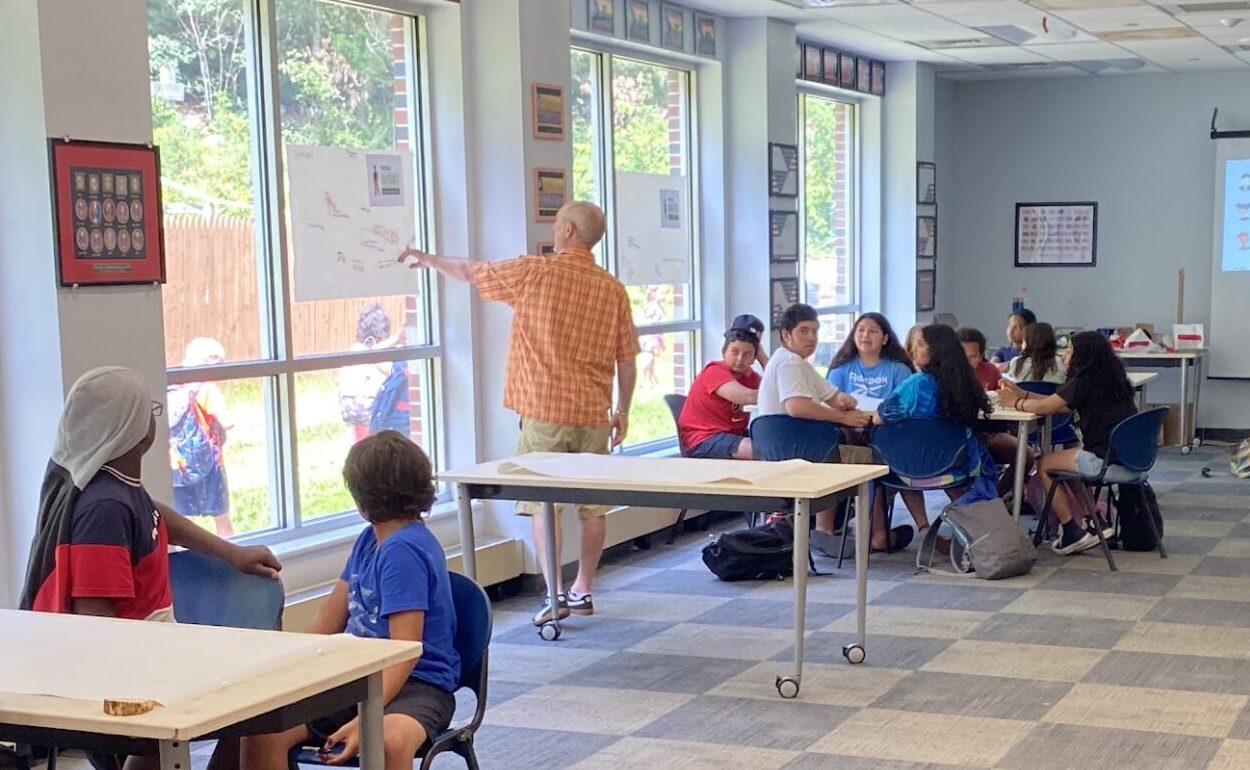
Research Camp is an immersive experience for both youth and clients. For the kids, it involves engaging in a full schedule of camp activities and participating in research for a brief period each day. Clients have the opportunity to witness children grapple with their research or design questions in real life while also interacting with them informally. What makes this experience unique is that we conduct the research in a fun and engaging environment: Camp. Research Camps take place in cities across the US at established camps that hold sessions during school vacations and in the summer. The incentive for youth participation is a week of the camp’s tuition at a significantly reduced price.

At Research Camp, we explore the world through the eyes of children. Using a range of qualitative research methodologies, we aim for deep insights into their thoughts, feelings, and experiences to answer our client’s research questions. Over the past few weeks, we’ve published articles about how Research Camp came about and how we found our first participants. In this article, we’ll focus on how we leverage a convenience sample and five qualitative research methodologies to understand and enhance the lives of children.

Convenience Sampling – A Quick Entry Point

Research Camp relies heavily on a convenience sampling. A convenience sample is just that, convenient, because participants are selected based on ease of recruitment over randomness. It is particularly helpful when conducting exploratory or formative research because it allows us to gather data quickly from children who are either attending the camp or already interested in going. Convenience sampling tends to be time efficient and cost effective compared to other sampling methodologies, making it a great choice when appropriate.

Convenience sampling, however, comes with its limitations. Since participants aren’t randomly selected, the sample may not accurately represent the broader population, thus limiting the external validity of the research. Additionally, the absence of randomness in the selection process makes reliable estimation of sampling error problematic and, therefore, precise statistical inferences and hypothesis testing doesn’t really work. For our purposes, the convenience sample is perfect, but researchers must be aware of the drawbacks when designing and interpreting convenience sample-based studies.

Qualitative Research Methodologies We Use with Kids at Camp

Because children have unique perspectives and experiences that may not always be adequately captured by utilizing one research solution, we use five different qualitative research methodologies at Research Camp. These methodologies were chosen to generate rich data to help us explore nuanced responses, emotions, and stories that go beyond data from surveys or questionnaires to provide a more holistic view of children’s experiences and opinions.

1. Focus Groups – Exploring Children’s Perspectives

One of the primary qualitative methodologies we use is focus groups. In a focus group a skilled moderator guides a small group of children through discussions on specific topics. This methodology offers several advantages:

        • Careful Participant Selection: We ensure that the children in our focus groups are uniquely positioned to provide valuable insights into the topic under investigation.
        • Experienced Moderation: Our moderators have backgrounds in child psychology or education, creating a safe environment for children to express themselves.
        • Age-Appropriate Sessions: Recognizing children’s shorter attention spans, our focus group sessions typically last 45 minutes to an hour and may involve engaging activities like games or storytelling.


2. In-Depth Interviews – A Personal Connection

In-depth interviews (IDIs) with children are another valuable qualitative methodology we use during Research Camp. These semi-structured interviews facilitate detailed discussions with children on a wide range of topics. Conducting in-depth interviews with kids provides two benefits to the research process:

        • A Child-Centric Approach: In-depth interviews allow us to adapt questions to the child’s developmental stage and cognitive abilities, ensuring age-appropriate interactions.
        • Building Trust: Conducted in a one-on-one, non-threatening environment, these interviews often lead to stronger connections between children and researchers, fostering more honest and open responses compared to focus groups.


3. Child Ethnography – Immersed in Their World

Child ethnography, a specialized form of ethnographic research, plays a crucial role in Research Camp. This qualitative methodology involves immersive, long-term fieldwork to study the lives of children within their cultural and social contexts. We do this both on-site at the camp as well as in the homes of some of the campers outside of the camp hours. Child ethnography is invaluable because it provides:

        • Deep Insights: Child ethnography provides a holistic understanding of children’s daily lives, experiences, and perspectives by allowing the researchers to see things play out over a longer period in a more natural environment.
        • Cultural Context: Ethnographies can help researchers explore how cultural norms, values, and practices shape children’s experiences and development, offering insights into their socialization.


4. Observations – Becoming part of the scene

Nothing has been more effective than getting into the thick of it with kids. By interacting with youth through observations and immersion during Research Camp, researchers spend time with children, observe their interactions, and engage in informal conversations. Observations have some specific benefits:

        • Immersive Insights: Observations and immersion provide authentic insights into children’s lives by creating the opportunity to see kids over a longer and less contrived period of time.
        • “Quantity” time: By creating a wider timeframe to observe kids, we increase the possibility of kids becoming more comfortable and, therefore, authentic. It also makes the space for other unintended insights that can provide some of the most profound breakthroughs.


5. Co-Creation Sessions – Collaborating with Children

Co-creation sessions, when children are invited into the process of the design, development, or improvement of products or services, are an amazing and inspiring experience. Often, researchers and designers get stuck in a certain adult-centric way of thinking and need to enlist the help of kids to create alongside them. Co-creation is great because it provides:

        • Fresh Perspectives: Children offer fresh, imaginative, and innovative viewpoints that can lead to creative solutions.
        • User-Centric Solutions: Co-creation ensures that products or services are tailored to children’s needs and preferences, enhancing customer satisfaction.


Research Camp employs a range of qualitative research methodologies to unlock the unique perspectives and experiences of children. From focus groups and in-depth interviews to child ethnography, observations, and co-creation sessions, these methodologies help us understand, empower, and advocate for children in a world that often, intentionally or not, misinterprets or tunes out their critical voices.

By Dan Warren, Director, Youth Development & Education
In June, my colleague Amy Warren and I set out to recruit families from the Greater Boston and Providence areas for Fluent Research’s first ever Research Camp, a new and innovative take on community-based action research. For this inaugural camp, we focused on recruiting Latinx families for a GBH study funded by the National Science Foundation (NSF). But we were not just focused on hitting target recruitment numbers. Fluent’s Research Camp is about building genuine connections and embracing the diverse backgrounds of the communities that inform our research.

Anyone who has ever tried to recruit research participants knows it is no easy task, an uphill battle some may say. It requires a lot of time, energy, planning, and resources. The approach must be strategic, utilizing personal connections to tap into different networks. To make things easier, Fluent could have hired a professional recruiter and called it a day, but we wanted to connect personally with these families, hear their stories, and build bridges of trust.

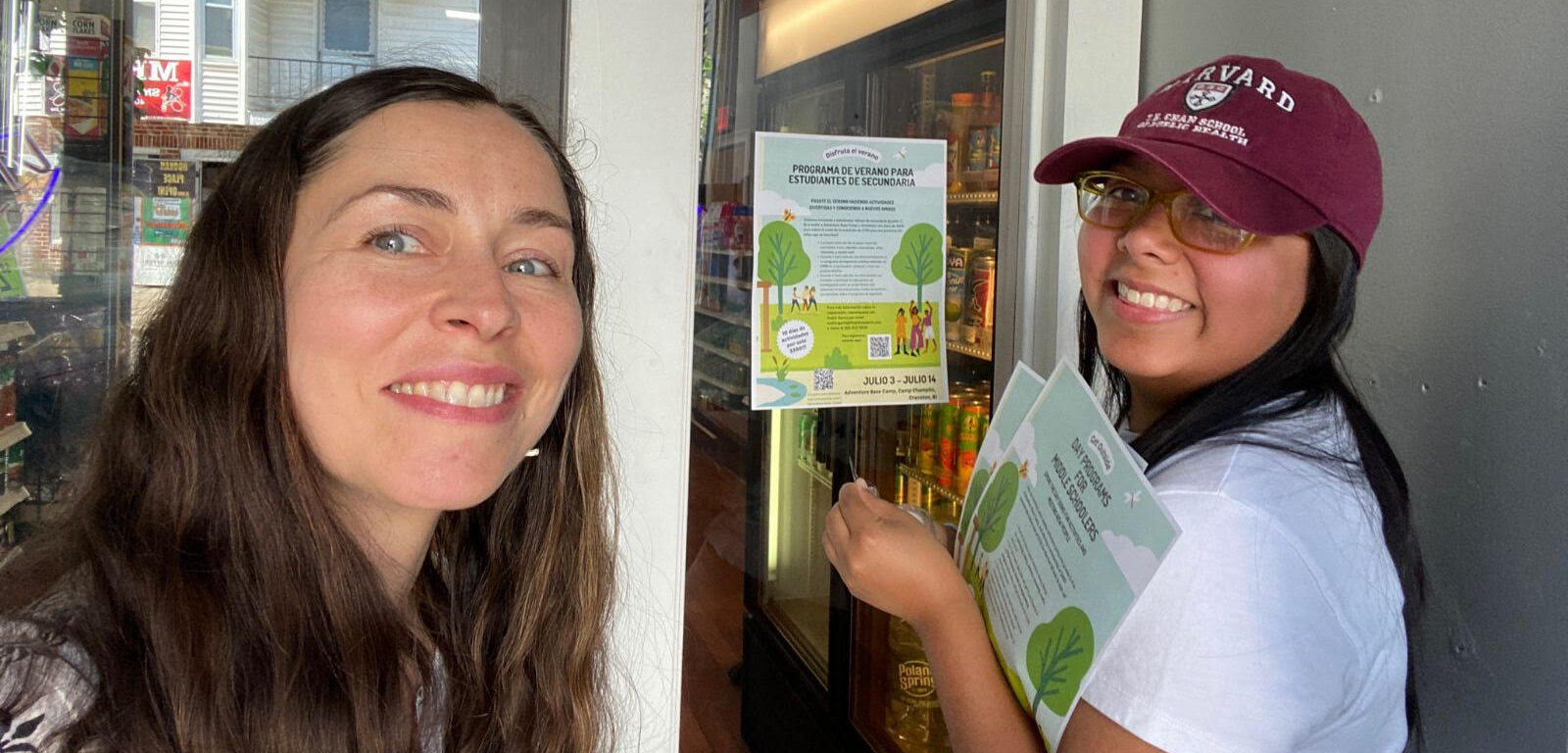
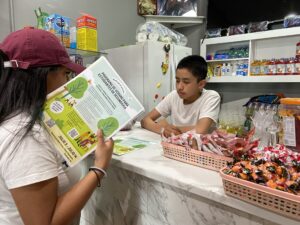
Armed with sunscreen, pushpins, tape, and stacks of flyers, Amy and I hit the streets of Boston and Providence in our most comfy sneakers to engage the community. Our recruitment journey was guided by a map we created of key locations where we could find our target population – bodegas, restaurants, laundromats, hair salons, schools, nonprofit organizations, etc. With a well-rehearsed spiel in English and Spanish, we set forth to talk to anyone who would listen.

Interestingly, our journey turned into an immersive cultural experience. At each stop, we heard fascinating stories from really interesting people that reminded us of the resilience and diligence of the Latinx immigrant community. For instance, we met a business owner from El Salvador, who had recently written a book about the first Central American migrants who arrived in the US in the 1800’s, a story not many people know about. Another notable encounter occurred with two young boys who were spending their summer helping out at the cash register of their family’s store. One of them expressed interest in going to summer camp because it was something he had always wanted to do. Towards the end of the day, we visited a tortilleria, a shop that makes and sells hand-made tortillas. There, I chatted with a worker about how tortillas connect our two cultures, hers Guatemalan and mine Mexican.
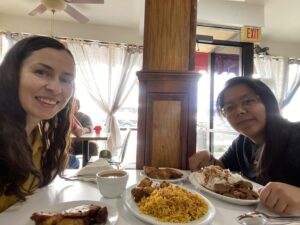
One major highlight was the opportunity to indulge in what felt like a culinary tour of Latin America. Amy and I tried dishes from a variety of cultures like Brazilian coxinhas, Colombian empanadas, Mexican agua fresca, and Dominican guisado de res, which made us feel more connected to the people we met.
As a Mexican-American woman, I felt a great deal of responsibility and pride employing my own cultural background and roots to build bridges of trust throughout this experience. I value knowing that my upbringing, principles, and Spanish-language skills allowed Amy and I to form authentic connections that otherwise could not be formed by simply using a recruiting service.

As I reflect on our journey, I am reminded of the true purpose of research, to gain a genuine and ethical understanding of the human experience. It is more than just hitting recruitment numbers and it begins long before the analysis phase. The process of uncovering insights begins when we build true human connection, when we appreciate and experience diverse cultures, and when we collaborate on the ground with communities.

By Evelin Garcia, User Experience Researcher, Fluent Research

My name is Emma Clarke and I am an intern at Fluent Research. In the fall, I will be a senior at Tulane University in New Orleans, where I study psychology and cognitive studies. I first interned with Fluent during the summer of 2022 and I am very grateful to be back this summer. While my workdays are always a bit different, I’d like to give you an idea of what a typical day looks like.

8:00 A.M.

I typically wake up at around 8:00 in the morning because the work day starts at 9:00. I like to start my day by driving to get some coffee. My order this summer has been a brown sugar shaken espresso! When I get home from getting coffee, I make breakfast too. Usually I’ll make an omelet or a breakfast sandwich.

9:00 A.M.

The work day begins at about 9:00 in the morning. While Fluent Research has an office in New York City, I work remotely because I live outside of Philadelphia. First, I usually like to log on to my email to check for missed notifications from the previous day. Once I have done that, I will typically have some work left to complete from the day before.

11:00 A.M.

After I have completed the previous day’s work, I will either wait for someone to reach out to me with a new task they need support on, or I will message my supervisor, Mary Meyn, and ask her what I can help with for the day. I tend to work on whatever I have been assigned or attend meetings with colleagues.

This summer, I have really enjoyed attending presentations by Fluent staff to help interns learn more about the company and how it works. For example, I recently attended a presentation led by Sofia Polo about the essentials of report writing. The week prior, Farah Brensinger presented about what it means to be a user experience (UX) researcher. As I plan for my future post graduation, these presentations have provided me with insight about potential career paths. I really appreciate how everyone at Fluent is willing to help guide and teach the interns.

12:00 P.M.

Since I tend to make a big breakfast for myself, I’m not super hungry by lunchtime. I may have a small snack at this time, though.

On Fridays, we often have a “Lunch and Learn” presentation. Different staff members will present on a topic of their choice and everyone gets to learn something new. One of my favorite presentations was Charlotte’s discussion of how reproductive justice plays into research.

1:00 P.M.

At this time on Mondays, we have a weekly staff meeting, when we take time to thank and give kudos to colleagues for jobs well done over the past week, and go over the status of the current projects we are working on. I find this meeting really helpful because I can gauge where I may be of help to people that week and learn about interesting projects.

2:00 P.M.

The weekly meeting lasts for about an hour. I will then return to what I was working on prior to the meeting. This may be something like taking notes on user experience interviews, pulling quotes from interviews for reports, testing out surveys, or something else entirely. One thing I really appreciate about interning at Fluent Research is that I get to be involved in a variety of different projects and tasks.

No day is ever the same! While I can’t give details about any current projects I am working on, the most impactful one I have worked on in the past was a report on how to help military families who had a spouse that died of suicide after their service. This was a very sensitive subject andI learned a lot from it. I went through interviews of the military spouses discussing their experiences and how they would have liked to have been helped during such a tough time. It was great to know that this work was going to contribute to improving the experiences of others suffering from the same type of loss in the future.

4:00 P.M.

By about this time in the afternoon, I tend to be in need of a little break from the computer. I usually do this by taking my dog on a walk around the neighborhood. It’s nice to be outside and get a little exercise after working inside all day. I like to listen to a podcast while I walk, too. One of my favorites is “You’re Wrong About,” which discusses how events in the past have been misrepresented in society and how these events truly played out.

5:00 P.M.

When I return from my walk, I will typically continue working until around 5:00. Of course, sometimes the work day goes a little longer or ends a little earlier for me, but this is the general cutoff point.

I hope you enjoyed reading about a day in my life as an intern at Fluent Research! As I stated earlier, no day is ever the same in terms of what tasks or projects I will be working on. However, I think this portrait of a day in my life as a summer intern at Fluent Research will give a general overview of how my days are typically structured.

If you have had any interactions with a teen or young adult recently, I am sure you have heard the word “cringy” uttered more than once. Consider Chicken Shop Date interviews with Amelia Dimoldenberg and Taylor Swift’s infamous 2022 NYU graduation speech when she says “… learn to live alongside cringe,” as examples of the current cultural relevance of cringe. But how about “meta-cringe”? Trend forecasters predict that 2023 is the year of meta-cringe for Gen Z. While cringe is generally defined as embarrassment, awkwardness or discomfort about something or someone being out of touch, meta-cringe is defined as having an awareness that something is cringey and enjoying it anyway. A hallmark of meta-cringe is that it’s unclear whether the act is sincere or ironic, and because of that, the question about intent loses importance all together.

It makes sense that meta-cringe is having its moment. In the current political and social climate, Gen Z are inundated with news and trends that move at a speed far too fast to keep up with. Young people are understandably anxious about the state of the world and disillusioned with emerging adulthood for many reasons, including the war in Ukraine, mass shootings, climate change, and economic uncertainty. These feelings of distress, combined with Gen Z’s value of authenticity, leads young people to deliberately engage in absurd, awkward, and idiosyncratic cringe humor. Gen Z are no longer interested in projecting a perfect online image. Instead, they are rejecting the societal pressures of a flawless feed and the shame associated with cringeworthy moments, and in lieu of this, opting for curated cringe. This kind of humor is often an expression of nostalgia for the media and cultural trends of Gen Z’s adolescence from the 2000s to 2010s (i.e., Shrek raves, viral memes about 2000s emo singing impressions).

In our work at Fluent, where we often conduct research with Gen Z teens and young adults, we consider the cultural shifts and values that embody meta-cringe when trying to connect with and design for young people. Here are some ideas to keep in mind when working with Gen Z:

– Be Nostalgic: Find unique and easy ways for Gen Z to connect with the beloved digital and media world they grew up with (2000s to 2010s).

– Embrace Absurdity: Don’t be afraid to be cringy. Intentional or not, this peaks interest.

– Play with “when the curtain drops” moments: Focus on content that feels unstaged and genuine. Consider the trope of “when the curtain drops” or “the camera stops rolling” humor where the viewer gets a glimpse into the inner world of a character, or behind the scenes.

– Be Authentic: Be cringey, be real, as long as you are being truthful to you. A curated and manicured public image is not in style anymore.

– Cultivate personal and meaningful connection: Ensure that connection feels vulnerable, intimate and simple, perhaps with smaller groups of peers.

– Share the unfiltered self: Encourage sharing in a way that feels like unedited, first takes. Consider BeReal and Poparazzi as examples of apps popular among Gen Z that are designed for unedited and in-the-moment photo sharing.

– Be Relatable: One aspect of meta-cringe is the relatability of those moments of embarrassment, awkwardness or discomfort. It may be painful to watch, but the humor connects with Gen Z who are disillusioned with the perfect, filtered digital image.

Meta-cringe will influence Gen Z’s expectations and behaviors in the digital world. Young people are embracing their guilty pleasures and giving themselves permission to be themselves, IRL and online. We can view this carefree attitude as a way for Gen Z to express more vulnerability when they connect with others online.

Sources:
https://i-d.vice.com/en/article/qjkywp/meta-cringe
https://www.russh.com/tiktok-meta-cringe/
https://zeefeed.com.au/meta-cringe/
https://www.tiktok.com/t/ZTRWYP36o/

By Natalia Belchikov, User Experience Researcher, Fluent Research

As I reflect on my first year working at Fluent Research, I am grateful for the valuable lessons I have learned from my colleagues who work in market research. Their expertise and experience have given me a new perspective on the industry and helped me grow as a marketer. Here are some of the key things I have learned from my market research colleagues in my first year in marketing.

1. Understanding the customer

My colleagues in market research have taught me that the key to successful marketing is understanding the customer. They have shown me that the customer is not just a demographic, but a unique individual with unique needs, wants, and motivations. To truly understand the customer, it is essential to go beyond simple data analysis and dive into their experiences, emotions, and behaviors.

2. The power of data

Data is the backbone of market research, and my colleagues have taught me the importance of using data to inform marketing decisions. They have shown me that the key to unlocking the power of data is to approach it with a critical eye, asking questions and looking for patterns and relationships that can inform decision-making.

3. The importance of collaboration

Day in and day out, I see my colleagues working together as if marketing research were a team sport. They have shown me that the best insights and recommendations come from working with others and combining different perspectives and skill sets. Whether it’s working with designers, product managers, or other researchers, collaboration is essential for producing high-quality research that leads to actionable insights.

4. The need for creativity

Market research is not just about gathering data, but also about interpreting it in a meaningful and compelling way. My colleagues have taught me the importance of presenting findings and recommendations in a way that resonates with stakeholders, using creative and visually engaging methods.

5. The importance of staying current

The market research industry is constantly changing, and staying current with new techniques and technologies is essential for success. My market research colleagues have taught me the importance of attending conferences, reading industry publications, and engaging with other researchers to stay up-to-date and continuously improve my skills.

My first year as a marketer in the market research industry has been a journey of learning and growth, thanks in part to the valuable lessons I have learned from my colleagues. Their expertise and experience have given me a new perspective on the industry and helped me grow as a marketer. I am eager to continue learning and collaborating with my colleagues in market research, and I am confident that the next year will bring even more exciting opportunities and insights.

By Stefanie Cousins.

Here at Fluent Research, we find ourselves interacting with kids nearly all year around. We interview them about playtime and class time, film them at home and at school, play games with them, and even watch videos alongside them. We talk to kids a lot for the research we conduct on behalf of our clients!

Some researchers may be intimidated by talking to children. It’s understandable. We were young people too once, but we might not remember what it’s like to be 4, 6, or 8 years old. Well, fear no more! Our Director of Youth Development and Education Dan Warren put together the above video to help you get through your next interaction with a small human and have fun at the same time!

If you would like to download the slide show, click here.