
Market Research Tag

Picture this: a charming summer camp tucked away in the woods on the outskirts of Boston. Hundreds of children are splashing in the pool, hiking through the trees, and playing on the ropes course. A select group will not only partake in typical camp activities over the next two weeks, but they will also share their thoughts and feelings with researchers on a wide range of topics, including mobile devices, media content, and wearable tech.
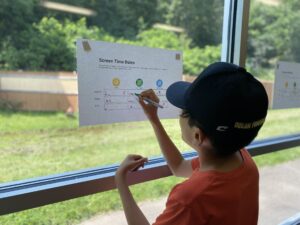
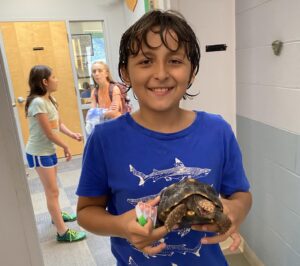
Our Fluent Research team recently took an unexpected path to this magical place. Fueled by the need to find Latinx children to test out a new curriculum for GBH, the Boston-based PBS affiliate, we scouted for and recruited 10-13-year old children in their communities. As our team began building relationships with them and their families, a novel idea soon transformed our methodology. In lieu of a typical monetary incentive, we would offer each child a scholarship for a two-week immersive day camp experience filled with adventure. Amidst the laughter, splashes, and camaraderie of swimming, hiking, archery, and crafts, our young participants would share their insights and reflections on the GBH curriculum and beyond. This is how Research Camp was born.

In partnership with New England Base Camp, we had arranged for the children we recruited to attend the day camp for two weeks. When they were not participating in camp activities, they would take part in research-related activities, including activity sessions, dyads, and focus groups. During these sessions, representatives from GBH and other companies had the opportunity to interact one-on-one with the children, ask probing questions, observe focus groups and interviews, and even spend time participating in camp activities themselves. Simultaneously, Director of Productions Heath Cozens and Associate Producer Paige Frankovich of Fluent Productions were filming campers’ day-to-day activities, interviewing them, teaching them how to interview each other, and gaining real-time insights during spontaneous debrief sessions. Heath connected with one camper’s family and arranged a “deep dive” interview with the child and family in their home – a documentary style he recently described in his blog.
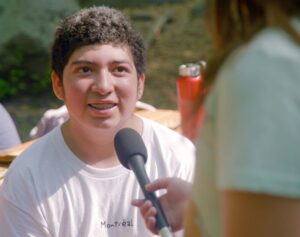
Research Camp fostered an immersive research environment for our clients that provided them with a front row seat for focus groups, activity sessions, and in-depth interviews. But what’s more—our clients could engage in the kid world of summer camp! They had the opportunity to spend time with kids during research activities, ask them questions, get a feel for how kids talk with one another, how they move and relate, and what they are interested in. A far cry from the one-way mirror, our clients had the opportunity to “hop in” and ask questions, set up impromptu interviews, sit down with insightful participants, debrief with us in person, and open themselves to breakthrough insights—all things best supported by a live, dynamic, open-ended, and immersive research environment.

What started as a pragmatic choice has blossomed into an enriching research model, poised to reshape how we think about client and participant engagement. With the addition of Research Camp to our toolbox, Fluent can now offer clients a new kind of research methodology, one that blends innovation and exploration for meaningful insights and endless opportunities. Stay tuned for announcements about specific dates and locations for future Research Camps during school breaks in Boston, MA and Los Angeles, CA. See you there!
By Stefanie Cousins

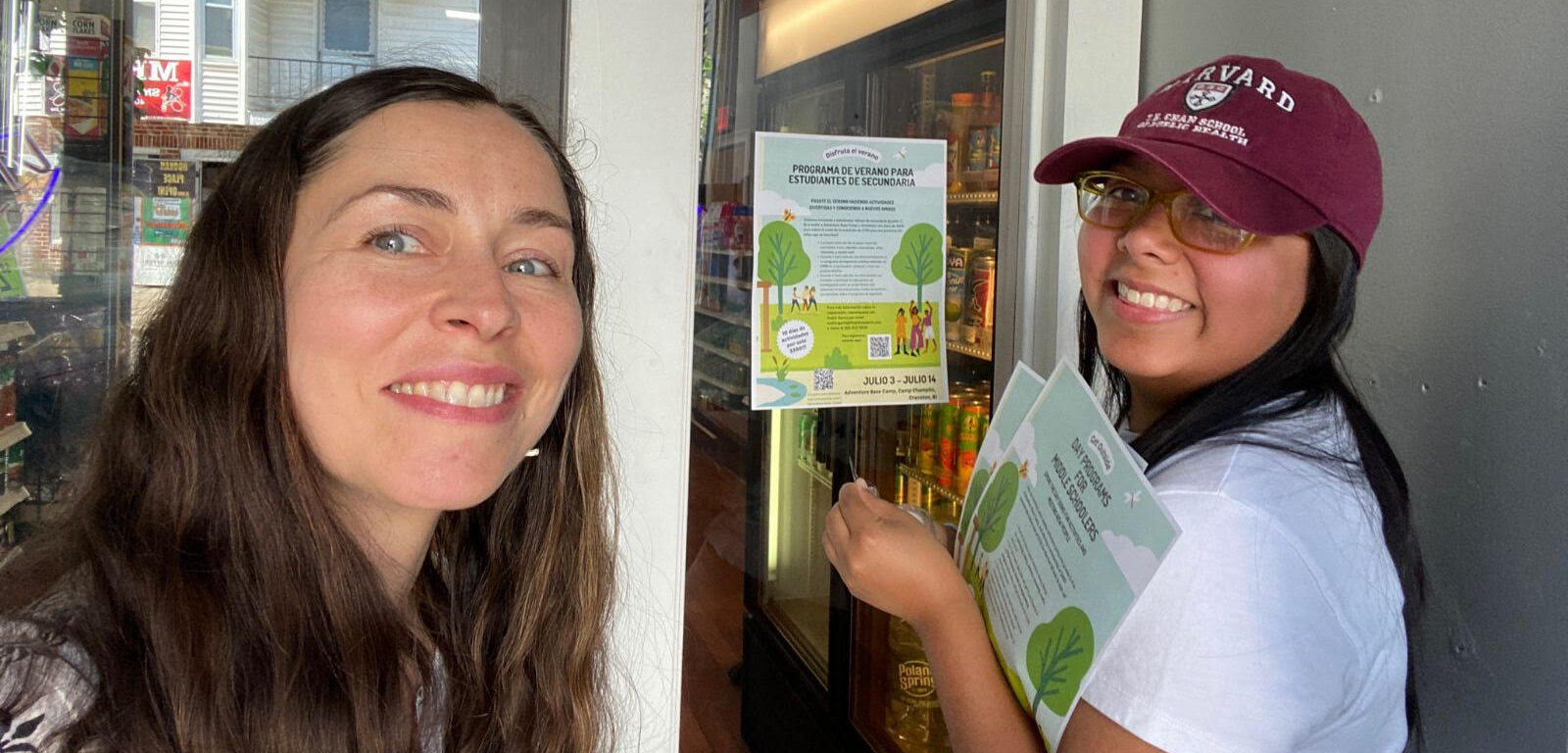
In June, my colleague Amy Warren and I set out to recruit families from the Greater Boston and Providence areas for Fluent Research’s first ever Research Camp, a new and innovative take on community-based action research. For this inaugural camp, we focused on recruiting Latinx families for a GBH study funded by the National Science Foundation (NSF). But we were not just focused on hitting target recruitment numbers. Fluent’s Research Camp is about building genuine connections and embracing the diverse backgrounds of the communities that inform our research.

Anyone who has ever tried to recruit research participants knows it is no easy task, an uphill battle some may say. It requires a lot of time, energy, planning, and resources. The approach must be strategic, utilizing personal connections to tap into different networks. To make things easier, Fluent could have hired a professional recruiter and called it a day, but we wanted to connect personally with these families, hear their stories, and build bridges of trust.

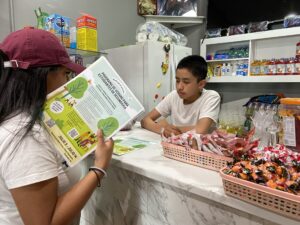
Armed with sunscreen, pushpins, tape, and stacks of flyers, Amy and I hit the streets of Boston and Providence in our most comfy sneakers to engage the community. Our recruitment journey was guided by a map we created of key locations where we could find our target population – bodegas, restaurants, laundromats, hair salons, schools, nonprofit organizations, etc. With a well-rehearsed spiel in English and Spanish, we set forth to talk to anyone who would listen.

Interestingly, our journey turned into an immersive cultural experience. At each stop, we heard fascinating stories from really interesting people that reminded us of the resilience and diligence of the Latinx immigrant community. For instance, we met a business owner from El Salvador, who had recently written a book about the first Central American migrants who arrived in the US in the 1800’s, a story not many people know about. Another notable encounter occurred with two young boys who were spending their summer helping out at the cash register of their family’s store. One of them expressed interest in going to summer camp because it was something he had always wanted to do. Towards the end of the day, we visited a tortilleria, a shop that makes and sells hand-made tortillas. There, I chatted with a worker about how tortillas connect our two cultures, hers Guatemalan and mine Mexican.
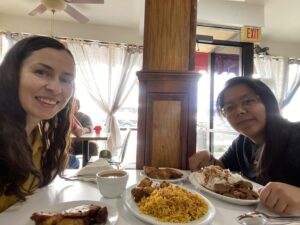
One major highlight was the opportunity to indulge in what felt like a culinary tour of Latin America. Amy and I tried dishes from a variety of cultures like Brazilian coxinhas, Colombian empanadas, Mexican agua fresca, and Dominican guisado de res, which made us feel more connected to the people we met.
As a Mexican-American woman, I felt a great deal of responsibility and pride employing my own cultural background and roots to build bridges of trust throughout this experience. I value knowing that my upbringing, principles, and Spanish-language skills allowed Amy and I to form authentic connections that otherwise could not be formed by simply using a recruiting service.

As I reflect on our journey, I am reminded of the true purpose of research, to gain a genuine and ethical understanding of the human experience. It is more than just hitting recruitment numbers and it begins long before the analysis phase. The process of uncovering insights begins when we build true human connection, when we appreciate and experience diverse cultures, and when we collaborate on the ground with communities.

By Evelin Garcia, User Experience Researcher, Fluent Research

At Fluent, we have a deep commitment to uncovering and fostering emerging talent. This summer, we are thrilled to welcome three exceptional interns to our team. Learn more below about Emma Clarke, Halley Robbins, and Marko Stroumbakis – their backgrounds and plans for the future…


Emma Clarke

Emma Clarke is returning to Fluent Research as an intern for the second consecutive summer. Emma will continue assisting research teams with both qualitative and quantitative projects. In the past, Emma has found research concerning education and family relations to be the most rewarding. Her interest in this type of work stems from her previous experience as a volunteer and tutor for young children in high school.

Emma will be entering her final year of college as a psychology and cognitive studies major at Tulane University in the fall. Over the last three years she has helped conduct undergraduate academic research in social psychology and will continue to do so during her final year. After graduation, Emma hopes to pursue a graduate degree in social psychology.


Halley Robbins

Halley Robbins is a summer intern at Fluent Research. In her internship search, Halley was looking for a company where she could do quantitative data analysis for an organization whose mission strives to better the lives of others. Halley is excited to apply her experiences as a teacher’s assistant, president of a 60-person tutoring program, camp counselor, and more to add her unique voice to Fluent Research.

Halley grew up in New York City and is a rising senior at Washington University in St. Louis. She is majoring in economics and math with minors in psychology and computer science. After college, Halley is interested in going to graduate school for business or computer science. She is excited about working in her hometown and joining Fluent Research to put her data analytics skills into practice.


Marko Stroumbakis

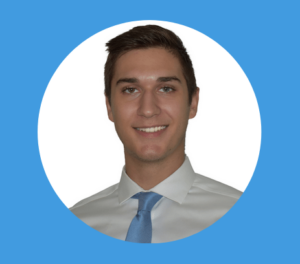
Marko Stroumbakis, who has been an invaluable intern at Fluent Research since June 2022, will be continuing his work at Fluent this summer. As an intern who has worked with everyone on the Fluent staff over the past year, Marko has gained a breadth of knowledge and experience in market research. Verifying both qualitative and quantitative data, working on survey testing, and translating subject responses from Spanish to English have all been valuable for his understanding of how data is used to inform insights.

Marko would like to gain more experience and knowledge in the field of marketing, with a particular emphasis on brand management. He will be a junior at Baruch College in New York City this fall.


As I reflect on my first year working at Fluent Research, I am grateful for the valuable lessons I have learned from my colleagues who work in market research. Their expertise and experience have given me a new perspective on the industry and helped me grow as a marketer. Here are some of the key things I have learned from my market research colleagues in my first year in marketing.

1. Understanding the customer

My colleagues in market research have taught me that the key to successful marketing is understanding the customer. They have shown me that the customer is not just a demographic, but a unique individual with unique needs, wants, and motivations. To truly understand the customer, it is essential to go beyond simple data analysis and dive into their experiences, emotions, and behaviors.

2. The power of data

Data is the backbone of market research, and my colleagues have taught me the importance of using data to inform marketing decisions. They have shown me that the key to unlocking the power of data is to approach it with a critical eye, asking questions and looking for patterns and relationships that can inform decision-making.

3. The importance of collaboration

Day in and day out, I see my colleagues working together as if marketing research were a team sport. They have shown me that the best insights and recommendations come from working with others and combining different perspectives and skill sets. Whether it’s working with designers, product managers, or other researchers, collaboration is essential for producing high-quality research that leads to actionable insights.

4. The need for creativity

Market research is not just about gathering data, but also about interpreting it in a meaningful and compelling way. My colleagues have taught me the importance of presenting findings and recommendations in a way that resonates with stakeholders, using creative and visually engaging methods.

5. The importance of staying current

The market research industry is constantly changing, and staying current with new techniques and technologies is essential for success. My market research colleagues have taught me the importance of attending conferences, reading industry publications, and engaging with other researchers to stay up-to-date and continuously improve my skills.

My first year as a marketer in the market research industry has been a journey of learning and growth, thanks in part to the valuable lessons I have learned from my colleagues. Their expertise and experience have given me a new perspective on the industry and helped me grow as a marketer. I am eager to continue learning and collaborating with my colleagues in market research, and I am confident that the next year will bring even more exciting opportunities and insights.

By Stefanie Cousins.

As August ends and autumn approaches, companies, and schools across the country are preparing for a return to business as usual.

Now two years out from the initial disruption of the pandemic, many workplaces are seeing a return to “pre-pandemic” routines like mandated in-person work and school programs. With a slow return to life as we used to know it, combined with a significant drop in national unemployment and an employee-friendly hiring market, it seems like a promising time to be a young professional beginning a career in research.

Equally promising is the wave of recent interest and growth in UX research. Life in quarantine spurred innovation in tech and media design that opened new possibilities of inquiry and investigation for UX research. With the research market evolving rapidly, it is worth considering – what makes a good researcher? And how can young researchers pursue a career in UX research?

Each research team may be looking for something a little different, and there are countless different ways to pursue a career in research. But whether you are interested in statistical analytics or immersive ethnography, these four tips may help you hone your targets in the job hunt.

1. Identify your skills

Whether a researcher has a background in humanities, social sciences, or STEM, all researchers possess a unique set of skills and a wealth of knowledge that they will contribute to a research team. Consider what sets of knowledge you have acquired throughout your academic and professional career. Everything you have experienced, whether it was an intensive graduate program, unpaid internship, part-time job, or one-off volunteer opportunity, has given you a unique perspective that you can leverage and apply to your research process. Do not sell yourself short for having a resume that may not match those around you – all experience is good experience, even those that may seem like they aren’t directly relevant to your field.

The emotional intelligence and consumer familiarity acquired from working years in customer service can be just as useful in a research setting as academic expertise acquired in a Ph.D. program. The best researchers know how to recognize value and insight from the everyday life experiences of not just others, but themselves as well.

2. Identify your passions.

Pursuing a career in research means you are pursuing a career in endless exploration. Every economic sector, nonprofit, and government branch needs research to function and grow. When considering a career in research, remember that the opportunities for research are endless – so you should make sure you apply for jobs in an area that truly speaks to you and your passion. Identify what social issues, industry sectors, or creative interests are most important to you. Chances are, there’s a company within that sector that needs research.

3. Identify your potential for growth.

Career building is an ongoing, dynamic process with many small decisions along the way that contribute to what will become your overall lived experience. When looking for a career in research, ask yourself in what ways you would like to grow. Do you want to work alongside designers to create and perfect ideas at one particular company? Or do you want to be on the research vendor side, leading many different projects across a variety of industries? The research positions you seek out should not just reflect your interests, but also offer an opportunity for your growth as a researcher. The types of routines, co-workers, and topics that stimulate you the most may be indicative of what industries and work settings would be the best fit. Be curious, and reach out to industry professionals who could offer insight. Considering how you think you may contribute to a team and the ways in which you could grow within it is essential.

4. Market yourself!

You may have noticed the last three steps were all about reflection. While you may not need to know exactly what you want to do in research, you do need to have a deep understanding of yourself and who you are. Hiring is a two-way experience – employees and employers need to have a significant understanding of who they are and their potential contribution to the other. In pushing yourself to identify who you are and what you bring to the table, you are practicing articulating those qualities. Self-expression is half the battle in job hunting, so be vocal! Share what makes you unique as a researcher, what research philosophies speak to you the most, and why you see value in gathering and sharing knowledge.

As the research industry blossoms alongside a recovering economy, know that the possibilities for growth as a researcher have never been more expansive and exciting. In using these tips to reflect and grow, we hope that your journey in research remains expansive and exciting as well.

By Charlotte Beatty.

Charlotte Beatty is a User Experience Researcher at Fluent, where she specializes in qualitative research design, implementation, and analysis.

We’re so excited to have three talented interns working with our Fluent Research team this summer. Discovering and nurturing new talent is something we’re passionate about at Fluent, and we have no doubt that this cohort of interns will go on to do great things in their careers.

In the coming weeks, we’ll bring you brief interviews with each of our interns where they will share their background, what they’ve learned during their time with us, and what they hope to achieve in the future.

First up is Marko Stroumbakis, a rising sophomore at Hunter College in New York City.

Fluent: What made you want to intern at Fluent Research?

Marko: My initial internship search was for professional experience in the world of marketing, but being such a vast field, I quickly narrowed it to market research. As I explored my social network, I came across Fluent’s Founder and President Nellie Gregorian through a common contact. When doing research on the Fluent website, I was immediately intrigued by the variety of practice areas and services. Fluent is based in the heart of NYC, my home city, which was a huge plus for me. From there, I knew Fluent would be the best place to begin my professional career.

Fluent: What have you learned so far?

Marko: I have learned several skills during my time at Fluent. First, I have enhanced my professional communication, both verbal and non-verbal. I have also improved some technical skills in software such as Excel. Most importantly, I have gained a breadth of knowledge and experience in market research and business development. Checking both qualitative and quantitative data and working on survey testing as well as translating subject responses from Spanish to English has been valuable in understanding how data is used to inform insights.

Fluent: What has been the most interesting thing you have done? 

Marko: The assignment that has interested me the most so far was conducting secondary research in the preliminary steps of a new client project. As I uncovered more resources, I was captivated by the plethora of information and data on such a recent market trend.

Fluent: What do you hope to do after college? 

Marko: After I graduate from college, I hope to obtain my MBA in Marketing from Duke University, NYU, or USC. Throughout the rest of my academic career, I aim to gain several experiences and broad knowledge in the field of marketing, with a particular emphasis on brand management.