

Positive Youth Development Tag

At first glance, Positive Youth Development and the Native Tongues might seem to live in different worlds — one grounded in research and youth policy, the other born from hip-hop’s playful, inventive spirit. Look closer and you see the same heartbeat: Young people thrive when we recognize their strengths, connect them to community and give them real opportunities to contribute.

The Birth of PYD

Positive Youth Development (PYD) emerged in the late 20th century as a response to deficit-based models of adolescence. Too often, young people were seen as problems waiting to happen, defined by risks like delinquency, dropout or substance use.

Developmental psychologist Richard Lerner, Ph.D., helped flip that script. His research identified the Five Cs of thriving youth: competence, confidence, connection, character and caring. Similarly, Peter Benson, Ph.D., of the Search Institute emphasized the power of developmental assets (i.e., relationships, skills and opportunities) that allow young people to ignite their “sparks.”

Together, these scholars (along with many others) advanced a movement that was not just about preventing harm but about promoting growth, leadership and well-being.

The Native Tongues as a living PYD case study

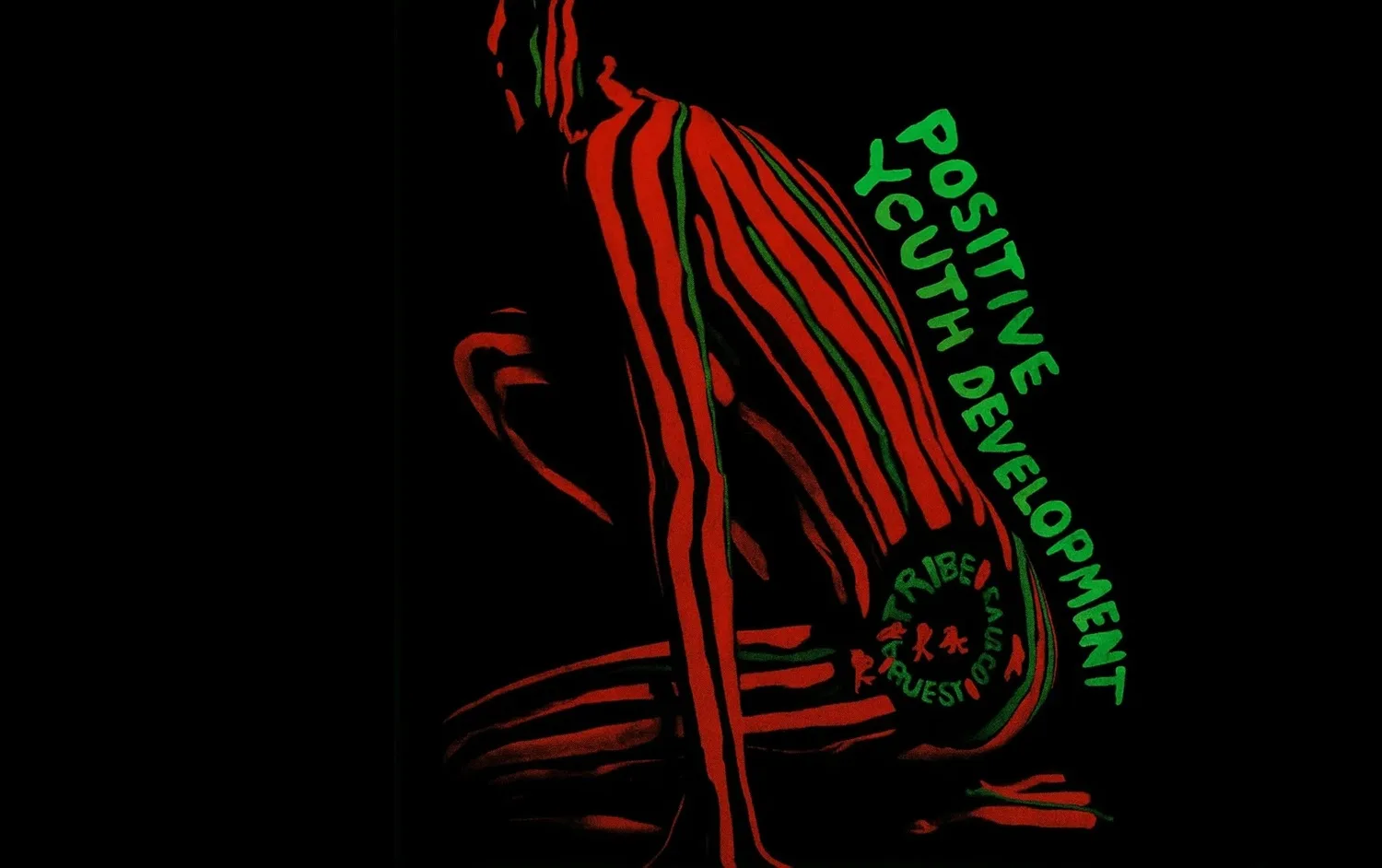
In the late 1980s and early 1990s, the Native Tongues — including A Tribe Called Quest, De La Soul, Jungle Brothers and Queen Latifah — modeled a youth-positive culture long before PYD was a common acronym. They offered a countercurrent to cynicism and narrow definitions of “realness,” centering curiosity, humor, Afrocentric imagery and community. The cipher wasn’t just a performance — it was a classroom, a lab, a family.

Through that lens, you can see the principles of Positive Youth Development in motion:

• Aiming for positive outcomes: The Native Tongues didn’t build their movement around fear or scarcity. They built toward something: connection, creativity, pride and contribution. They showed that the best way to keep young people from harm is to give them something powerful to move toward.

• Using a strength-based approach: Their music celebrated what was already strong in their communities (i.e., language, rhythm, humor, intelligence and culture) and turned it into an engine for self-expression and growth.

• Promoting youth engagement and voice: They didn’t wait for permission to lead; they created their own platforms and spoke in their own voices. Collaboration and co-creation were the rule, not the exception. This was authentic youth-adult partnership before the term existed.

• Utilizing inclusive strategies: Their art welcomed everyone into the fold. Black, white, brown, queer, straight, nerdy, street, spiritual … it didn’t matter. The goal was to bring more people into the circle, not to draw lines around who belonged.

• Fostering collaborative, long-term community engagement: They worked together across crews, neighborhoods and generations to create a lasting cultural shift that valued mentorship, belonging and contribution over competition.

They didn’t reject struggle; they transformed it. Their legacy reminds us that Positive Youth Development isn’t about denying what’s hard but rather about creating spaces where joy, dignity and possibility can thrive alongside it.

Culture as a Pathway

The Native Tongues’ influence extended through the music and messages of affiliated artists. Queen Latifah, with her anthem “U.N.I.T.Y.”, elevated self-respect and empowerment, especially for young women in spaces where their voices were too often marginalized. Afrika Baby Bam from the Jungle Brothers celebrated the strengths that he saw in his context when he said, “We weren’t trying to separate ourselves from the street. We were trying to lift it up.”

These artists carried forward the same developmental ideals that scholars like Lerner and Benson articulated: youth need opportunities to express themselves, to contribute to something larger, and to be affirmed as valuable members of a community.

From deficits to strengths

As Karen Pittman reminds us, “problem-free is not fully prepared.” Both PYD and the Native Tongues rejected the notion that young people should only be measured by what they avoid: violence, drugs, failure. Instead, they emphasized what young people can become: leaders, creators, community-builders.

Consider a modern youth center. A deficit approach might emphasize control and surveillance, aiming only to “keep kids out of trouble.” A PYD approach, inspired by both research and hip-hop culture, would instead provide mentorship, leadership opportunities and creative outlets that help young people prepare not just to stay safe, but to thrive.

Seeing the bigger picture

Neither PYD nor the Native Tongues ignored the realities of poverty, racism or trauma. But both refused to let those forces define young people. They insisted on seeing talent, resilience and possibility. That shift from deficit to possibility is what allows youth programs, cultural movements and whole communities to move from survival to thriving.

Learning from the Native Tongues

The Native Tongues show that PYD isn’t only a framework, it’s a way of building culture. It’s a set of practices that turn individual sparks into community light.

If we want youth to thrive, let’s do what both the research and the records tell us: invest in competence, connection and contribution; honor identity and creativity; build spaces where joy and rigor live side by side.

In other words, let’s recognize what the Native Tongues already knew: When young people are given real chances to express their gifts and lift each other up, they don’t just survive, they thrive. And if we didn’t know before … well, now we do.

Dan Warren is Director, Youth Development & Education.

This article was originally published in Youth Today, on November 11, 2025.

Digital contexts are becoming more prevalent in children’s lives than ever before, fueled in part by the COVID-19 pandemic and the need to move various aspects of children’s lives online*. Since human development is a holistic and dynamic process between the developing person and his or her context* and children develop in positive and healthy ways when their strengths are combined with the strengths of their contexts, we have an opportunity as researchers to bring this framework to the changing landscape of children’s lives.

What has become apparent in our company’s recent requests for proposals, is that there is a lack of fit between the knowledge and experience of many designers and the developmental needs and abilities of children. This lack of fit signals a fundamental problem, and an opportunity, given the growing presence of digital technology as a context for children’s development. The virtual world is a new frontier and there has been a land rush of companies looking to stake their claim flag.  This rapid growth has seemed to create holes in the capabilities of these frontier companies. More precisely, the talent needed to design for adults does not adequately translate to designing for kids. In the absence of comprehensive knowledge about child development, current designers may err in using themselves or those close to them as the markers of success and/or “normality”.

“We all have a blind spot and it’s shaped exactly like us.” – Junto Diaz, Author

Short of extensive training in child development, designers can utilize a few central rules of thumb when designing for kids. Keeping these in mind will go a long way to minimizing, or at least acknowledging, our biases:

1) All humans are whole. Sometimes by necessity, we need to zoom in and focus on a specific part of children’s development, such as their literacy level or their ability to swipe on a tablet. But it is important to understand those parts within the context of the whole developing person. We then need to further adjust our lens to view that person as situated within a dynamic relationship with his or her context.

2) There is no ‘typical’ child. Much of what we know and have studied about children is approximations that are gathered from information that has been averaged over large groups from mostly Westernized societies. Expectations about children should be considered approximations that can get you close to understanding.

3) All households are different. A common mistake is to view children’s development as unfolding in a vacuum. Rules and expectations differ greatly by household and are driven by cultural, situational, and practical factors. Just because a child is developmentally capable of something does not mean that they will do it.

4) Child development is less linear than it appears. Because development is an iterative process, there are often regressions that ebb and flow with progressions. Development of a skill or competency may occur steadily over time or rapidly in spurts. While many abilities get better over time, it is not always the case.  Some abilities, like attention span increase gradually over time during childhood while other capacities, like learning a new language, decrease over time. Other aspects of development, like identity development, are latent during younger years and then rapidly develop.

If there is one mantra that we could recommend to all designers and those thinking about how to best support kids, we would strongly offer this:

“Every [child] is like all other [children], some other [children], and no other [child].” – Kluckhohn & Murray, Anthropologist & Psychologist

By Dan and Amy Warren.

==========

1*Responsible Innovation in Technology for Children. UNICEF Office of Research – Innocenti, Florence, 2022.

*Lerner, R. M., Lerner, J. V., Almerigi, J., Theokas, C., Phelps, E., Gestsdóttir, S. Naudeau, S., Jelicic, H., Alberts, A. E., Ma, L., Smith, L. M., Bobek, D. L., Richman-Raphael, D., Simpson, I., Christiansen, E. D., & von Eye, A. (2005). Positive youth development, participation in community youth development programs, and community contributions of fifth-grade adolescents: Findings from the first wave of the 4-H Study of Positive Youth Development. Journal of Early Adolescence, 25(1), 17-71.


Today, the most cutting-edge thinking about human development is holistic, dynamic, and emphasizes the relationship between the developing person and his or her context.  This thinking is an important evolution; a stark contrast to outmoded ideas that see people as something to be molded by the context like a piece of clay or “filled” like an empty receptacle.

The Positive Youth Development (PYD) perspective is one such holistic and dynamic view, based on the ideas that:1

   1. All young people have strengths (because of the potential for developmental change across the lifespan), and

   2. All contexts have strengths as well. These strengths are resources that can be used to promote positive youth development.

   3. If the strengths of young people are combined with the strengths of the context, then positive, healthy development occurs.

PYD emerges out of this dynamic relationship and is evidenced by the presence in young people of “Five C’s”:  Competence, Confidence, Connection, Caring, and Character.

Digital contexts are becoming more prevalent in children’s lives than ever before, fueled in part by the COVID-19 pandemic and the need to move various aspects of children’s lives online.2  The growing presence of digital technology as a context for children’s development requires that we think deeply about its impact, identify its strengths, and consider how best to combine those strengths with the strengths of young people to promote their positive development.

Nutrient-rich digital contexts have many of the same features as those found in the physical world.  Both are guided by a deep understanding of children’s development, behavior, and natural play patterns.3  Both also recognize social interactions as the core of what it means to be human, seeking to enhance and extend (not obstruct) human connection.4  In turn, both types of contexts empower children to be agents in their own development, to make choices and course-corrections, to be generative and creative.5

We know digital contexts support positive development when children exhibit these six positive behaviors:3

    1. Communication (sharing ideas, caring about and interpreting the work of others)

    2. Collaboration (turning shared ideas into shared action)

    3. Community Building (contributing to the good of the community)

    4. Content Creation (using tools to create new artifacts)

    5. Creativity (being flexible and imaginative)

    6. Choices of Conduct (making decisions based on one’s personal sense of morality)

Taken together, these behaviors can be used to guide the design of developmentally-mindful digital contexts and, as well, to evaluate and revamp existing digital contexts.

When we take a positive developmental approach to digital contexts, we recognize that the quality and potential benefits of those contexts are contingent upon children’s developmental milestones.  Just as a child’s height determines the relevance of monkey bars, so too does their attention span, memory, symbolic representational skills and so on, determine the relevance and nutrient richness of digital contexts.  Certain developments, particularly in early childhood, happen best in the physical, multidimensional world.  Children must reach these key milestones to unlock and benefit from the strengths of digital contexts.  When unlocked, the strengths of young people can combine with the strengths of digital contexts to support positive development.

    1. Lerner, R. M., Lerner, J. V., Almerigi, J., Theokas, C., Phelps, E., Gestsdóttir, S. Naudeau, S., Jelicic, H., Alberts, A. E., Ma, L., Smith, L. M., Bobek, D. L., Richman-Raphael, D., Simpson, I., Christiansen, E. D., & von Eye, A. (2005). Positive youth development, participation in community youth development programs, and community contributions of fifth-grade adolescents: Findings from the first wave of the 4-H Study of Positive Youth Development. Journal of Early Adolescence, 25(1), 17-71.
    2. Responsible Innovation in Technology for Children. UNICEF Office of Research – Innocenti, Florence, 2022.
    3. Bers, M. U. (2012). Designing Digital Experiences for Positive Youth Development: From Playpen to Playground. Oxford, Cary, NC.
    4. Hirsh-Pasek, K., Zosh, J. M., Golinkoff, R. M., Gray, J. H., Robb, M. B., & Kaufman, J. (2015). Putting education in “educational” apps: Lessons from the science of learning. Psychological Science in the Public Interest, 16(1), 3-34.
    5. Lerner, R. M., Theokas, C., & Jelicic, H. (2005). Youth as active agents in their own positive development: A developmental systems perspective. In W. Greve, K. Rothermund, & D. Wentura (Eds.). The adaptive self: Personal continuity and intentional self-development (pp. 31-47). Göttingen, Germany: Hogrefe & Huber Publishers.

Amy Warren, Ph.D. is a Senior Child Development Researcher at Fluent Research. Amy holds a Bachelor of Arts in psychology from Clark University and M.A. and Ph.D. degrees in child development from Tufts University. Dan Warren, Ph.D. is Director, Youth Development and Education at Fluent Research. Dan holds a doctorate in Human Development and Child Study from Tufts University and taught elementary school in Massachusetts for nearly a decade. Together, they co-founded Home Base Learning Center, a nature-based elementary school guided by the core values of Positive Youth Development, Social Justice, and Earth Stewardship.