

Allison Caplovitz Tag

This year Fluent Research is celebrating its 20th anniversary. It is a major milestone for the company, which has spent two decades conducting research across a wide variety of industries, sectors, and audiences. While I haven’t been at Fluent for that entire two-decade run, hitting this benchmark naturally got me thinking about my own career in children’s media research, and how much the landscape has shifted since I first started.

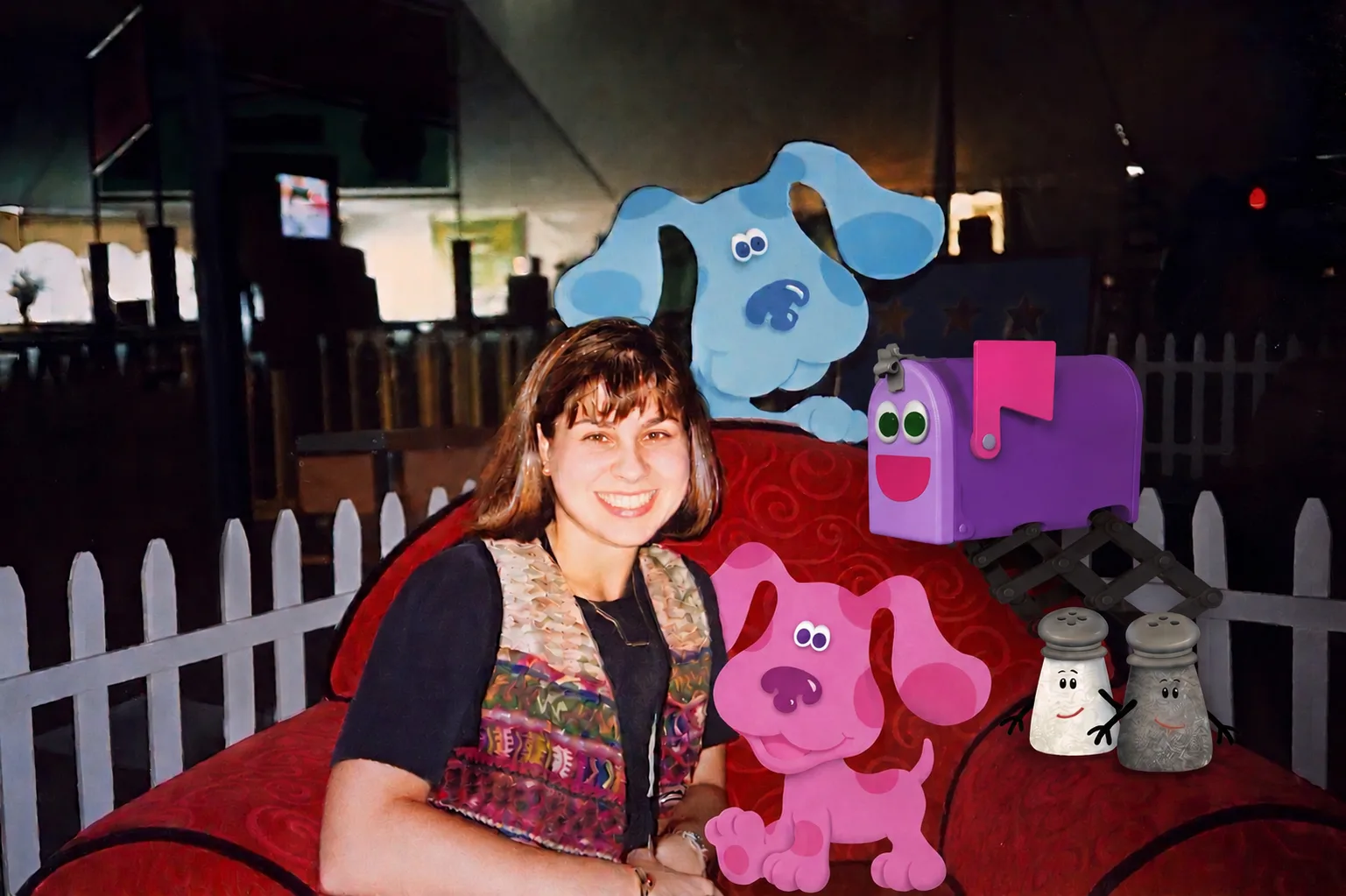
When my career in kids’ media began, things looked very different. One of my earliest projects was working on Blue’s Clues. Back then, research wasn’t a checkbox you ticked at the very end of production; it was baked into the show’s DNA.

We tested every episode with kids three separate times as it moved through development. We’d watch how they engaged, gather their feedback, and use those insights to tweak the story structure, the pacing, and the animation. It was a given that children’s voices would shape the final product. We used to joke: We’re cheating because we’re asking the kids to tell us what they think even before it’s produced. But of course it wasn’t cheating at all. It was an effective way to let the audience guide the show before it was even finished.

I also remember the early days of evaluating interactive CD-ROMs, trying to figure out what meaningful digital engagement even looked like for a young audience. At the time, it felt like we were exploring uncharted territory. Looking back, what strikes me most about that era was the level of intentionality. Content was crafted with patience, and there was a true commitment to truly understanding your audience before making big decisions.

The Shift to Hyperspeed in the Children’s Media Landscape

The media environment today is a different world entirely.

Audiences don’t just watch TV; they move fluidly between streaming, social platforms, gaming, and digital spaces like TikTok and YouTube. The challenge for creators is no longer getting content into people’s hands. It’s about standing out in a world where there are a million other distractions and choices at your fingertips.

On one hand, the growth of streaming and digital platforms have brought real gains. There are more diverse stories being told and more ways to reach audiences than ever before. But it has also changed the pace of the industry. Production cycles have compressed. The pressure to constantly feed platforms means content is dropped at a rapid pace. In the rush to keep up, the deep, iterative research that used to be standard practice often gets sidelined.

Why the Children in the Audience Matter More Than Ever

The acceleration of the industry doesn’t make research less important. It makes it more important.

When audiences have infinite choices, understanding what actually resonates with them (what builds emotional connections and keeps them genuinely engaged) is everything. Research is what stops us from guessing and keeps us grounded in the reality of people’s actual lives.

That’s why the work we still get to do with partners like PBS KIDS means so much to me. When productions are able to secure the necessary funding, we collaborate on the kind of rigorous, formative testing that allows us to help shape shows while they are still in active development. Seeing the direct impact of that research reminds me just how important this process remains. It proves that taking the time to listen to children is still the most effective way to build media that truly serves them.

Children: The Heart of Children’s Media

As we celebrate 20 years of Fluent and look to the future, my hope is that we see a renewed commitment to putting research at the center of production, not as an afterthought. At Fluent, that’s the work we are dedicated to continuing and expanding. I look forward to partnering with more creators who believe that rigorous, child-first research isn’t a luxury, but a foundation. 

The platforms will keep shifting and the technology will keep evolving. That’s not going away. But after 20 years, here’s what we know for certain: truly great content will always start by putting children, their voices, and their needs at the heart of development.

By Allison Caplovitz, PhD, Director, Content Research and Evaluation
We’re proud to announce that our research study on Dicey Escape, a PBS Kids digital math game, has been accepted to the International Communication Association (ICA) 2026 Conference — one of the leading global forums for communication research. The paper’s first author, Nancy A. Jennings, PhD from the CHEER Lab at the University of Cincinnati, will present the research findings at the conference in Cape Town, South Africa, June 4–6, 2026. Allison Caplovitz, PhD and Tiffany Salone, M.Ed from Fluent Research and Kelly R. Merrill Jr, PhD from University of Cincinnati are co-authors.

The research was conducted when PBS KIDS engaged Fluent Research to answer a straightforward but important question: does the Odd Squad Dicey Escape game actually improve math skills in young children, and how do kids respond to it overall? The study followed children ages 5–7 over a three-week period, measuring their math knowledge before and after gameplay. The findings — and their implications for app design and parenting decisions — are available on our website.

The ICA acceptance brings this work to an international research audience and reflects the broader significance of the study’s findings. The article provides a deeper look at the methodology, results, and what they mean for educators, parents, and digital content developers. Read the full text here: Digital Games and Math Skills Development: Leveraging Digital Play with Early Math Trajectories in the PBS KIDS’ Odd Squad Game Dicey Escape.

Recently, we attended the Digital Media and Developing Minds International Scientific Congress in Washington, DC, which was organized by the Children and Screens Institute of Digital Media and Child Development. This unique event brought together clinicians, advocacy leaders, teachers, and researchers. Expertise among attendees included medicine, developmental psychology, and experimental psychology. The conference aimed to foster collaboration and exchange of ideas concerning children’s health and safety in relation to digital media use.

Key Themes

During the three-day event, which featured more than 15 talks and panels, several key themes emerged:

The Impact of Screen Media on Minoritized Youth

Discussions revolved around both the positive and negative effects of screen media on LGBTQ youth and youth of color.

Challenges of Under-Connected Youth

There was a focus on the limitations faced by under-connected youth and the need for equitable access to digital resources in the global south.

Data Deficiency on Young Children

Participants noted the lack of comprehensive data on young children’s digital media usage.

Privacy and Security Concerns

Topics included discussions on data ownership (parents vs. children) and the need for improved privacy and security measures for children online.

Updated Policies

There was a consensus that the Children’s Online Privacy Protection Act (COPPA) is outdated and that age gates alone are insufficient to safeguard children in today’s digital landscape.

Mental Health Implications

Speakers addressed the impact of digital media on the mental health of youth, including externalizing behaviors and bidirectional effects.

Youth Advisory Panels

Experts highlighted the value of involving youth in decision-making processes and participatory design research.

Parental Support and Contextual Influence

Panelists discussed how the context of home environments has impacts on children’s media use and potential dependence on screen time.

We found the conference  thought provoking and inspiring. It was a great opportunity to listen to interesting figures in the field and gain new perspectives that will inform our future work. This event served as a reminder that stepping away from daily tasks to attend conferences may lead to new ideas.


By Allison Caplovitz & Tiffany Salone

A wise and dear professor once told me, “The medium is not the message. The message is the message.” And when television was the medium, that was certainly true. But is that still the case with the proliferation of interactive media for children taking hold? Does the interactivity of the medium outweigh the content being delivered on it?

In the podcast series, Chasing Life, Dr. Sanjay Gupta delves into the science behind the impact of technology on our brains. This particular episode, Inside a Lab Studying Toddlers and Touchscreens,” explores the impact of interactive touchscreen technologies on very young children. Dr. Dimitri Christakis, a pediatrician and director of Seattle Children’s Research Institute, explains how his research is finding that children between the ages of 18 and 24 months struggle to disengage from an app in comparison to a traditional toy. This knowledge triggers questions for both parents of young children as well as the technology companies that create these apps. What can parents and tech companies do to prevent adverse effects on children’s young brains from this relatively new technology?

As a parent myself, I see in my teenagers how the interactivity and stimulation of technology keeps them fully engaged and immersed. And in my role as Director of Content Research and Evaluation at Fluent Research, I help technology and media companies understand how children and parents experience apps, games, and other products so designers and producers who create digital content for kids do so with their wellbeing in mind. This is more important than ever as technology continues to evolve and draw in the attention of a generation. As Dr. Christakis says, “Every program is educational. The question is, ‘What is it teaching?’” We need to do better for our children.

By Allison Caplovitz, PhD

Last week Allison Caplovitz and Stefanie Cousins traveled to Miami to attend the Kidscreen Summit, one of the most important events for the kids’ entertainment industry. Attendees from all over the world return year after year to engage in critical conversations affecting the industry, conduct business meetings, and participate in key networking opportunities.

The week kicked off with a keynote by New York Times best-selling author and Newbery Award winner Kwame Alexander about the power of yes, specifically saying yes to creativity, saying yes to thinking outside the box, and saying yes to every opportunity. It was an impactful event, setting a positive tone for the rest of the week.

Streaming platforms, networks, production companies, animators, writers, and researchers were well represented on the stage and in the crowd last week. While not all sessions focused on COVID, several of the sessions Stefanie and Allison attended looked at kids’ content through that lens. Here are a few of their takeaways:

• A panel of kids’ content experts from Sesame Workshop, Warner Brothers Discovery, Duolingo, and Crandall Consulting discussed Lessons in Social Emotional Learning. They emphasized that infusing positive psychology, human-centric learning, and social-emotional learning into kids’ content is more critical than ever for kids to overcome the adversity they experienced during COVID. All panelists emphasized that soft skills, like resilience, collaboration, cooperation, and communication must be the nutrition we pack into programming.

• In their session, Coming out of COVID, experts from Dubit looked at the toll the pandemic has taken on kids, specifically their relationship with media. Dubit found that familiar, low risk, interactive, and comforting entertainment brands bring stability to kids and families now.

• Nickelodeon presented research in Mind the Gap, about “bridge” programs, which are geared toward 4-7-year-old, between preschool and big kid age groups. Bridge shows are just the right mix of comfort and excitement and are more like preschool programming than programs for big kids. Bluey, Gaby’s Dollhouse, and Wild Kratts are all examples of bridge programs. In our post-COVID world, bridge shows are thought to be more supportive of children in both age groups.

• The session, Pandemic Education Fallout: How COVID-19 Has Changed Everything, featured Sesame Workshop and The Family Room sharing research about the shifting learning priorities parents have for their preschoolers since the onset of the pandemic and how content creators can use this new information to impact their educational programming. Sesame Street, for example, has used this research in the development of its content for next season, focusing on curiosity (I wonder…) creative thinking (What if…), and task persistence (Let’s try…).

The next KidScreen Summit returns to Miami in February 2023 and we’re looking forward to another powerful week. See you there!

Next month Fluent’s Director of Content & Evaluation, Dr. Allison Caplovitz, will be returning to Miami to attend the Kidscreen Summit after the conference’s two-year hiatus due to COVID. Allison’s favorite meeting of the year, the Kidscreen Summit is known as the most important annual event in the kids media industry.

Allison’s background includes deep experience informing the development of children’s television programs, evaluating curriculum development, and conducting summative research. She has advised 9 Story, Highlights for Children, Meta, Netflix, PBS Kids, Sesame Workshop, Warner Media, and YouTube Kids, and was instrumental to the success of the iconic children’s media property Blue’s Clues. Read all about Allison here and be sure to connect with her in Miami.