

10 Aug Recruiting Latinx Families for Research Camp, a New Kind of Community-Based Research
In June, my colleague Amy Warren and I set out to recruit families from the Greater Boston and Providence areas for Fluent Research’s first ever Research Camp, a new and innovative take on community-based action research. For this inaugural camp, we focused on recruiting Latinx families for a GBH study funded by the National Science Foundation (NSF). But we were not just focused on hitting target recruitment numbers. Fluent’s Research Camp is about building genuine connections and embracing the diverse backgrounds of the communities that inform our research.
Anyone who has ever tried to recruit research participants knows it is no easy task, an uphill battle some may say. It requires a lot of time, energy, planning, and resources. The approach must be strategic, utilizing personal connections to tap into different networks. To make things easier, Fluent could have hired a professional recruiter and called it a day, but we wanted to connect personally with these families, hear their stories, and build bridges of trust.
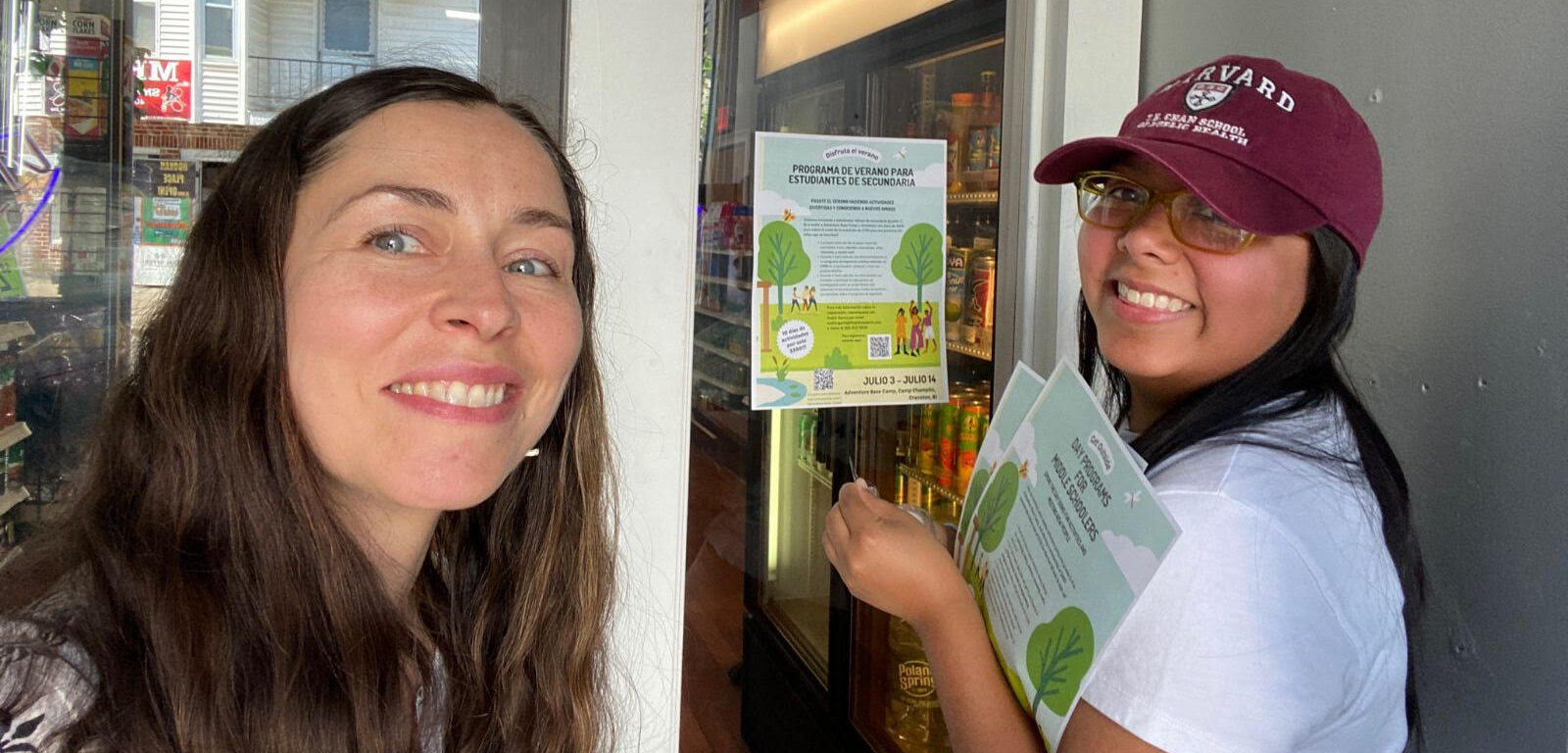
Armed with sunscreen, pushpins, tape, and stacks of flyers, Amy and I hit the streets of Boston and Providence in our most comfy sneakers to engage the community. Our recruitment journey was guided by a map we created of key locations where we could find our target population – bodegas, restaurants, laundromats, hair salons, schools, nonprofit organizations, etc. With a well-rehearsed spiel in English and Spanish, we set forth to talk to anyone who would listen.
 Interestingly, our journey turned into an immersive cultural experience. At each stop, we heard fascinating stories from really interesting people that reminded us of the resilience and diligence of the Latinx immigrant community. For instance, we met a business owner from El Salvador, who had recently written a book about the first Central American migrants who arrived in the US in the 1800’s, a story not many people know about.
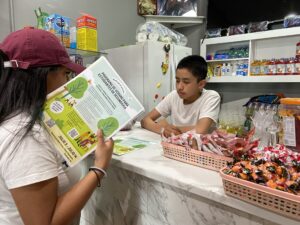
  Another notable encounter occurred with two young boys who were spending their summer helping out at the cash register of their family’s store. One of them expressed interest in going to summer camp because it was something he had always wanted to do. Towards the end of the day, we visited a tortilleria, a shop that makes and sells hand-made tortillas. There, I chatted with a worker about how tortillas connect our two cultures, hers Guatemalan and mine Mexican.
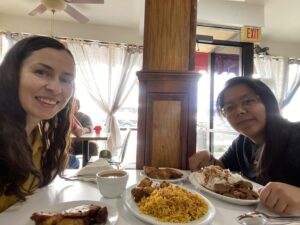 One major highlight was the opportunity to indulge in what felt like a culinary tour of Latin America. Amy and I tried dishes from a variety of cultures like Brazilian coxinhas, Colombian empanadas, Mexican agua fresca, and Dominican guisado de res, which made us feel more connected to the people we met.
As a Mexican-American woman, I felt a great deal of responsibility and pride employing my own cultural background and roots to build bridges of trust throughout this experience. I value knowing that my upbringing, principles, and Spanish-language skills allowed Amy and I to form authentic connections that otherwise could not be formed by simply using a recruiting service.
As I reflect on our journey, I am reminded of the true purpose of research, to gain a genuine and ethical understanding of the human experience. It is more than just hitting recruitment numbers and it begins long before the analysis phase. The process of uncovering insights begins when we build true human connection, when we appreciate and experience diverse cultures, and when we collaborate on the ground with communities.
By Evelin Garcia, User Experience Researcher, Fluent Research