
Content Research Tag

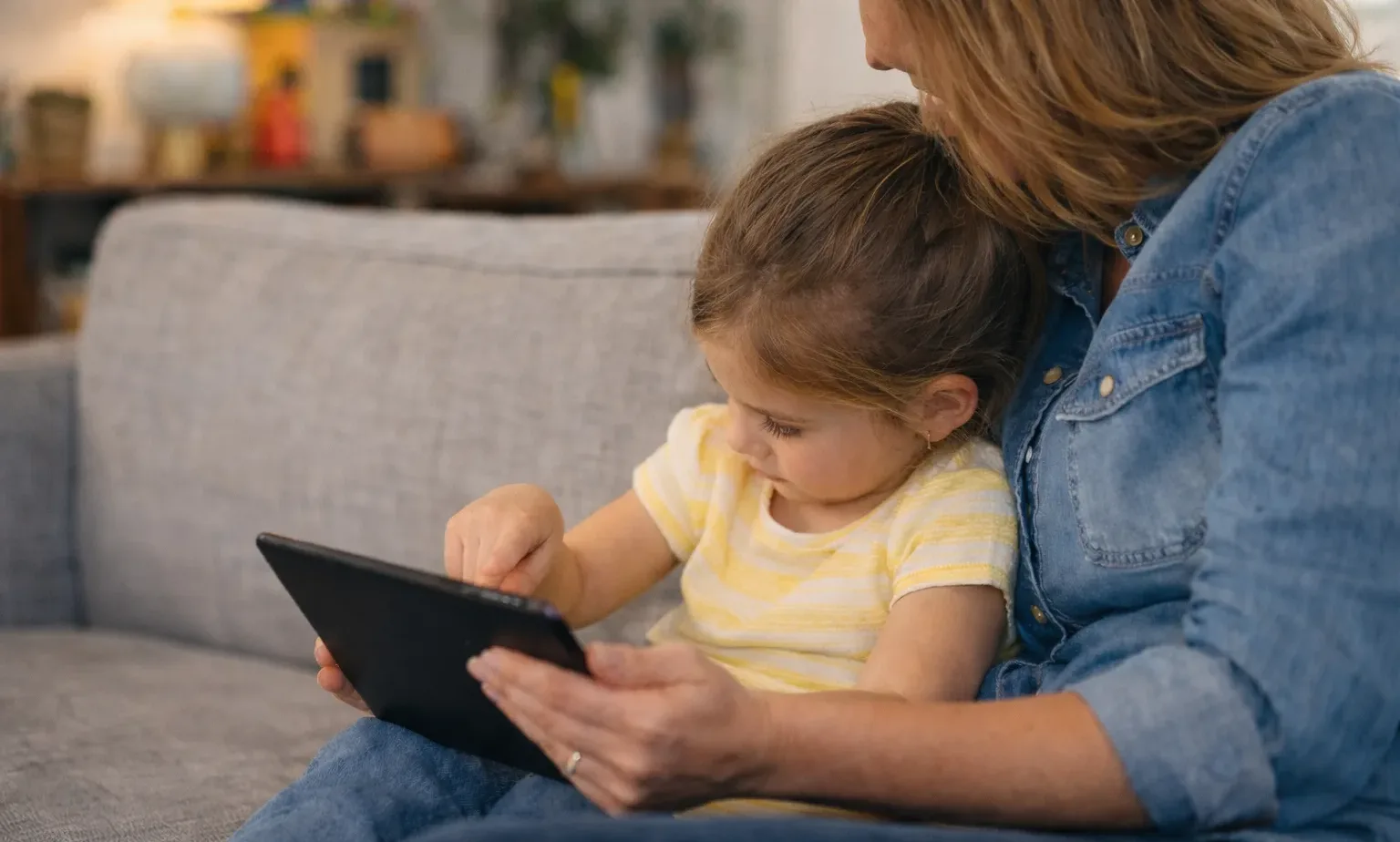
The moment that changes a children’s series rarely just happens in the writers’ room. It can also happen in a living room.

A five-year-old girl tilts her head and says something unexpected about a character. A parent pauses and admits they’re not sure what the takeaway was. An eight-year-old boy laughs at a moment the creators thought was instructional, and tunes out during the explanation. Those are the moments that shape better content.

When people think about research in children’s media, they often think about measurement, proving that something worked after it’s complete. But the real power of research happens much earlier. Research doesn’t just validate content. It influences it.

Where Insight Changes Direction

In our work with PBS KIDS, Nickelodeon, and other children’s media clients across broadcast, digital, and interactive properties, we’re often brought in while content is still evolving. Animatics are rough. Scripts are fluid. Characters haven’t been finalized. Game mechanics are still being refined. That’s exactly when research matters most.

What we uncover doesn’t sit in a report; it informs revision. We examine questions that go beyond surface appeal:

Do children understand the core skill the episode is designed to model?

Do children understand the core skill the episode is designed to model?

Is the learning goal clear, or buried under plot?

Are the rules of the world intuitive to young viewers?

Does the problem feel concrete, or abstract?

When do children disengage, and what’s happening at that moment?

Are parents interpreting the educational intention the way producers expect?

Sometimes the insight confirms the creative approach. Other times, it shifts it.

We’ve observed executive function skills resonating clearly, while the context surrounding them creates confusion. In one project, adults found career themes compelling, but children experienced them differently. In another, humor carried the learning more effectively than explanation. Without research, those disconnects remain invisible. With research, they become opportunities to revise, clarify, and strengthen before a series moves forward. In other words, those insights lead to better alignment between intention and interpretation. That’s not cosmetic feedback. It’s directional influence. 

Research as a Creative Partner

The strongest development teams don’t treat research as a compliance step at the end of production. They treat it as a creative partner.

When research is embedded in the development process, it can influence story pacing, character development, world-building clarity, the explicitness of educational messaging, and the balance between entertainment and instruction. The result isn’t content that feels “researched.” It’s content that feels intuitive, because it aligns with how children actually learn.

That alignment doesn’t happen by instinct alone. It happens by listening. 

Designing for How Kids Learn

This article is the first in a series exploring how research shapes and strengthens children’s media development across the broader children’s content landscape.

In upcoming articles, we’ll feature insights from Allison Caplovitz, PhD, Director of Content Research and Evaluation, and Senior Researchers Sylvia Rusnak and Tiffany Salone, whose expertise in child development, educational measurement, and media testing informs the work behind the scenes.

If you’re developing content for children, consider this:

Do you know what kids are actually taking away?
Are you testing intention against interpretation?
Are you building in time to revise based on evidence?

Because if you’re building for kids, listening to them isn’t optional. It’s foundational.

By Stefanie Cousins, Vice President, Marketing and Communications

Fluent’s Research Strategist Sofia Polo recently completed research on oral health literacy for our client Sesame Workshop that was included in an article published in the peer-reviewed California Dental Association Journal.

The article describes a series of activities through which UCLA and Sesame Street collaborated to develop and use oral health resources as part of a children’s oral health awareness campaign. Read an excerpt of some of Fluent’s findings below. You can read the rest of the study starting from page 771 on the December 2021 issue of the California Dental Association Journal.

Focus Groups:

Sesame Street organized a qualitative study using focus groups to examine dentists’, child care providers’ and parents’ current practices and perceptions of the barriers Chinese-speaking, Spanish- speaking, Korean-speaking, Black and Filipino families encounter with regard to the oral health of their young children. The focus groups also sought to solicit feedback on SSIC’s oral health resources.Research objectives included identifying stakeholders’ top priorities and concerns around the oral health of young children; exploring stakeholders’ current practices for promoting the oral health of young children and pinpointing where they learned about these practices; describing the challenges and barriers parents encounter in promoting the oral health of young children, including those unique to specific language/ethnic groups; and gathering feedback and recommendations on the SSIC resources and soliciting ideas for effective dissemination strategies to reach the specific language/ethnic groups. The focus groups consisted of 16 in-depth 45- to 60-minute individual interviews with dentists via Zoom and 13 90-minute virtual focus groups with mothers and child care providers conducted via Zoom.

Results:

During the lifetime of the campaign, the aim was to achieve the following goals across all platforms on social media:

  • Reach 10,000 users per video at minimum.
  • Achieve 25% engagement across all posts per video views.
  • Receive 20,000 views per Dentist Grover video.
  • Receive 50,000 views for Elmo’s Toothy Dance.
  • Increase followership by 50% across all platforms.
  • Recruit at least five local and/ or national partners.  

Results of the awareness campaign exceeded each of the reestablished goals, with the social media campaign generating impressive metrics within a month of the release of the fifth video (FIGURE 2) and a grand total of over 687,000 views of the five featured new videos across MLAS and SSIC websites by the conclusion of the project in December 2020. Followers increased across all social media platforms, with Facebook followers showing the highest percentage increase (112%) and Instagram having the greatest number of followers (204).


September 1, 2021 (New York, NY) – Fluent Research, a data and insights-driven strategic consulting firm, announced today that Allison Gilman Caplovitz, Ph.D has joined the company in the role of Director, Content Research and Evaluation. In this role, Dr. Caplovitz will oversee Fluent’s extensive media, technology, and education research on a global basis, helping the organization deliver on its mission of advancing children’s and families’ health, wellbeing, and education. She will report to Nellie Gregorian, President of Fluent Research.

“For over a decade, Fluent Research has had the privilege of collaborating with some of the best-known brands in media, technology, and education in developing age-appropriate and stimulating products and programs. We couldn’t have asked for a more experienced and talented researcher than Allison Caplovitz to lead our content research and evaluation practice,” – said Gregorian. “After her exceptional work on groundbreaking children’s media properties, Allison is uniquely qualified to provide guidance and support to content and curriculum developers in creating age-appropriate, educational and engaging products and experiences.”

Dr. Caplovitz joined Fluent Research after a distinguished career in children’s media and education. Dr. Caplovitz was instrumental to the success of an iconic children’s media property, Blue’s Clues, in her role as the Manager of Research and Development for Nickelodeon. She also served as a consultant to Fisher-Price where she assessed the efficacy of an interactive literacy product called the Power Touch. Dr. Caplovitz has authored 17 Blue’s Clues children’s books, as well as numerous academic publications.

Most recently, Dr. Caplovitz was a founder of Technology & Education Consulting Associates (TECA) where some of her notable clients included The Cartoon Network, Netflix, 9 Story, Highlights for Children, PBS Kids, Sesame Workshop, The University of Pittsburg, The Austin Independent School District, and Texas State University.

Dr. Caplovitz has her B.S. from Cornell University and earned her M.A. and Ph.D. from The University of Texas at Austin, where she still resides with her family.

About Fluent Research
Fluent Research is a data and insights-driven strategic consulting firm. Since 2006 Fluent has leveraged understanding of human behavior to help the world’s best-known brands and organizations advance worthy causes, innovate transformational products, and successfully navigate change. Fluent’s work centers around three practice areas: thought leadership research, formative research and evaluation, and social impact assessment. Fluent has applied rigorous and innovative research solutions in service of promoting children’s access to and quality of education, and gender equality in the U.S. and in over 70 countries around the world. Fluent’s creative arm, Fluent Productions, is an award-winning producer of original documentary content that harnesses the power of visual storytelling to bring attention to important issues facing our society, to build empathy and inspire action.

Contact: Ruth Aravena
[email protected]