Posted at 10:42h
in
Research,
STEM
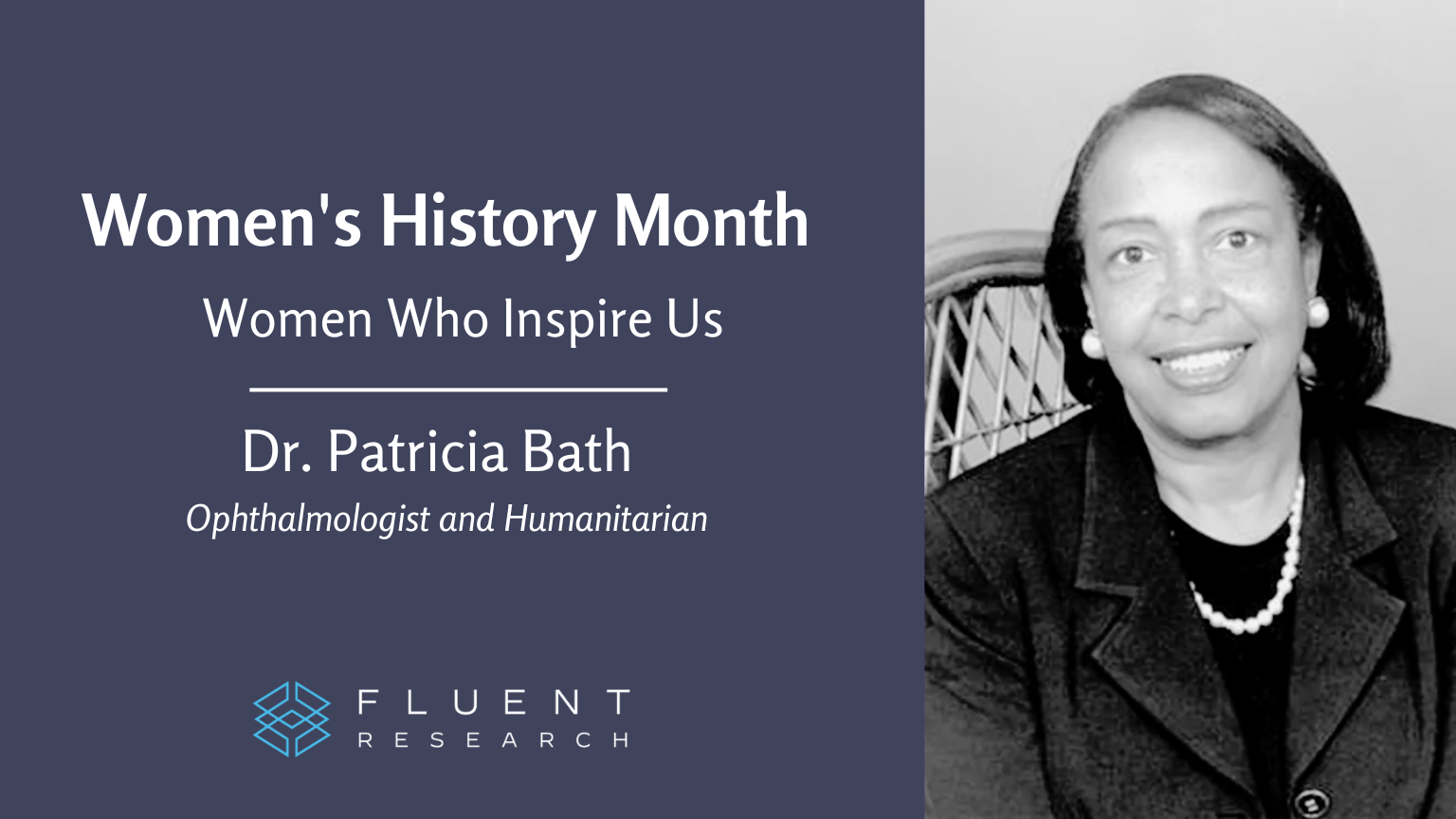
Bridging the gap between Black History Month and Women’s History Month, we celebrate the remarkable life and achievements of Dr. Patricia Bath. Millions around the world owe their restored vision to her groundbreaking ophthalmological work and early advocacy for new modalities of health care.
A daughter of Harlem, Bath displayed scientific aptitude from a young age. While as a secondary student at Charles Evans Hughes High School she was named a National Science Foundation scholar, connecting her with researchers at Yeshiva University and Harlem Hospital Center. Her accompanying research studies explored the complex relationship between cancer, nutrition, and stress and further demonstrated her research acumen: By age 19, her research work was already being recognized in scientific journals and magazines like Mademoiselle.
Bath continued her academic journey at Howard University and returned to New York City after graduation. While working at Harlem Hospital Center in the 1970s she observed double the rates of blindness in Black patients compared to white patients. This ignited her passion to help the blind and underserved and to develop new treatment methods. In 1976, Bath established the field of community ophthalmology, a discipline focused on preventing blindness in underserved populations through a mix of public health and community medicine initiatives. The National Institutes of Health described these efforts to make eye care more accessible through neighborhood hubs in this way: “Volunteers trained as eye workers visit senior centers and daycare programs to test vision and screen for cataracts, glaucoma, and other threatening eye conditions.” Bath also became the first African American resident in ophthalmology at New York University, a feat that marked the beginning of a series of historical firsts:
• First African American woman to serve on staff as a surgeon at the UCLA Medical Center.
• First woman to lead a post-graduate training program in ophthalmology.
• First woman elected to the honorary staff of the UCLA Medical Center.
• First African American female doctor to receive a patent for a medical purpose.
Eventually, her dedication to accessible eye care led her to co-found the American Institute for the Prevention of Blindness. The history of the Institute’s many efforts includes donating ophthalmological surgical equipment to developing nations like Pakistan and Nigeria, as well as distributing educational materials.
Dr. Bath’s path was far from easy. While visiting as an honored guest on Good Morning America, she had this to say about being a woman of color in medicine: “I had a few obstacles but I had to shake it off…. Hater-ation, segregation, racism….”At one point in her career, the growing intensity of sexism and racism she faced in America forced Dr. Bath to temporarily relocate to Europe. There in France and Germany, she was able to continue her pioneering work in laser science.
Beyond her extensive list of firsts, Dr. Bath is a holder of 5 patents. The Laserphaco Probe, her most celebrated invention, was a revolutionary technology in 1988. It used lasers to dissolve cataracts with ultrasonic waves in a transformative improvement over scalpel methods. In addition to inventions, Dr. Bath was an early champion of telemedicine, recognizing its potential to bridge healthcare gaps by bringing healthcare to the masses regardless of proximity to brick and mortar doctors’ offices.
In the later years of her life, Bath was honored by the International Women in Medicine Hall of Fame, the American Academy of Ophthalmology Museum of Vision, and the Hunter College Hall of Fame. And in a cause close to this author’s heart, in 2009 she was selected by then-President Barack Obama to serve on a digital accessibility task force.
While Dr. Bath passed away in 2019, her inspiring legacy continues to illustrate the power of women in STEM. When girls and women are empowered to pursue science, all manner of breakthroughs are possible. She had this to say about serving as a role model: “I want to pass the torch to young girls and have them do S.T.E.M. and have them do ophthalmology.” Today, we can remember Dr. Bath for her brilliance, determination, and courage, but also for her humanitarian devotion to preserving sight for all.
By Farrah Brensinger, Senior User Experience Researcher.
——–
Resources:
1: Lemelson-MIT Program. (n.d.). Patricia Bath. The Lemelson-MIT Program. Retrieved March 20, 2025, from https://lemelson.mit.edu/resources/patricia-bath
2: National Museum of American History. (n.d.). Patricia Bath papers, 1960-2019. Smithsonian Institution. Retrieved March 20, 2025, from https://americanhistory.si.edu/de/collections/archival-item/sova-nmah-ac-1585-ref110
3: ABC News. (2018, November 27). Revolutionary ophthalmologist Dr. Patricia Bath shakes off haters. Good Morning America. Retrieved March 20, 2025, from https://abcnews.go.com/GMA/Wellness/revolutionary-ophthalmologist-dr-patricia-bath-shake-off-haters/story?id=53357320
4: Anumula, V., Kanyadan, P., & Kanyadan, C. (2024, July 30). Patricia E. Bath: A luminary in ophthalmology. Cureus, 16(7), e65781. https://doi.org/10.7759/cureus.65781
5: National Library of Medicine. (n.d.). Patricia Bath, MD, ophthalmologist. Retrieved March 20, 2025, from https://cfmedicine.nlm.nih.gov/physicians/biography_26.html
6: Lottie. (2021, June 30). Patricia Bath biography for kids. Retrieved March 20, 2025, from https://www.lottie.com/blogs/strong-women/patricia-bath-biography-for-kids?srsltid=AfmBOoo7grMzWKUwJ_l0BXVggJVT6ek3gBFs_J56AxfFCxVzmPTWlPFY
7: Wikipedia contributors. (2025, March 20). Patricia Bath. Wikipedia. Retrieved March 20, 2025, from https://en.wikipedia.org/wiki/Patricia_Bath