Get to know us Tag

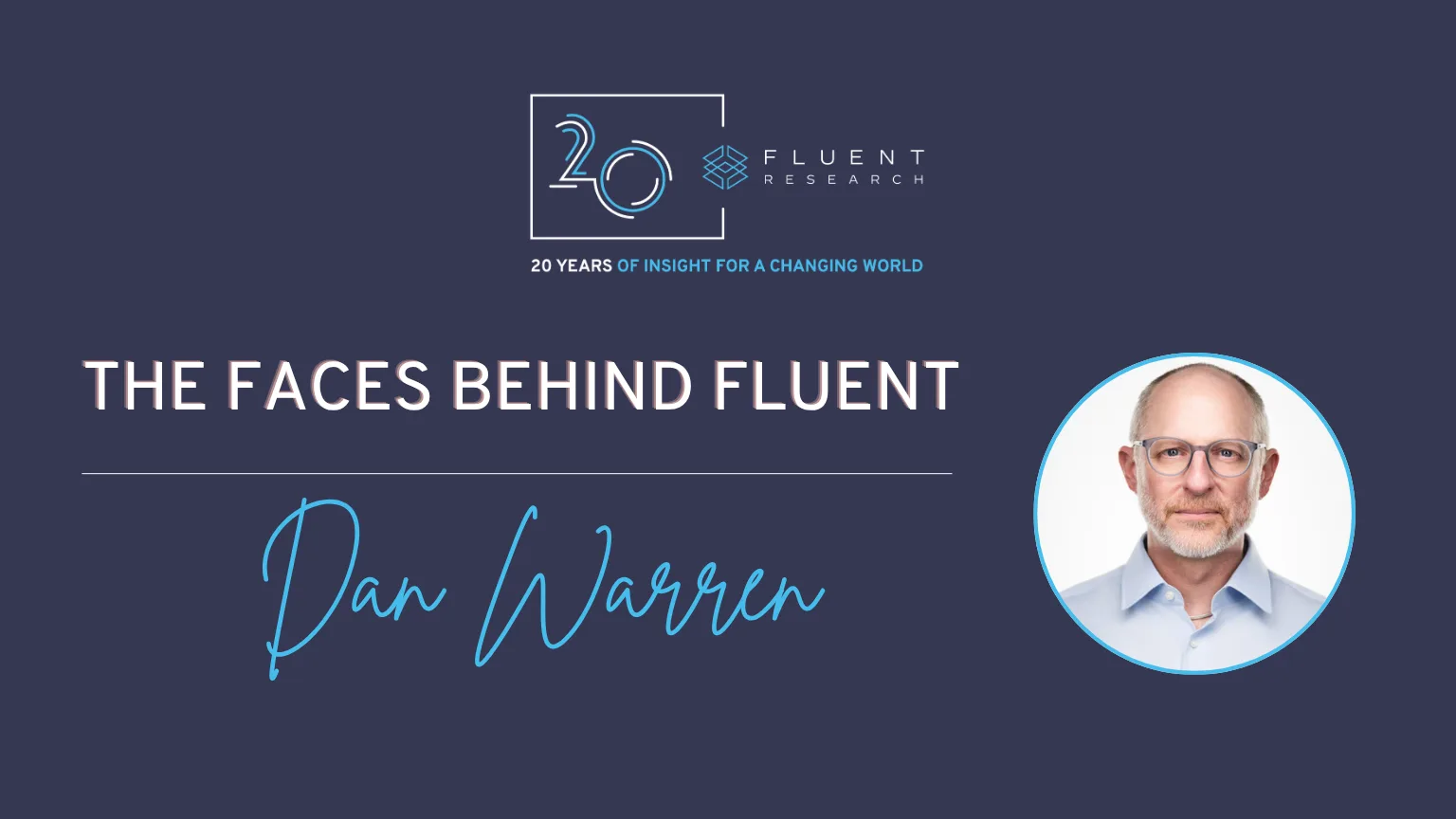
To celebrate Fluent Research’s 20th Anniversary, we’re highlighting the people who have helped shape the organization along the way. This week, we’re featuring Dan Warren, Fluent’s director of youth development & education.

Drawing on his experience as a teacher, academic researcher, and youth development practitioner, Dan leads research that helps organizations better understand children and the environments in which they learn and grow. His work spans qualitative research, data analysis, and client strategy, with a focus on turning insights into more meaningful products, programs, and experiences for young people.

Read below to learn what first drew Dan to Fluent, how his background in education shapes his approach to research, and his experience as a member of the U.S. National Luge team.

1) What inspired you to join Fluent Research?

I first encountered Fluent while working for the Boy Scouts of America (BSA). We were exploring a research study on how scouting had affected the lives of its alumni. A friend who had worked with Fluent through the Girl Scouts recommended the company.

When I met Nellie and William, I was immediately impressed by how thoughtful, engaging, and creative they were in approaching research. Although the study ultimately did not move forward because we were unable to secure funding, I kept Fluent in mind as a company I hoped to work with someday. After the BSA bankruptcy, I reached out to Nellie while looking for my next opportunity, and I joined Fluent shortly afterward.

2) What’s your role at Fluent, and what does a typical day look like for you?

I am the director of youth development and education. There really isn’t a typical day, which is one of the things I enjoy about the role.

On any given day, I might moderate interviews, focus groups, or co-creation sessions; analyze data; write reports; or meet with clients. I’m generally working across several projects at once, so much of my day involves moving between different clients, research questions, and stages of the research process.

3) What’s been your most memorable project or moment at Fluent?

Because much of our work is proprietary, many of the projects that stand out most are difficult to discuss publicly. However, one major highlight has been collaborating with the Google EDU team. It has been incredibly rewarding to contribute to work designed to make the lives of students and teachers more productive, thoughtful, and personalized, especially after being a teacher for so many years.

Another memorable experience has been Research Camp, a concept I developed that combines day camp programming with research. Given my background in the camping world, it has been especially exciting to see children engaged outdoors while clients have the opportunity to observe and interact with them in a natural, energetic, and enjoyable environment.

4) How has Fluent evolved since you joined?

There were only five of us when I joined Fluent. At that time, most of the company was often working together on the same project or a small group of projects.

Since then, Fluent has grown exponentially into a much larger and more diverse team of researchers and support staff. We now work in more specialized teams and manage a much broader portfolio of clients and projects.

5) What’s one thing you’ve learned about research that surprised you?

Coming from an academic and program evaluation background, I was surprised by the enormous range of methodologies and approaches available in market research.

Academic research can sometimes be quite rigid and prescriptive. In market research, the approach needs to be much more responsive to the context, the audience, and what the client is ultimately trying to achieve. That flexibility can make the work more adaptive and, in many cases, more directly meaningful to the people who use it.

I have also experienced a major methodological shift personally. Historically, I worked almost exclusively in quantitative research, whereas today I work primarily in qualitative research.

6) What’s your favorite part of working at Fluent?

My favorite moments are when I see something in the world that I helped work on (which happens almost every day). It is especially rewarding to hear people talking about a feature, product, or experience that our research helped shape. Knowing that people are benefiting from the work we do makes me very happy.

7) What’s a fun fact about you that most people don’t know?

I was a member of the U.S. National Luge Team for several years. I competed on the World Cup circuit and was also an alternate for the Olympic team.

8) If you could have dinner with any public or historical figure, who would it be and why?

It is difficult for me to choose only one.

Jane Goodall would be fascinating because I would love to understand how she built relationships among very different stakeholders and made meaningful progress in such challenging circumstances. I also admire how she inspired people to reconnect with and care about the natural world.

I would also choose John Muir. I once heard that he would climb to the tops of enormous trees during severe storms so he could experience nature from that perspective. I love the curiosity and adventurousness behind that idea.

My third choice would be David Bowie. I love his music, and I have always found his creativity, curiosity, and perspective on life fascinating.

9) What’s a book, movie, or podcast you’d recommend to everyone?

The book I would recommend is A Walk in the Woods by Bill Bryson. I have read it several times, and I enjoy it more each time.

For a movie, I would recommend Wes Anderson’s The Royal Tenenbaums. I love its unusual cast of characters, its distinctive style, and the performances by some of my favorite actors.

I absolutely love the Desert Island Discs podcast. Biographical stories + music opinions…yes, please!! Any time I can listen to something for more than 30 minutes, and I am not working, this is my go-to.

10) What’s your go-to productivity hack?

My productivity hack is that I work with my wife, Amy. Fluent is not the only company where we have worked together. It’s a hack because we know each other so well that we can speak code and move very quickly through the work. Also, it helps that we work together, so she has some context for when I yell an idea about a project from the shower.

11) If you weren’t in research, what career would you have pursued?

I could imagine two very different paths. One would have been working as a physician in an emergency room setting. I think I would have enjoyed the fast pace, problem-solving, and immediate impact.

The other would have been a career in the building trades, perhaps as a general contractor, plumber, or HVAC professional. I enjoy understanding how things work and the satisfaction of solving tangible, practical problems.

12) What does Fluent’s 20th Anniversary mean to you?

It is an extremely impressive milestone. Reaching 20 years demonstrates that Fluent has consistently provided real value to its clients, maintained strong relationships, and continued to grow over time. Building and sustaining a company for that long is extraordinarily difficult, and it is something worth celebrating.

13) How do you see Fluent evolving in the next 20 years?

One opportunity I see is for Fluent to move beyond conducting research and become more involved in creating the products, programs, and resources that emerge from it. That could include tools and programming for parents or teenagers, proprietary research, educational curricula, professional development, or other practical resources that people can use directly.

I could see Fluent not only helping clients understand the world, but also building things that improve it.

14) What’s one word you’d use to describe Fluent Research? Why?

Stylish.

That has been my impression of Fluent from the very beginning. When I first met Nellie and William, they had such a distinctive voice and approach. The company felt thoughtful, creative, cool, and modern. That sense of style has always stayed with me, and it is something I have tried to emulate in my own work.

15) What’s your favorite way to unwind after a busy day?

I love watching television, especially familiar shows that I can return to again and again. How I Met Your Mother, The West Wing, and Frasier are three of my favorites. I have watched all three series from beginning to end several times.

16) If you could travel anywhere in the world, where would you go and why?

Nepal would be at the top of my list because I would love to experience the Himalayas. The days of climbing big mountains are over for me, but I would love to go to Everest and help clean up some of the trash.

17) What’s your favorite snack or drink to have while working?

I’m not much of a snacker. I usually have coffee in the morning, drink water throughout the day, and have a cup of green tea after lunch.

18) What’s a hobby or activity you’re passionate about outside of work?

Snowboarding is one of my favorite things to do. I especially love that it is something I can do with my children and that we live close enough to the mountains to make it part of our weekends throughout the winter.

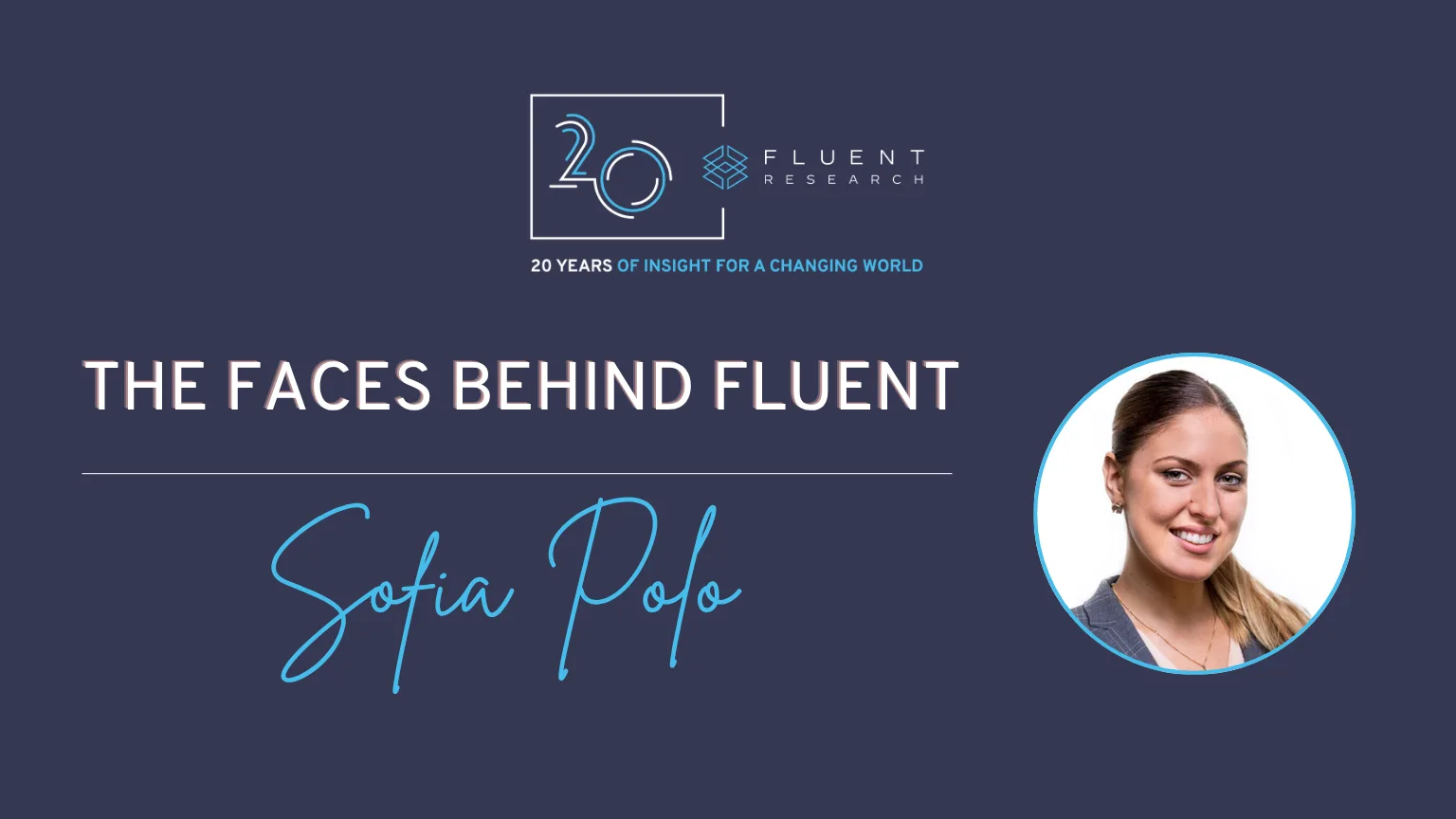
To celebrate Fluent Research’s 20th anniversary, we’re highlighting the people who have helped shape the organization along the way. This week, we’re featuring Sofia Polo, Fluent’s Director of Research Strategy.

Sofia leads qualitative research that helps organizations better understand the needs of children, youth, and families. With a background in public health and extensive experience leading global research studies, she’s passionate about turning people’s experiences into insights that inform products, programs, and services with real-world impact.

Read below to learn what first drew Sofia to research, what she enjoys most about working at Fluent, and how she sees the future of research evolving.

1) What inspired you to join Fluent Research?

I’d just finished my Master’s in Public Health and loved doing research in all my roles—undergrad, grad school, and at the Health Department. Fluent really drew me in by offering a chance to do fast-paced and varied qualitative research. I knew I could grow and learn quickly.

2) What’s your role at Fluent, and what does a typical day look like for you?

I’m the Director of Research Strategy. Every day is a mix of conducting interviews, analyzing data, writing reports, meeting with clients and colleagues, developing research materials, and helping improve how we conduct research across the company. I also enjoy mentoring teammates and thinking about ways to strengthen our research practices.

3) What’s been your most memorable project or moment at Fluent?

It’s hard to choose just one because I genuinely get excited about almost every project I work on. I especially enjoy studies focused on health, wellness, and mental health, and when I can see how research can improve products, services, and people’s lives.

4) How has Fluent evolved since you joined?

One of the biggest changes has been how much we’ve grown as a team. As the company has expanded, we’ve built a great team with diverse backgrounds and talents.

5) What’s one thing you’ve learned about research that surprised you?

I’ve been surprised by how much participants genuinely enjoy being part of research. Many people tell us they find interviews fun, meaningful, and even the highlight of their day. It’s rewarding to see how much people appreciate having the opportunity to share their experiences and contribute to something bigger.

6) What’s your favorite part of working at Fluent?

I love the flexibility that comes with working at a smaller company. Research isn’t one-size-fits-all, so having the freedom to adapt our methods, try new ideas, and creatively solve problems allows us to better serve both our clients and participants. It’s exciting to continuously evolve our approach.

7) What’s a fun fact about you that most people don’t know?

My favorite thing to do during the summer is spend the day at the beach. I try to go as much as possible.

8) If you could have dinner with any public or historical figure, who would it be and why?

I’d choose Dr. John Snow. He traced the source of a cholera outbreak and laid the foundation for modern epidemiology.

9) What’s a book, movie, or podcast you’d recommend to everyone?

My favorite movie is Triangle of Sadness because it’s funny, thought-provoking, and tackles complex social themes in a really fun, artistic way.

10) What’s your go-to productivity hack?

Time blocking helps me plan my week and prioritize tasks. I also try to keep meetings to 30 min as much as possible and keep to the agenda.

11) If you weren’t in research, what career would you have pursued?

I would probably be in public health since that is my educational background and my passion. If not public health research, likely program planning and implementation, or public health policy.

12) What does Fluent’s 20th Anniversary mean to you?

It’s amazing to see that Fluent has been around for 20 years, and it’s also incredible how quickly the time has gone by. I’m proud to have been part of the company’s journey and growth.

13) How do you see Fluent evolving in the next 20 years?

I think we’ll continue growing, with team members across the country and even more collaboration than we have today. AI will become a much bigger part of research and transform our industry in ways we can’t even imagine today.

14) What’s one word you’d use to describe Fluent Research? Why?

Passionate. Employees care about doing great work and delivering meaningful insights to our clients.

15) What’s your favorite way to unwind after a busy day?

Taking my daughter to the playground and spending time together outside.

16) If you could travel anywhere in the world, where would you go and why?

There isn’t one specific place at the top of my list. I would just love to get out of town and experience a new place and culture. I am open-minded, so any opportunity to explore somewhere new would be exciting to me.

17) What’s your favorite snack or drink to have while working?

Fruit salad because it’s sweet and fresh.

18) What’s a hobby or activity you’re passionate about outside of work?

Going on walks and spending quality time with my family.

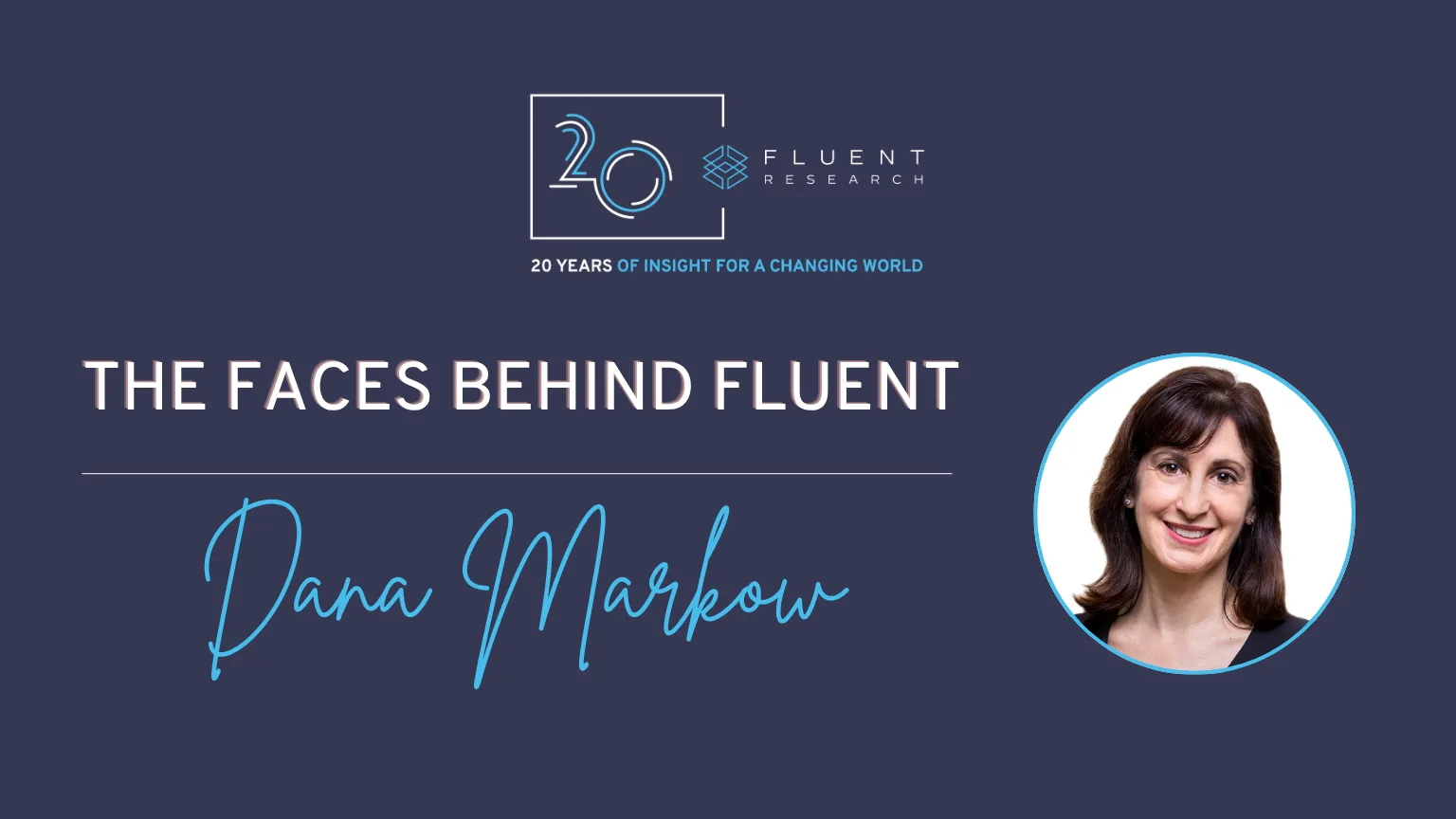
To celebrate Fluent Research’s 20th anniversary, we’re highlighting the people who have helped shape the organization along the way. This week, we’re featuring Dana Markow, PhD, Fluent’s Vice President, Research.

Dana wears many hats at Fluent, including leader of our quantitative, survey-based research and driver of business, innovation, and strategy development. Having conducted extensive research with children and teens, education products and services, and public affairs, Dana provides her clients with data-driven, human-centered strategic insights that help them address complex questions and support strategic decisions.

Read below to find out about what Dana’s typical day looks like, her favorite productivity hack, and the activities she enjoys outside the office.

1) What inspired you to join Fluent Research?

Nellie and I met around 10 years ago and I was really impressed with the work that she was doing. I was working as an independent consultant at the time and a project came my way that I thought would be a great opportunity for us to partner on. That project was a success, which led to a few more projects. So when the offer came to join Fluent on a full-time basis, I was thrilled to accept. 

2) What’s your role at Fluent, and what does a typical day look like for you?

I’m Vice President, Research and lead a team focused primarily on quantitative, survey-based research. I also have broader responsibilities for overall research strategy and innovation and business development. A typical day for me involves speaking with existing and potential clients, preparing a proposal for a new project, overseeing the various research projects managed by my team, and digging into the data to inform insights and recommendations for a client.

3) How has Fluent evolved since you joined?

It’s been a period of exciting growth. Since I’ve joined, the Fluent team has increased from fewer than five employees to more than 20 incredibly talented individuals. 

4) What’s your favorite part of working at Fluent?

I love the wide variety of topics and populations that we get to investigate. I have the opportunity to learn from my clients and colleagues, as well as deepen and expand my areas of expertise.  

5) What’s a book, movie, or podcast you’d recommend to everyone?

Bel Canto by Ann Patchett

6) What’s your go-to productivity hack?

Does taking a walk to clear my head count as a productivity hack?

7) What does Fluent’s 20th Anniversary mean to you?

It’s an opportunity to celebrate and reflect on our accomplishments and devote attention to what we want to achieve in the next 20 years. 

8) What’s your favorite way to unwind after a busy day?

Doing the puzzles on The New York Times Games app. Wordle, Sudoku, Pips, Spelling Bee, the crosswords–I’m obsessed with them all!

9) If you could travel anywhere in the world, where would you go and why?

The list is long, as I haven’t traveled nearly as much as I would have liked, but Italy is at the top. The “why” is probably obvious: history, art, the coastal landscapes, and of course, the food (pasta and gelato?!).

10) What’s your favorite snack or drink to have while working?

Almonds (raw, unsalted)

11) What’s a hobby or activity you’re passionate about outside of work?

I really enjoy cooking and baking. I love the entire process–from choosing the recipes, shopping for special ingredients, preparing the food and sharing it with others. The only part I’m less enthused about is washing the pots & pans, but that’s a small price to pay. 

To celebrate Fluent Research’s 20th anniversary, we’re highlighting the people who have helped shape the organization along the way. First up is William Sandy, Fluent’s Executive Director. With a background spanning market research, educational evaluation, and international development, William brings a global perspective to understanding human behavior and the motivations that drive it.

In this profile, he reflects on Fluent’s growth over the years, memorable projects from around the world, and the curiosity that continues to fuel his work today.

1) What inspired you to join Fluent Research?

I was working at a competing research firm, which didn’t seem to make sense once Nellie (Fluent’s founder and president) and I had gotten married.

2) What’s been your most memorable project or moment at Fluent?

The international projects: Working on impact assessment studies in the West Bank, in Nigeria, and in the DRC, or conducting focus groups in South Africa and Mexico.

3) How has Fluent evolved since you joined?

It’s grown from four people crammed into a tiny room in a shared office space, doing much research in-person and in the field, and doing a lot of work with not-for-profit organizations, to 25 people connected virtually around the country, doing research across digital platforms, and working for major companies

4) What’s your favorite part of working at Fluent?

The need to never stop learning; the opportunities to interview fascinating people; the ability to work alongside other extraordinary researchers.

5) If you could have dinner with any historical figure, who would it be and why?

Charles Darwin, David Hume, Denis Diderot, Gabriel García Márquez, Ernest Gellner, et al

6) What’s a book, movie, or podcast you’d recommend to everyone?

Don’t Lets Go to the Dogs Tonight, (a memoir by Alexandra Fuller), Not One Less (Chinese film), Hardcore History podcast.

7) What’s your go-to productivity hack?

Wish I had one.

8) If you weren’t in research, what career would you have pursued?

Something in evolutionary biology perhaps, or writing.

9) What’s your favorite way to unwind after a busy day?

Reading.

10) If you could travel anywhere in the world, where would you go and why?

The Pyrenees, The Caucasus, Botswana, Namibia, Albania, Slovenia, the Baltic countries, and many more.

11) What’s your favorite snack or drink to have while working?

Coffee and chocolate.

12) What’s a hobby or activity you’re passionate about outside of work?

I wouldn’t say passionate about them, but I do love snow skiing, water skiing, and sporting clays—though I rarely get to do them anymore.

Twenty years is a long time. Long enough to fill a lot of shelves, queue up a lot of podcasts, and dog-ear a lot of pages. As we mark Fluent Research’s 20th anniversary, we wanted to share something more personal than a milestone — the 20 books, magazines, and podcasts our team can’t stop talking about right now.

Think of this as our staff-curated summer list. Twenty recommendations. One for each year. Organized by genre, so you can find your way to whatever you’re in the mood for — a gripping thriller, a quiet literary novel, a podcast that makes a long walk fly by.

Here’s what we’re reading and listening to.

Fiction: Literary

Theo of Golden by Allen Levi

This one stayed with me long after the last page. As I read, I kept thinking about two things: how others see us isn’t always how we see ourselves, shown through the recipients of Theo’s paintings — and how a person’s greatest legacy may be the quiet, lasting impact they leave on the hearts around them. I didn’t want it to end. The characters felt like part of my life while I was reading. Recommended by Allison Caplovitz

The Vanishing Half by Brit Bennett

I started this after seeing it everywhere — best-of lists, bestseller charts, bookstore windows. It’s a family saga, a sub-genre I’m drawn to, centered on twin sisters from a fictional Louisiana town known for its light-skinned Black community. Themes of racial identity sit at the forefront, so I’m settling in for a serious read with a lot to think through. And I can already feel the two sisters drifting toward very different lives. Recommended by Farrah Brensinger

Fiction: Historical

Katherine by Anya Seton

A fictionalized account of Katherine Swynford and John of Gaunt, set in 14th-century England. Katherine isn’t widely known today, yet the modern English monarchy descends from her, and she’s an ancestral grandmother to four U.S. presidents. So little of her life is documented that the author researched what she could and filled in the gaps — though many of the major events really happened. I love learning about these figures and doing my own digging as I read. Recommended by Paige Frankovich

Martyr! by Kaveh Akbar

This novel follows Cyrus Shams, a young, newly sober poet and the son of Iranian immigrants. His mother died in a plane crash when he was very young, and the story moves between Cyrus’s present and his parents’ pasts. Obsessed with martyrs, art, and family history, he travels to Brooklyn to meet a dying artist. Because both author and protagonist are poets, many chapters open with a poem. I love that variation — the poems let you reflect on the story from a new angle. Recommended by Lia Abrams

We Don’t Talk about Carol by Kristen L. Berry

Sydney Singleton, a former investigative journalist, discovers she had an aunt — one of six Black teenage girls who vanished in Raleigh, NC, in the 1960s. The cases were never solved, mostly forgotten, until Sydney begins a deep dive. The author blends historical fiction, mystery, and journalism, three of my favorite genres. She also brings to light the ongoing crisis of missing Black girls, and the systemic disparities in how their cases are treated, underreported, and unsolved. Recommended by Stefanie Cousins

Fiction: Mystery/Thriller

Verity by Colleen Hoover

I’m only a few chapters into this one (reading for a book club with friends) and I’m already completely gripped. The movie is coming out later this year, so we wanted to read it before seeing the film. Recommended by Mona El-Hout

A Lesson in Secrets: A Maisie Dobbs Novel by Jacqueline Winspear

I’ve been working my way through the Maisie Dobbs historical mystery series. I love the protagonist — her approach, her process, the careful way she solves a mystery. Recommended by Sylvia Rusnak

Fiction: Science Fiction/Fantasy

Project Hail Mary by Andy Weir

I just started this one. I’ve heard wonderful things about both the book and the upcoming movie, and I can’t wait to keep reading. Recommended by Kelly Sheehan

Non-Fiction: History/Biography

Banana Ball: The Unbelievably True Story of the Savannah Bananas by Jesse Cole & Don Yaeger

Anyone who’s seen the Savannah Bananas play knows they are pure fun. As I listen to this audiobook, I’m enjoying how the Bananas think creatively — keeping the true essence of baseball while making it more exciting, engaging, and entertaining. Their bold ideas and willingness to take risks have led to remarkable success, and it’s a joy to be along for the ride. Recommended by Mary Meyn

The Intelligence Explosion: When AI Beats Humans at Everything by James Barrat

I’m learning more about Artificial General Intelligence and superintelligence here than I ever did in a formal AI course. Barrat warns about the existential risks of advanced AI, making a compelling case that a recursive self-improvement loop could spiral into something uncontrollable. Despite some technical moments, it’s a genuine page-turner — fascinating, and occasionally a bit ominous. Recommended by Nellie Gregorian

Unplugged: Adventures from MTV to Timbuktu by Tom Freston

Written by MTV’s co-founder, this memoir chronicles a wild, wonderfully unconventional life — hitchhiking across the globe, selling clothing in India and Afghanistan, then helping launch one of the most iconic cable networks of all time. What a life. It also brought back great memories of my early research career, working on projects for MTV, Nickelodeon, and other Viacom networks. Recommended by Nellie Gregorian

I Regret Almost Everything: A Memoir by Keith McNally

“The Restaurateur Who Invented Downtown.” A candid, bestselling look at his legendary New York restaurants — Balthazar, Pastis, The Odeon — his health struggles, and his late-career reinvention as a viral Instagram personality. I probably spent a small fortune at McNally’s tables over the years. Zero regrets. Recommended by Nellie Gregorian

Non-Fiction: Self-Help/Wellness

The Art of Gathering: How We Meet and Why It Matters by Priya Parker

I love hosting friends and family, and I’ve been on the library waitlist for this one for a month. The author writes about how to bring real intention and purpose to the way we gather. I can’t wait to dive in. Recommended by Aeliya Ahmed

The Natural Superwoman by Uzi Reiss, M.D. and Yfat Reiss Gendell

This is an accessible, science-backed guide to an often overlooked part of women’s health: the role of hormones in wellness and longevity. Women’s health — particularly in midlife and beyond — has long been understudied and underrepresented in research and clinical practice. I was drawn to it as a woman and as a researcher-practitioner focused on supporting women’s positive development across the lifecycle. Recommended by Amy Warren

Article/Periodical

The New Yorker — Multiple authors

I look forward to The New Yorker every week. There’s always a new topic to learn about and a short story to satisfy a fiction craving. And I can always count on the cartoons to put a smile on my face. Recommended by Dana Markow

Traces of Consciousness — Donald Hoffman, Chetan Prakash, and Manish Chattopadhyay

This paper presents a mathematical framework describing how an observer (a conscious agent) can perceive a larger, more complex system by focusing on only a limited subset of its states, effectively acting as an informational “window.”

It’s the latest development in Donald Hoffman’s groundbreaking work advancing the “case against reality”—the idea that the physical world is not fundamental, but rather a mental construct. At first glance it’s mind-blowingly far-out stuff, but its ambition is matched by its rigor and, in my admittedly limited understanding, the argument is remarkably convincing.

I give thanks every day for tools like NotebookLM, which help me make sense of dense material like this at my own pace. Recommended by Heath Cozens

Podcasts

Desert Island Discs — BBC

I love how the music choices create an anchor for a biographical conversation. There’s something revealing in what people choose to bring with them. And I’m always curious whether the people I admire would pick the same songs I would. Recommended by Dan Warren

Hardcore History: Blueprint for Armageddon — Dan Carlin

A deep, immersive dive into history that rewards your full attention. Dan Carlin has a way of making the past feel urgent and alive. Recommended by Sofia Polo

Blowback — Noah Kulwin & Brendan James

This podcast breaks down US interventionism — specific events, campaigns, battles, and their legacy. As the name suggests, there’s some anti-war perspective woven throughout. It’s a thoughtful way to understand how the past still shapes the present. Recommended by Sofia Polo

Prestige TV Podcast: “Widows Bay” Deep Dive — The Ringer

A recap series following Widows Bay, the new Apple TV drama. Perfect for anyone who wants to keep talking about a show long after the episode ends. Recommended by Sofia Polo

Fashion Neurosis with Bella Freud — Bella Freud

Bella Freud interviews artists, musicians, and designers about their relationship to clothes, fashion, and art across their lives. I love hearing everyone’s different experiences — to me, nothing is more central to self-understanding and identity than how we choose to present ourselves. My favorite episodes are her conversations with Jonathan Anderson, Rosalía, FKA Twigs, and Lorde. Recommended by Charlotte Beatty

A list built by people, for people

What strikes me about this list isn’t its range, though the range is wide. It’s how much of each person shows up in their pick. A historical mystery solved by a beloved protagonist. A podcast that turns music into memory. A memoir that brings back an entire era of someone’s career.

That’s the work we do, really. We pay attention to what people choose, and why it matters to them.

So here’s our invitation as we celebrate twenty years: pick one. Start it this week. And if it stays with you — if it becomes the book you didn’t want to end, or the podcast you recommend to everyone you know — come tell us about it.

What would make your list?

By Stefanie Cousins, Vice President, Marketing and Communications

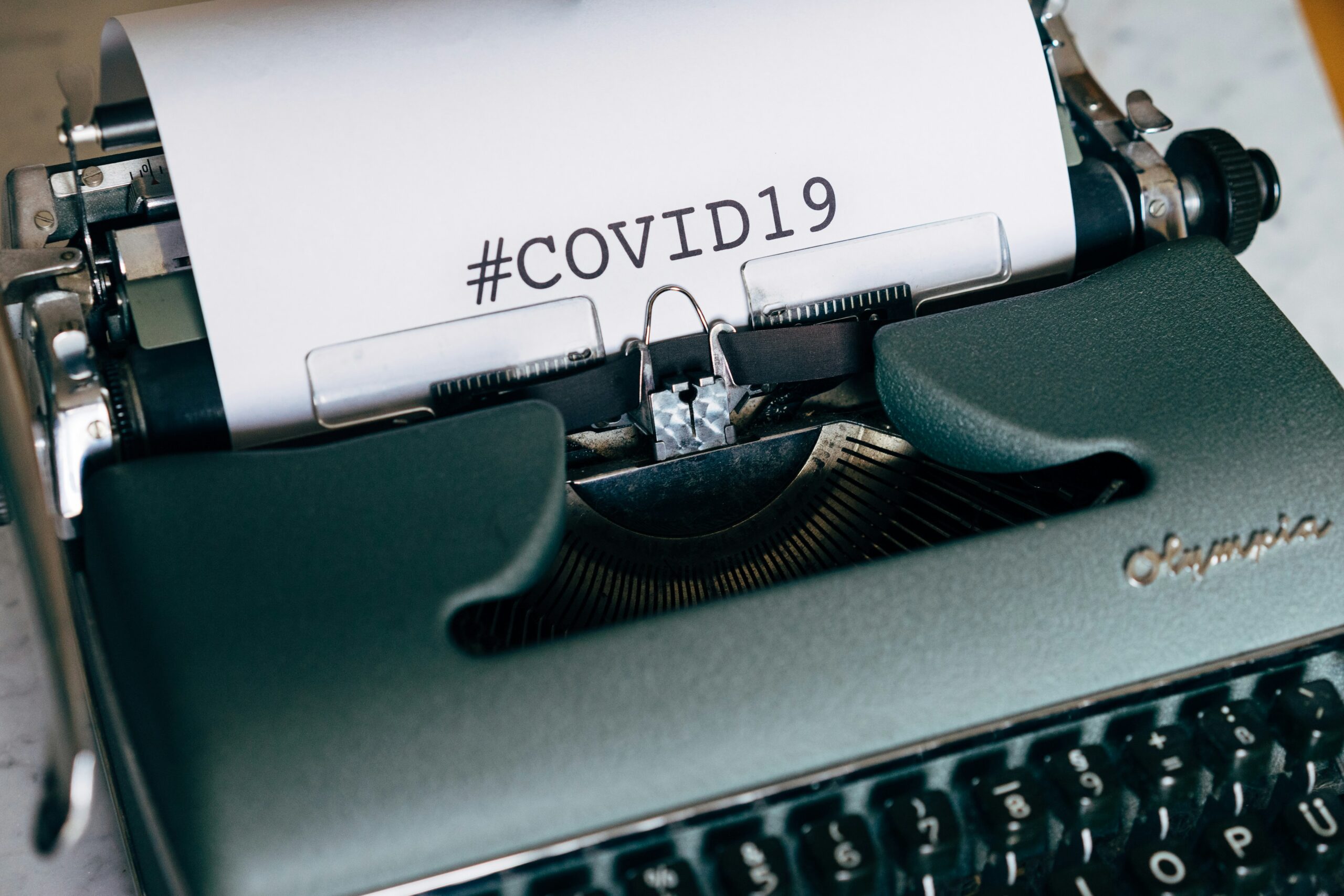
As we mark five years since the start of the COVID-19 pandemic, its impact continues to shape our lives in profound ways. From deepening our appreciation for healthcare workers to redefining how we connect with loved ones, the pandemic left a lasting imprint on both our personal and professional worlds. We asked our team to reflect on how their perspectives, routines, and priorities have evolved. Here’s what they had to say.

Farrah Brensinger, Senior User Experience Researcher

The COVID-19 pandemic profoundly deepened my appreciation for healthcare workers, scientists, and epidemiologists. Hearing firsthand accounts, like my nurse friend describing the emergency room as a “war zone” in the early days, was truly staggering. One of my hopes coming out of the devastation of the pandemic is that more people are inspired to enter healthcare and medicine. However, these fields do require strong and resilient personalities, as it is such demanding work, and lots of familial, community, and financial support. We must as a nation find new ways to encourage and advocate for a strong, sustainable healthcare system that empowers the many people who keep it afloat.  

Allison Caplovitz, Director, Content Research and Evaluation

COVID changed the way I work and how I think about connection. I love that I can work from anywhere, but I’ve come to appreciate in-person interactions even more—there’s just no substitute for being in the same room with people. Watching my kids go through online school also gave me a window into what actually happens in the classroom. It made me realize how much learning isn’t just about sitting still and listening—it’s about doing, exploring, and engaging in ways that go beyond a screen or a lecture. More than anything, the past few years have reinforced how important it is to prioritize mental health, both for myself and for those around me.

Mona El-Hout, Quantitative Researcher

The pandemic had a huge impact on me in many different ways. Not only did I meet my now-husband during the lockdown, but learning to transition to fully remote work has been a quiet blessing in balancing my personal and professional lives. I also realized how unbelievably connected we are to the entire world thanks to the digital age we live in, and I now do a much better job staying in touch with friends and family in unique and entertaining ways. For example, my friends and I like to plan virtual arts & crafts dates to catch up with each other while also enjoying shared hobbies in our spare time!  

Mary Meyn, Research Director & Chief of Staff

The pandemic encouraged me to enjoy the outdoors all year round and start solo hiking. The winter weekends of the early pandemic felt so long and claustrophobic. Unable to see family and friends or go anywhere, I felt like every day was the same—like Groundhog Day . I needed to get out! I’ve always enjoyed hiking, but my kids were too young to hike very far, especially in the winter. I decided to make the leap and go out hiking on my own, even in the winter months. I spent time preparing, making sure to have maps, the right gear, and strategies to stay safe. I am now a confident solo hiker in all seasons. It is an amazing feeling to stride up an icy rock scramble with microspikes on my boots to see the view from the top!

Sofia Polo, Director of Research Strategy

The pandemic reshaped my perspective on connection and the importance of family. I now prioritize quality time, making family gatherings special, and staying consistently in touch with extended family members. Professionally, it accelerated my comfort with remote work and flexible schedules, demonstrating that productivity isn’t tied to a physical office. It’s left me with a stronger sense of resilience and a deeper appreciation for adaptability.

Kelly Sheehan, Senior User Experience Researcher

The pandemic made me a full-time remote worker, which I have been for several companies (including Fluent) since the start of the pandemic. Being a full-time remote worker allowed me to move closer to my family, spend more time with my spouse (who is also a remote worker), and be more productive at work AND at home. I love it! The pandemic also made me realize how quickly life can get turned upside down. I try hard to appreciate the small joys in every day!

At Fluent Research, we believe that a good book has the power to inspire, educate, and transform. In honor of National Book Lovers Day, we asked our team to share what they’re reading right now and their thoughts on the content. From thoughtful novels to powerful nonfiction, their diverse tastes reflect a passion for life, learning, and laughter.

Aeliya Ahmed – Project Manager

  • Tuesdays with Morrie by Mitch Albom
  • A friend of mine recently recommended this book to me and I’m enjoying it so far. It’s a book that’s written by a former student who goes on weekly visits to his old college professor, Morrie who’s dying from ALS. In their weekly talks, Morrie imparts gems of his end-of-life wisdom. I’m still making my way through all the lessons this book chronicles, but it has been a great reminder of what is truly important.


Charlotte Beatty – User Experience Researcher

  • Orlando by Virginia Woolf
  • Orlando is my favorite book I’ve read so far this year. As a big Virginia Woolf fan, I find Orlando to be the most playful, hopeful, and self-expressive novel in her body of work. The book exists as both a work of fiction and a surrealist autobiography of Woolf’s own life, identity, and relationships. The gender-bending, poetry-obsessed, effortlessly endearing Orlando lives for hundreds of years through different time periods, switching genders and lives overnight, and experiencing different political moments and social catalysts from different stratifications. The book is a snapshot of Woolf’s meditations on gender, politics, and power in conversation with the time period she was alive in, but her thoughts still feel relevant to the world we find ourselves in today, nearly a century later. The 1993 movie adaptation starring Tilda Swinton is equally moving and delightful.


Evelin Garcia – User Experience Researcher

  • Magic in Room 216: How One Teacher Came of Age and Inspired the Next Generation by Andee Nunn
  • The author of this book, Andee Nunn, was my English teacher in high school. At the time, I was having a very difficult time and living with so much uncertainty about the future. Mrs. Nunn was extremely supportive and did everything she could to help me go to college. To this day, she has been one of the most supportive teachers I’ve ever had and I am still in touch with her to this day. In this book, she talks about her experiences navigating education and recalls stories of the students who have made a lasting impression on her throughout her career. I highly recommend this book!


Mary Meyn – Research Director and Chief of Staff

  • Real Americans by Rachel Khong
  • I recently finished reading Real Americans, by Rachel Khong. A few years ago I read Khong’s 2017 novel called Goodbye, Vitamin and loved it. It was original, poignant, and beautifully written. So when I saw that Khong had a new novel coming out I knew I had to read it. Real Americans is a story of cross-generational family identity, as told from two perspectives. The two perspectives were radically different yet equally compelling and believable. I really enjoyed this novel and would recommend it to those who enjoy fiction!


Kelly Sheehan – Senior User Experience Researcher

  • Funny Story by Emily Henry
  • Funny Story is a fictional story about a children’s librarian whose fiancé dumps her for his childhood best friend. She finds companionship in her fiancé’s new partner’s ex and soon begins to fall for him. Emily Henry only has a handful of books, and I was so excited about the release of this new one. She has a way of creating vivid and compelling characters whose storylines feel both understandable and novel. Her books feel like a complete escape from reality, and I love being pulled into her stories!


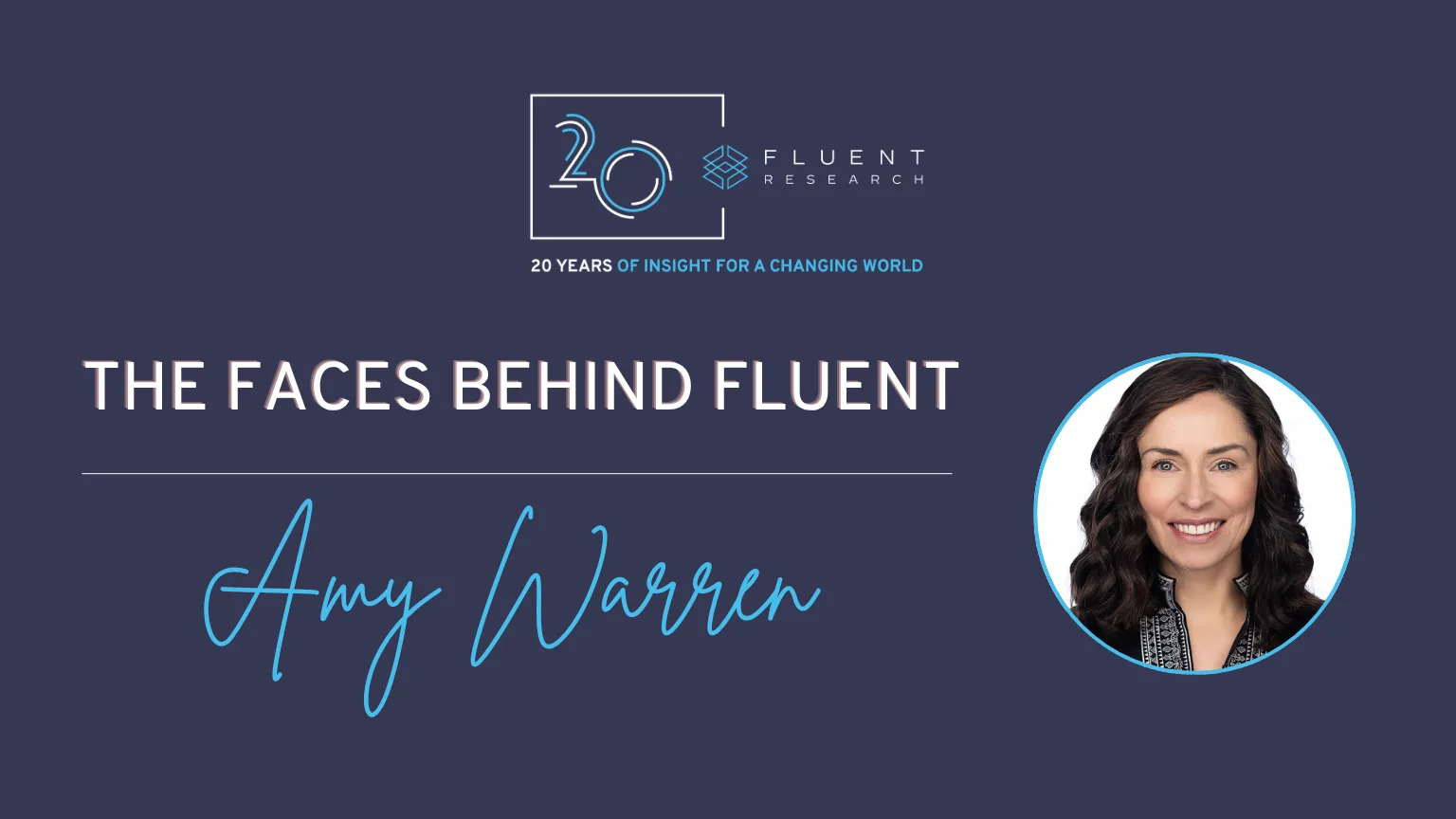
Amy Warren – Senior Child Development Researcher 

  • Braiding Sweetgrass by Robin Wall Kimmerer
  • I was drawn to this book for its blending of Indigenous knowledge and Western science. As a botanist and a member of the Citizen Potawatomi Nation, Kimmerer offers a unique perspective on our relationship with the Earth. She shares the wisdom and teachings of her ancestors, emphasizing the importance of reciprocity and gratitude towards the natural world. She delves into the intricate details of plant life, revealing the complex systems and relationships that sustain ecosystems. I love how she weaves together these two ways of knowing. I think it’s this sort of “mending of splits” — between Wisdom and Science, Humans and Nature — that is most needed now.


Dan Warren – Director of Youth Development & Education

With its capacity to bring us knowledge, laughter, and new perspectives, social media can enrich our lives in countless ways. In this blog, our team shares their favorite accounts to follow. From thrilling outdoor adventures to insights into parenting with empathy, these accounts offer endless fun and inspiration. We hope you enjoy them as much as we do!


Lia Abrams: User Experience Researcher – Beli

Beli is an up-and-coming social media platform that allows you to search for restaurants in your area, save them to your wishlist, and rate them once you have dined there. You can see where your friends want to go and where they have been as well as what they ordered at each restaurant, how they rated it, and even pictures of their food. It’s the best way to find a great restaurant that’s been vetted by people you trust!


Aeliya Ahmed: Projet Manager – Ben Kielenski 

Ben makes TikTok videos that always open with “do you want to come on an adventure with?” He solo travels and does the coolest outdoor activities you could imagine – all the hiking, biking, kayaking, swimming, diving, running in the world! I love watching him because his videos remind me of how much there is to see – and he inspired me to go on my three-month solo trip earlier this year!


Farrah Brensinger: Senior User Experience Researcher – The Pancake Princess 

The Pancake Princess (Erika Kwee) hosts “data-driven bake-offs,” where she tests trending Internet recipes and lets her squad of taste testers give their verdicts. Whether you’re on the hunt for a new carrot cake recipe, or if you simply MUST know how Smitten Kitchen’s lemon bar recipe stacks up against Tartine’s, the Pancake Princess is your go-to guru!


Mary Meyn: Chief of Staff and Director, Research – Born a Backpacker

One of my favorite accounts to follow is Born a Backpacker, the Instagram account of a family who share their travels around the United States and the world with their three young children. I love following their journey as a family doing everything from everyday things such as taking their kids to soccer practice to living on a boat for a week in Thailand. Nia, the woman who runs the account, is very down to earth and seemingly shows her family’s “real life.” It is the best of social media: an account that is inspiring, shares practical tips, and makes me feel connected to other people with similar interests.


Kelly Sheehan: Senior User Experience Researcher  – NurturedFirst

As a parent of a young child, I find NuturedFirst a super helpful account for tackling everyday challenges (like how to respond to tantrums) and more serious challenges (like body safety). The account owner (Jess) uses real world examples to demonstrate how to meet your child with deep empathy rather than focusing on the inconvenient behavior itself. I love this account because I feel like I walk away with more knowledge, more empathy, and greater appreciation for my child.


Amy Warren: Senior Child Development Researcher –  Darcia Narvaez

Darcia Narvaez is a central force within the paradigm shift BACK to humans’ original and “normal” cooperative orientation that begins within the human family. Simply, she is the Jane Goodall of humans, reminding us of our (human) needs, inner wisdom, and wellness-informed pathways to flourishing. Check out her educational outreach project, The Evolved Nest, to learn more! And be sure to explore #EvolvedNest #JaneGoodall #humanflourishing too!


Meet Aeliya Ahmed Fluent’s new project manager! With over six years of experience in the non-profit, education, and healthcare sectors, Aeliya excels at streamlining processes and promoting informed decision-making. A graduate of the University of Pittsburgh, her journey includes supporting families at a crisis nursery and even teaching in NYC Public Schools through Americorps! We sat down with her to learn more about her background, approach to project management, and what excites her about her new role at Fluent.

1. Tell us a little about your background. What did you want to be when you were younger and what motivated you to pursue a career in project management?

When I was younger, I wanted to be an artist. I didn’t know what project management was until after I graduated college, and once I realized how detail-oriented the role could be, I decided it was the right fit! The perfectionism and attention to nitty-gritty details that project management involves feels like a close enough fit to an artist.

2. How do your experiences in the non-profit, education, and healthcare industries inform your approach to project management? 

Having worked with so many different people across different industries has certainly made me a better project manager. I’ve worked with energetic five-year-olds in classrooms, stressed attending surgeons in the ER, worried parents at community centers, and busy tech clients with crunched timelines. All of these experiences have made me comfortable working with and talking to anyone. Project management involves a lot of cross-functional collaboration, so that’s a skill I’ve been able to develop having worked in these different roles.

3. With your diverse background, what advice do you have for individuals looking to pursue a career in project management, especially those interested in working with children or in research?  

The best advice I have is to try as many different paths as you can. Working in the education, healthcare, and non-profit spaces has helped me realize what I didn’t enjoy working on — which is just as important as realizing what you do enjoy. If you have varying interests, I would say to test as many of them out as you can, and you’ll rack up immeasurable experiences along the way. Project management involves a lot of organizing and streamlining processes — having varied experiences can help you approach finding ways to improve those processes with a new lens!

4. What’s your go-to hobby or activity outside of work that brings you joy?

I’m a serial hobby collector. This year, I’m getting back into figure skating. Last year’s focus was on learning how to surf, and next year’s goal is to learn kung fu!

5. What are you most excited about in your new role at Fluent Research?

I am super grateful to be working with such an awesome team. I’ve gotten to learn so much from my teammates in a short amount of time. I’m looking forward to streamlining some more of our processes, and ensuring that every project is a smooth operation.

Connect with Aeliya on LinkedIn!

We’re thrilled to introduce Kelly Sheehan, our new Senior User Experience Researcher! With over a decade of experience in technology, including roles at Meta and Age of Learning, we’re excited to welcome Kelly and her expertise in qualitative and quantitative methodologies to our team. We caught up with Kelly to learn all about her career journey, her passion for user experience research, and what brings her joy outside of work!

1. Tell us a bit about your career journey. What inspired you to become a user experience (UX) researcher, and how did you navigate your path to Fluent?

I knew I was a researcher ever since my first research methods class in college. I loved the idea that research could help answer any question, and bring us closer to understanding why people do and think the way they do. I went right to grad school to get my PhD with the intention of becoming a professor but realized the long years from research to publishing and academic bureaucracy were not for me.

I discovered UX research after doing an informational call with a former member of my graduate school lab who landed a UX research job. I loved that UX experience research was fast, and rigorous, and that you could see the impact of your research on people’s everyday lives. I landed my first UX researcher job at Age of Learning, an ed-tech company that creates educational products for kids, students, and families. I spent four years at Age of Learning leading UX research on their flagship app, ABCMouse, before leaving to work for Instagram.

At Instagram, I worked on the Integrity team, with the goal of making Instagram safer for teens. I led foundational research on users’ experiences with negative comments, as well as testing design changes to make hashtag pages safer for teens. After a year and a half at Meta, I worked briefly at a small market research firm called Brilliant Experience before joining Fluent.

I found my way to Fluent after a former manager of mine, who is now a client of Fluent, saw that they were hiring a Senior UX Researcher and connected me to a few people at the company. I was incredibly impressed not only by the organization’s portfolio of work but also by how genuinely kind and smart everyone was that I met with. I was also excited to work on a variety of projects and have the opportunity to hone some new research skills. I feel very lucky to be part of the Fluent team!

2. What’s a unique challenge you’ve faced in your career as a user experience researcher, and how did you overcome it?

I, unfortunately, experienced two rounds of layoffs as a UX researcher in the span of a year, during a time when the competition for a UX research role was fierce. It was challenging to position myself as unique in a large pool of highly qualified candidates.

I kept myself focused and motivated by doing lots of networking calls, which helped me get my name out there and also feel connected to the UX research community. In a way, I felt like I was conducting my own UX research with the goal of learning about research at other companies, and understanding how other researchers landed their current jobs. While it was challenging being on the job market, I learned a lot about what I want in a career and who I am as a researcher, and I’m ultimately thankful for the space and insight it provided me.

3. With over 10 years of research experience, what advice do you have for those looking to pursue a career in the field?

There are two key parts of being a UX researcher that are important for being successful. First, there’s the research part, which includes selecting appropriate methodologies, being a good moderator, managing research projects and timelines, and delivering insights that are impactful. I would encourage those new to the field to try to get as much diverse research experience and training as they can so that they can understand how to make the best strategic research decisions for a variety of situations.

The second part is the relationship part. Whether you are an in-house researcher or a market researcher working with clients, building strong relationships with your stakeholders is essential to being a great researcher because it ensures that your research is impactful. For example, I once had to deliver research insights that I knew would not be received positively by my team because the findings suggested that we should not move forward with a product idea we were pursuing. I had a great relationship with the product manager on my team, so I leaned on him to help me strategize how to present the results in a way that offered a more viable and exciting solution. The team ended up accepting my recommendations and shifting product directions, which led to the whole product team being successful because of my research.

What makes UX research valuable is not only that it is rigorous and designed appropriately, but also that someone takes the research and does something with it to improve a product or experience. If you’re new to the field, make sure you’re investing not only in your research expertise but in your collaboration and relationship-building skills.

4. What’s your go-to hobby or activity outside of work that brings you joy?

Relationships are extremely important to me, so I try to spend my free time planning activities and spending time with my family or friends. About a year ago, I started a “club” for my group of friends that meets every month where we take turns hosting get-togethers at our houses. I’ve been friends with the same group of friends since middle school, and having a recurring event on the calendar for us to get together brings me so much joy and means there’s always something to look forward to.

When I’m not sipping wine and eating cheese with my life-long friends, you can typically find me spending time with my husband, Frank, and my 2-year-old daughter, Madison. Maddie is absolutely wild and has boundless amounts of energy, and I love watching her climbing and jumping at gymnastics, digging in the dirt, and talking to literally anyone that she sees. Every moment with her is pure joy.

5. What are you most excited about in your new role at Fluent Research?

I am most excited to work on projects with an amazing group of smart and driven researchers. What drew me to Fluent was the people, who are not only incredibly bright and interesting, but driven, empathetic, and kind. Even when work is busy, people are always asking how they can help move a project forward. I’m looking forward to working with such great people, and I know I will be learning a lot from them.

Connect with Kelly on LinkedIn!