
16 Apr Beyond the Focus Group: The Origins of Research Camp
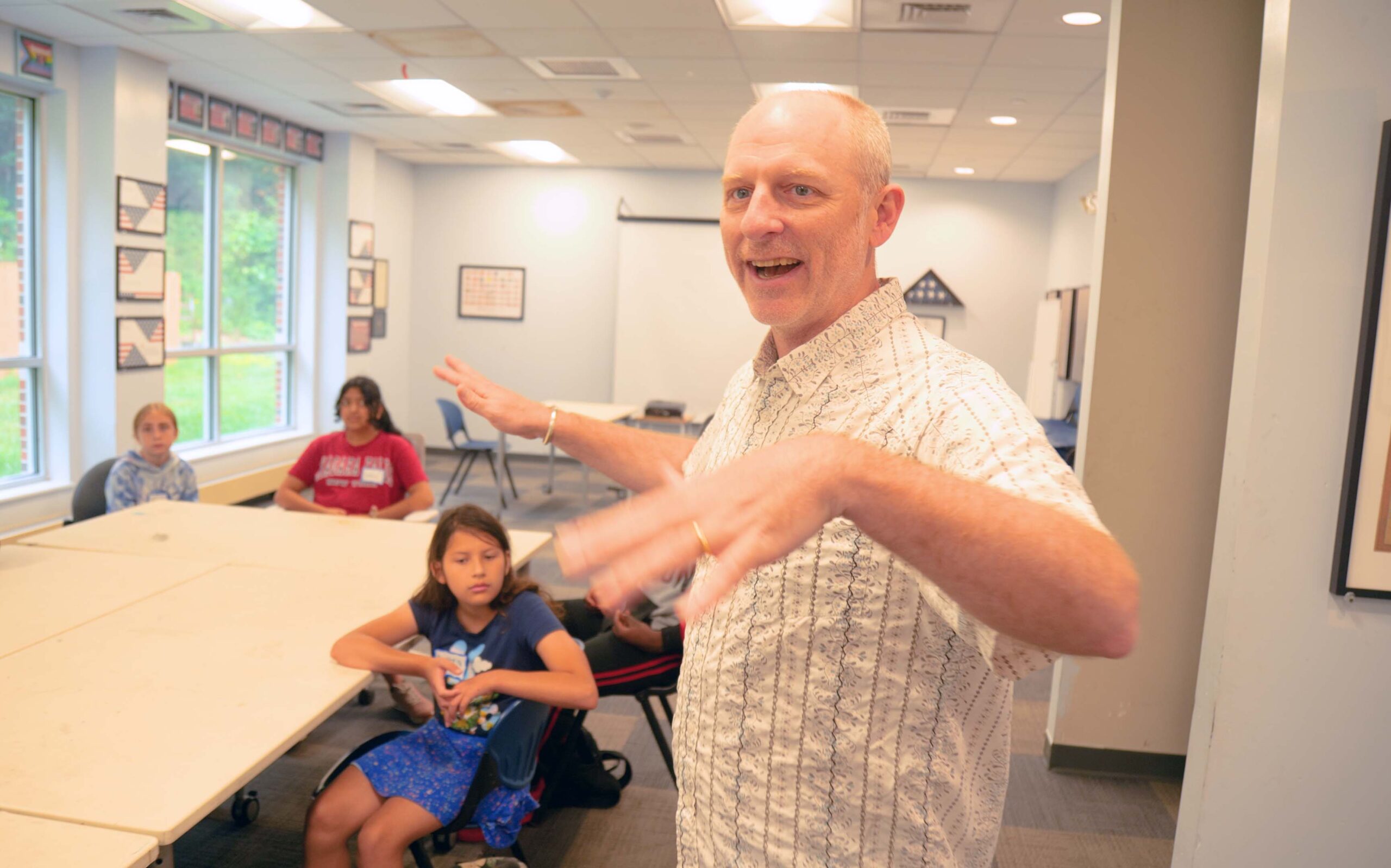
What happens when you combine summer camp energy with cutting-edge research? You get Research Camp —a fresh, participatory approach that brings kids into the heart of the research process. We sat down for a quick Q&A with Dan Warren, Fluent’s Director of Youth Development & Education, to explore how this idea came to life, what participatory research really means, and why kids aren’t just participants—they’re co-creators.
FR: Let’s start at the beginning—what sparked the idea for Research Camp?
DW: It started with a pretty practical challenge. We were working with a client who needed to test a curriculum—something hands-on, engineering-related—and we needed a group of kids who could commit to doing something every day for 10 days. The most reliable way I could think to make that happen was to partner with a day camp.
I reached out to a local camp in Boston and asked if we could sponsor a group of kids to attend. In exchange, we’d get an hour of their time each day to run our sessions.
What we realized was that the cost of recruiting those kids and paying incentives wasn’t that different from just sending them to camp for two weeks. And this way, they got a full camp experience—and we got consistent attendance, energy, and engagement. It turned out to be such a win-win that it sparked the idea of building a whole model around that experience.
FR: How would you describe Research Camp to someone who’s never heard of participatory research?
DW: Participatory research is all about bringing the people you’re studying into the process. Instead of asking questions from a distance, you’re inviting them to help shape the questions, explore the answers, and understand the meaning behind the insights.
Research Camp is a way to bring that approach to life with kids. Over multiple days, you build real rapport. They get comfortable, they open up, and they start to think more critically and creatively. They challenge ideas, build on each other’s thoughts, and begin to see themselves as co-creators in the process—not just subjects. That’s where the magic happens.
FR: Why is it so important to involve kids directly in the research process?
DW: Too often, their voices are filtered or left out entirely. In market research, we’ve traditionally asked parents what their kids think or only engaged kids when we’re testing products. But when it comes to big topics—education, health, policy—we haven’t given youth a real seat at the table.
What I’ve seen is that when kids are involved meaningfully, when their actual words and experiences are represented, it changes the research. It makes it richer, more grounded. And when they’re part of presenting that research too, it shifts how people listen. Their voices deserve to be central—not peripheral.
FR: What kinds of activities do you use during a Research Camp session?
DW: We use a wide range of methods—co-creation sessions, focus groups, one-on-one interviews, kid-led interviews, and roundtables. Sometimes it’s a traditional focus group—but in the woods. That changes the whole vibe.
Because the kids are on-site for longer periods, we can go deeper. We can follow up on something someone said in a group and pull them aside for a one-on-one the next day. We’ve had kids interview other kids as ‘camp reporters.’ We build sessions that match the environment—collaborative, exploratory, and fun.
FR: What are clients able to see at Research Camp that they might miss in a traditional research setting?
DW: First, there’s flexibility. You’re not locked into a strict schedule or format. If something interesting comes up, we can pivot. We can go back to a kid or reconfigure a group. That’s rare in research.
Second—and maybe more importantly—it immerses clients in the world of kids. A lot of our clients design for youth, but they haven’t spent much time with them outside their own families. At camp, they see how kids talk, how they move, how different ages interact. That exposure changes how they think about their work. They leave with a better feel for the people they’re designing for.
FR: Have there been any surprises or challenges in running Research Camp?
DW: A few surprises, for sure. One was how excited the kids were to come back. Many had never been to day camp before, so this was a big opportunity. They didn’t just enjoy it—they felt proud to be part of something important.
Another surprise: I wrote an article about Research Camp, and someone in Pakistan saw it and decided to create their own version there. She reached out to tell me how being outside in nature helped kids open up. That was powerful—it showed that this model can travel and adapt. Check out the article she wrote for us about her Research Camp with a group of girls in Lahore.
And then there’s just the joy of it. Being outside, having real conversations, watching kids light up when they realize their voice matters—it’s meaningful for everyone involved.
FR: What do you hope kids take away from participating in Research Camp?
DW:Two things. First, that they have fun—real fun. That they get to play, explore, be outside, and connect with other kids. That’s meaningful on its own.
But second, and maybe more importantly, I hope they leave feeling heard. Not just like someone listened, but like their ideas mattered. We’ve had kids say things like, “Wait… are they really going to use what I said?” That moment—that realization that their words could shape something bigger—is powerful. It plants a seed of agency, of self-worth. That’s the heart of what we’re doing.
FR: If a potential client is curious but unsure about participatory research, what would you say to them?
DW: I’d say: come visit. Spend some time with us at camp. Once you see the energy, the honesty, and the depth of insight that comes from these sessions, you’ll get it. You don’t have to take our word for it. Just be there. Watch how the conversations unfold when kids feel safe, seen, and engaged. There’s a kind of clarity that’s hard to unsee once you experience it firsthand.
FR: What’s next for Research Camp? Any ideas you’re excited to try in future sessions?
DW: We’re launching camps this summer at Colorado Adventure Point in Denver, which is a fantastic facility. We’re really excited about that.
But I’m also thinking bigger—beyond just kids. I want to explore something I’m calling Family Fest. Not just parents. Not just kids. But families as a system—a whole unit of insight. I imagine bringing diverse families together for a few days in a retreat-like setting, where they can participate in meaningful, fun activities and research sessions.
Designers, engineers, and policymakers could attend—not to observe from the sidelines, but to engage. To spend real time getting to know the families they’re designing for.
Eventually, I could see Family Fest growing into something even larger—part retreat, part research lab, part conference. A place where researchers, funders, designers, and families all gather. Where findings are shared, ideas are built, and families are at the center of it all. Like a world’s fair for participatory research.
And I think there’s a real appetite for that. I’d love to collaborate with conference organizers like Common Sense Media, TMRE, Quirks, and the Society for Research in Child Development (SRCD); companies like Google, Sesame Workshop, Meta, LEGO, or PBS; and youth-serving organizations like 4-H, the Boys & Girls Clubs, YMCA, Campfire, and Scouting. There’s so much potential to bring more people into this work—and to center it around the voices that matter most.